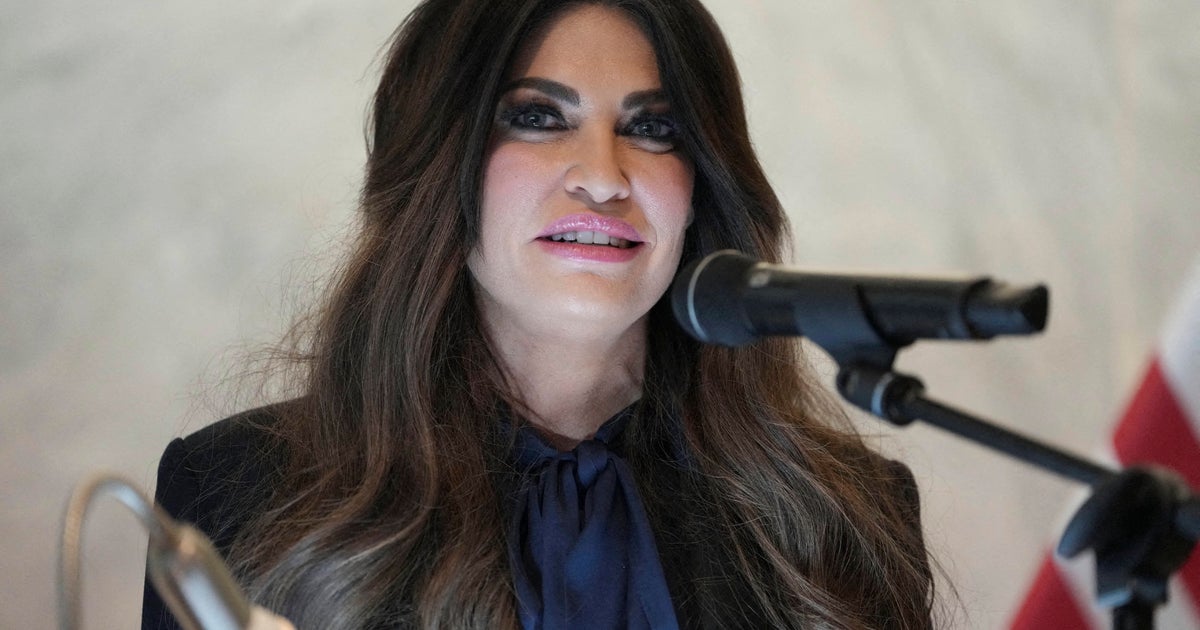
Photo via CBS News

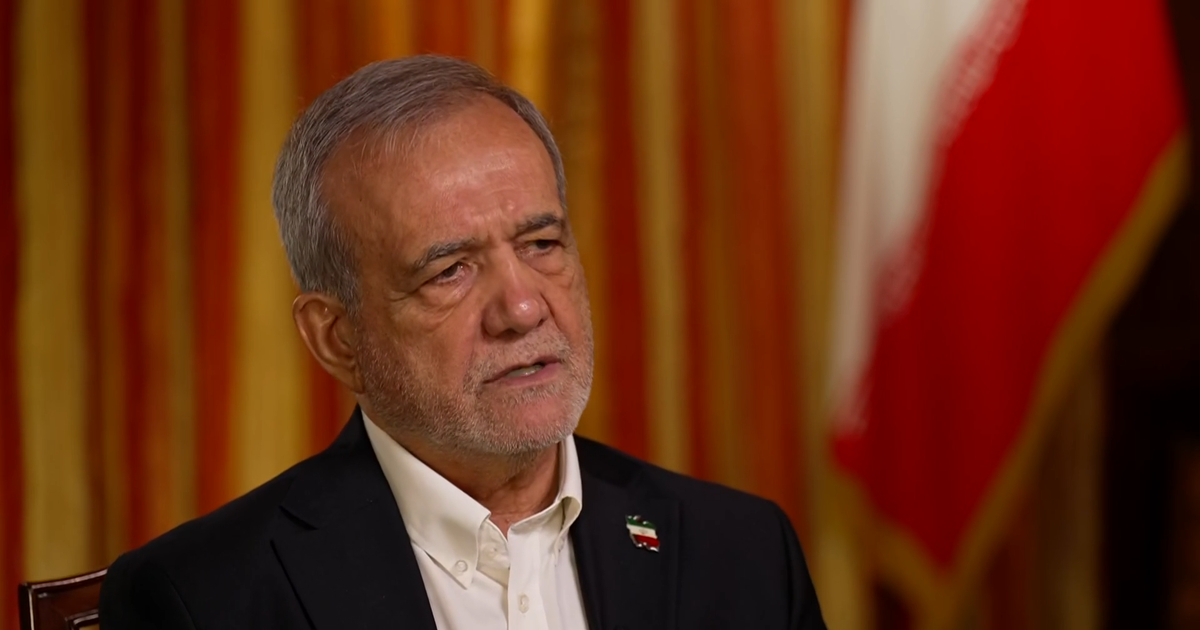
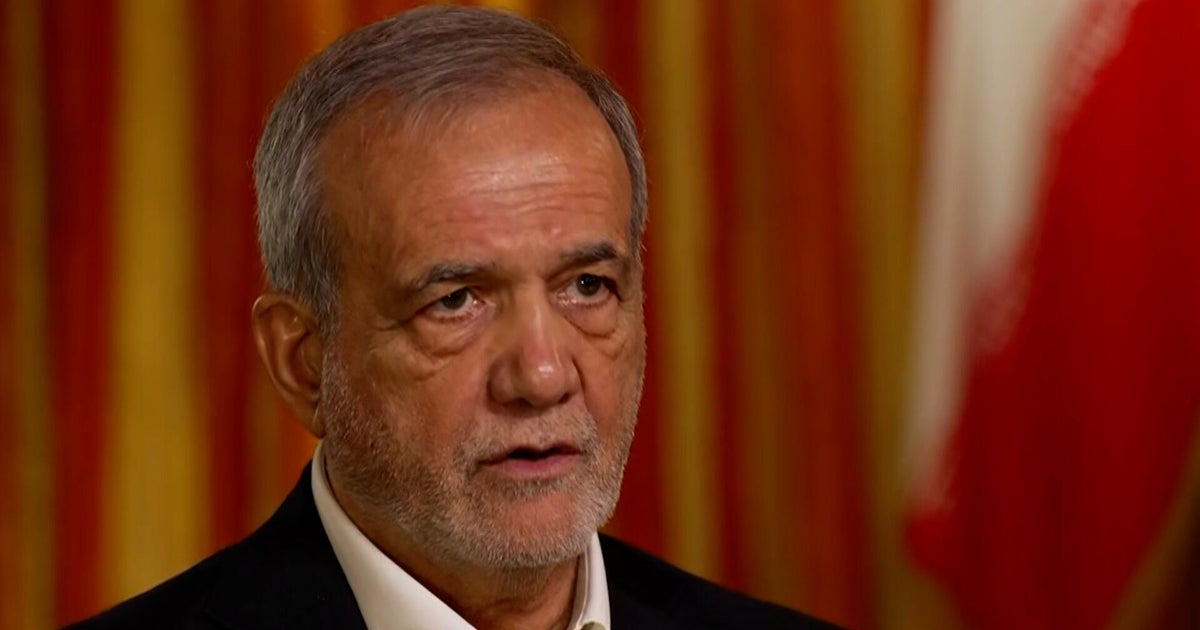
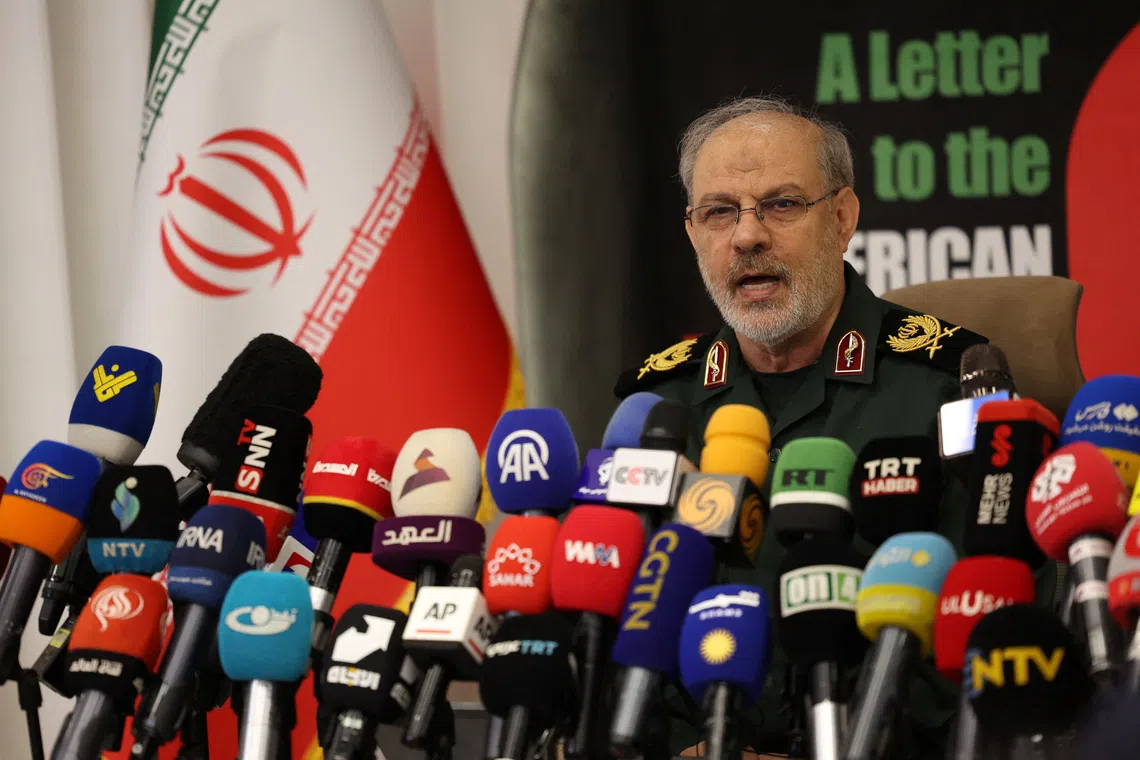
Iranian President Pezeshkian talks about proposal to reopen Strait of Hormuz

Read the original at CBS News ↗
Cite

Watson, K. (2026, September 26). Iranian President Pezeshkian talks about proposal to reopen Strait of Hormuz. CBS News. https://www.cbsnews.com/news/iran-president-masoud-pezeshkian-proposal-trump-strait-of-hormuz-war/

Dated when The Aporia collected the article, usually within hours of publication. Check the original for its exact date and byline.

CBS News · collected 2026-09-26 · by Kathryn Watson

Quick Summary

Iranian President Masoud Pezeshkian, during an interview with "Face the Nation," expressed skepticism about meeting with U.S. President Donald Trump due to mutual distrust arising from past conflicts. Pezeshkian proposed that Iran would be willing to reopen the Strait of Hormuz and restart negotiations if the United States accepts Iran's latest proposal, which was offered at the United Nations General Assembly in New York. The Iranian president emphasized that increased sanctions and threats from the U.S. hindered trust-building between the two nations.
Written by AI on 2026-09-26, from this article's own text only (the story summary below draws on all the coverage).

AI analysis

Story summary

As of October 2, 2026, Donald Trump rejected Iran's offer to reopen the Strait of Hormuz within seven days, deeming it "simply not enough." This proposal was made by Iranian President Masoud Pezeshkian in an effort to ease tensions and open dialogue. However, Trump warned that military action against Tehran could resume after the U.S. midterm elections, suggesting ongoing hostility despite Iran's willingness to negotiate. The offer came amidst international pressure for a resolution to the conflict; Russian President Vladimir Putin expressed hope that the strait would reopen, while also noting Russia’s proposal to receive enriched uranium from Iran remains on the table.

The U.S. has imposed new sanctions on Iranian carmakers and rail operators in response to Tehran's threats and actions. In parallel, Trump dismissed previous claims suggesting his administration was preparing to provide significant concessions to Iran, instead emphasizing a strategy focused on economic pressure through sanctions that have severely impacted Iran’s currency, with the rial trading at an unprecedented 2.5 million to the dollar.

The situation remains tense, with multiple international stakeholders advocating for dialogue and peace but facing resistance from both sides, particularly as the U.S. continues its aggressive stance towards Iran despite diplomatic efforts by other nations like Russia. Ed Miliband, UK Foreign Secretary, also met with his Iranian counterpart in New York during the UN General Assembly to discuss reopening the Strait of Hormuz and address threats posed by Iranian-linked groups on British soil. However, Miliband reiterated that Britain will not tolerate any form of intimidation or hostile activity linked to Iran. This complex diplomatic scenario underscores the challenges in achieving a peaceful resolution without further escalation.

Written for “Trump's Iran Policy And Pardons Talks” on 2026-11-03, grounded in this article and the 132 other(s) covering the same event.

Story

📰 Trump's Iran Policy And Pardons Talks
Politics · 133 article(s) covering the same event. See how they differ ↓

Compared with similar articles

This article reads unscored and hedges 10% of its claims. Each row says how that neighbour differs.
South China Morning Post
Hedges 1 of 6 claims Outlet record 63/100
“The articles describe different addresses or interviews given by Iranian President Pezeshkian on separate days.”
The Guardian
⚖️ Leans strongly left Hedges 4 of 34 claims Outlet record 66/100
“The articles describe different parts of a larger series of events involving Iranian President Pezeshkian's stance and interactions with the U.S. The first is his speech at the UN, while the second reports on an interview he gave later about willingness to meet.”
CBS News
Hedges 0 of 1 claims Outlet record 66/100
CBS News
Hedges 16 of 262 claims Outlet record 66/100
CBS News
Hedges 0 of 1 claims Outlet record 66/100
Al Jazeera
Hedges 4 of 31 claims Outlet record 60/100
BBC News
Hedges 1 of 19 claims Outlet record 68/100
“The articles discuss different aspects of negotiations regarding the Strait of Hormuz and meetings between leaders, not the same specific incident.”
9/27: Face The Nation Different event
CBS News
Hedges 0 of 2 claims Outlet record 66/100
“The articles describe different parts of a broader series of events - Article A reports on Iranian President Pezeshkian's statement about the atmosphere of distrust and willingness to meet with Trump, while Article B mentions an interview that was taped before Trump rejected the plan to reopen the Strait of Hormuz.”
The Straits Times
Hedges 2 of 8 claims Outlet record 66/100
“The articles describe different incidents: one involves Iranian President Pezeshkian's comments about meeting Trump, while the other reports on Iran's Revolutionary Guards calling Trump a 'big liar'.”
BBC News
⚖️ Leans left Hedges 1 of 25 claims Outlet record 68/100
“While both articles discuss Iran's proposal to reopen the Strait of Hormuz, they focus on different aspects: Article A highlights Foreign Minister Araghchi's statement at the UN, while Article B centers on President Pezeshkian's interview regarding negotiations and distrust.”
How this article was measured signals, leaning charts, publisher record, byline, topics and claims

Signals How these are calculated →

Claims extracted
42
sentences that state something as happening or true
Uncertain
10%
4 of 42 hedged ("reportedly", "may", "according to")
Leaning
withheld
no quote in the article backed the model's score
Publisher signals
66/100
CBS News's corrections and hedging, across everything collected from it. Not a measure of accuracy.
Outlets on this story
133
Politics
Same framing elsewhere
1
articles that frame the event the way this one does
Analyzed 2026-09-26 · how these are computed

How this is being covered How these are calculated →

Article leaning vs. publisher reliability
Source leaning vs. consistency

Publisher

CBS News · 4465 article(s) · 6 correction(s) detected
Running correction rate · 6 correction(s)

Who wrote this

Kathryn Watson
24 article(s) here · 1 carrying a prediction
🔮 "Everything that's on their website, speeches, press releases, anything that they want the agent to know, and then our agent will only ever discuss that information."
🔮 First lady Melania Trump joined him for a signing ceremony in the Rose Garden and said the executive order will make progress on five objectives: - Directing research funding to find cures that disproportionately affect women. - Using artificial intelligence to speed up medical discoveries. - Accelerating new therapeutics for women. - Delivering medical breakthroughs for women at an affordable price. - Making conversations about women's health less taboo.
2026-10-19 · assertive framing · Trump signs executive order on women's health
🔮 "Kim Guilfoyle and her lawyers claimed my allegations were false and they would defend the allegations vigorously," Deters wrote in a statement accompanying his lawsuit.
🔮 "She has been a wonderful asset to the team, and we wish her well."
🔮 "I responded that I would never take my Trump hat off to appease the left," she wrote.
🔮 The revelation that the Pentagon plans to livestream the execution by firing squad of Nidal Hasan, the ex-Army major convicted of killing 13 people at Fort Hood in 2009, has sparked intense pushback, with one Republican senator calling it "disgusting" and critics warning it could inspire more acts of terrorism.
2026-10-09 · assertive framing · Pentagon's plan to livestream execution sparks backlash
🔮 "Unfortunately for Kimberly Guilfoyle, at that time, at that moment in time, I didn't have $100,000 to spare to give to Kimberly Guilfoyle, or I actually would have been a dumbass enough to do it."
🔮 This year's Kennedy Center Honors will take place at Capital One Arena in downtown Washington, D.C., instead of at the Kennedy Center, a spokesperson for the institution said Friday.
🔮 I would say the answer, based on what I'm hearing, is yes.
🔮 Iranian President Masoud Pezeshkian said there was an "atmosphere of distrust" when asked whether he would have been willing to meet with President Trump in New York this week, an idea raised by the U.S. leader.
Also by Kathryn Watson
Nothing else under this byline is closely related to this article, so these are simply their most recent.
All 24 articles by Kathryn Watson →

Topics

Iran Iranian New York U.S. the United States

Subjects

Iran GPE · 16× U.S. GPE · 9× Iranian NORP · 6× Trump PERSON · 6× Brennan PERSON · 4× Pezeshkian PERSON · 3× the United States GPE · 3× New York GPE · 2× U.N. ORG · 2× Masoud Pezeshkian PERSON · 1×

Narrative

" When asked whether Mojtaba Khamenei is advising Pezeshkian on diplomacy, the president explained that there is a team "consisting of six members of various organizations, security forces, parliamentary representatives, government agencies, and they sit and conduct talks, consultations about decision-making processes, and reach any decisions through coordination."
framing: assertive · carried by 1 article(s) · first seen 2026-09-26
🔮 Iranian President Masoud Pezeshkian said there was an "atmosphere of distrust" when asked whether he would have been willing to meet with President Trump in New York this week, an idea raised by the U.S. leader.

Claims (42 extracted, 4 hedged)

Iranian President Masoud Pezeshkian said there was an "atmosphere of distrust" when asked whether he would have been willing to meet with President Trump in New York this week, an idea raised by the U.S. leader. asserted
he → say → leader
Pezeshkian, during an interview with "Face the Nation with Margaret Brennan" Friday, suggested that he would need to know "what exactly we want to reach an understanding on," after running through a list of the times the U.S. has attacked Iran while the countries were in the midst of negotiations. uncertain
countries → suggest → negotiations
But he also said Iran would "abide by whatever we commit to" if the U.S. accepts the latest Iranian proposal to reopen the Strait of Hormuz. asserted
U.S. → say → Hormuz
Iran's foreign minister offered a this week to reopen the strait after seven days and restart talks with the U.S. as an initial step toward a final nuclear deal. asserted
minister → offer → deal
The U.S. has yet to respond to the Iranian proposal, which was announced during the United Nations General Assembly in New York City. asserted
which → have → City
Mr. Trump had expressed openness to meeting with Iranian officials in New York. asserted
Trump → express → York
Although top Trump officials held indirect talks with Iranian officials through mediators, the president himself did not. asserted
president → hold → mediators
During his speech to the General Assembly, Mr. Trump said he has a "big decision to make" on whether to cut a deal with Iran or "annihilate" the country. asserted
he → say → country
He also predicted that the two sides will not reach an agreement until after the midterms. asserted
sides → predict → midterms
Pezeshkian suggested it would be difficult for him to meet face-to-face with Mr. Trump, pointing to an "atmosphere of distrust that has developed between Iran and the United States." " uncertain
that → suggest → Iran
As long as they don't cease doing what they're imposing on us every day, it's difficult to trust them," he said. asserted
he → cease → them
"Every day, they increase the sanctions against us. asserted
they → increase → us
Every day, they threaten us. asserted
they → threaten → us
Every day, they strike us. asserted
they → strike → us
And they don't honor what they have put in writing. asserted
they → honor → writing
So if they engage in talks, will they actually follow through?" asserted
they → engage → talks
Brennan asked when Iran expects a response from the United States on its offer to reopen the Strait of Hormuz and restart negotiations. asserted
Iran → ask → negotiations
"If this message reaches the president of the United States, or the interviewers and those involved in the discussions, naturally the process will begin from the very day they accept it," he said. asserted
he → reach → it
He blamed the U.S. for the collapse of the ceasefire agreement known as the "memorandum of understanding," or MOU, over the summer, after Iran targeted commercial shipping vessels and the U.S. responded by carrying out attacks on Iran. asserted
U.S. → blame → Iran
The U.S. has insisted Iran should not control the waterways entering the Strait of Hormuz, including those that pass Omani territory, or charge tolls for ships that pass through. asserted
that → insist → ships
Iran has demanded that ships seek permission and follow an Iranian-approved shipping route. asserted
ships → demand → route
"If they operate according to that framework, I think all of us will abide by it," he said of the original U.S.-Iran agreement. uncertain
he → operate → agreement
The 60-day ceasefire deal that fell apart in July was designed to buy time for Iran and the U.S. to hold talks on the future of Iran's nuclear program — a thorny issue that both sides have struggled to reach a deal on. asserted
sides → fall → deal
In recent years, Iran has enriched uranium to near weapons-grade levels of purity, and while it denies any interest in building a nuclear weapon, it has refused to give up uranium enrichment altogether. asserted
it → enrich → enrichment
Mr. Trump has said in the past that Iran must stop enriching uranium — a more hardline stance than the Obama-era nuclear deal that allowed Iran to enrich to a low level, with limits on the size of its program and international inspectors. asserted
Iran → say → program
Pezeshkian told Brennan Iran would now allow U.N. nuclear inspectors into the country. asserted
Iran → tell → country
"That is absolutely correct," he said. asserted
he → say → ?
Brennan pointed out that inspectors from the U.N.'s International Atomic Energy Agency were not given full access when they tried before. asserted
they → point → access
"Will your country allow in weapons inspectors now?" Brennan asked again. asserted
Brennan → allow → inspectors
"That is absolutely correct," he responded again, adding, "If they wish to come in and have inspections, we can reach accords and agreements vis-à-vis that specific topic within the negotiations." asserted
we → respond → negotiations
At the same time, Pezeshkian claims that Iran is not trying to build a nuclear weapon: "Developing nuclear weapons is haram," he said, using the word forbidden, maintaining that even if some in Iran wanted to build a nuclear weapon, "religiously speaking, they are not allowed to pursue that path." uncertain
they → claim → path
asked Pezeshkian about his communications with Mojtaba Khamenei, Iran's supreme leader, who has not been seen in public since the U.S.-Israeli attack that killed his father, Supreme Leader Ali Khamenei, earlier this year. asserted
that → ask → father
The Iranian president insisted the new supreme leader has "no specific ongoing health issues or challenges," and said they last met twice, once for over seven hours. asserted
they → insist → hours
He said they were seated "for those many hours" and "changed angles and positions" because they were unaccustomed to being seated for so long. asserted
they → say → long
"From a medical standpoint, he's completely healthy," Pezeshkian said, adding that injuries to his face and legs have recovered. asserted
injuries → say → face
He has no issues. asserted
He → have → issues
" When asked whether Mojtaba Khamenei is advising Pezeshkian on diplomacy, the president explained that there is a team "consisting of six members of various organizations, security forces, parliamentary representatives, government agencies, and they sit and conduct talks, consultations about decision-making processes, and reach any decisions through coordination." asserted
they → ask → coordination
Brennan said it was notable for the Iranians to be in a country they're at war with, when they were in shelters only months earlier. asserted
they → say → shelters
"We were not in a shelter a few months ago," he said. asserted
he → say → shelter
"How did we manage the country?" asserted
we → manage → country
…and 2 more, not listed.

💬Give feedback
🕘History 🎫Support