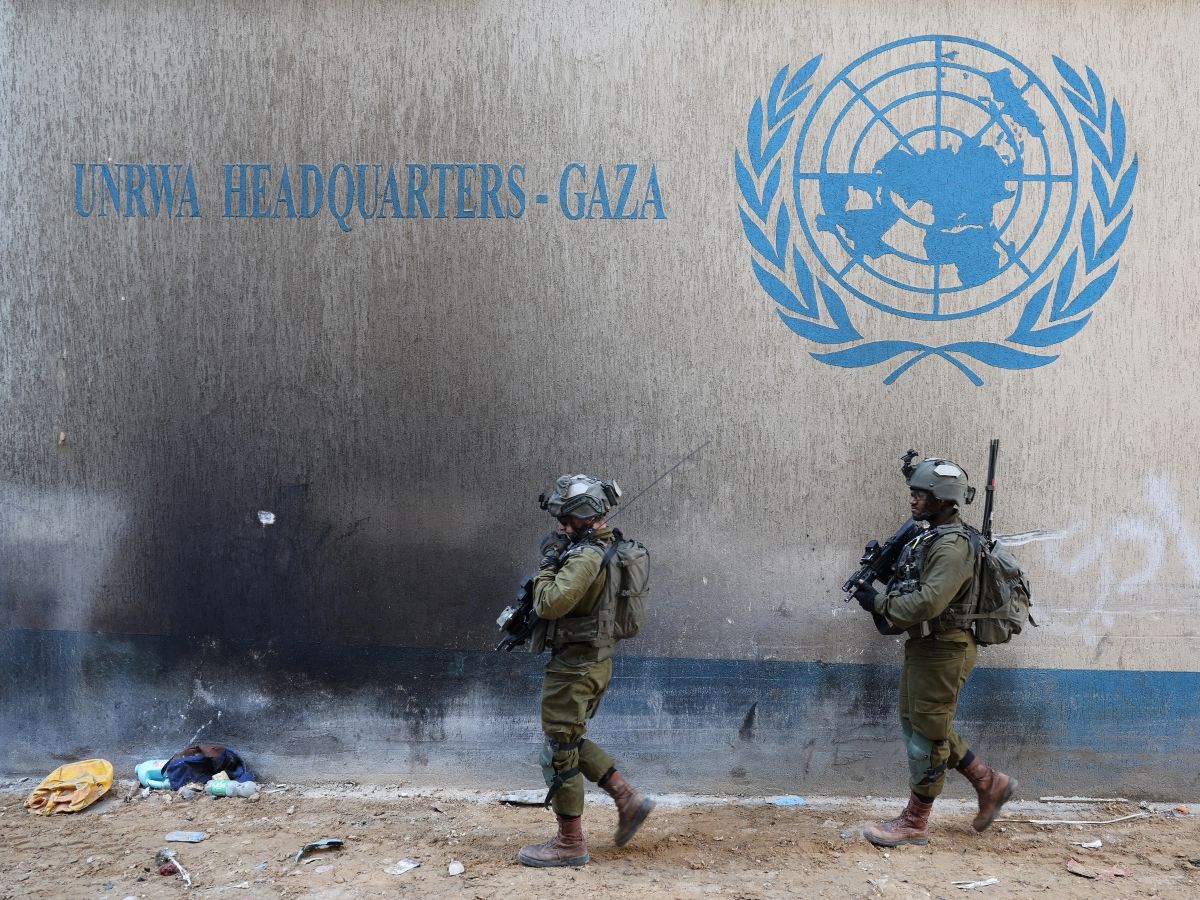
The U.K., France, and Canada, along with nine other countries, namely Denmark, Finland, Iceland, Ireland, Norway, Poland, Portugal, Spain and Sweden, issued a joint statement on Tuesday (September 8, 2026) confirming their intention to introduce new restrictions on trade with illegal Israeli settlements in the West Bank.
asserted
U.K. → issue → Bank
While the U.K., France and Canada announced a trade ban, some have sanctions in process, and others have already sanctioned their trade with illegal settlements.
asserted
others → announce → settlements
While the joint statement reinforces the commitment of these countries to the two-state solution, it appears largely symbolic and barely consequential.
asserted
it → reinforce → solution
Rising settler violence
The statement comes in response to the rapidly deteriorating situation ‘amid unprecedented levels of settler violence and settlement expansion’ in the occupied West Bank and Israel’s decision to publish tenders for construction of 1,234 Israeli homes as part of its E1 settlement project that aims to create a continuous settlement ‘corridor’ between occupied East Jerusalem and Ma’ale Adumim.
asserted
that → rise → Jerusalem
This construction on Palestinian land is illegal under international law and would isolate Palestinian communities between the northern and southern West Bank.
asserted
construction → isolate → Bank
While the E1 settlement project is the latest trigger, Israel has been intensifying its activities in the West Bank since October 7, 2023, resulting in more than a thousand casualties and several thousand injuries.
asserted
Israel → intensify → casualties
More than 41,000 Palestinians have been displaced in the West Bank due to settler and Israeli violence as of UNRWA’s monthly snapshot released last month.
asserted
Palestinians → displace → snapshot
Settler violence has also been escalating.
asserted
violence → escalate → ?
Data from UN OCHA show that more than 3,000 settler attacks resulted in casualties or property damage between January 2025 and July 2026.
asserted
attacks → show → January
Israel also scaled up the expansion of its footprint since October 7, 2023.
asserted
Israel → scale → October
In less than three years, nearly 5,000 structures, including houses and other infrastructure, have been demolished.
asserted
structures → include → houses
That is an average of nearly 5 buildings being demolished in the West Bank each day.
asserted
That → demolish → Bank
Data from Peace Now, an Israeli activist group tracking settlements, show that settlers established at least 200 outposts (Israeli settlements established without government approval and considered illegal even under Israeli law) and issued over 12,000 tenders for construction of housing units in the region since 2023.
asserted
settlers → track → 2023
While the decision to restrict shipments from Israeli settlements emerged in this backdrop, it is unlikely to deter Israel’s illegal activities in the West Bank.
asserted
it → restrict → Bank
Eight of the 12 countries that issued the joint statement already belong to the European Union, which already has a trade policy with respect to goods from Israeli settlements.
asserted
which → issue → settlements
But that policy itself has several loopholes.
asserted
policy → have → loopholes
As per existing EU policy, goods originating from Israeli settlements in territories occupied by Israel since 1967 are not entitled to benefit from preferential tariff treatment.
asserted
goods → exist → treatment
The EU has ensured this since 2004 via a ‘Technical arrangement’ between EU and Israeli customs authorities by differentiating between products originating in Israel and settlements.
asserted
EU → ensure → Israel
Basically, shipments are required to carry proof of origin (names and postal codes) to identify the real origin and, if so, deny preferential treatment and trade preferences that are granted to Israel under the EU-Israel association agreement.
asserted
that → require → agreement
This existing policy has not deterred illegal settlements from flourishing in occupied territories.
asserted
policy → exist → territories
The population of settlers in the West Bank doubled between 2004 and 2025, and trade with the EU from these settlements eventually found its way.
asserted
trade → double → way
Palestinian rights legal advocacy group Global Echo, in its ‘Importing Occupation’ report released in 2026, found that illegal settlement products to the EU are sustained through three principal practices — hiding in plain sight (indicating the actual location and postal code of production in occupied territory while designating that location as being in Israel), sham address method (use of a proxy or invented address within Israel’s recognised borders instead of disclosing true origin) and mingling method (co-mingling settlement produce with goods from within Israel).
asserted
products → import → Israel
The organisation, in its analysis of over 30,000 export documents accompanying over 6,800 shipments of agricultural products from Israel, found that more than 17% of the 5,900 shipments destined for Europe — that is, one in six shipments overall and one in five shipments bound for the EU — originated from illegal settlements.
asserted
that → accompany → settlements
Lack of impact
These practices, which have already undermined the effective application of the EU’s trade policy, could still allow products from settlements in the European market despite the restrictions.
uncertain
which → undermine → restrictions
Further, even if the move by these 12 countries effectively counters these existing loopholes, the intended impact on Israeli activities in the West Bank is not likely to pan out.
asserted
impact → counter → Bank
This is because these countries continue to harbour their trade activities with Israel, which account for at least $21 billion.
asserted
which → continue → billion
Meanwhile, trade with settlements amounts only to a fraction of this value which is why it is unlikely to amount to any sort of economic impact/threat.
asserted
it → amount → threat
 The Aporia