The Middle East is a prisoner of its past, held hostage by history and territory.
asserted
East → hold → history
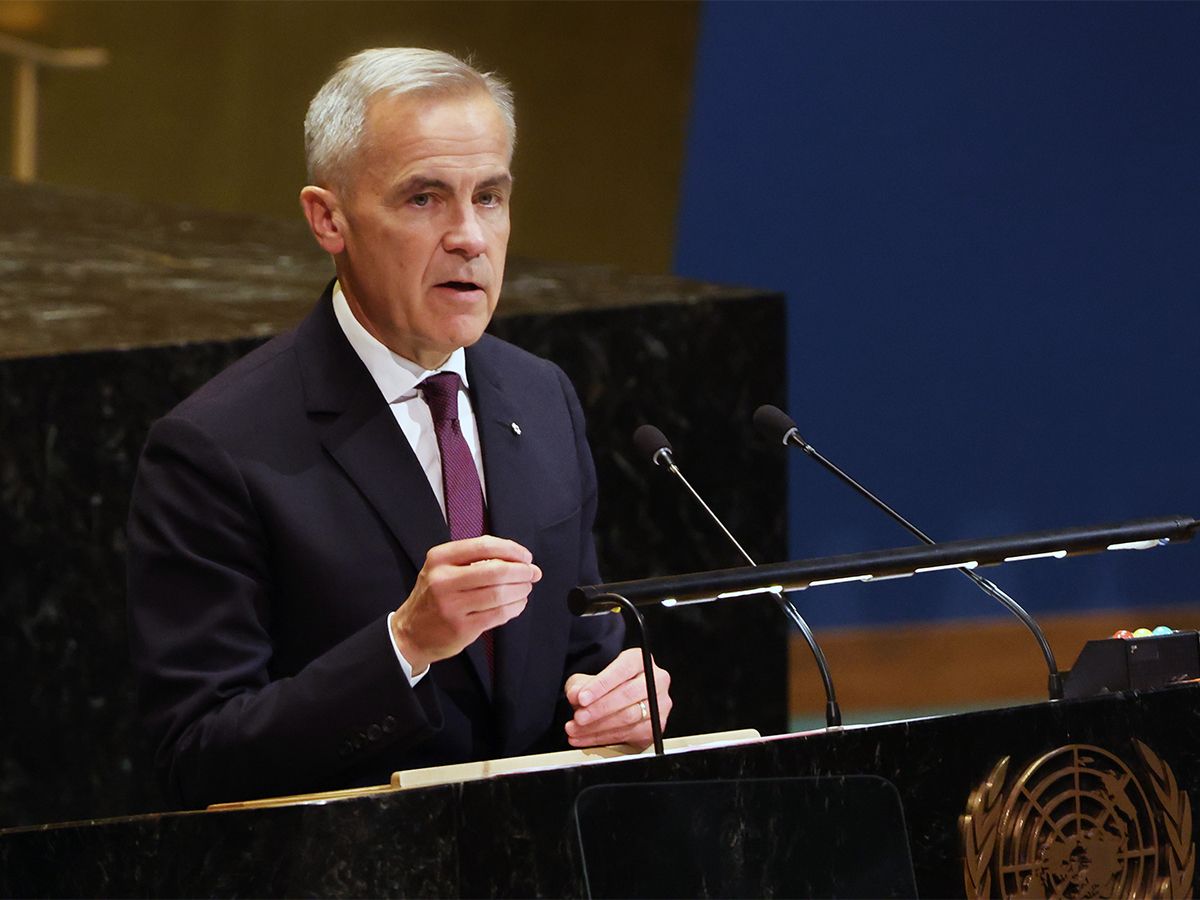
This week, Prime Minister Mark Carney spoke of a future two-state solution on his visit to the United Nations.
asserted
Carney → speak → Nations
But to reach that destination, it’s worth revisiting the recent history of Jewish settlements that remain a roadblock on the path to peace.
asserted
that → reach → peace
This month, Canada joined several European nations in planning a ban on commercial ties that support those settlements in the occupied West Bank.
asserted
that → join → Bank
I’ve argued that the ban is long overdue — those settlements contravene international law, contradict Canadian foreign policy, and run counter to a peace process that culminates in two states for two peoples.
asserted
that → argue → peoples
Removing them would not magically bring peace in our time.
asserted
Removing → remove → time
For history shows that it was tried before when Israeli security authorities forcibly removed settlers from Gaza in 2005.
asserted
authorities → show → 2005
Rather than repurpose the abandoned fruit orchards, Hamas dug tunnels that laid the groundwork for a terrorist massacre in late 2023, triggering the Israeli overkill that followed.
asserted
that → repurpose → overkill
All the while, settlement expansion and excesses continue unabated in the West Bank — perpetuating occupation, confrontation and violence.
asserted
expansion → continue → occupation
Stopping the expansion and removing the provocation is far from a full prescription for peace, but it is the prerequisite for peace.
asserted
it → stop → peace
If not, settlements will sabotage the process, now and in future.
asserted
settlements → sabotage → future
The lesson of Jewish settlements is that they only prolong occupation and provoke conflict, rather than providing the security that many Israelis once imagined.
asserted
Israelis → prolong → that
Settlements were not the original sin, but rather a symptom of the earliest conflict — an accident of history bound up in grievances and grudges.
asserted
Settlements → bind → grievances
They turned out to be a grievous error, as some predicted decades ago.
asserted
some → turn → ?
The State of Israel — legally recognized by most of the world — came into being in 1948 when its declaration of independence was recognized by a vote of the UN, following a proposal for partition of the former mandate territory held by Britain (at the behest of the League of Nations, after the collapse of the colonial Ottoman Empire in Istanbul).
asserted
declaration → recognize → Istanbul
In the aftermath, Jordan occupied the West Bank until the Six Day War of 1967, when Israel repelled a Jordanian attack and took it over along with East Jerusalem.
asserted
Israel → occupy → Jerusalem
Egyptian-held Gaza also fell to Israel.
asserted
Gaza → hold → Israel
A few days after the war, then-prime minister Levi Eshkol agreed to a new settlement on the ruins of Kibbutz Kfar Etzion, 20 kilometres south of Jerusalem, which had been abandoned and destroyed during the 1948 war.
asserted
which → agree → war
Eshkol led Israel’s Labour party, a putatively progressive, left-wing, social democratic movement that gave settlements their start and support for years to come.
asserted
that → lead → years
The idea at first was to use them as bargaining chips in any future settlement with the Palestinians — so-called “land for peace.”
asserted
idea → use → peace
But the settlers had a different strategy, premised on “facts on the ground.”
asserted
settlers → have → ground
Only 15 settlers arrived to reclaim the old kibbutz in 1967.
asserted
settlers → arrive → 1967
Today, more than 500,000 settlers and their settlements are on the front lines of the Israeli-Palestinian conflict, living outside the boundaries of the internationally recognized state whose population is 10 million people.
asserted
population → live → state
Jewish settlers wield disproportionate political influence in the country, nowhere more than in the battleground of Hebron, in the heart of the West Bank, the reputed burial site of biblical patriarch Abraham revered by all three Abrahamic faiths.
asserted
settlers → wield → faiths
In 1968, 32 religious Jewish families slipped into Hebron, defying army orders ostensibly to celebrate Passover — then refused to leave.
asserted
families → slip → Passover
The Labor government of the day moved them into a military compound.
asserted
government → move → compound
But after a two-year standoff, the authorities let them build the settlement of Kiryat Arba, which would later become a centre of the movement’s messianic tendencies next door to Hebron.
asserted
which → let → Hebron
The defence minister of the day, Moshe Dayan, later said it was a mistake.
asserted
it → say → day
“I was opposed to such wild settling,” he told a biographer, but he went along with it publicly at the time.
asserted
he → oppose → time
At a 1973 Labor congress, then-prime minister Golda Meir pushed for more settlements in the West Bank.
asserted
Meir → push → Bank
Her foreign minister at the time, the late Abba Eban, abstained from the vote out of cabinet solidarity.
asserted
minister → abstain → solidarity
But as he told me in an interview before his death, it was a historical blunder.
asserted
it → tell → death
“The Labour party made a fool of itself … because there was no real basis for settlement expansion,” Eban said in the late 1990s.
asserted
Eban → make → 1990s
Perhaps Israel’s best-known diplomat, Eban is remembered today for his famous put-down that “the Palestinians never miss an opportunity to miss an opportunity.”
asserted
Palestinians → know → opportunity
But by his historical reasoning, this too might be said:
Israel’s settlement movement always seizes an opportunity to block an opportunity.
uncertain
movement → say → opportunity
 The Aporia