The intense heat that brought widespread drought and wildfires to Europe this summer extended far beyond the land.
Sea surface temperatures across the continent reached their highest levels for the summer period since dependable satellite records started in 1982, an analysis of marine data shows.
asserted
analysis → bring → data
Temperature records were broken from the English Channel to the Mediterranean Sea.
asserted
records → break → Sea
On 5 August, an offshore buoy anchored near Mallorca registered 33.02 degrees Celsius (91.44 degrees Fahrenheit), marking the warmest temperature ever recorded by the Spanish port authority's monitoring system.
asserted
buoy → anchor → system
Experts caution that marine heatwaves of this nature are growing in frequency, severity, and extent as global greenhouse gas emissions elevate air temperatures worldwide.
asserted
emissions → caution → temperatures
Earth's oceans take in most of this trapped thermal energy, holding onto it far longer than land surfaces or the atmosphere.
asserted
oceans → take → surfaces
These shifting conditions are altering aquatic ecosystems with devastating impacts on certain European fisheries and coastal livelihoods, based on scientific literature alongside testimonies from over a dozen analysts, researchers, and fishing sector figures.
asserted
conditions → shift → analysts
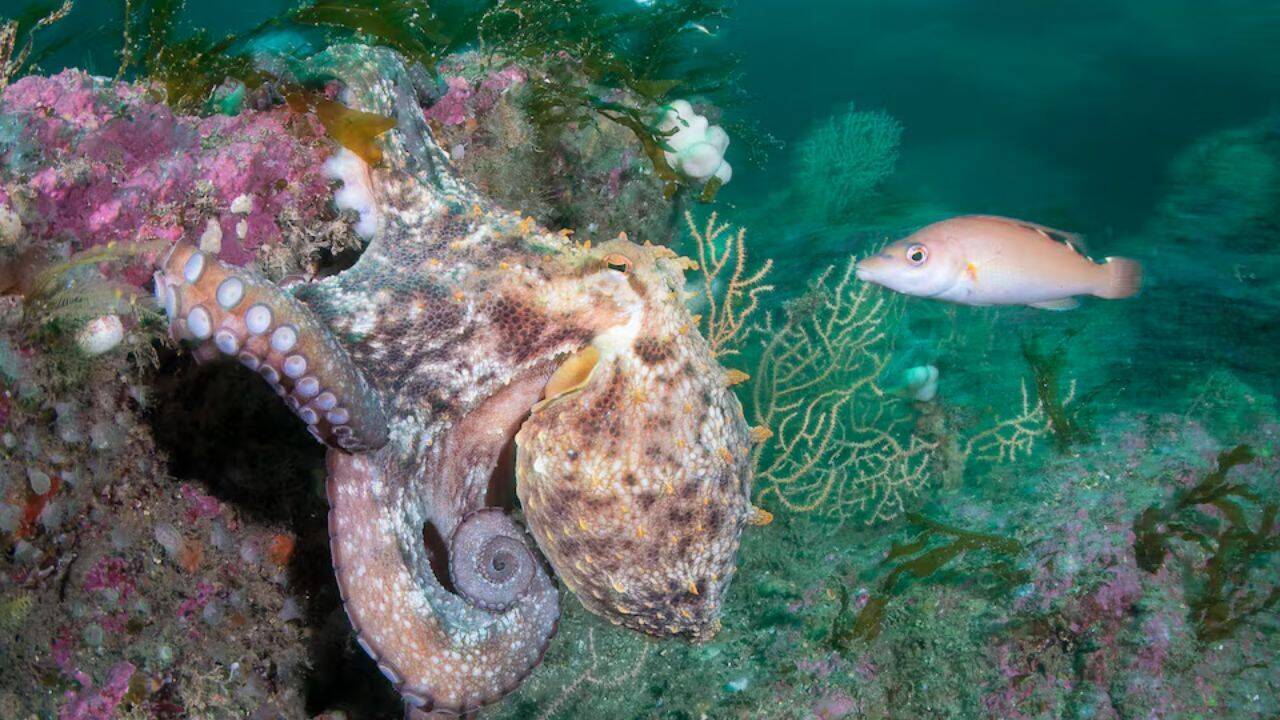
Marine species that long supported local communities in southern England and Spain are departing, replaced by non-native species migrating into newly warmed habitats.
asserted
that → support → habitats
"What is surprising is the speed at which this occurs," Jean-Pierre Gattuso, senior research scientist at France's National Centre for Scientific Research, said of Europe's warming seas.
asserted
Gattuso → occur → seas
"Records are broken almost every day in many places."
Across the continent as a whole, European marine waters averaged 21.6 C (70.9 F) from June to August, setting a peak across 45 years of collected observations.
Among the most affected regions was the Bay of Biscay, situated along the Atlantic coast shared by France and Spain.
asserted
Bay → break → France
Reaching from Galicia’s Cape Ortegal to Pointe de Penmarch in southern Brittany, the bay—where waters are typically cool—averaged 21.4 C (70.5 F) across the summer, exceeding the 1991–2020 baseline by more than 2.4 degrees (4.4 degrees).
asserted
waters → reach → degrees
Measurements from the US National Oceanic and Atmospheric Administration reached a satellite-era high of 23.2 C (74 F) on 13 August.
asserted
Measurements → reach → August
Marine heatwaves are defined by researchers as periods of five or more consecutive days where water temperatures significantly exceed historical baselines.
asserted
temperatures → define → baselines
While the Bay of Biscay experienced only a few heatwave days annually during the 1980s, analysis shows it had accumulated 186 heatwave days by late August this year, representing over three-quarters of the period.
asserted
it → experience → period
The Bay of Biscay's cool waters, long prized by Spaniards seeking relief from the heat of the Mediterranean coast, were immortalized in Ernest Hemingway's 1926 novel "The Sun Also Rises."
asserted
Sun → prize → novel
The book's protagonist recovers after weeks of dissolution on the northern beaches of San Sebastian.
asserted
protagonist → recover → Sebastian
"Now if you want to swim in cold water, you have to go to the westernmost portion of Galicia," in the far northwestern corner of Spain, said Jose Manuel Rico Ordas, a professor of marine ecology at the University of Oviedo in the northern Asturias region.
asserted
Ordas → want → region
Galicia benefits from strong winds that push warm surface water away from the coast during the summer months, allowing cold, deep-sea water to take its place in a process known as upwelling.
asserted
water → benefit → upwelling
Rico Ordas has been spending summers on the bay since he was a child and now studies its transformation.
asserted
he → spend → transformation
Back then, there were extensive underwater forests of kelp, which provide vital food, shelter and nurseries for dozens of species that sustain the region's small-scale fisheries.
asserted
that → be → fisheries
But he estimates roughly 95% of the large, brown seaweed stands have disappeared, based on sampling along the rugged Asturias coast since 2010.
asserted
% → estimate → 2010
He attributes the decline primarily to climate change.
asserted
He → attribute → change
Kelp needs cold water – typically below 20 C (68 F) – to survive.
asserted
Kelp → need → C
Higher temperatures were once exceptionally rare in the bay, Rico Ordas told Reuters.
asserted
Ordas → tell → Reuters
"Now, it's the opposite," he said.
asserted
he → say → ?
Fish overgrazing – in particular by dreamfish, which thrive in warmer temperatures – has added to the kelp's decline, he said.
asserted
he → thrive → decline
"We are finding no more lobster, no more crayfish, no more sea urchins and many other species that are associated with the good status of kelp forests," Rico Ordas said.
asserted
Ordas → find → forests
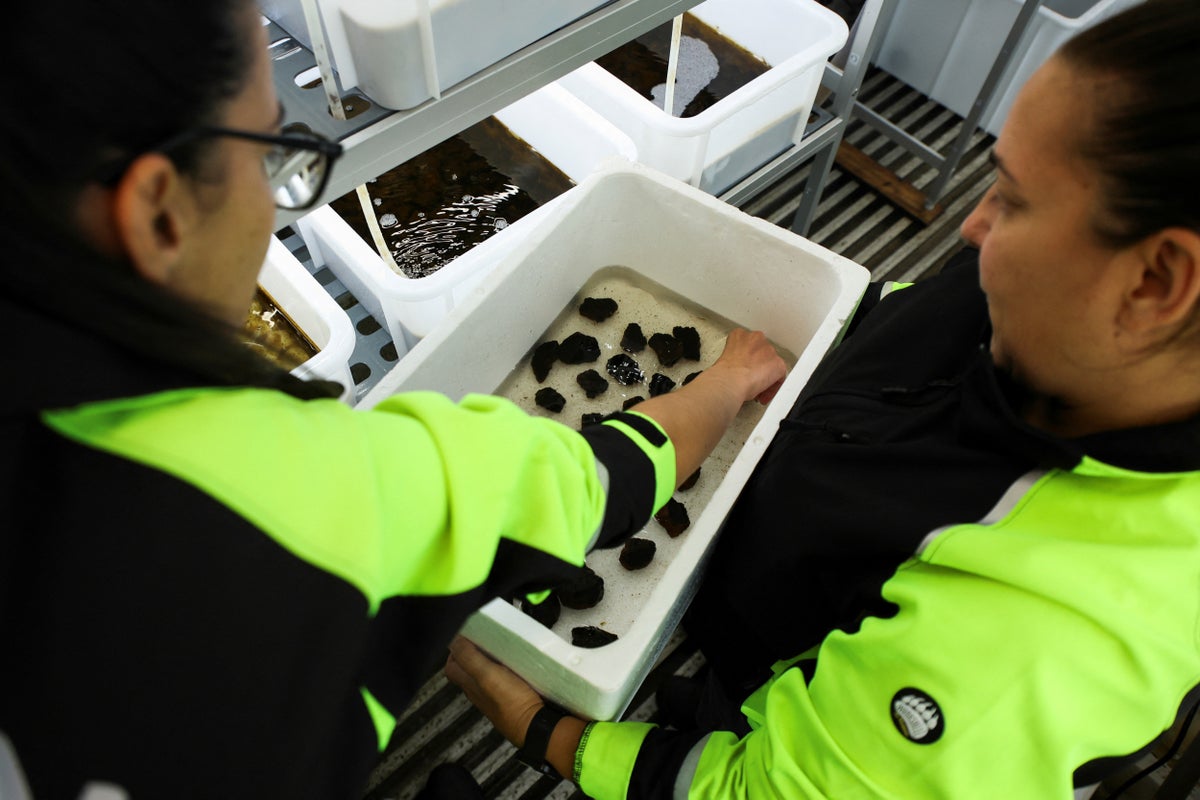
Concerned fishermen have been teaming up with scientists and environmental activists to try to restore kelp forests by planting seedlings grown in laboratories.
asserted
fishermen → team → laboratories
Manuel Angel Reiriz Gonzalez, president of a local fishermen's guild in Galicia, recently ferried members of one such project in a boat he uses for sport fishing charters out of the port of Ribeira.
asserted
he → ferry → Ribeira
The group brought a box full of small stones seeded with kelp, which they tossed into the choppy waters.
asserted
they → bring → waters
Climate change threatens a way of life that has sustained Gonzalez's community for generations, he said.
asserted
he → threaten → generations
His family has been diving for sea urchins and harvesting clams for more than a century.
asserted
family → dive → century
But now, he said, recurring heatwaves are hurting shellfish stocks.
asserted
heatwaves → say → stocks
The area has also seen an influx of Portuguese man o' war and trigger fish from warmer climes to the south – species that prey on local fish and crustaceans.
asserted
that → see → fish
"We had some very bad years for clam production, but we worked on seeding them, and the species gradually adapted," Gonzalez said.
asserted
Gonzalez → have → them
He hopes the seabed restoration efforts can do the same for kelp forests.
asserted
efforts → hop → forests
The disappearance of kelp could lead to the decline of sea urchins and other species fishermen depend on, he said.
uncertain
he → lead → urchins
"At that point, as a fishing guild, we would cease to exist."
asserted
we → cease → guild
In other European waters, new, invasive species from the Red Sea and beyond are entering the Mediterranean through the Suez Canal, displacing native populations, reshaping food chains and threatening fisheries, researchers say.
asserted
researchers → enter → fisheries
Some native species are coping with the warmer temperatures better than others.
asserted
species → cop → others
A massive swarm of jellyfish shut down reactors at France's Gravelines nuclear power plant in August when they clogged its cooling system – for the second time in as many years.
asserted
they → shut → years
…and 20 more, not listed.
 The Aporia