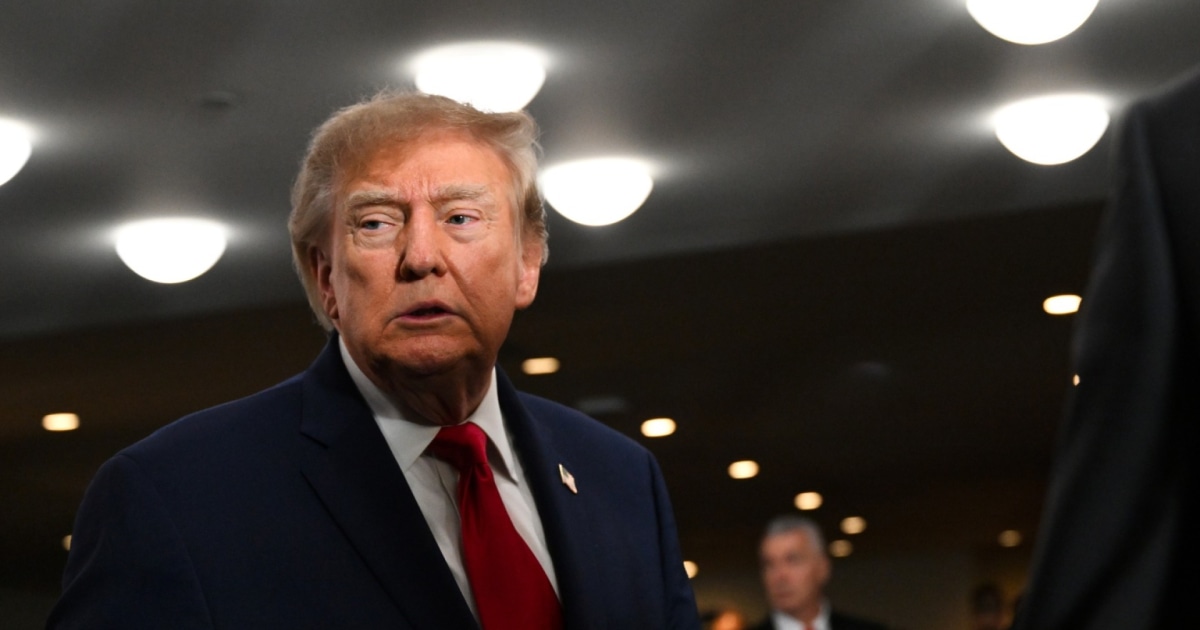
Photo via South China Morning Post

Amid many thorny issues with China, Trump pushes to rename AI as superintelligence

Read the original at South China Morning Post ↗
Cite

Chow, V. (2026, September 26). Amid many thorny issues with China, Trump pushes to rename AI as superintelligence. South China Morning Post. https://www.scmp.com/news/china/diplomacy/article/3368921/amid-many-thorny-issues-china-trump-pushes-rename-ai-superintelligence?utm_source=rss_feed

Dated when The Aporia collected the article, usually within hours of publication. Check the original for its exact date and byline.

South China Morning Post · collected 2026-09-26 · by Vincent Chow

Quick Summary

US President Donald Trump is advocating for the term "superintelligence" (SI) to replace "artificial intelligence" (AI) in government documents and diplomatic communications, aiming to include China’s cooperation on this terminology change during discussions at the United Nations General Assembly. The US State Department has already instructed its diplomats to use SI instead of AI in all future communications. A Chinese foreign ministry spokesperson did not commit to adopting Trump's preferred term but expressed respect for the decision.
Written by AI on 2026-09-26, from this article's own text only (the story summary below draws on all the coverage).

AI analysis

Story summary

As of September 2026, President Donald Trump told reporters that the U.S. is "hopefully toward the end" of its ongoing war with Iran, which began on February 28 and has lasted for seven months. Despite this hopeful statement, there are no clear timelines or significant de-escalation efforts in sight. The conflict continues to disrupt global oil supplies through the Strait of Hormuz, pushing up oil prices to over $108 per barrel. Additionally, Iran's foreign minister is under pressure from China and international concerns to reopen the strait and return to a previous interim peace deal with the U.S.

Meanwhile, tensions have escalated beyond Iran into Yemen, where Houthi rebels, aligned with Iran, pose significant threats near the Red Sea, complicating efforts at regional stability. The conflict has also drawn in other nations such as Saudi Arabia, which is offering extra crude oil through Oman to ease supply disruptions and stabilize oil prices.

At the United Nations General Assembly, Trump further alarmed global leaders by threatening to "annihilate" Iran if necessary, raising concerns about the potential for catastrophic outcomes involving nuclear weapons. This rhetoric contrasts sharply with past U.S. presidents who emphasized caution regarding such extreme measures. Despite these challenges, there is an urgent need for multilateral solutions and effective engagement through international bodies like the UN to address ongoing conflicts and crises around the world.

Written for “Trump's UN Speech Controversies” on 2026-10-31, grounded in this article and the 206 other(s) covering the same event.

Story

📰 Trump's UN Speech Controversies
Politics · 207 article(s) covering the same event. See how they differ ↓

Compared with similar articles

This article reads unscored and hedges 0% of its claims. Each row says how that neighbour differs.
The Hindu
⚖️ Leans right Hedges 0 of 4 claims Outlet record 60/100
CBS News
Hedges 0 of 1 claims Outlet record 66/100
The Independent
⚖️ Leans left Hedges 3 of 34 claims Outlet record 59/100
The Straits Times
⚖️ Leans strongly right Hedges 1 of 23 claims Outlet record 66/100
The Independent
⚖️ Leans right Hedges 3 of 18 claims Outlet record 59/100
BBC News
Hedges 2 of 28 claims Outlet record 68/100
Semafor
Hedges 0 of 4 claims Outlet record 60/100
“The articles describe different aspects of AI discussions related to international relations and the UN General Assembly but do not refer to the same specific incident.”
New York Post
Hedges 0 of 15 claims Outlet record 66/100
BBC News
Hedges 0 of 7 claims Outlet record 68/100
How this article was measured signals, leaning charts, publisher record, byline, topics and claims

Signals How these are calculated →

Claims extracted
4
sentences that state something as happening or true
Uncertain
0%
0 of 4 hedged ("reportedly", "may", "according to")
Leaning
not political
takes no side on a contested political question
Publisher signals
64/100
South China Morning Post's corrections and hedging, across everything collected from it. Not a measure of accuracy.
Outlets on this story
207
Politics
Same framing elsewhere
1
articles that frame the event the way this one does
Analyzed 2026-09-26 · how these are computed

How this is being covered How these are calculated →

Article leaning vs. publisher reliability
Source leaning vs. consistency

Publisher

South China Morning Post · 3467 article(s) · 6 correction(s) detected
Running correction rate · 6 correction(s)

Who wrote this

Vincent Chow
9 article(s) here · 1 carrying a prediction
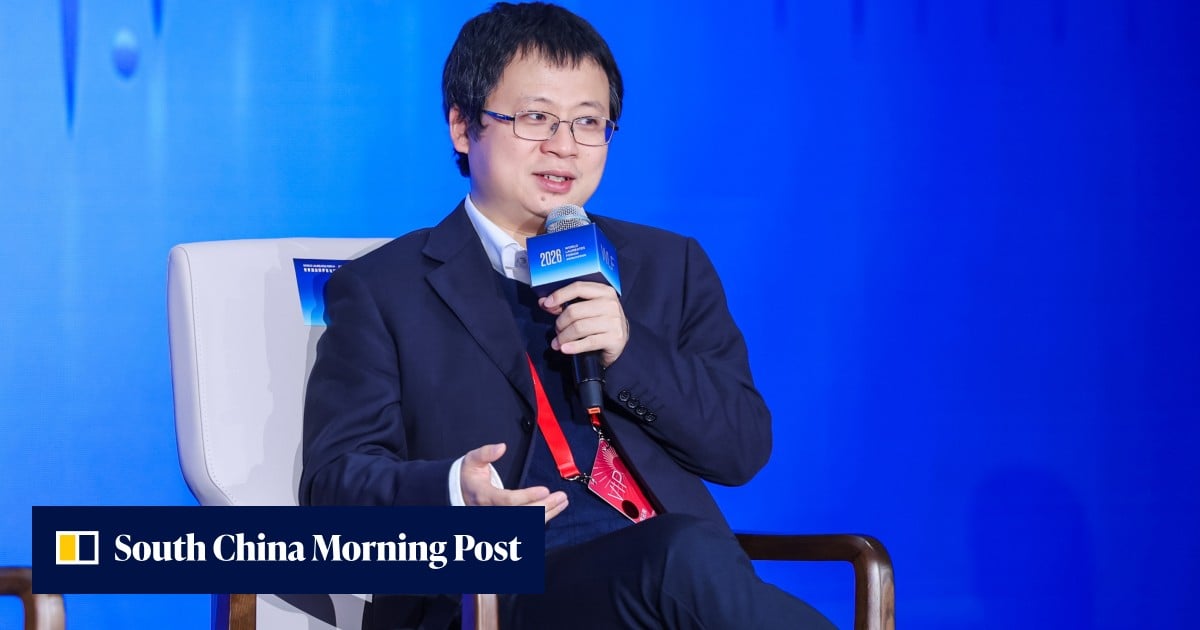
🔮 Predicting that AI advances would develop even faster, Chen proposed a universal “ethics checker” that all leading AI models would need to satisfy, citing the systems developed by Chinese companies DeepSeek and ByteDance as well as American start-up OpenAI.
🔮 Trump rejects calls to work with China on AI safety despite Xi summit progress US president won’t collaborate with Beijing to govern AI as it would make it harder for American companies to get ahead in global tech race “Whoever wins superintelligence wins.
🔮 A foreign ministry spokesperson did not say if China would adopt Trump’s preferred term for artificial intelligence but respects the choice of the term US President Donald Trump is pushing for a rebrand of artificial intelligence (AI) — and looking to get the world’s other AI superpower, China, on board.
🔮 China’s growing semiconductor self-reliance may explain the relative calm, but looming US measures could put it to the test There is little question that Jensen Huang and Lisa Su, the heads of US semiconductor chip giants Nvidia and Advanced Micro Devices (AMD), had secured two of the best seats in the house at the White House state dinner on Thursday evening: at the head table alongside the two presidents and their wives.
🔮 More than 80 questions sought to uncover potential biases in the landmark criminal case against the Chinese tech giant Known as voir dire, the process allows the presiding judge and two legal teams to question prospective jurors before the trial begins to identify possible bias and conflicts that could impede their ability to adjudicate the case in a “fair and impartial” way.
Also by Vincent Chow
Nothing else under this byline is closely related to this article, so these are simply their most recent.
All 9 articles by Vincent Chow →

Topics

China the Associated Press the US State Department the United Nations General Assembly

Subjects

China GPE · 3× Trump PERSON · 3× Donald Trump PERSON · 1× the Associated Press ORG · 1× the US State Department ORG · 1× the United Nations General Assembly ORG · 1×

Narrative

A foreign ministry spokesperson did not say if China would adopt Trump’s preferred term for artificial intelligence but respects the choice of the term US President Donald Trump is pushing for a rebrand of artificial intelligence (AI) — and looking to get the world’s other AI superpower, China, on board.
framing: assertive · carried by 1 article(s) · first seen 2026-09-26
🔮 A foreign ministry spokesperson did not say if China would adopt Trump’s preferred term for artificial intelligence but respects the choice of the term US President Donald Trump is pushing for a rebrand of artificial intelligence (AI) — and looking to get the world’s other AI superpower, China, on board.
2026-09-26 · South China Morning Post
Amid many thorny issues with China, Trump pushes to rename AI as superintelligence · assertive framing

Claims (4 extracted, 0 hedged)

Amid many thorny issues with China, Trump pushes to rename AI as superintelligence asserted
Trump → push → superintelligence
A foreign ministry spokesperson did not say if China would adopt Trump’s preferred term for artificial intelligence but respects the choice of the term US President Donald Trump is pushing for a rebrand of artificial intelligence (AI) — and looking to get the world’s other AI superpower, China, on board. asserted
Trump → say → board
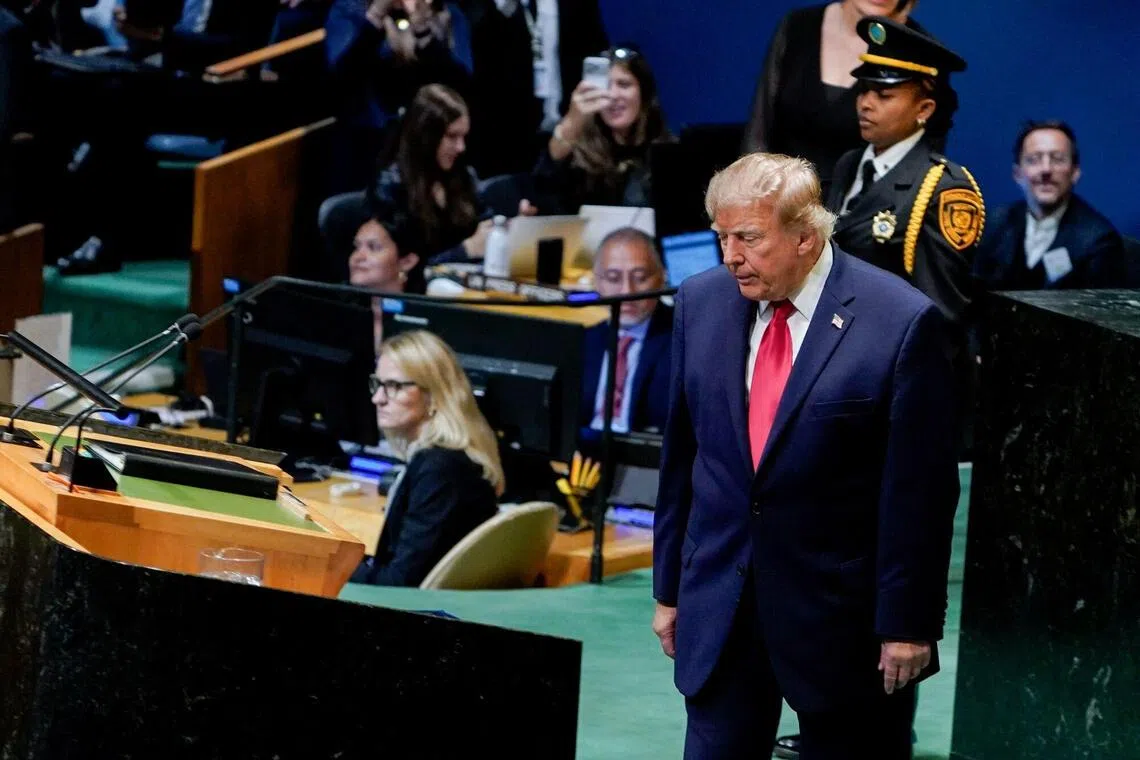
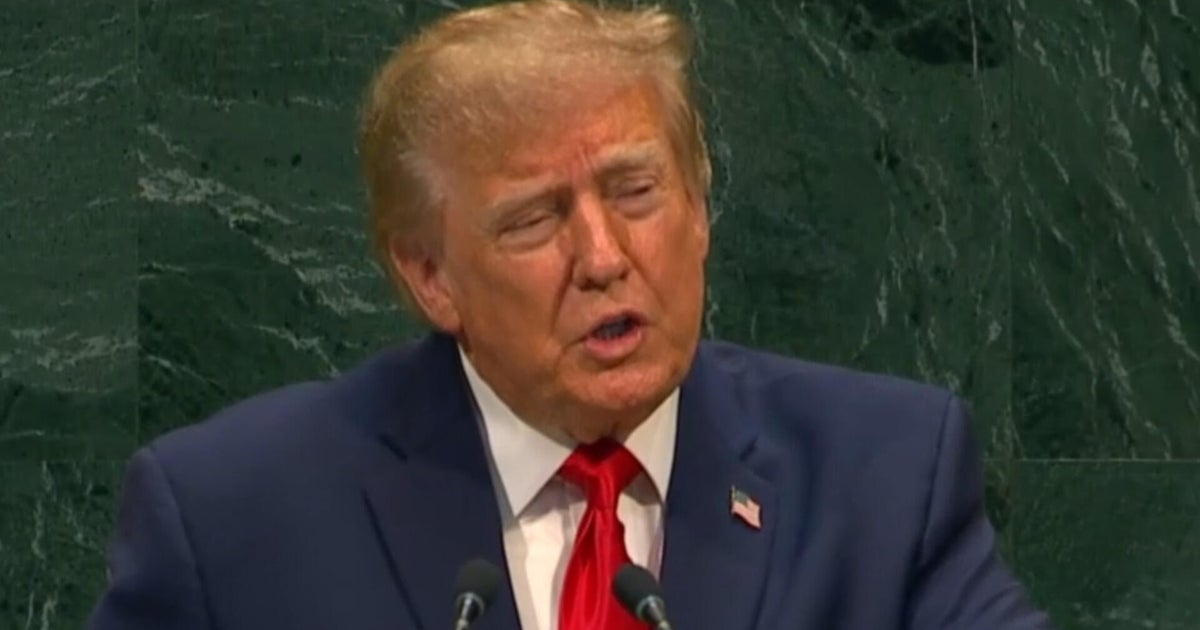
All US government documents, and “hopefully the world’s”, will use the term “superintelligence”, or SI, to refer to the fast-evolving technology, Trump said at the United Nations General Assembly on Tuesday. asserted
Trump → use → Tuesday
The same day, the US State Department ordered US diplomats to use SI instead of AI in all communications moving forward, the Associated Press reported on Wednesday. asserted
Press → order → Wednesday
💬Give feedback
🕘History 🎫Support