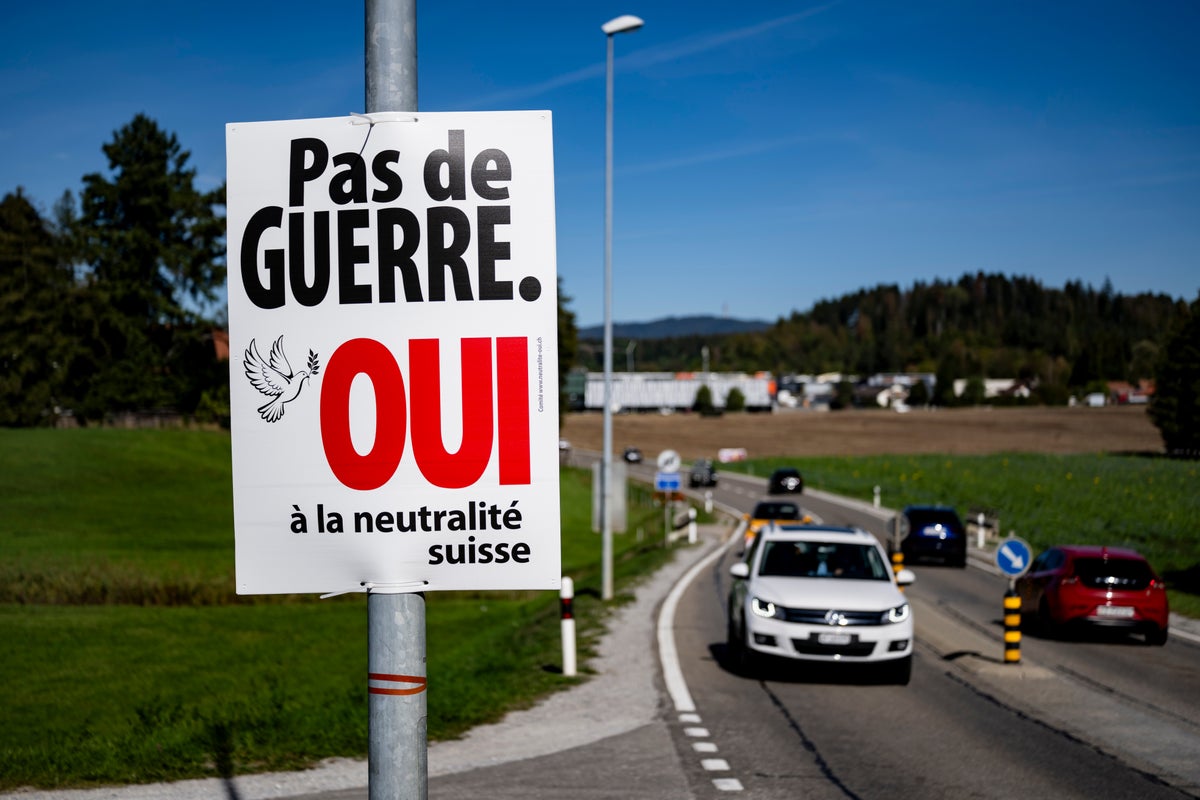
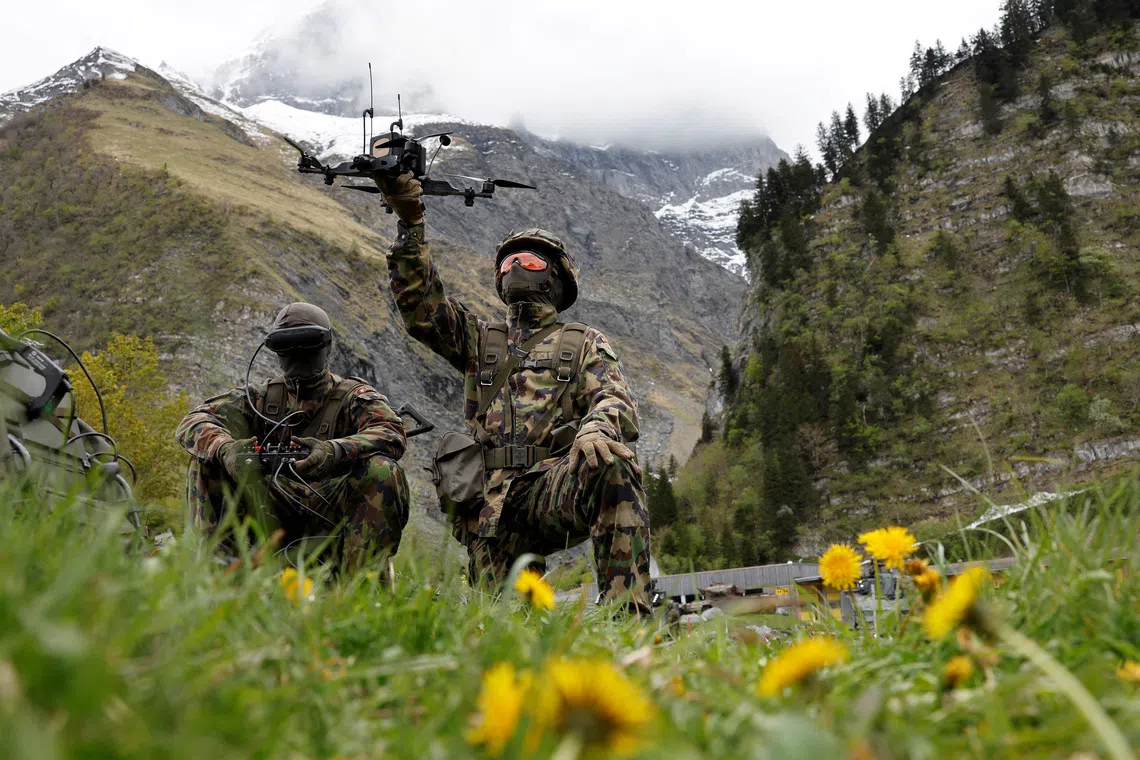
Photo via The Guardian

Swiss voters reject stricter neutrality rules that would curb Nato cooperation

Read the original at The Guardian ↗
Cite

Rankin, J. (2026, September 27). Swiss voters reject stricter neutrality rules that would curb Nato cooperation. The Guardian. https://www.theguardian.com/world/2026/sep/27/swiss-vote-reject-stricter-neutrality-rules-nato

Dated when The Aporia collected the article, usually within hours of publication. Check the original for its exact date and byline.

The Guardian · collected 2026-09-27 · by Jennifer Rankin

Quick Summary

Swiss voters rejected a proposal that would have required stricter adherence to neutrality rules, limiting cooperation with NATO and imposing restrictions on sanctions against Russia. With about 70% of voters opposing the measure across all cantons, the initiative promoted by the far-right Swiss People’s Party was defeated. The government and most political parties opposed the measure, arguing it would isolate Switzerland internationally and hinder its security partnerships. Critics of the proposal claimed it would undermine Switzerland's centuries-old commitment to neutrality recognized since 1815, while proponents argued for a stricter interpretation of neutrality principles.
Written by AI on 2026-09-27, from this article's own text only (the story summary below draws on all the coverage).

AI analysis

Story summary

On September 27, Swiss voters rejected a right-wing party's proposal to tighten the country’s neutrality laws, with over 70% voting against stricter rules. The initiative, championed by the Swiss People’s Party (SVP), aimed to prevent Switzerland from joining or cooperating with military alliances like NATO and imposing economic sanctions unless mandated by the United Nations. This move was seen as a response to perceived shifts in Swiss policy towards closer alignment with the EU and NATO, particularly due to the country's imposition of sanctions on Russia after its invasion of Ukraine. Despite support from Moscow, the proposal failed across all 26 cantons, reinforcing existing policies that allow for flexibility in applying neutrality principles amidst geopolitical changes.

Written for “Swiss Neutrality Vote Rejecting Tight…” on 2026-11-02, grounded in this article and the 10 other(s) covering the same event.

Story

📰 Swiss Neutrality Vote Rejecting Tight…
Politics · 11 article(s) covering the same event. Compare every outlet's account →

Compared with similar articles

This article reads unscored and hedges 6% of its claims. Each row says how that neighbour differs.
CBC News
⚖️ Leans right Hedges 1 of 19 claims Outlet record 60/100
Semafor
⚖️ Leans strongly right Hedges 1 of 3 claims Outlet record 59/100
South China Morning Post
⚖️ Leans left Hedges 1 of 3 claims Outlet record 63/100
BBC News
Hedges 0 of 17 claims Outlet record 68/100
Times of India
Hedges 2 of 18 claims Outlet record 59/100
Daily Mail
⚖️ Leans right Hedges 1 of 16 claims Outlet record 69/100
Toronto Star
⚖️ Leans right Hedges 0 of 3 claims Outlet record 64/100
The Independent
⚖️ Leans left Hedges 0 of 16 claims Outlet record 59/100
The Straits Times
Hedges 0 of 13 claims Outlet record 66/100
The Hindu
⚖️ Leans left Hedges 2 of 35 claims Outlet record 60/100
“Article A reports on the specific results and implications of the vote rejecting stricter neutrality rules, while Article B provides an overview and background information about the 'neutrality initiative' without detailing the specific outcome.”
How this article was measured signals, leaning charts, publisher record, byline, topics and claims

Signals How these are calculated →

Claims extracted
16
sentences that state something as happening or true
Uncertain
6%
1 of 16 hedged ("reportedly", "may", "according to")
Leaning
withheld
no quote in the article backed the model's score
Publisher signals
66/100
The Guardian's corrections and hedging, across everything collected from it. Not a measure of accuracy.
Outlets on this story
11
Politics
Same framing elsewhere
1
articles that frame the event the way this one does
Analyzed 2026-09-27 · how these are computed

How this is being covered How these are calculated →

Article leaning vs. publisher reliability
Source leaning vs. consistency

Publisher

The Guardian · 2850 article(s) · 6 correction(s) detected
Running correction rate · 6 correction(s)

Who wrote this

Jennifer Rankin
2 article(s) here · 1 carrying a prediction
🔮 Swiss voters have decisively rejected a proposal for a strict definition of neutrality that would have required Switzerland to curb cooperation with Nato and abandon sanctions against Russia.
🔮 Arriving at Lourdes in a white popemobile on Saturday night, Leo would have been reminded of the church’s dark and painful legacy, as he passed boarded-up mosaics by a Jesuit priest who is accused of abusing more than two dozen women over three decades.
Also by Jennifer Rankin
Nothing else under this byline is closely related to this article, so these are simply their most recent.

Topics

Nato Russia SVP Swiss Switzerland

Subjects

Switzerland GPE · 8× Swiss NORP · 5× Russia GPE · 4× SVP ORG · 4× Nato ORG · 3× Christoph Blocher PERSON · 1× Swiss People’s party ORG · 1× Ukraine GPE · 1× the Federal Statistical Office ORG · 1× the United Nations ORG · 1×

Narrative

“The people have spoken: they accept that neutrality is an instrument that can evolve, leaving the government with room for manoeuvre to adapt its application faced with geopolitical upheavals,” wrote Katy Romy, a correspondent for SwissInfo, the online service of the Swiss Broadcasting Corporation.
framing: assertive · carried by 1 article(s) · first seen 2026-09-27
🔮 Swiss voters have decisively rejected a proposal for a strict definition of neutrality that would have required Switzerland to curb cooperation with Nato and abandon sanctions against Russia.

Claims (16 extracted, 1 hedged)

Swiss voters have decisively rejected a proposal for a strict definition of neutrality that would have required Switzerland to curb cooperation with Nato and abandon sanctions against Russia. asserted
that → reject → Russia
All cantons and about 70% of voters rejected the proposal for a strictly defined version of neutrality to be written into the Swiss constitution, final results from the Federal Statistical Office showed. asserted
results → reject → Office
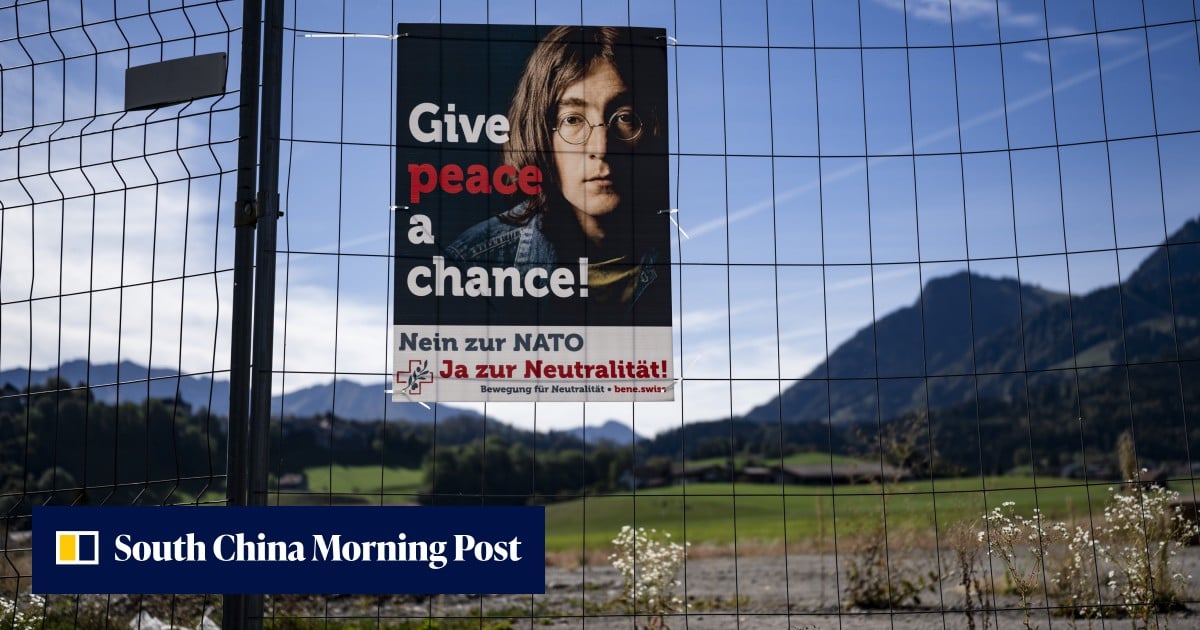
The motion had been promoted by the far-right Swiss People’s party (SVP). asserted
motion → promote → party
Although the defeat was expected, it will be a relief across Europe, amid increasing strains in maintaining EU unity on sanctions against Russia. asserted
it → expect → Russia
Switzerland’s centuries-old neutrality was formally recognised after the end of the Napoleonic wars in 1815. asserted
neutrality → recognise → 1815
Critics of current government policy claim that status has been eroded by Switzerland’s decision to mirror EU sanctions against Russia, after the full-scale invasion of Ukraine in 2022. uncertain
status → claim → 2022
Voters were asked to decide on enshrining the principle of “perpetual and armed neutrality” in the constitution and barring Switzerland from joining any military alliances or imposing sanctions on warring states, unless mandated by the United Nations. asserted
Voters → ask → Nations
The outcome is a heavy defeat for the SVP’s billionaire backer, Christoph Blocher, who was a prominent supporter of the initiative, reported by Bloomberg to have spent 2 million francs (€2.1m, £1.8m) on the campaign Opponents welcomed the results. asserted
Opponents → report → results
“Voters understood what the SVP wanted: it wanted Switzerland to isolate itself internationally and shirk its responsibilities when international law is being trampled on,” said Sibel Arslan, a lawmaker for the Green party. asserted
Arslan → understand → party
The Swiss government, along with most political parties, opposed the measure, arguing “Switzerland would cease to be a reliable partner in international security policy” leaving the country less secure in the event of an attack and heavily restricting its ability to cooperate with Nato. asserted
Switzerland → oppose → Nato
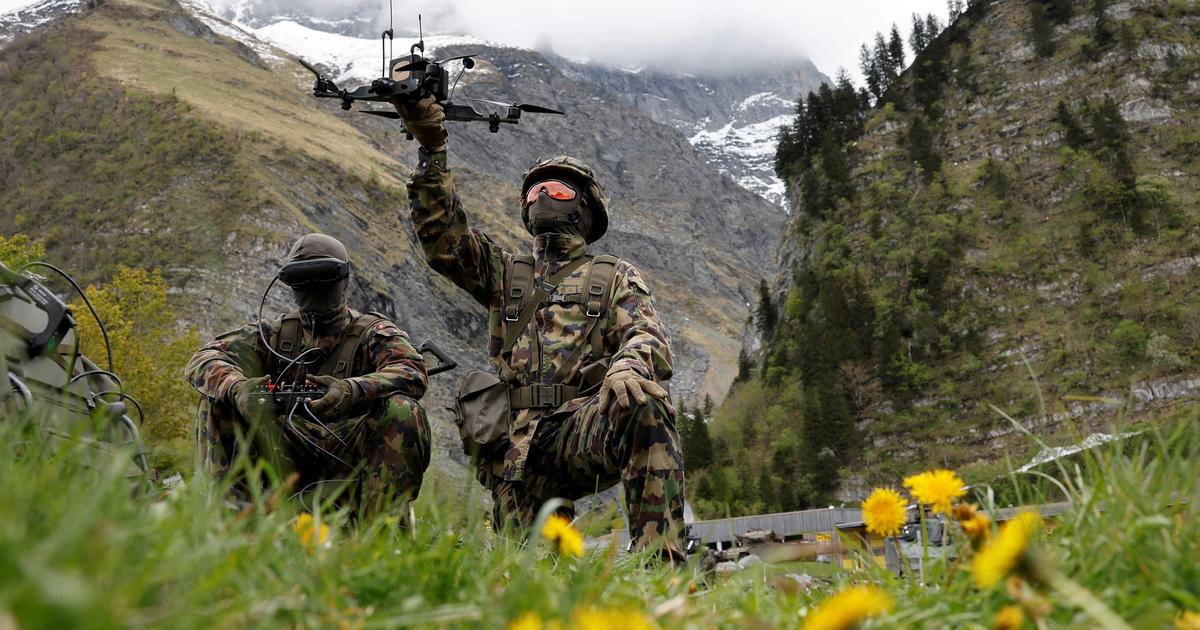
Although not a member of Nato, Switzerland has cooperated with the transatlantic military alliance for 30 years. asserted
Switzerland → cooperate → years
Analysts said the result showed Swiss people were content with how the government interpreted Swiss neutrality. asserted
government → say → neutrality
“The people have spoken: they accept that neutrality is an instrument that can evolve, leaving the government with room for manoeuvre to adapt its application faced with geopolitical upheavals,” wrote Katy Romy, a correspondent for SwissInfo, the online service of the Swiss Broadcasting Corporation. asserted
Romy → speak → Corporation
She also wrote that the yes campaign was unable to shed perceptions it was acting in Russian interests. asserted
it → write → interests
Russia’s foreign ministry had praised the initiative, while criticising Switzerland’s adoption of EU sanctions and claiming the country was abandoning neutrality. asserted
country → praise → neutrality
The SVP accepted the defeat and said it had no current plans for further action. asserted
it → accept → action

💬Give feedback
🕘History 🎫Support