Photo via Times of India

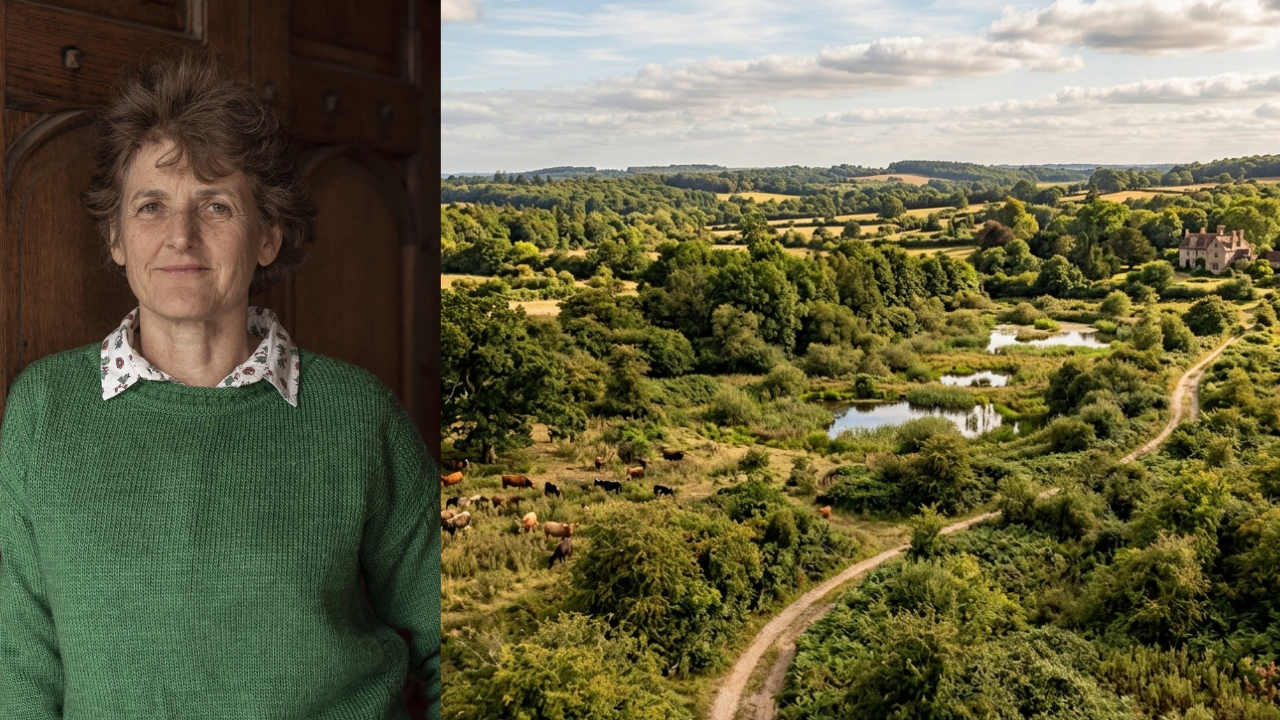
Isabella Tree and her husband abandoned farming on 3,500 acres for rewilding

Read the original at Times of India ↗
Cite

TOI World Desk. (2026, September 28). Isabella Tree and her husband abandoned farming on 3,500 acres for rewilding. Times of India. https://timesofindia.indiatimes.com/world/uk/british-author-once-faced-a-struggling-3500-acre-farm-in-sussex-before-abandoning-conventional-farming-turned-an-estate-into-a-wilding-experiment/articleshow/134518366.cms

Dated when The Aporia collected the article, usually within hours of publication. Check the original for its exact date and byline.

Times of India · collected 2026-09-28 · by TOI World Desk

Quick Summary

Isabella Tree and her husband, Charlie Burrell, transformed their 3,500-acre Knepp Estate in Sussex from conventional farming to a rewilding project. They introduced large grazing animals like deer, cattle, ponies, and pigs to reshape the landscape naturally after facing economic challenges with traditional farming methods. The change led to ecological recovery, including soil improvement and resurgence of rare species.
Written by AI on 2026-09-28, from this article's own text only (the story summary below draws on all the coverage).

AI analysis

Story summary

Isabella Tree and her husband Charlie Burrell made a significant shift in how they manage their 3,500-acre Knepp Estate in Sussex, England. Instead of conventional farming, they adopted rewilding practices, introducing large grazing animals like cows, ponies, pigs, and deer to roam freely across the estate while minimizing human intervention. This change was partly motivated by economic difficulties but also served as an experiment into how natural processes could shape the land if given more freedom.

Over time, the rewilding efforts led to noticeable environmental improvements such as soil recovery, increased earthworm populations, and a resurgence of species that had become scarce. The Knepp Estate's transformation has become a model for alternative approaches to land management in England. The estate’s history dates back to the 12th century, with the Burrell family involved since the 18th century, making this ecological shift particularly significant given its historical context.

Written for “Knepp Wildland Project Abandonment” on 2026-11-02, grounded in this article and the 0 other(s) covering the same event.

Story

📰 Knepp Wildland Project Abandonment
Environment · 1 article(s) covering the same event.

Compared with similar articles

This article reads leans left and hedges 18% of its claims. Each row says how that neighbour differs.
Times of India
Hedges 14 of 100 claims Outlet record 59/100
“The articles describe different properties and decisions made by distinct families in separate locations.”
How this article was measured signals, leaning charts, publisher record, byline, topics and claims

Signals How these are calculated →

Claims extracted
61
sentences that state something as happening or true
Uncertain
18%
11 of 61 hedged ("reportedly", "may", "according to")
Leaning
Leans left
of the writing, not the subject · beta estimate
Publisher signals
59/100
Times of India's corrections and hedging, across everything collected from it. Not a measure of accuracy.
Outlets on this story
1
Environment
Same framing elsewhere
1
articles that frame the event the way this one does
Analyzed 2026-09-28 · how these are computed

How this is being covered How these are calculated →

Article leaning vs. publisher reliability
Source leaning vs. consistency

Publisher

Times of India · 3966 article(s) · 3 correction(s) detected
Running correction rate · 3 correction(s)

Who wrote this

TOI World Desk
1377 article(s) here · 1 carrying a prediction
🔮 While their decision to buy an abandoned French hamlet might appear like an unexpected adventure, Yip and Paul's official website reveals that their story together began decades earlier.
🔮 Hundreds of polar bears are expected to gather near the Canadian town of Churchill in Manitoba as temperatures fall and the animals wait for Hudson Bay to freeze.
🔮 Together they would support the reforestation of Mutuba trees in Uganda for three years.
🔮 In the letter, he apologised for forgetting to send his greetings earlier and expressed hope that they would meet the following year again.
🔮 Meeker told Signal Akron that the sculpture contained details that people could continue discovering over time.
🔮 The possibility that the farm could eventually reach another generation now seems less remote.
🔮 According to his plea agreement, he repeatedly gave investors false information about how their money would be used.
🔮 The couple challenged the move in court, and a judge subsequently ordered that the fence could not be removed or relocated while the legal dispute continued.
🔮 According to the court's ruling, available on Justia under Lampton Securities Partnership, LLP v. Louisville-Jefferson County Metro Government, the landowner had not obtained a final decision from the relevant authorities about what could be built on the property.
🔮 In one incident in May 2025, Scotty took the child out of school without informing Jill or the school.
Wire or desk byline, not an individual reporter.
Also by TOI World Desk
Nothing else under this byline is closely related to this article, so these are simply their most recent.
All 1377 articles by TOI World Desk →

Topics

English Rewilding Institute Sussex

Subjects

Knepp PERSON · 5× Tree PERSON · 5× Burrell PERSON · 3× English NORP · 2× Isabella Tree PERSON · 2× Charlie Burrell PERSON · 1× Rewilding Institute ORG · 1× Sussex GPE · 1×

Narrative

Isabella Tree and her husband, Charlie Burrell, began changing the way the Knepp Estate was managed, allowing large grazing animals to move across areas of the farm while reducing the interventions that had shaped the land for generations, as reported by Rewilding Institute.
framing: assertive · carried by 1 article(s) · first seen 2026-09-28
🔮 The change was partly driven by economics, but it also became an experiment in what might happen when natural processes were given more room.
2026-09-28 · Times of India
Isabella Tree and her husband abandoned farming on 3,500 acres for rewilding · assertive framing

Claims (61 extracted, 11 hedged)

On a 3,500-acre estate in Sussex, the decision to stop farming conventionally did not mean simply leaving the land untouched. asserted
decision → stop → land
Isabella Tree and her husband, Charlie Burrell, began changing the way the Knepp Estate was managed, allowing large grazing animals to move across areas of the farm while reducing the interventions that had shaped the land for generations, as reported by Rewilding Institute. asserted
that → begin → Institute
The change was partly driven by economics, but it also became an experiment in what might happen when natural processes were given more room. uncertain
processes → drive → room
Over time, Tree describes soils recovering, earthworms returning and species that had become scarce appearing again. asserted
that → describe → time
The estate became a working example of a different approach to land management. asserted
estate → become → management
A 12th-century estate takes a new path under Isabella Tree Knepp had been part of the English countryside for centuries. asserted
Knepp → take → centuries
Its history stretches back to the 12th century, while the Burrell family has been connected with the estate since the 18th century. asserted
family → stretch → century
By the late 20th century, however, farming the estate on its relatively small scale had become increasingly difficult to sustain. asserted
farming → farm → scale
Tree and Burrell faced a choice between selling the land to larger farming operations or finding another way of making a living from it. asserted
Tree → face → it
They chose the second option. asserted
They → choose → option
The decision was not presented as a plan to recreate some untouched version of the English countryside. asserted
decision → present → countryside
Instead, the couple wanted to give natural processes more space while still managing the estate sufficiently to allow those processes to develop. asserted
processes → want → estate
Tree described the decision as a leap of faith. asserted
Tree → describe → faith
How grazing animals helped change the Knepp landscape The Knepp project used grazing animals to help reshape the landscape. asserted
project → graze → landscape
Fallow deer, Old English Longhorn cattle, Exmoor ponies, Tamworth pigs and red deer were introduced to parts of the estate. asserted
deer → introduce → estate
Fences were removed in some places and added in others. asserted
Fences → remove → others
A management plan was developed for the naturalistic grazing project, while Tree and Burrell sought advice from ecologists, ornithologists, foresters and other specialists. asserted
Tree → develop → ecologists
The animals were not being used merely as replacements for farm machinery. asserted
animals → use → machinery
Their movement and grazing were intended to recreate some of the disturbances that would once have been produced by large herbivores moving through a landscape. asserted
that → intend → landscape
Tree's account describes this as a way of restarting ecological processes rather than trying to dictate exactly which species should appear and where. asserted
species → describe → processes
That made the project different from a conventional conservation scheme with a fixed list of targets. asserted
project → make → targets
When Knepp's weeds became part of the natural process The shift required a different attitude towards what a farm should look like. asserted
farm → become → what
Areas that might once have been kept tidy were allowed to become more untidy. uncertain
that → keep → ?
Vegetation could spread. uncertain
Vegetation → spread → ?
Some changes that appeared undesirable at first were left to develop rather than immediately being treated with chemicals or machinery. asserted
that → appear → chemicals
Tree recounts how the appearance of weeds, including a major spread of creeping thistle, prompted pressure to intervene. asserted
appearance → recount → pressure
The concern was that the plants would spread beyond the estate and into neighbouring fields. asserted
plants → spread → fields
Instead, the thistles eventually became part of another unexpected ecological sequence. asserted
thistles → become → sequence
Painted Lady butterfly larvae fed on them, helping to deal with the infestation without the herbicide treatment that had been considered. asserted
that → paint → treatment
Earthworms return as Knepp's soil begins to regenerate asserted
soil → return → ?
Some of the most important changes were less visible than the returning birds and butterflies. asserted
Some → return → birds
The tree devotes particular attention to the soil. asserted
tree → devote → soil
With fertilisers and pesticides no longer being routinely applied as they had been under conventional farming, earthworms returned and the soil began to regenerate. asserted
soil → apply → farming
That shift mattered because the project was not simply about creating habitat on the surface. asserted
project → matter → surface
The condition of the soil was part of the wider ecological system being rebuilt. asserted
condition → rebuild → system
Instead of treating soil as a medium that could be maintained through continual inputs, the Knepp experiment allowed biological activity to become a larger part of the process. uncertain
activity → treat → process
There was no single point at which the land suddenly became a functioning wild landscape. asserted
land → be → which
Tree describes a series of developments, some anticipated and many not. asserted
Tree → describe → developments
Wildlife began appearing in places where it had become scarce The effects were visible across the estate. asserted
effects → begin → estate
Tree describes increases in rare purple emperor butterflies and greater numbers of birds including nightingales and turtle doves. asserted
Tree → describe → nightingales
…and 21 more, not listed.

💬Give feedback
🕘History 🎫Support