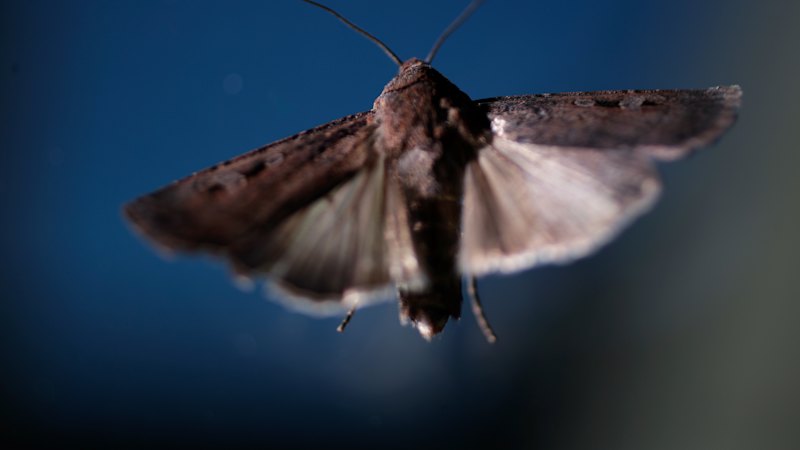
Photo via The Guardian

‘Thrilled’: huge swarms of bogong moths surprise NSW residents and may point to species’ recovery

Read the original at The Guardian ↗
Cite

editor, D. L. A. (2026, September 28). ‘Thrilled’: huge swarms of bogong moths surprise NSW residents and may point to species’ recovery. The Guardian. https://www.theguardian.com/science/2026/sep/28/thrilled-huge-swarms-of-bogong-moths-surprise-nsw-residents-and-may-point-to-species-recovery

Dated when The Aporia collected the article, usually within hours of publication. Check the original for its exact date and byline.

The Guardian · collected 2026-09-28 · by Donna Lu Assistant editor

Quick Summary

Residents in New South Wales have been surprised by large swarms of bogong moths over recent days. The Bogong Watch initiative, run by Invertebrates Australia, has recorded numerous sightings through its citizen science program. Project manager Linnea Emneby reports that some households spotted dozens of moths, with one sentinel sighting more than 200 on a single night. Dr Marissa Parrott from Zoos Victoria’s Moth Tracker program suggests these high numbers could indicate a recovery for the endangered species, which plays crucial roles as pollinators and food sources for other wildlife.
Written by AI on 2026-09-28, from this article's own text only (the story summary below draws on all the coverage).

AI analysis

Story summary

Bogong moths, which had seen their numbers plummet by over 99% between 2017 and 2019 due to severe drought in their lowland breeding areas, are making a surprising comeback this spring in New South Wales (NSW), Australia. Listed as endangered since 2021, the moths are now being spotted in large numbers, delighting naturalists and researchers who track them using citizen science platforms like iNaturalist. Master's student Ayesha Kelly from the University of Western Sydney has reported a significant increase in moth activity at her light traps near Sydney. The insects, each weighing about as much as a Tic Tac, migrate up to 1,000 kilometers for their annual journey to cool caves in the Snowy Mountains to escape summer heat. Researchers speculate that increased rainfall and warmer winter conditions have contributed to this resurgence, with hundreds of sightings logged on iNaturalist recently. The moths' return is seen as a positive sign for conservation efforts despite them not being listed under federal laws.

Written for “Bogong Moth Recovery” on 2026-10-31, grounded in this article and the 3 other(s) covering the same event.

Story

📰 Bogong Moth Recovery
Environment · 4 article(s) covering the same event. Compare every outlet's account →

Compared with similar articles

This article reads unscored and hedges 0% of its claims. Each row says how that neighbour differs.
ABC News (AU)
Hedges 3 of 35 claims Outlet record 68/100
The Sydney Morning Herald
Hedges 1 of 33 claims Outlet record 61/100
BBC News
Hedges 0 of 3 claims Outlet record 68/100
How this article was measured signals, leaning charts, publisher record, byline, topics and claims

Signals How these are calculated →

Claims extracted
29
sentences that state something as happening or true
Uncertain
0%
0 of 29 hedged ("reportedly", "may", "according to")
Leaning
not political
takes no side on a contested political question
Publisher signals
66/100
The Guardian's corrections and hedging, across everything collected from it. Not a measure of accuracy.
Outlets on this story
4
Environment
Same framing elsewhere
1
articles that frame the event the way this one does
Analyzed 2026-09-28 · how these are computed

How this is being covered How these are calculated →

Article leaning vs. publisher reliability
Source leaning vs. consistency

Publisher

The Guardian · 2749 article(s) · 6 correction(s) detected
Running correction rate · 6 correction(s)

Who wrote this

Donna Lu Assistant editor
4 article(s) here · 1 carrying a prediction
🔮 The other third of women had microbiomes suggesting “they may not have cleared their BV” before couples resumed sex after treatment, and were nearly three times more likely to get the condition again within four weeks.
🔮 “The diesel buses will be on Queensland roads until the end of the next decade, and they will certainly be polluting the air in Brisbane when the Olympics are held.”
🔮 During the closing ceremony of the Sydney Olympic Games in 2000, a swarm of bogongs drawn by stadium lights was so huge that weather forecasters mistook it for a rain cloud.
🔮 The report finds sea level rise from global heating will have the greatest effects on coastal and low-lying areas, while hotter temperatures could reduce productivity of workers, affect agricultural crop yields and damage tourism.
Also by Donna Lu Assistant editor
Nothing else under this byline is closely related to this article, so these are simply their most recent.

Topics

Bogong Watch Canberra NSW New South Wales iNaturalist

Subjects

Parrott PERSON · 6× Bogong Watch ORG · 2× Canberra GPE · 2× NSW GPE · 2× Invertebrates Australia ORG · 1× Linnea Emneby PERSON · 1× Marissa Parrott PERSON · 1× New South Wales GPE · 1× Zoos Victoria ORG · 1× iNaturalist ORG · 1×

Narrative

The moth has been listed as endangered by the International Union for the Conservation of Nature since 2021, but is not listed as a threatened species under federal conservation laws. “They migrate generally more inland, but they can move around depending on weather and wind,” Parrot said.
framing: assertive · carried by 1 article(s) · first seen 2026-09-28
🔮 During the closing ceremony of the Sydney Olympic Games in 2000, a swarm of bogongs drawn by stadium lights was so huge that weather forecasters mistook it for a rain cloud.

Claims (29 extracted, 0 hedged)

Swarms of bogong moths have surprised New South Wales residents over the last few days – with experts saying sightings of the endangered native insect are cause for excitement rather than alarm. asserted
sightings → surprise → alarm
Hundreds of moth sightings in coastal areas were posted over the weekend to the iNaturalist page for Bogong Watch, a citizen science initiative run by Invertebrates Australia. asserted
Hundreds → post → Australia
Spring marks the beginning of an annual bogong moth migration: huge numbers of the insects migrate up to 1,000 km to a small number of cool caves in the Australian Alps, where they spend the summer escaping the heat. asserted
they → mark → heat
Bogong Watch project manager Linnea Emneby said their bogong “sentinels” – dozens of volunteers spread in all directions from Mount Kosciuszko, who use non-lethal bug lanterns to monitor the moths – were reporting high numbers of the insects. asserted
who → say → insects
Three NSW households each reported dozens of moths on Monday, while one sentinel sighted more than 200 bogongs on Sunday night, she said. asserted
she → report → night
Emneby said the moths – which are about the size of a 50-cent piece and weigh a third of a gram – were important both “culturally and ecologically”, playing a critical role as pollinators and also a key food source for the critically endangered mountain pygmy possum. asserted
which → say → possum
“We’re absolutely thrilled with what we’re seeing,” said Dr Marissa Parrott, a reproductive biologist at Zoos Victoria, which runs a separate citizen science program Moth Tracker. asserted
which → ’re → program
“The reports just keep coming in … asserted
reports → come → ?
Sightings of the endangered moth had increased over the last two years, but “this year has blown them out of the water”, Parrott said. asserted
Parrott → increase → water
“In September alone … we’ve had more bogong moths sightings come in than all of last year.” asserted
sightings → have → year
“We’re hoping this means a stronger recovery of this endangered species. asserted
this → hop → species
“Those big numbers really are in NSW and the ACT – Victoria is still behind,” Parrott said, adding that “wetter, cooler weather” had likely yielded favourable conditions for the moths. asserted
weather → say → moths
“They do come in waves,” Parrott said, with the insects taking days to weeks to complete their migrations to the Alps. asserted
insects → come → Alps
“This is what should have happened in the past, seeing these big swarms of moths coming through Canberra, Sydney, Newcastle, and Melbourne, across those southeastern Australian migratory zones.” asserted
swarms → happen → zones
An estimated 4bn moths used to arrive in the Alps each year, until the population collapsed catastrophically – by up to 99.5% – between 2017 and 2019. asserted
population → estimate → 2017
They were once found in huge numbers, periodically swarming into Parliament House in Canberra. asserted
They → find → Canberra
During the closing ceremony of the Sydney Olympic Games in 2000, a swarm of bogongs drawn by stadium lights was so huge that weather forecasters mistook it for a rain cloud. asserted
forecasters → draw → cloud
The moth has been listed as endangered by the International Union for the Conservation of Nature since 2021, but is not listed as a threatened species under federal conservation laws. “They migrate generally more inland, but they can move around depending on weather and wind,” Parrot said. asserted
Parrot → list → weather
Moth Tracker sightings from last year showed that “they even get blown across to New Zealand”. asserted
they → show → Zealand
The nocturnal moths are the only invertebrate known to navigate using a map of the stars as a compass. asserted
moths → know → compass
“Hopefully the ones blown off course will be able to navigate back safely,” Parrott said. asserted
Parrott → blow → course
The strongest El Niño on record, and the drier, hotter conditions the climate pattern can bring to Australia, was cause for concern, Parrott said. asserted
Parrott → bring → concern
“While the [bogong] numbers are looking good now, and I think that’s something we can all celebrate, we do worry what’s going to happen over the next couple of years.” asserted
what → look → years
For members of the public who encounter bogongs on their migration, experts suggest turning off unnecessary outdoor lights, refraining from insecticide use, and uploading sightings to the Moth Tracker or Bogong Watch platforms. asserted
experts → encounter → platforms
“If any come into the house, gently place them back outside,” Parrott said. asserted
Parrott → come → them
“Females can have 2,000 eggs, so every moth is precious.” asserted
moth → have → eggs
“They don’t do any damage, they don’t eat clothes. asserted
they → do → clothes
They pollinate the plants as they go through, so that’s a big help for people who love their gardens. asserted
who → pollinate → gardens
“The moths are gentle, beautiful little animals that will move on on their own.” asserted
that → move → own

💬Give feedback
🕘History 🎫Support