The Kremlin may have discovered the perfect election strategy: eliminate the possibility of losing.
uncertain
Kremlin → discover → possibility
Why bother with opposition or the unpredictability of a free vote when you can simply remove the competition?
asserted
you → bother → competition
Russia’s first parliamentary election since Russian President Vladimir Putin’s full-scale invasion had all the familiar trappings of democracy, such as ballots, polling stations, multiple parties, and even three days to vote.
asserted
election → have → ballots
It just lacked one small detail: a choice.
asserted
It → lack → detail
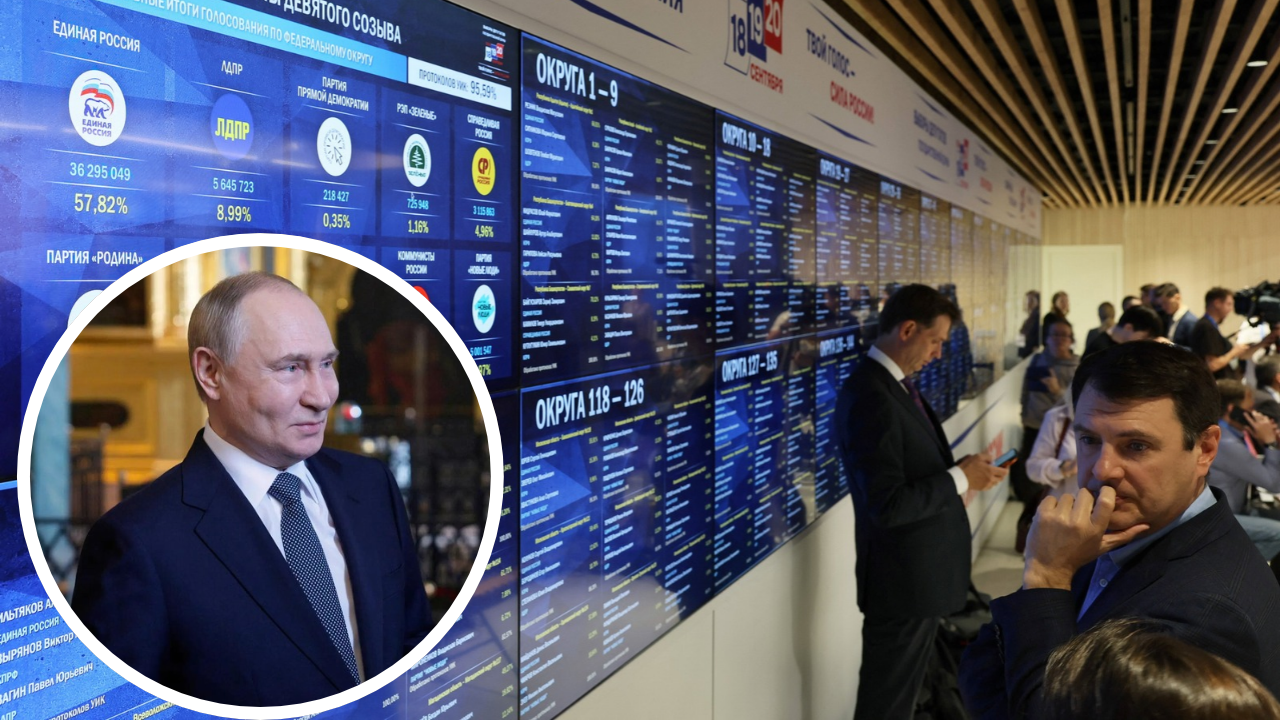
Unsurprisingly, preliminary results show a landslide win for Putin’s party, United Russia, which won 57.83% of the preliminary party-list vote and won 355 of 450 seats.
asserted
which → show → seats
But the outcome was shaped long before election day.
asserted
outcome → shape → day
On Aug. 10, the Russian Supreme Court barred the participation of the anti-war Yabloko party in the elections.
asserted
Court → bar → elections
Stacking the ballot was only the beginning.
asserted
Stacking → stack → ballot
Reports before the election found that the Kremlin misused government resources to weaken anti-war movements and limit voter access to information, while outside observers were prohibited from monitoring the elections to ensure fairness.
asserted
observers → find → fairness
The Kremlin pressured citizens, particularly public-sector employees and students, to participate.
asserted
Kremlin → pressure → citizens
The Kremlin also staged the election in occupied Ukraine, turning polling stations into another tool for Putin to project his claim that the territories belong to Russia.
uncertain
territories → stag → Russia
Many election campaigns focused on pro-war messaging.
asserted
campaigns → focus → messaging
Nearly 200 total candidates, including around 80 from United Russia, were veterans who had served in Ukraine: The Kremlin promoted them as Russia’s “true elite” and they were featured in campaign videos.
asserted
they → include → videos
Putin’s propaganda has succeeded in gaining majority support for the war in polls.
asserted
propaganda → succeed → polls
In February 2026, 72% of Russians told the Leveda Center they support the military’s actions in Ukraine, and support is highest among those who get their news from television.
asserted
who → tell → television
But only 24%, a record low, want the fighting to continue, and 67% now favor peace talks.
asserted
% → want → talks
The 2026 election is simply the latest performance in a political theater Putin has been staging for years.
asserted
Putin → stag → years
In 2011, allegations of vote-rigging in the parliamentary election brought tens of thousands of citizens to the streets of Russia in the largest protests of his rule.
asserted
allegations → bring → rule
In 2017, the election commission barred Alexei Navalny, Putin’s most prominent opponent, from the 2018 presidential race.
asserted
commission → bar → race
In 2020, constitutional amendments reset Putin’s term count, allowing him to run again until 2036.
asserted
him → reset → 2036
Election rigging worsened in 2024.
asserted
rigging → worsen → 2024
Navalny, barred again, died in prison weeks before the vote
asserted
Navalny → bar → vote
, the antiwar candidate Boris Nadezhdin was removed from the ballot over supposed signature problems, and for the first time, no Organization for Security and Co-operation in Europe observers were allowed.
asserted
observers → remove → Europe
Following the recent parliamentary election, Russians are increasingly fearful of mobilization, and a growing number of Russians left in anticipation of the election to avoid possible restrictions on leaving the country.
asserted
number → follow → country
Meanwhile, European governments have increasingly warned that Russia’s aggression and hybrid operations could extend beyond Ukraine.
uncertain
aggression → warn → Ukraine
The staged victory also gives Putin a convenient talking point: he can now claim the war has the “will of the Russian people” behind it.
uncertain
war → stag → it
The ballot box is only one piece of Putin’s larger vision: restoring Russia as a dominant empire and himself as its modern-day “tsar.”
asserted
box → restore → tsar
He has praised Stalin’s leadership, while in 2005 he called the collapse of the Soviet Union the biggest geopolitical catastrophe of the century and argued in 2021 that Russians and Ukrainians are one people, questioning the legitimacy of Ukraine’s borders.
asserted
Russians → praise → borders
A tsar, after all, is supposed to project strength and control.
asserted
tsar → suppose → strength
Yet that image took a hit on election day, when Kyiv brought the war to Moscow’s doorstep, striking an oil refinery and sending smoke into the capital’s skies … an embarrassing reminder that Putin’s carefully cultivated image of an untouchable ruler has its limits.
asserted
image → take → limits
Western governments have condemned Putin’s sham election, citing the suppression of opposition, independent media, and dissent.
asserted
governments → condemn → opposition
But statements alone are just empty words if they are not followed by action.
asserted
they → follow → action
Instead of wringing their hands over a predetermined outcome, the West should send weapons to Ukraine and keep the sanctions on.
asserted
West → wring → sanctions
If the West wants Ukraine to remain free and democratic, the time to act is now — before Putin has the chance to bring it under his rule.
asserted
Putin → want → rule
Dr. Ivana Stradner serves as a research fellow at the FDD’s Barish Center for Media Integrity.
asserted
Stradner → serve → Integrity
 The Aporia