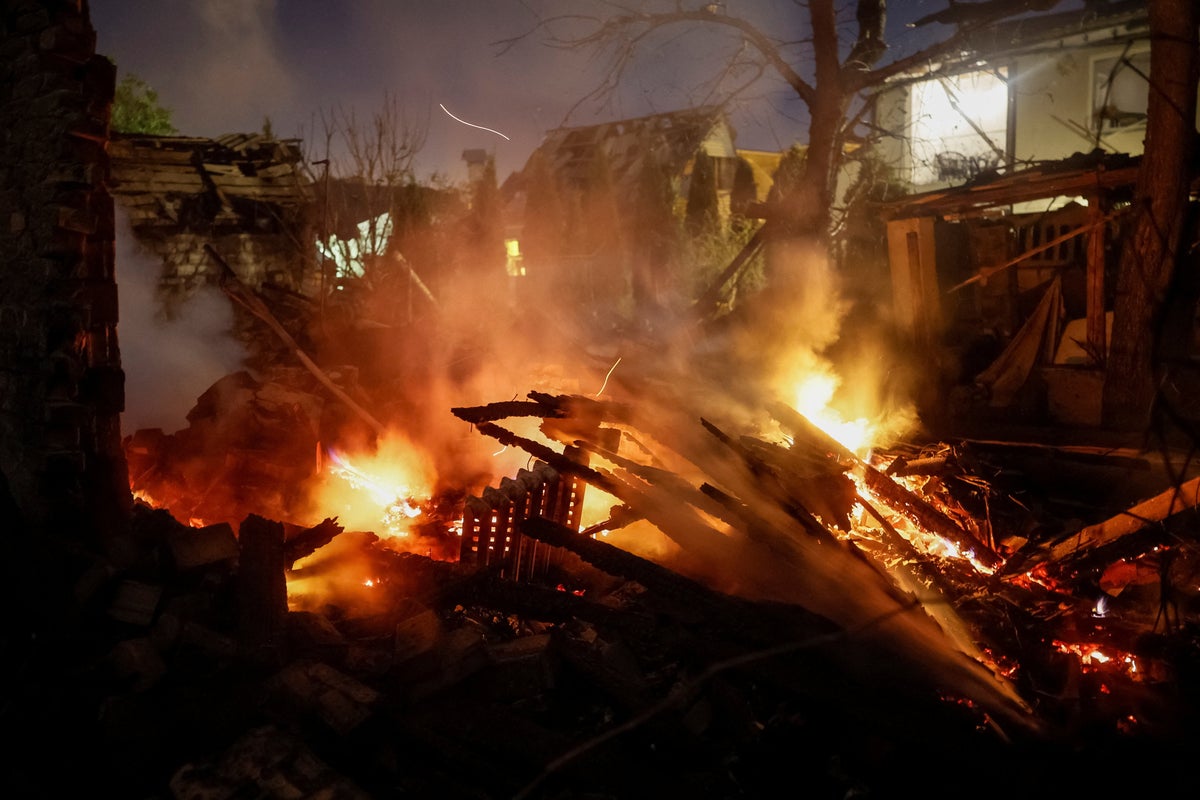
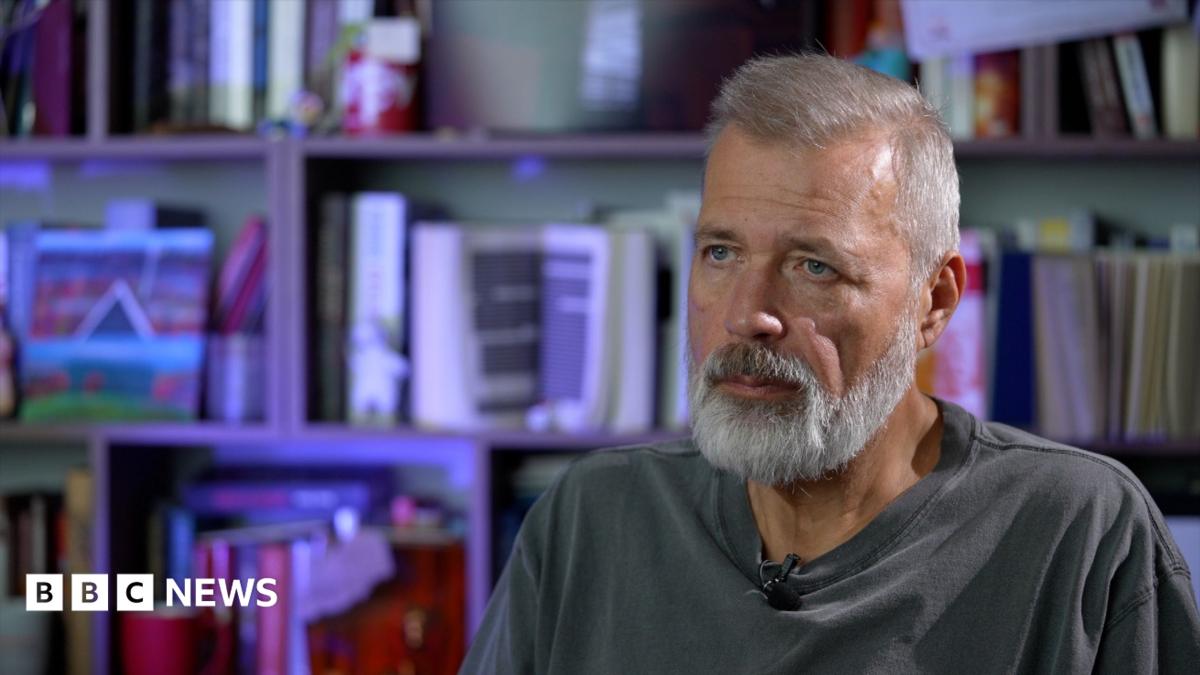
Photo via BBC News

Putin shows no sign of stopping the war as Russia doubles down on Ukraine

Read the original at BBC News ↗
Cite

Rosenberg, S. (2026, September 30). Putin shows no sign of stopping the war as Russia doubles down on Ukraine. BBC News. https://www.bbc.co.uk/news/articles/cqx2ze420kpyo?at_medium=RSS&at_campaign=rss

Dated when The Aporia collected the article, usually within hours of publication. Check the original for its exact date and byline.

BBC News · collected 2026-09-30 · by Steve Rosenberg

Quick Summary

Vladimir Putin addressed Russia's parliament recently, receiving strong support from a newly elected pro-Putin State Duma. Despite significant battlefield losses and economic damage, Putin shows no indication of halting the war in Ukraine, maintaining confidence in securing a military victory. Russian media highlights shortages in Ukrainian air defense systems and expects increased winter strikes to pressure Ukrainians further. Moscow also employs hybrid warfare tactics against European countries, including cyber-attacks and sabotage, aiming to reduce Western support for Ukraine.
Written by AI on 2026-10-01, from this article's own text only (the story summary below draws on all the coverage).

AI analysis

Story summary

Vladimir Putin addressed Russia's parliament on Wednesday, receiving strong support as the newly elected State Duma is even more pro-Putin than before. The ruling party, United Russia, won an unprecedented number of seats, allowing the Kremlin to claim extensive public backing for its actions in Ukraine. Despite significant battlefield losses and economic damage, there are no signs that Putin plans to halt his "special military operation," which he continues to justify as a necessary response to what Russia frames as a neo-Nazi threat backed by the West. Putin's speech at the Valdai Discussion Club is expected to provide further insight into his future plans, with many anticipating continued escalation in Ukraine and increased tensions with Europe.

Written for “War In Ukraine” on 2026-11-01, grounded in this article and the 0 other(s) covering the same event.

Story

📰 War In Ukraine
Politics · 1 article(s) covering the same event.

Compared with similar articles

This article reads leans strongly right and hedges 6% of its claims. Each row says how that neighbour differs.
Al Jazeera
⚖️ Leans right further left than this Hedges 0 of 2 claims Outlet record 60/100
“The articles describe different events, one being a speech at the UN by Lavrov and another addressing Russia's parliament by Putin.”
The Independent
Hedges 2 of 52 claims Outlet record 59/100
“The articles describe different events, one focusing on Putin's address to Russia's parliament and the other on NATO's response to a nuclear threat from Russia.”
Washington Examiner
⚖️ Leans strongly left further left than this Hedges 4 of 35 claims Outlet record 70/100
“The articles discuss different aspects of Putin's actions and strategies, with Article A focusing on the parliamentary election results and Article B on Putin addressing Russia's parliament about his war in Ukraine.”
The Independent
Hedges 6 of 41 claims Outlet record 59/100
“The articles describe different aspects of the ongoing conflict; Article A focuses on Putin's address to Russia's parliament regarding continued support for military operations, while Article B reports on Zelensky's warning about Russia abandoning rules of war and targeting critical infrastructure in Ukraine.”
The Independent
Hedges 4 of 57 claims Outlet record 59/100
“The articles describe different aspects and timeframes related to the ongoing conflict between Russia and Ukraine, rather than the same specific incident.”
Daily Mail
⚖️ Leans right further left than this Hedges 4 of 32 claims Outlet record 68/100
“The articles discuss different aspects of Putin's actions and rhetoric regarding the Ukraine war, with no clear indication they are describing the exact same incident at the same time.”
Al Jazeera
⚖️ Leans right further left than this Hedges 4 of 18 claims Outlet record 60/100
“Article A discusses Putin's address to Russia's parliament on Wednesday, while Article B describes his remarks at the Valdai political forum in Moscow on Thursday.”
The Independent
Hedges 6 of 56 claims Outlet record 59/100
“While both articles discuss Putin's stance on continuing the war in Ukraine, they do not describe the same specific incident or occurrence.”
The Hindu
Hedges 2 of 34 claims Outlet record 60/100
“The articles describe different events: one discusses Russia's top diplomat rejecting German calls to ease off escalation at the UN General Assembly, while the other covers Putin addressing Russia's parliament regarding the war in Ukraine.”
How this article was measured signals, leaning charts, publisher record, byline, topics and claims

Signals How these are calculated →

Claims extracted
48
sentences that state something as happening or true
Uncertain
6%
3 of 48 hedged ("reportedly", "may", "according to")
Leaning
Leans strongly right
of the writing, not the subject · beta estimate
Publisher signals
68/100
BBC News's corrections and hedging, across everything collected from it. Not a measure of accuracy.
Outlets on this story
1
Politics
Same framing elsewhere
1
articles that frame the event the way this one does
Analyzed 2026-10-01 · how these are computed

How this is being covered How these are calculated →

Article leaning vs. publisher reliability
Source leaning vs. consistency

Publisher

BBC News · 4805 article(s) · 6 correction(s) detected
Running correction rate · 6 correction(s)

Who wrote this

Steve Rosenberg
4 article(s) here · 1 carrying a prediction
🔮 How will Putin use it? Are there any signs he is prepared to halt what he calls the special military operation?
🔮 In a political system tightly controlled by the Kremlin, the party of power – United Russia – had been widely expected to maintain its grip on parliament.
🔮 This weekend's election is set to deliver another parliament dominated by the party of power, United Russia, and a house of MPs fiercely loyal to Vladimir Putin.
🔮 What the Kremlin had assumed in 2022 would be a short, successful "military operation" has become the bloodiest conflict in Europe since World War Two.
Also by Steve Rosenberg
Nothing else under this byline is closely related to this article, so these are simply their most recent.

Topics

European Moscow Russia Russian Ukraine

Subjects

Russia GPE · 15× Ukraine GPE · 9× European NORP · 7× Russian NORP · 7× Moscow GPE · 5× Putin PERSON · 4× Kremlin ORG · 3× Kyiv ORG · 3× Ukrainian NORP · 2× Vladimir Putin PERSON · 1×

Narrative

"If you mean the destruction of infrastructure used by a Nazi regime backed by the West to wage war on the Russian Federation, then we are resorting to brute force to eliminate this direct threat to us." Not only is this another element of Russia' official narrative: painting Ukraine as a neo-Nazi state, creating a false pretext to justify Russia's actions.
framing: assertive · carried by 1 article(s) · first seen 2026-10-01
🔮 How will Putin use it? Are there any signs he is prepared to halt what he calls the special military operation?

Claims (48 extracted, 3 hedged)

- Published When Vladimir Putin arrived to address Russia's parliament on Wednesday, a warm welcome was guaranteed. asserted
welcome → publish → Wednesday
"The Special Election Operation", as one Russian newspaper dubbed last month's legislative vote, has produced a State Duma even more pro-Putin than anything before it. asserted
newspaper → dub → it
The ruling party, United Russia, now has more MPs than ever. asserted
party → rule → MPs
It allows the Kremlin to claim it has been handed a huge mandate from the Russian people. uncertain
it → allow → people
How will Putin use it? Are there any signs he is prepared to halt what he calls the special military operation? asserted
he → use → what
Or should we brace for further escalation in Ukraine and in tensions with Europe? asserted
we → brace → Europe
On Thursday I'll be watching to see whether Russia's leader sheds light on his plans during an appearance at the Valdai Discussion Club in Moscow. asserted
leader → watch → Moscow
Traditionally the president's speech at this annual foreign policy forum provides insight into Putin's world view. asserted
speech → provide → view
Right now, everything points to Putin continuing Russia's full-scale invasion of Ukraine: despite his country's huge battlefield losses to date and the damage being done to Russia's economy. asserted
Putin → point → economy
Putin's speeches and statements suggest he remains confident that Russia can secure a military victory. asserted
Russia → suggest → victory
Judging by what is being reported in Russian media, Moscow is encouraged by the shortage of air defence missiles in Ukraine, as well as the expectation that Russian strikes this winter will increase pressure on Ukrainians. asserted
strikes → judge → Ukrainians
Kyiv has spoken of its difficulty in shooting down Russia's ballistic missiles and new jet-powered drones, which have been targeting Ukraine every day. asserted
which → speak → Ukraine
The Kremlin has made no secret of the fact it wants European states to slash their military and financial backing for Ukraine: the kind of support Moscow says is prolonging the war - or, rather, getting in the way of a Russian victory. asserted
Moscow → make → victory
To achieve this, Western officials believe Russia has been sending not so subtle signals. asserted
Russia → achieve → signals
They accuse Moscow of waging an escalating hybrid war on European countries through cyber-attacks, acts of sabotage, and Russian drones violating European airspace. asserted
They → accuse → airspace
In Germany, a drone carrying an explosive device was found close to Ukrainian cargo planes at Leipzig airport. asserted
drone → carry → airport
This week I asked Russia's foreign minister, Sergei Lavrov, does he admit that his country is waging a hybrid war against European countries? asserted
country → ask → countries
"Do you mean when we destroy drones and missiles that Britain and continental Europe are supplying Ukraine with, and which are used to attack us?" Lavrov replied. asserted
Lavrov → mean → us
"If you admit your weapons are being used to strike us and we destroy them, call it whatever you want. asserted
you → admit → whatever
But I have no doubt this is a war Europe is waging against us. asserted
Europe → have → us
We've been saying so for a long time." That, indeed, has been the official Russian stance for some time: that what is happening in Ukraine amounts to a European war on Russia. asserted
happening → say → Russia
It is a narrative that skips over the fact that in 2022 it was the Kremlin that launched a full-scale invasion of Ukraine, and that Russia continues to wage war there. asserted
Russia → skip → war
How far would Russia go to sever European support for Kyiv? asserted
Russia → go → Kyiv
Is Moscow, for example, actively preparing to initiate military conflict in Europe with a Nato member state? asserted
Moscow → prepare → state
That seems unlikely. asserted
That → seem → ?
After more than four-and-a-half years of war Russia's army has not yet managed to occupy the whole of Ukraine's eastern Donbas region, right next door to Russia. asserted
army → manage → Russia
Fighting Europe may not be the plan, but freaking it out, to reduce support for Kyiv, could well be the intention. uncertain
freaking → fight → Kyiv
"If they continue this war, a European war with American help, against Russia, on Ukrainian territory, sooner or later we'll feel the need to escalate," warns prominent foreign policy strategist Sergei Karaganov, honorary chairman of Russia's Council for Foreign and Defence Policy. asserted
Karaganov → continue → Policy
"According to my scenarios, the first series of blows will be conventional," he told me. uncertain
he → accord → me
"But if Europe does not surrender, unfortunately, we will have to go nuclear. asserted
we → surrender → ?
" But if Russia went nuclear there would be a response from Europe, and nothing would be left of Russia, I suggest. asserted
I → go → Russia
"No, there will be no response from Europe," said Karaganov. asserted
Karaganov → say → Europe
"What, Britain will attack Russia with nuclear weapons? asserted
Britain → attack → weapons
I hope you're not that crazy. asserted
you → hope → ?
I asked him if he agreed the last four-and-a-half years had been disastrous for Russia, in terms of casualties and the worsening security and economic situation. asserted
years → ask → casualties
"We've lost a lot of people, yes," he admitted, asserted
he → lose → people
"and I criticise my government for not being rough enough. asserted
I → criticise → government
But now we are getting rough enough in Ukraine. asserted
we → get → Ukraine
We're doing away with Ukraine as a viable state." asserted
We → do → state
If "doing away with Ukraine as a viable state" is Moscow's goal, it is hard to imagine the war ending soon. asserted
war → do → state
…and 8 more, not listed.

💬Give feedback
🕘History 🎫Support