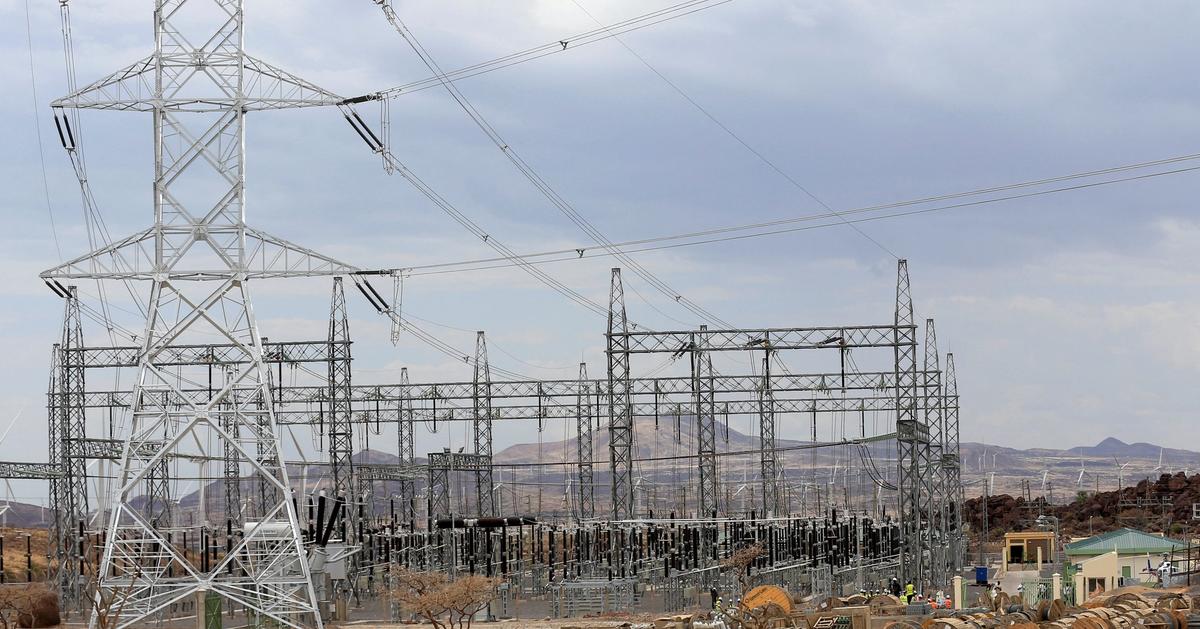
Photo via Semafor

Half of sub-Saharan Africa relies more on generators than grid

Read the original at Semafor ↗
Cite

Quinn, L. (2026, September 28). Half of sub-Saharan Africa relies more on generators than grid. Semafor. https://www.semafor.com/article/09/28/2026/half-of-sub-saharan-africa-relying-more-on-generators-than-grid

Dated when The Aporia collected the article, usually within hours of publication. Check the original for its exact date and byline.

Semafor · collected 2026-09-28 · by Leah Quinn

Quick Summary

Energy for Growth analysis reveals that half of sub-Saharan African countries depend more on diesel generators than on the electrical grid due to unreliable energy infrastructure. Diesel generator usage, while providing consistent energy, exposes users to fluctuating global fuel prices since these generators rely on imported fuel. The study finds that Africa’s total diesel generator capacity is larger than previously reported, equating to about 63% of the continent's grid-connected generation capacity. In 26 sub-Saharan markets, diesel generation exceeds grid power, making businesses and households susceptible to high fuel costs and supply interruptions.
Written by AI on 2026-09-28, from this article's own text only (the story summary below draws on all the coverage).

AI analysis

Story summary

According to analysis by Energy for Growth, half of all countries in sub-Saharan Africa rely more on diesel generators than on grid power. This dependence has grown as a response to persistent shortages of electricity supplied through the grid. While diesel generators offer more reliable energy, they increase vulnerability due to reliance on imported fuel, subjecting consumers to volatile global pricing. The research reveals that Africa’s diesel generator fleet is about 63% of the continent’s grid-connected generation capacity, with 26 sub-Saharan markets estimated to have more diesel generation than grid power. This situation leaves businesses and households particularly exposed to rising fuel costs and supply disruptions.

Written for “Energy Shortages in Africa” on 2026-11-03, grounded in this article and the 0 other(s) covering the same event.

Story

📰 Energy Shortages in Africa
Environment · 1 article(s) covering the same event.

Compared with similar articles

Nothing to compare against. No article is close enough to this one for the pipeline to have linked or judged the pair.
How this article was measured signals, leaning charts, publisher record, byline, topics and claims

Signals How these are calculated →

Claims extracted
5
sentences that state something as happening or true
Uncertain
40%
2 of 5 hedged ("reportedly", "may", "according to")
Leaning
withheld
no quote in the article backed the model's score
Publisher signals
59/100
Semafor's corrections and hedging, across everything collected from it. Not a measure of accuracy.
Outlets on this story
1
Environment
Same framing elsewhere
1
articles that frame the event the way this one does
Analyzed 2026-09-28 · how these are computed

How this is being covered How these are calculated →

Article leaning vs. publisher reliability
Source leaning vs. consistency

Publisher

Semafor · 1432 article(s) · 3 correction(s) detected
Running correction rate · 3 correction(s)

Who wrote this

Leah Quinn
2 article(s) here · 0 carrying a prediction
🔮 At least one strategic acquirer mulled what a deal for Costa would look like before passing due to valuation and strategic issues, one of the people said.
2026-10-08 · mixed framing · Coca-Cola looks to sell Costa Coffee
Also by Leah Quinn
Nothing else under this byline is closely related to this article, so these are simply their most recent.

Topics

Energy for Growth North Africa South Africa the Iran war

Subjects

Energy for Growth ORG · 1× North Africa GPE · 1× South Africa GPE · 1×

Narrative

Outside North Africa and South Africa, diesel capacity is even more dominant, with 26 sub-Saharan markets estimated to have more diesel generation capacity than grid power, leaving businesses and households heavily exposed to fuel costs and supply disruptions.
framing: mixed · carried by 1 article(s) · first seen 2026-09-28

Claims (5 extracted, 2 hedged)

Half of all countries in sub-Saharan Africa are relying more on diesel generators than on grid power, according to analysis from Energy for Growth, leaving countries with less reliable energy infrastructure particularly vulnerable to the effects of the Iran war. uncertain
Half → rely → war
The continent’s dependence on diesel has emerged as a coping mechanism to a persistent shortfall in grid-supplied electricity. asserted
dependence → emerge → electricity
But while diesel generators provide more reliable energy, their dependence on imported fuel leaves consumers at the mercy of volatile global pricing. asserted
dependence → provide → pricing
Africa’s diesel generator fleet is far larger than previously captured by official power data, according to the research, amounting to about 63% of the continent’s grid-connected generation capacity. uncertain
fleet → capture → capacity
Outside North Africa and South Africa, diesel capacity is even more dominant, with 26 sub-Saharan markets estimated to have more diesel generation capacity than grid power, leaving businesses and households heavily exposed to fuel costs and supply disruptions. asserted
markets → estimate → costs
💬Give feedback
🕘History 🎫Support