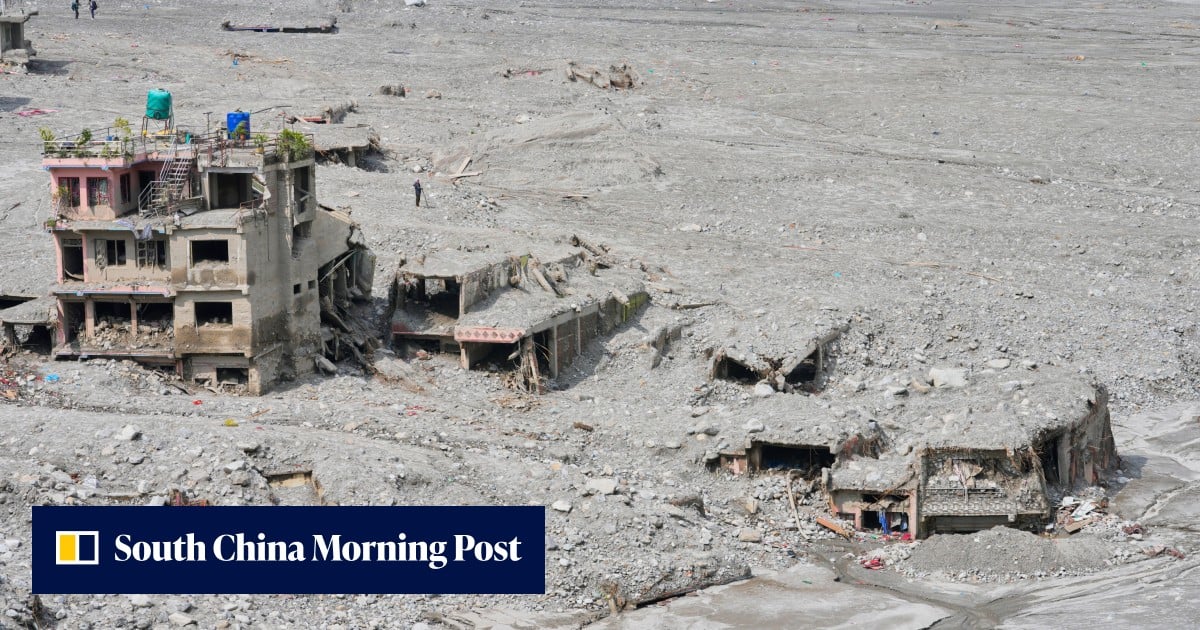
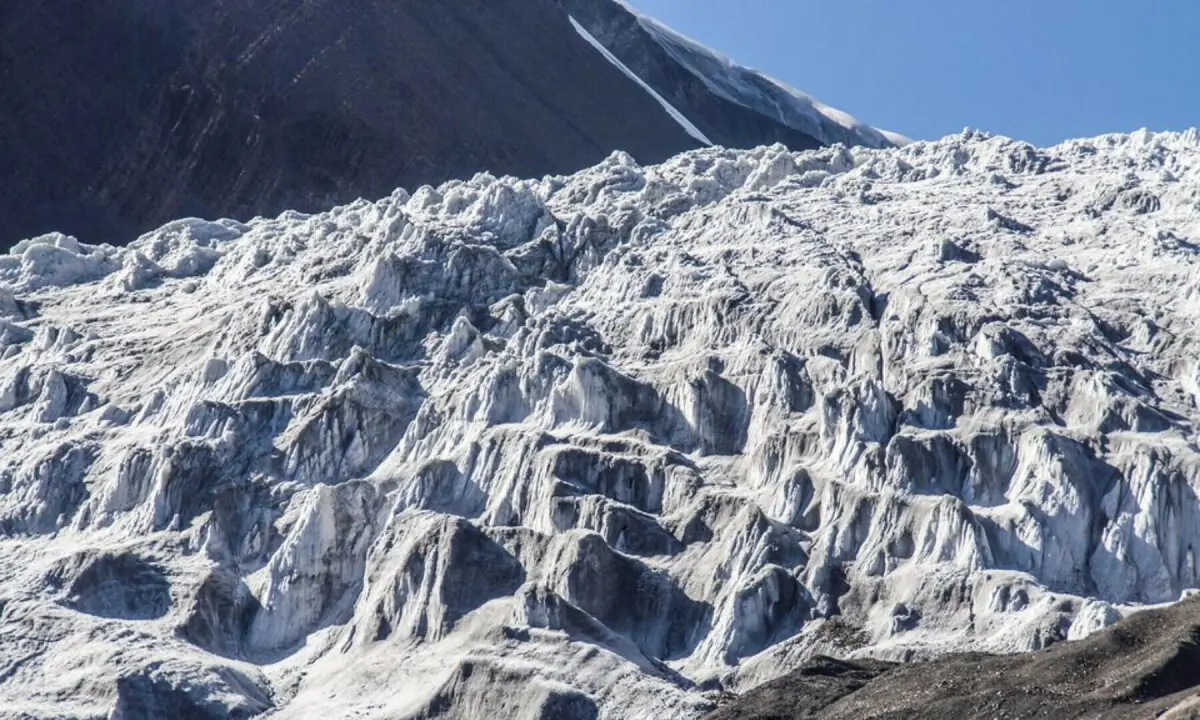
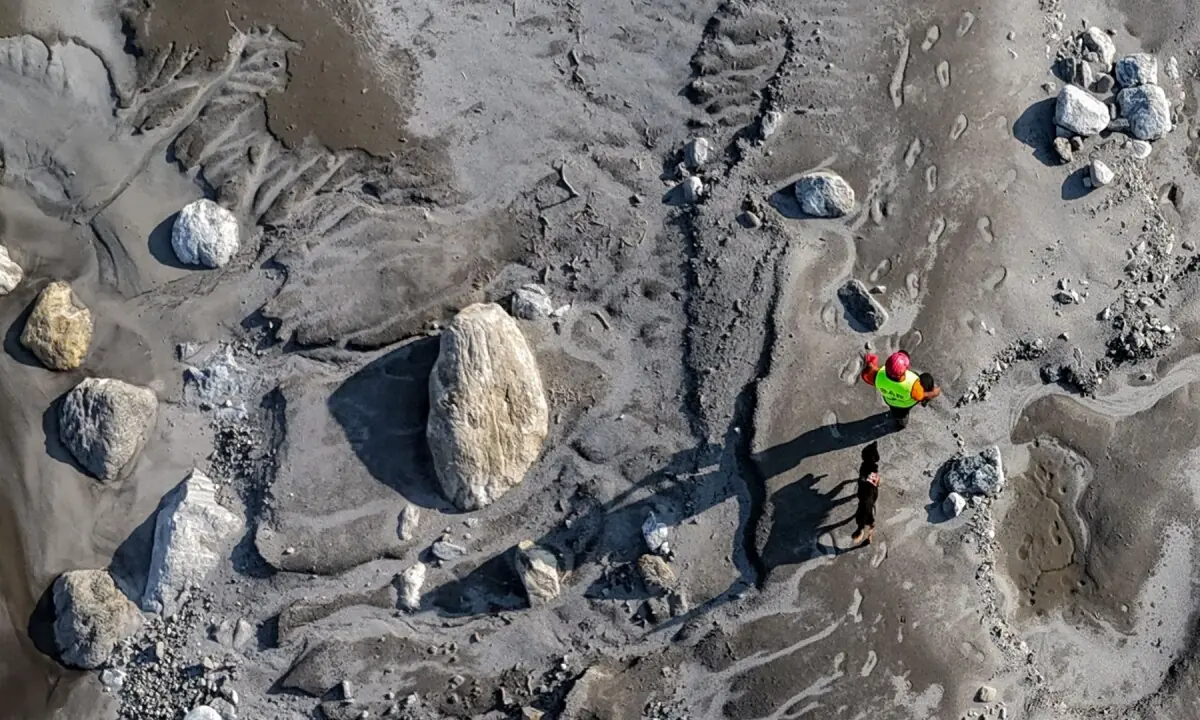
Photo via The Hindu

Himalayan floods highlight urgent need for regional disaster preparedness: Safi Ahsan Rizvi

Read the original at The Hindu ↗
Cite

A, S. K. (2026, September 28). Himalayan floods highlight urgent need for regional disaster preparedness: Safi Ahsan Rizvi. The Hindu. https://www.thehindu.com/news/international/what-caused-the-nepal-floods-and-how-can-south-asian-countries-prepare-for-them-in-the-future/article71425121.ece

Dated when The Aporia collected the article, usually within hours of publication. Check the original for its exact date and byline.

The Hindu · collected 2026-09-28 · by Shikha Kumari A

Quick Summary

Safi Ahsan Rizvi, an expert risk analyst and former adviser to India's National Disaster Management Authority, argues in an interview that better regional cooperation is essential for managing glacial outburst flood risks in the Himalayas. He attributes recent devastating floods in Nepal to a rock-ice avalanche, though scientists are still investigating why this occurred and where such a large volume of water originated. Rizvi emphasizes the need for real-time information sharing between countries to enhance disaster preparedness and reduce risks due to climate change and accelerated glacial melt.
Written by AI on 2026-09-28, from this article's own text only (the story summary below draws on all the coverage).

AI analysis

Story summary

Safi Ahsan Rizvi, an expert risk analyst and former adviser to the National Disaster Management Authority (NDMA) in India, emphasizes the urgent need for a regional data-sharing mechanism to manage glacial outbursts in the Himalayas. According to Rizvi, who is also a retired Indian Police Service (IPS) officer with extensive disaster management experience, recent devastating floods in Nepal were triggered by a rock-ice avalanche. While scientists are still investigating the exact volume of water involved, climate change is accelerating glacial melt and expanding high-risk glacial lakes, increasing extreme weather events across the region. Rizvi stresses that governments must prioritize cooperation as a shared public good to enhance early-warning systems and real-time information-sharing between countries like Nepal and India to better prepare for such disasters and reduce risks.

Written for “Himalayan Floods Preparedness” on 2026-11-02, grounded in this article and the 0 other(s) covering the same event.

Story

📰 Himalayan Floods Preparedness
Environment · 1 article(s) covering the same event.

Compared with similar articles

This article reads leans left and hedges 9% of its claims. Each row says how that neighbour differs.
ABC News (AU)
Hedges 4 of 66 claims Outlet record 68/100
“Article A describes the aftermath of specific catastrophic floods that hit Devighat in Nuwakot district, while Article B discusses a broader need for disaster preparedness and mentions recent devastating floods but does not specify the same exact incident or location.”
The Hindu
Hedges 3 of 18 claims Outlet record 60/100
“Article A discusses a broader need for disaster preparedness in the Himalayas and mentions a recent rock-ice avalanche-triggered flood, while Article B reports on specific casualty figures and incidents due to heavy rainfall over several days.”
South China Morning Post
Hedges 0 of 5 claims Outlet record 63/100
“While both articles discuss the need for improved data-sharing and cooperation due to flood events in Nepal, they describe different aspects and perspectives on the issue rather than the same specific incident.”
Dawn
Hedges 4 of 35 claims Outlet record 72/100
“While both articles discuss climate-related risks in the Himalayas, they cover different aspects: Article A focuses on an expert's view regarding disaster preparedness and a recent flood incident in Nepal, whereas Article B discusses broader diplomatic cooperation between Pakistan and Nepal due to shared environmental challenges.”
Dawn
Hedges 0 of 36 claims Outlet record 72/100
“Article A describes the immediate aftermath and impact of the August 26 flood disaster in Nepal, while Article B discusses the broader need for regional disaster preparedness and cooperation in light of such events.”
The Hindu
Hedges 3 of 31 claims Outlet record 60/100
“While both articles discuss flooding and disaster management issues in Nepal, Article A specifically reports on the current aftermath of recent floods and landslips, while Article B discusses broader disaster preparedness measures suggested by an expert.”
Dawn
⚖️ Leans left Hedges 4 of 32 claims Outlet record 72/100
“While both articles discuss the impact of a recent flood disaster in Nepal caused by a glacial outburst, Article A focuses on the direct impacts to hydropower and energy security, while Article B emphasizes the need for regional disaster preparedness based on expert opinion.”
The Independent
Hedges 5 of 39 claims Outlet record 59/100
“While both articles discuss the flooding disaster in Nepal caused by a rock and ice avalanche, they describe different aspects of the incident - one focuses on the economic impact on national debt, while the other discusses expert opinions on regional disaster preparedness.”
Dawn
Hedges 4 of 29 claims Outlet record 72/100
“Article A discusses the need for regional disaster preparedness in light of recent floods, while Article B specifically focuses on DNA testing efforts to identify victims from a particular flood incident.”
Al Jazeera
⚖️ Leans strongly left further left than this Hedges 1 of 17 claims Outlet record 60/100
“While both articles discuss flooding in Nepal and its implications, Article A focuses on Prime Minister Balendra Shah's speech at the UN General Assembly about a specific flood disaster from August, while Article B features an expert discussing the need for regional cooperation in managing risks of glacial outbursts in the Himalayas without specifying the same singular event.”
How this article was measured signals, leaning charts, publisher record, byline, topics and claims

Signals How these are calculated →

Claims extracted
92
sentences that state something as happening or true
Uncertain
9%
8 of 92 hedged ("reportedly", "may", "according to")
Leaning
Leans left
of the writing, not the subject · beta estimate
Publisher signals
60/100
The Hindu's corrections and hedging, across everything collected from it. Not a measure of accuracy.
Outlets on this story
1
Environment
Same framing elsewhere
1
articles that frame the event the way this one does
Analyzed 2026-09-28 · how these are computed

How this is being covered How these are calculated →

Article leaning vs. publisher reliability
Source leaning vs. consistency

Publisher

The Hindu · 907 article(s) · 2 correction(s) detected
Running correction rate · 2 correction(s)

Who wrote this

Shikha Kumari A
3 article(s) here · 1 carrying a prediction
🔮 Such lakes can fail for several reasons: the moraine dam may collapse, a landslide may fall into the lake and trigger overtopping, extreme rainfall may cause it to overflow, or a rock or ice avalanche may strike it.
Also by Shikha Kumari A
Nothing else under this byline is closely related to this article, so these are simply their most recent.

Topics

IPS Indian Police Service NDMA Nepal the National Disaster Management Authority

Subjects

Nepal GPE · 3× IPS ORG · 1× India GPE · 1× Indian Police Service ORG · 1× NDMA ORG · 1× Rizvi PERSON · 1× Safi Ahsan Rizvi PERSON · 1× Sikkim GPE · 1× the National Disaster Management Authority ORG · 1×

Narrative

A regional data-sharing mechanism is urgently needed to manage the escalating risks of glacial outbursts in the Himalayas, says Safi Ahsan Rizvi, an expert risk analyst, former adviser to the National Disaster Management Authority (NDMA), and a retired Indian Police Service (IPS) officer with extensive experience in disaster management and risk reduction.
framing: assertive · carried by 1 article(s) · first seen 2026-09-28
🔮 Such lakes can fail for several reasons: the moraine dam may collapse, a landslide may fall into the lake and trigger overtopping, extreme rainfall may cause it to overflow, or a rock or ice avalanche may strike it.

Claims (92 extracted, 8 hedged)

A regional data-sharing mechanism is urgently needed to manage the escalating risks of glacial outbursts in the Himalayas, says Safi Ahsan Rizvi, an expert risk analyst, former adviser to the National Disaster Management Authority (NDMA), and a retired Indian Police Service (IPS) officer with extensive experience in disaster management and risk reduction. asserted
Rizvi → share → management
He argues that governments must treat such cooperation as a shared public good rather than a diplomatic favour. asserted
governments → argue → good
In an interview, Mr Rizvi said a rock-ice avalanche clearly triggered the recent devastating floods in Nepal, though the sheer volume of water involved remains a subject of scientific investigation. asserted
volume → say → investigation
He warned that climate change is accelerating glacial melt, expanding high-risk glacial lakes and increasing the frequency of extreme weather events across the Himalayas. asserted
change → warn → Himalayas
Stressing the need for stronger early-warning systems and regional cooperation, he called for real-time information-sharing between neighbouring countries to improve preparedness and reduce disaster risks. asserted
he → stress → risks
Edited excerpts: What exactly happened in Nepal, and why did it become so destructive downstream? asserted
it → edit → Nepal
Based on assessments by scientists across the world, this was clearly a rock-ice avalanche. asserted
this → base → world
A rock face failed and collapsed, bringing glacier ice down with it. asserted
face → fail → it
What remains uncertain is the precise trigger. asserted
remains → remain → ?
We do not yet know whether glacier retreat and melting destabilised the slope or whether the geological failure happened first and then affected the glacier. asserted
failure → know → glacier
The bigger mystery concerns the volume of water involved. asserted
mystery → concern → water
The flood appears to have carried several times more water than the South Lhonak glacial lake outburst flood in Sikkim in 2023. asserted
flood → appear → 2023
Yet satellite imagery has not identified a large pre-existing glacial lake in the area. asserted
imagery → identify → area
One possibility is that the landslide temporarily dammed a river upstream, creating a landslide lake that later burst. asserted
that → dam → lake
Even so, scientists are still trying to understand where all the water came from and how the flood reached such extraordinary speeds. asserted
flood → try → speeds
The terrain also played a role. asserted
terrain → play → role
The avalanche fell nearly a kilometre vertically before racing down steep slopes. asserted
avalanche → fall → slopes
The combination of gravity, water and debris allowed the flood to travel extremely rapidly downstream. asserted
flood → allow → gravity
A conventional GLOF occurs when meltwater accumulates in front of a retreating glacier, forming a lake that is often held back by fragile moraine material rather than solid rock. asserted
that → occur → rock
As glaciers shrink, these lakes can grow larger and become increasingly unstable. asserted
lakes → shrink → ?
Such lakes can fail for several reasons: the moraine dam may collapse, a landslide may fall into the lake and trigger overtopping, extreme rainfall may cause it to overflow, or a rock or ice avalanche may strike it. uncertain
avalanche → fail → it
In Nepal’s case, the event appears to have involved a significant geohazard component, namely a rock-ice avalanche. asserted
event → appear → component
The key question remains why the rock face failed. asserted
face → remain → ?
Preliminary satellite-based interferometric studies suggest the slope was moving more rapidly than usual in the days before the collapse, but the precise trigger is still being investigated. asserted
trigger → base → collapse
Are such disasters becoming more common in the Himalayas? asserted
disasters → become → Himalayas
Climate change is accelerating glacier melt, which means many glacial lakes are growing in size. asserted
lakes → accelerate → size
As these lakes expand, the associated risks increase. asserted
risks → expand → ?
However, growing risk does not mean disaster is inevitable. asserted
disaster → grow → ?
River valleys containing high-risk lakes should have early-warning systems, evacuation plans and risk-reduction measures. asserted
valleys → contain → systems
In some cases, engineering interventions such as syphoning or pumping water can reduce lake levels. asserted
interventions → syphon → levels
The challenge is that these lakes are often located at elevations of around 5,000 metres, where work is possible only for a few months each year and requires specialised equipment. asserted
work → locate → equipment
This was one of the reasons why India developed national programmes for GLOF risk reduction and landslide risk mitigation. asserted
India → develop → reduction
The objective was to identify the highest-risk locations and systematically reduce risk before disasters occur. asserted
disasters → identify → risk
Q: Could warning signs have been detected before the Nepal flood? uncertain
signs → detect → flood
There are indications that residents observed reduced water flow in the river hours before the disaster. asserted
residents → be → disaster
That may suggest a landslide lake was forming upstream. uncertain
lake → suggest → ?
Mountain communities are often highly observant and can recognise abnormal changes in river behaviour. asserted
communities → recognise → behaviour
However, while a sudden drop in river flow might indicate danger, it does not tell people how large the resulting flood will be. uncertain
flood → indicate → people
That is where technology becomes important. asserted
technology → become → ?
Satellite monitoring, sensors and warning systems can complement local knowledge and provide crucial information on hazards that communities cannot directly observe. asserted
communities → complement → that
…and 52 more, not listed.

💬Give feedback
🕘History 🎫Support