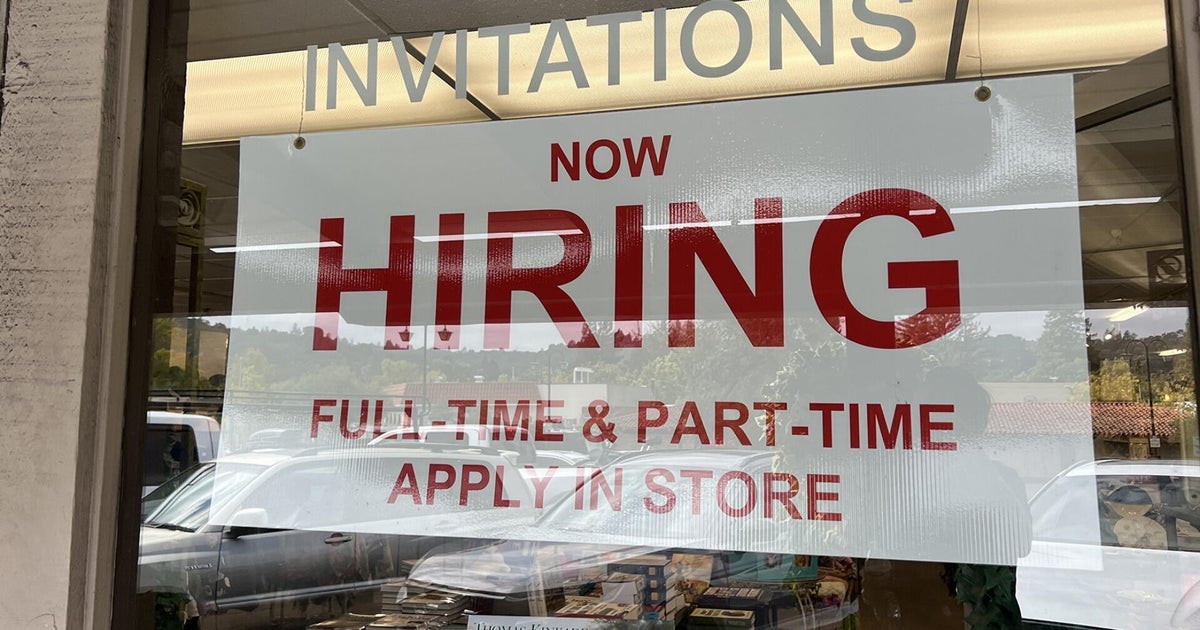
It really is a tale of two economies, depending on who you ask.
asserted
you → depend → who
On the one hand, Treasury Secretary Scott Bessent said Sunday that the US economy has entered an “acceleration phase”: Despite rising interest rates, the markets aren’t tanking as many experts predicted.
asserted
experts → say → rates
On the other, House Minority Leader Hakeem Jeffries railed just days before that President Donald Trump has delivered a “Rotten Age,” with an economy that’s “failing everyday Americans” — and Americans seem to agree, with 63% disapproving of Trump’s economic policies, per the RealClear Politics polling average.
asserted
% → rail → average
By the numbers, Bessent has a strong case.
asserted
Bessent → have → case
US jobless claims tumbled last week to levels not seen in years, retail sales are up and manufacturing is booming.
Importantly, the workforce participation rate is climbing — so the low unemployment numbers aren’t just the result of people giving up on the job search altogether.
uncertain
people → tumble → search
As columnist Daniel McCarthy notes, “Establishment economists predicted none of this.”
asserted
economists → note → this
Well, they’re usually wrong, it seems.
asserted
it → ’re → ?
Trump’s combination of lighter regulation, tighter restrictions on illegal immigration and protectionist tariffs is translating into more jobs here at home as businesses expand.
asserted
businesses → translate → home
New industries, like the private space race led by SpaceX and Starlink, are employing hundreds of thousands and still growing.
asserted
industries → lead → thousands
And the massive AI buildout, despite political opposition, is creating jobs for electricians, construction workers and the like all over America.
asserted
buildout → create → America
Good jobs at good wages, as a famous Democrat once said.
asserted
Democrat → say → wages
But it’s not all rosy: The “learn to code” advice of the last decade turned out to be awful, with unemployment spreading among computer-science majors as more and more jobs, especially entry-level ones, are taken over by AI.
(That’s happening nationwide, not just in Silicon Valley: My neighbors here in east Tennessee include the owner of a startup business that’s coded entirely by AI and the CIO of a decent-sized company who’s using AI for nearly all of his coding.
asserted
who → ’ → coding
And while employment is strong for blue-collar workers, the recent college graduates I talk to are having a harder time.
asserted
I → talk → time
Not only are their resumes screened by AI agents, they complain, their initial interviews are done via AI, too — in a chat interface or, somehow more alarmingly, via human-looking AI avatars — which they experience as a depressing signal that their prospects are poor.
asserted
prospects → screen → signal
Possibly because many of the jobs they seek are being performed by AI.
uncertain
they → seek → AI
And while AI is producing a huge investment boom now, the bubble will inevitably burst.
asserted
bubble → produce → boom
We saw this with the tech bubbles of the 1990s and the 2000s: New technologies attract a lot of enthusiasm and capital, some of which is invested in ideas and companies that don’t work out and go bust.
asserted
that → see → ideas
The losses are made up over time, but they hurt when they happen — and they could happen at any moment.
Gas prices are high due to supply interruptions from the war with Iran, and loss of refinery capacity due to closures at home (thanks a million, Gov. Gavin Newsom).
Sure, they’ve been higher, but nobody likes paying four bucks or more for a gallon of regular.
Those prices will likely go down soon — but probably not soon enough to help Republicans in the midterms.
uncertain
prices → make → midterms
As I’ve said, you can make a case that the economy is great or that it’s bad.
asserted
it → say → case
You can bet that between now and November, the Democrats and the media — but I repeat myself — will be focusing on the bad.
asserted
I → bet → bad
It’s an old playbook, one that Bill Clinton’s pollster Mark Penn wielded to defeat President George H.W. Bush in 1992.
asserted
pollster → ’ → 1992
The economy had actually recovered from a brief recession in 1991, but voters thought otherwise — because the media told them so.
asserted
media → recover → them
“There is often a huge disconnect between belief about the economy and the true economic state of affairs,” Penn wrote in his 2007 book “Microtrends.”
asserted
Penn → be → book
“Until the statistics are actually published, people tend to assess the economy through the eyes of the national media.”
asserted
people → publish → media
During the 1992 election, Clinton repeatedly told us we were experiencing the worst economy in 50 years.
asserted
we → tell → years
The press echoed that message dutifully.
asserted
press → echo → message
But as Penn recounted with glee, “The statistics that came out after the election showed that the period leading up to November had actually been a period of record growth.”
Whether this is the best of economies, the worst of economies, or something in between, you can bet that for the next month-plus we’ll be told it’s the worst.
asserted
it → recount → month
 The Aporia