Photo via The Globe and Mail

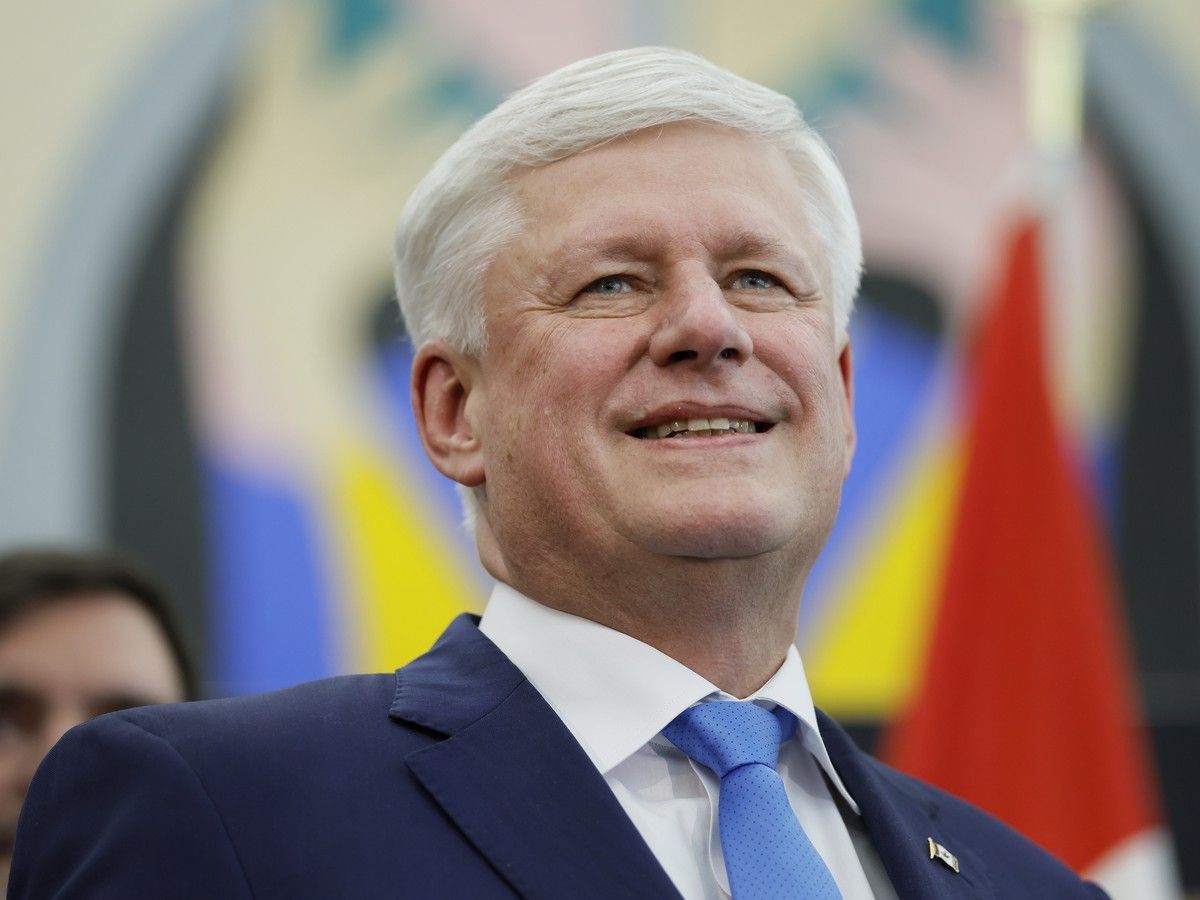
David Cameron ‘wouldn’t compare’ Alberta secession vote to Brexit, former British PM says in Calgary

Read the original at The Globe and Mail ↗
Cite

Scace, M. (2026, September 29). David Cameron ‘wouldn’t compare’ Alberta secession vote to Brexit, former British PM says in Calgary. The Globe and Mail. https://www.theglobeandmail.com/canada/article-david-cameron-brexit-alberta-secession/

Dated when The Aporia collected the article, usually within hours of publication. Check the original for its exact date and byline.

The Globe and Mail · collected 2026-09-29 · by Matthew Scace

Quick Summary

David Cameron, former UK prime minister during Brexit and Scottish independence votes, spoke at an energy conference in Calgary about Alberta’s upcoming secession referendum on October 19. He emphasized significant differences between the referendums, noting that while Brexit involved leaving a trade association with political ties, Canada is not such an entity. Cameron expressed regret for rushing the Brexit vote without sufficient negotiation and urged caution regarding Alberta's decision to proceed with its own referendum despite similarities in timing and context.
Written by AI on 2026-09-29, from this article's own text only (the story summary below draws on all the coverage).

AI analysis

Story summary

David Cameron, former Prime Minister of the United Kingdom during the Brexit referendum, spoke at an energy leadership conference in Calgary and discussed the differences between Scotland's 2014 independence referendum and Alberta’s current push for separation from Canada. He emphasized that while he called a fragmented United Kingdom a tragedy, not holding the Scottish vote would have worsened tensions. Cameron stated that comparing Alberta's secession debate to Brexit is inaccurate since Brexit was about leaving a trade association with political ties, unlike Canada where Alberta seeks to separate from an entire nation. In October, 11 times more ballots were requested for Alberta’s referendum compared to its last provincial election, indicating significant public interest. Cameron also noted he wishes he had negotiated more before allowing the UK's Brexit vote, suggesting a need for caution in similar scenarios.

Written for “Alberta Separatism Comparison” on 2026-11-05, grounded in this article and the 1 other(s) covering the same event.

Story

📰 Alberta Separatism Comparison
Politics · 2 article(s) covering the same event. See how they differ ↓

Compared with similar articles

This article reads unscored and hedges 12% of its claims. Each row says how that neighbour differs.
Global News
Hedges 0 of 6 claims Outlet record 63/100
The Globe and Mail
Hedges 0 of 2 claims Outlet record 52/100
“The articles describe different events: one discusses Smith and Ford's conversation on Alberta's referendum, while the other covers David Cameron's speech at an energy conference in Calgary comparing Alberta's situation to Brexit.”
National Post
Hedges 0 of 15 claims Outlet record 60/100
“The articles describe different statements made by former Canadian prime ministers about Alberta's potential secession, not the same specific incident.”
Toronto Star
Hedges 3 of 41 claims Outlet record 64/100
“The articles discuss different topics within the context of Alberta's referendum; Article A focuses on David Cameron's comments comparing Alberta's situation to Brexit, while Article B discusses federalists' concerns about multiple referendum questions.”
CBC News
Hedges 1 of 21 claims Outlet record 71/100
“The articles discuss different speeches by separate political figures addressing Alberta's referendum but occur on distinct days and places.”
How this article was measured signals, leaning charts, publisher record, byline, topics and claims

Signals How these are calculated →

Claims extracted
33
sentences that state something as happening or true
Uncertain
12%
4 of 33 hedged ("reportedly", "may", "according to")
Leaning
not political
takes no side on a contested political question
Publisher signals
52/100
The Globe and Mail's corrections and hedging, across everything collected from it. Not a measure of accuracy.
Outlets on this story
2
Politics
Same framing elsewhere
1
articles that frame the event the way this one does
Analyzed 2026-09-29 · how these are computed

How this is being covered How these are calculated →

Article leaning vs. publisher reliability
Source leaning vs. consistency

Publisher

The Globe and Mail · 1099 article(s) · 39 correction(s) detected
Running correction rate · 39 correction(s)

Who wrote this

Matthew Scace
27 article(s) here · 1 carrying a prediction
🔮 Ms. Smith’s governing United Conservative Party voted on Wednesday night to approve a motion that will result in the government creating a bill to put the map into law.
🔮 Premier Danielle Smith is rejecting allegations that an independent panel has torqued the province’s electoral map to favour her United Conservative Party, saying the recommended changes to redraw the boundaries are reasonable and would give voters better representation.
🔮 Mr. McClure said Elections Alberta’s resources are strained and pursuing a different avenue would protect “the readiness and successful delivery of Alberta’s next provincial general election.”
🔮 Alberta’s electoral boundaries are expected to be tabled in the provincial legislature on Monday and, if approved, would be used for next year’s election.
🔮 Two days after the vote, Ms. Smith asked members to accept the result and said that those wishing to turn the UCP into a separatist party would not be welcome.
🔮 Alberta’s new electoral boundaries are expected to be released next week, setting up a contentious battle over the map that will define the province’s political playing field for the next decade – a process that has been plagued by accusations of gerrymandering.
🔮 Alberta Premier Danielle Smith appears to have fended off a leadership challenge and is looking to smother discord within her United Conservative Party by requiring those seeking a seat on its provincial board to pledge they will respect the majority vote against holding a separation referendum.
🔮 Mr. Sylvestre and Mr. Rath have said that they won’t leave the UCP and will push to elect allies to the provincial board of the party at its annual meeting next month.
🔮 The results also underline a stark divide between rural and urban voters on her proposals, which could pose political risks for the Premier as she campaigns toward next year’s provincial election.
🔮 Alberta Premier Danielle Smith is urging separatist factions within her United Conservative Party to accept the results of Monday’s referendum or leave the party if they’re unwilling to do so.
Also by Matthew Scace
Nothing else under this byline is closely related to this article, so these are simply their most recent.
All 27 articles by Matthew Scace →

Topics

Alberta Brexit Britain British Canada

Subjects

Alberta GPE · 7× Cameron PERSON · 5× British NORP · 4× Canada GPE · 4× Britain GPE · 3× Ottawa GPE · 3× Smith PERSON · 3× the European Union ORG · 2× David Cameron PERSON · 1× Scottish NORP · 1×

Narrative

Randall Hansen, a political science professor at the University of Toronto’s Munk School of Global Affairs and Public Policy, said Brexit and Alberta’s referendum have numerous parallels between them, but that doesn’t mean Alberta will immediately march down the same path as Britain.
framing: assertive · carried by 1 article(s) · first seen 2026-09-29
🔮 “I wouldn’t compare what you’re discussing here with the Brexit referendum,” he said.

Claims (33 extracted, 4 hedged)

Former British prime minister David Cameron, who oversaw his country’s vote on Brexit as well as a referendum on Scottish independence, says he sees significant differences between those and Alberta’s coming vote on separation. asserted
he → oversee → separation
Speaking at an energy conference in Calgary on Monday, Mr. Cameron said he wishes he had spent more time at the negotiating table before allowing a vote that took the outcome out of his hands. asserted
that → speak → hands
“I wouldn’t compare what you’re discussing here with the Brexit referendum,” he said. asserted
he → compare → referendum
“Brexit was about whether we wanted to stay in a trade association with an element of political union. asserted
we → want → union
I mean, Canada is not a trade association with an element of political union. asserted
Canada → mean → union
Mr. Cameron, who resigned as prime minister in 2016 the day after Britain narrowly voted to leave the bloc, said he wishes he’d “pushed the pause button” and taken longer to negotiate with the European Union. asserted
he → resign → Union
He added that he failed to convince people to vote in favour of remaining in the EU, suggesting he didn’t campaign forcefully enough for that side. asserted
he → add → side
The former British prime minister made the comments exactly three weeks before Alberta voters will have their say on whether they want a second, binding secession referendum – a vote that frequently draws comparisons to Brexit. asserted
that → make → Brexit
Echoes of Britain’s 2016 referendum on its membership in the EU have loomed large over Alberta’s separation debate. asserted
Echoes → loom → debate
Prime Minister Mark Carney, who was governor of the Bank of England at the time of the British vote, has called Alberta’s plan a “dangerous bluff” and pointed to parallels between the two referendums. asserted
who → call → referendums
Mr. Cameron called the 2016 vote under pressure from segments of his party that were skeptical of the European Union. asserted
that → call → Union
He campaigned to stay in the EU, but the loss led to more than four years of negotiations between Britain and the bloc. asserted
loss → campaign → Britain
Alberta Premier Danielle Smith, meanwhile, has pointed to discontent in her province over Ottawa’s direction on energy policy under former prime minister Justin Trudeau as the impetus for the Oct. 19 referendum. asserted
Smith → point → referendum
In March, 2025, Ms. Smith threatened an “unprecedented national unity crisis” if Ottawa did not scrap laws she viewed as hostile toward Alberta’s energy industry. asserted
she → threaten → industry
Mr. Carney has since eliminated many of those laws. asserted
Carney → eliminate → laws
While Ms. Smith has argued that she called the referendum because of public demand – notably in two competing petitions that garnered hundreds of thousands of signatures – her detractors have accused her of attempting to appease separatists who make up a substantial part of her political base, according to public opinion polling. uncertain
who → argue → polling
The Premier has said she and her colleagues in the governing United Conservative Party favour remaining in Canada. asserted
she → say → Canada
Polling shows that roughly a quarter of Albertans would vote to hold a binding referendum on abandoning Canada. asserted
quarter → show → Canada
Before the British referendum, the remain side also led in the polls but ultimately lost with 48 per cent of the vote. asserted
side → lead → vote
Mr. Cameron has argued since Brexit that warnings about the consequences of leaving the EU were drowned out by an emotionally charged leave campaign. asserted
warnings → argue → campaign
“We wanted to remain a sovereign, independent United Kingdom, but part of this association. asserted
We → want → association
My regret is that I failed to convince people that that was the best answer,” he said Monday. asserted
he → fail → people
Mr. Cameron said Scotland’s 2014 independence referendum worried him more than Brexit because it threatened to break up the U.K. “If you have a referendum, you can’t guarantee what the result is going to be,” he said. asserted
he → say → what
While polling suggests Alberta separatists will be defeated soundly next month, observers say voter turnout will play a major role in the result. uncertain
turnout → suggest → result
Ms. Smith, who has spent the better part of her political career railing against what she views as an overstepping federal government, has also said she’s concerned voters may use the referendum to express their frustration with Ottawa. uncertain
voters → spend → Ottawa
Indeed, some separatist groups are advertising the vote as a means to extract concessions from Mr. Carney and his Liberal government. asserted
groups → advertise → Carney
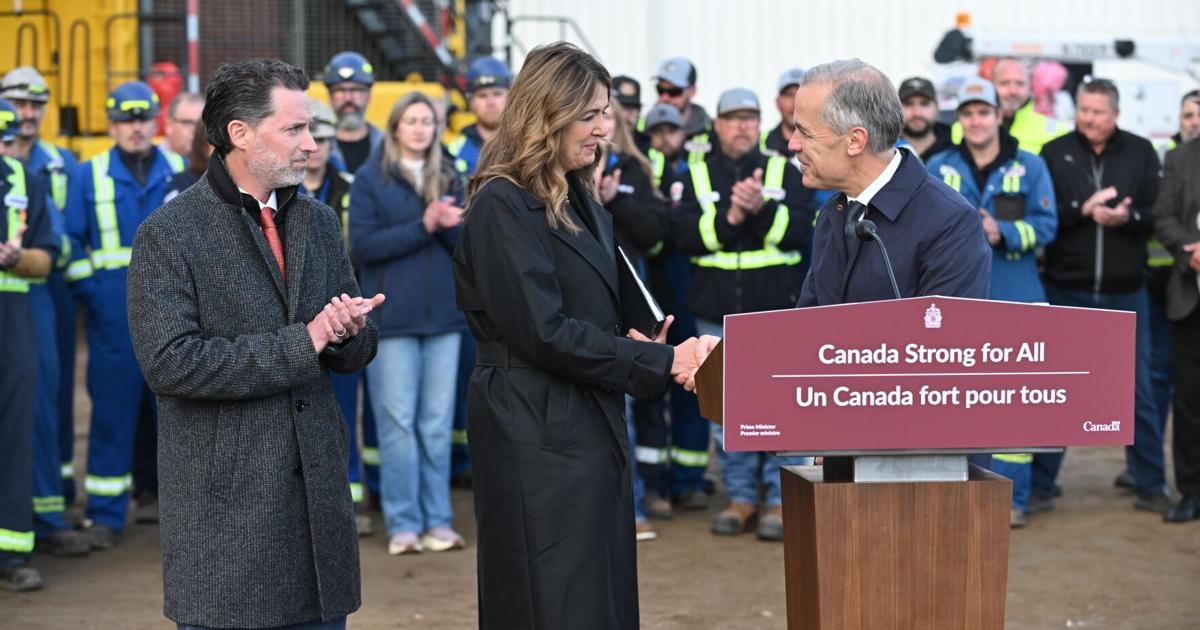
On Monday, Ms. Smith argued the conditions in Alberta’s referendum are different from Brexit, contending that the EU didn’t work to solve the problems that she believes motivated Britain’s referendum. asserted
she → argue → referendum
She contrasted that with Ottawa’s approach under Mr. Carney. asserted
She → contrast → Carney
“I see a major reach-out on the part of Ottawa to not only acknowledge but also address in a very serious way the issues that caused the tension in the first place,” Ms. Smith said. asserted
Smith → see → place
“I hope it has an impact on election day.” asserted
it → hope → day
Randall Hansen, a political science professor at the University of Toronto’s Munk School of Global Affairs and Public Policy, said Brexit and Alberta’s referendum have numerous parallels between them, but that doesn’t mean Alberta will immediately march down the same path as Britain. asserted
Alberta → say → Britain
What happens after the referendum will matter more, he said, pointing to Britain’s earliest rumblings of discontent in the 1980s over its relationship with Europe. asserted
he → happen → Europe
“The Alberta conservatives … cannot make the mistake the Tories made in the 80s, which is continually delegitimize the federation,” Prof. Hansen said. “That two-thirds can become 50 per cent, and the next time around you might end up in a situation that everyone would regret on both sides, which is Alberta leaving the federation.” uncertain
Alberta → make → federation

💬Give feedback · no sign-in needed

No sign-in needed for now. Your note is sent without a name, so it cannot be answered.

🕘History 🎫Support