Photo via Toronto Star

Takeaways from the AP's analysis on the fundamental flaws in the national flood insurance program

Read the original at Toronto Star ↗
Cite

Phillis, M., & Wildeman, M. (2026, September 29). Takeaways from the AP's analysis on the fundamental flaws in the national flood insurance program. Toronto Star. https://www.thestar.com/news/world/united-states/takeaways-from-the-ap-s-analysis-on-the-fundamental-flaws-in-the-national-flood-insurance-program/article_f6e5f09c-cf84-5381-a2a8-c7ce2caf83d4.html

Dated when The Aporia collected the article, usually within hours of publication. Check the original for its exact date and byline.

Toronto Star · collected 2026-09-29 · by Michael Phillis, M.k. Wildeman

Quick Summary

The Associated Press conducted an analysis revealing significant issues with the National Flood Insurance Program (NFIP), established in 1968, which aims to provide flood insurance coverage while managing flood risk. The study found that only 2.4% of properties nationwide are insured by federal flood policies, despite 8.4% being at severe or extreme risk of flooding. In eastern Kentucky, for example, less than 5% of buildings in some areas have flood insurance, even though hundreds are at high risk due to outdated FEMA flood maps that fail to accurately reflect the severity and type of risks involved, particularly from inland heavy rains rather than coastal floods.
Written by AI on 2026-09-29, from this article's own text only (the story summary below draws on all the coverage).

AI analysis

Story summary

The Associated Press analyzed the National Flood Insurance Program, established in 1968, and found significant flaws. Nationwide, only 2.4% of properties are covered by the program's 4.5 million policies, despite 8.4% being at severe or extreme risk of flooding. In eastern Kentucky, some ZIP codes have insurance coverage rates as low as 5%, even though many buildings face high flood risks. The problem is exacerbated in poorer areas where FEMA’s flood maps understate the severity, leading to insufficient protection and affordability issues for low-income buyers. Jeffrey Schlegelmilch from Columbia University's National Center for Disaster Preparedness noted, "Everybody agrees it’s broken, but no one can agree how to fix it," highlighting stalled proposals aimed at making the program more affordable and effective.

Written for “National Flood Insurance Flaws” on 2026-11-02, grounded in this article and the 0 other(s) covering the same event.

Story

📰 National Flood Insurance Flaws
Politics · 1 article(s) covering the same event.

Compared with similar articles

This article reads leans left and hedges 3% of its claims. Each row says how that neighbour differs.
The Independent
Hedges 6 of 20 claims Outlet record 59/100
“Article A discusses systemic issues with flood insurance coverage across the United States, while Article B reports on current flooding threats from Hurricane Polo remnants.”
The Guardian
Hedges 7 of 17 claims Outlet record 66/100
“The articles discuss different aspects of flood risk and insurance without clearly describing the same specific incident.”
Toronto Star
⚖️ Leans left Hedges 6 of 95 claims Outlet record 64/100
“Article A discusses the broader issues with the national flood insurance program, while Article B describes a specific flood event that occurred in July 2022.”
How this article was measured signals, leaning charts, publisher record, byline, topics and claims

Signals How these are calculated →

Claims extracted
34
sentences that state something as happening or true
Uncertain
3%
1 of 34 hedged ("reportedly", "may", "according to")
Leaning
Leans left
of the writing, not the subject · beta estimate
Publisher signals
64/100
Toronto Star's corrections and hedging, across everything collected from it. Not a measure of accuracy.
Outlets on this story
1
Politics
Same framing elsewhere
1
articles that frame the event the way this one does
Analyzed 2026-09-29 · how these are computed

How this is being covered How these are calculated →

Article leaning vs. publisher reliability
Source leaning vs. consistency

Publisher

Toronto Star · 11028 article(s) · 28 correction(s) detected
Running correction rate · 28 correction(s)
2026-10-26
Correction
2026-10-24
Correction
2026-10-07
Correction
2026-09-24
Correction

Who wrote this

Michael Phillis
3 article(s) here · 1 carrying a prediction
🔮 The flood left six inches of “gooey, clay mud” in the house that was so thick it could suck shoes off feet and had to be shoveled out.
🔮 His insurance shot up over time from roughly $900 to $4,000 — an amount he expected to keep climbing.
🔮 The flood left six inches of “gooey, clay mud” in the house that was so thick it could suck shoes off feet and had to be shoveled out.
Also by Michael Phillis
Nothing else under this byline is closely related to this article, so these are simply their most recent.
M.k. Wildeman
3 article(s) here · 1 carrying a prediction
🔮 The flood left six inches of “gooey, clay mud” in the house that was so thick it could suck shoes off feet and had to be shoveled out.
🔮 His insurance shot up over time from roughly $900 to $4,000 — an amount he expected to keep climbing.
🔮 The flood left six inches of “gooey, clay mud” in the house that was so thick it could suck shoes off feet and had to be shoveled out.
Also by M.k. Wildeman
Nothing else under this byline is closely related to this article, so these are simply their most recent.

Topics

Associated Press FEMA Kentucky The National Flood Insurance Program WASHINGTON

Subjects

FEMA ORG · 4× Kentucky ORG · 2× The National Flood Insurance Program ORG · 2× Associated Press ORG · 1× Congress ORG · 1× First Street ORG · 1× Jeremy Porter PERSON · 1× Lake Charles GPE · 1× Louisiana GPE · 1× WASHINGTON GPE · 1×

Narrative

Proposals to overhaul the program have stalled, including adding options to make it more affordable to low-income buyers. “Everybody agrees it’s broken, but no one can agree how to fix it,” said Jeffrey Schlegelmilch of the National Center for Disaster Preparedness at Columbia University.
framing: assertive · carried by 1 article(s) · first seen 2026-09-29
🔮 His insurance shot up over time from roughly $900 to $4,000 — an amount he expected to keep climbing.

Claims (34 extracted, 1 hedged)

The nation’s flood insurance program struggles to balance affordability, flood protection and cost to taxpayers, leaving millions vulnerable at a time when climate change is driving flood risk higher. asserted
change → struggle → risk
Nationwide, just 2.4% of properties are covered by 4.5 million federal flood insurance policies, an Associated Press analysis shows — but 8.4% are at severe or extreme risk of flooding. asserted
% → cover → flooding
The problem is especially bad in eastern Kentucky — where in some ZIP codes, no more than 5% of properties are covered by flood insurance, even though hundreds or thousands of buildings are at extreme risk of flooding, according to figures from the federal government and data provided exclusively to the AP by the risk analysis group First Street. uncertain
hundreds → cover → group
It’s not just Appalachia — coastal areas, including parts of southern Louisiana, stand out, too. asserted
areas → ’ → Louisiana
Areas at high risk of flooding and where few people are insured tend to be poorer, experts said, as are areas where FEMA’s flood maps don’t properly convey the severity of the risk or mandate that enough people buy coverage. asserted
people → insure → coverage
The National Flood Insurance Program was set up in 1968 Congress set up the National Flood Insurance Program in 1968. asserted
Congress → set → 1968
It offers flood insurance in participating communities that agree to take steps to manage flood risk, such as restricting construction in high-risk areas. asserted
that → offer → areas
Homeowners insurance doesn’t cover floods. asserted
insurance → cover → floods
Policies are available to renters and businesses, but most are purchased by homeowners covering up to $250,000 for their property and $100,000 for belongings. asserted
most → purchase → belongings
FEMA flood maps determine who is in a high-risk area where flood insurance must be attached to a federally backed mortgage. asserted
insurance → determine → mortgage
Experts say flood maps need to be updated FEMA’s flood maps don’t do a good job of capturing the extent of severe flood risk. asserted
maps → say → risk
Millions think their homes are safer than they really are and aren’t forced to buy insurance when they probably should. asserted
they → think → insurance
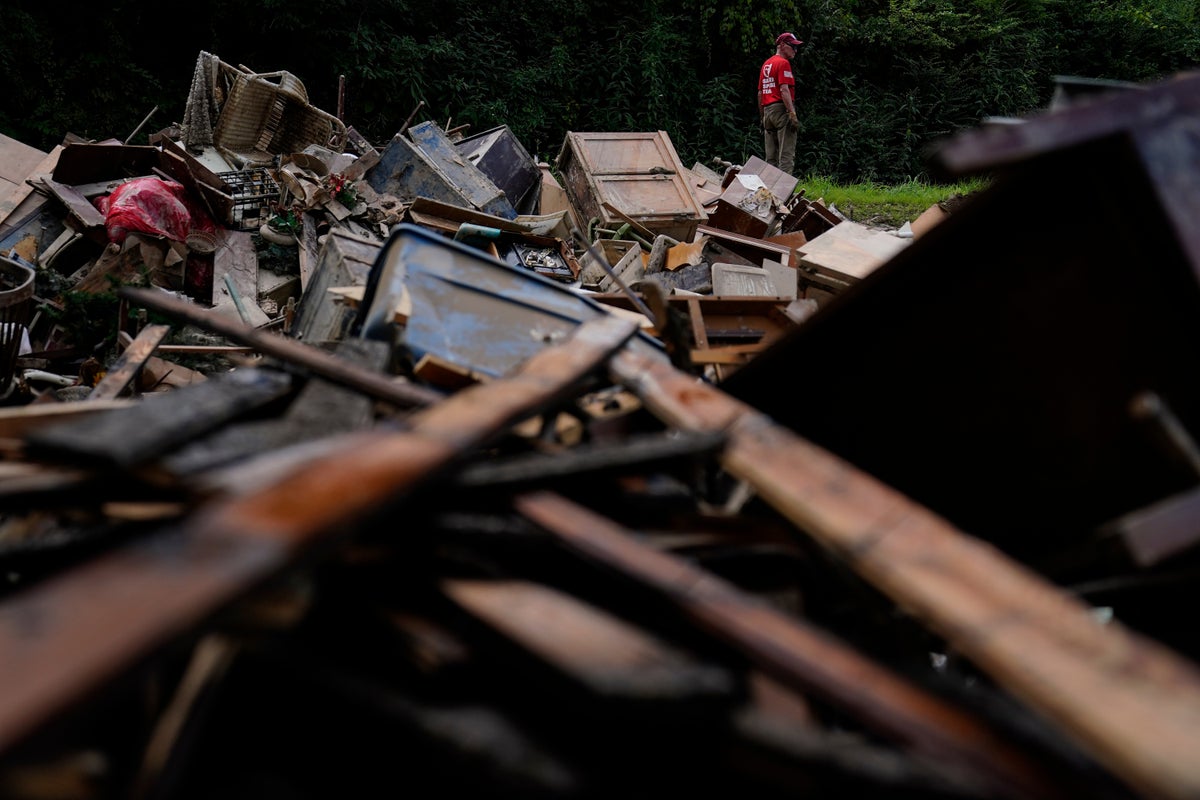
Consider the horrific 2022 floods in eastern Kentucky, when more than a foot of rain fell over parts of the state, killing more than 40 people. asserted
foot → consider → people
Where the flood struck, just 2.1% of properties were insured then, a rate that remains about the same today, the AP analysis shows, even though about 47% are at severe or extreme risk of flooding. asserted
% → strike → flooding
That’s a gap of 45 percentage points — more than 7 times the national average. asserted
That → ’ → points
FEMA’s flood maps didn’t catch all that risk during the 2022 flood, with only 18% of the buildings that were affected falling within a high-risk zone. asserted
that → catch → zone
Flood maps, which are commonly out of date, don’t consider some types of flood risk, such as flooding from inland heavy rains. asserted
which → consider → rains
The places with the biggest insurance gaps are those where heavy precipitation flooding occurs away from large water bodies, said Jeremy Porter, the chief economist at First Street. asserted
Porter → occur → Street
“That’s the Appalachian region, further inland, and then in the Midwest and Northeast in particular, extreme precipitation is the way climate change is manifesting itself,” he said. asserted
he → ’ → itself
Most buyers face rising costs for flood insurance The typical cost of a flood insurance policy is $1,100 per year, up roughly 90% in the last five years, the AP’s estimates show. asserted
estimates → face → years
Lake Charles resident Dan Charlson said he dropped his policy when the math no longer worked. asserted
math → say → policy
His insurance shot up over time from roughly $900 to $4,000 — an amount he expected to keep climbing. asserted
he → shoot → 4,000
“I’m looking at what it costs to fix the house, and the fact that I only flooded once in 50 years. asserted
I → look → years
So, it’s a risk analysis,” he said. asserted
he → ’ → ?
The costs have been driven up chiefly by efforts to modernize pricing. asserted
costs → drive → pricing
A couple of years ago, the federal government introduced Risk Rating 2.0, a much more accurate way of aligning a property’s flood risk with the price of coverage. asserted
government → introduce → coverage
But more accurately priced flood insurance meant much higher prices overall for most buyers. asserted
insurance → price → buyers
A government watchdog report found that Gulf Coast states had been the most underpriced and required the largest increases under the new pricing structure. asserted
states → find → structure
FEMA said in a statement that stronger building codes, smarter zoning and competitive private insurance options are needed rather than shifting all flood risk and cost to the federal government. asserted
codes → say → government
Risk Rating 2.0’s accuracy gives policyholders a better sense of their true risk. asserted
accuracy → give → risk
The agency can’t address affordability without action from Congress, and it can’t make private insurance companies enter the market. asserted
companies → address → market
FEMA is working on a better system to map flood risk, called Future of Flood Risk Data. asserted
FEMA → work → Risk
Proposals to overhaul the program have stalled, including adding options to make it more affordable to low-income buyers. “Everybody agrees it’s broken, but no one can agree how to fix it,” said Jeffrey Schlegelmilch of the National Center for Disaster Preparedness at Columbia University. asserted
Schlegelmilch → overhaul → University
The Associated Press receives support from the Walton Family Foundation for coverage of water and environmental policy. asserted
Press → receive → policy

💬Give feedback
🕘History 🎫Support