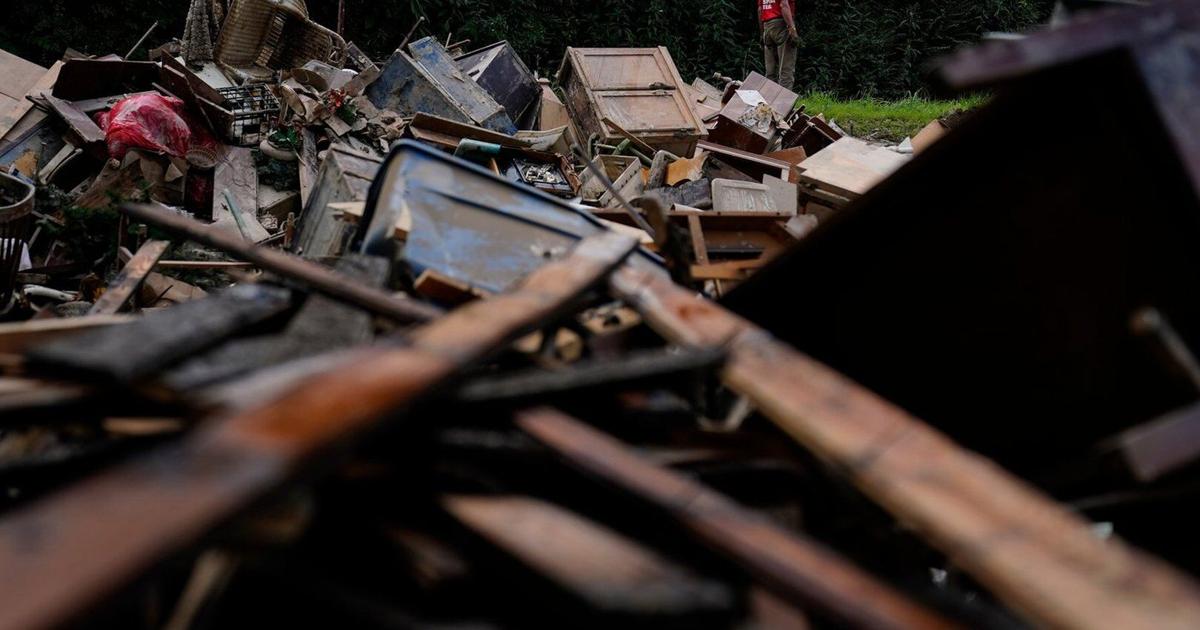
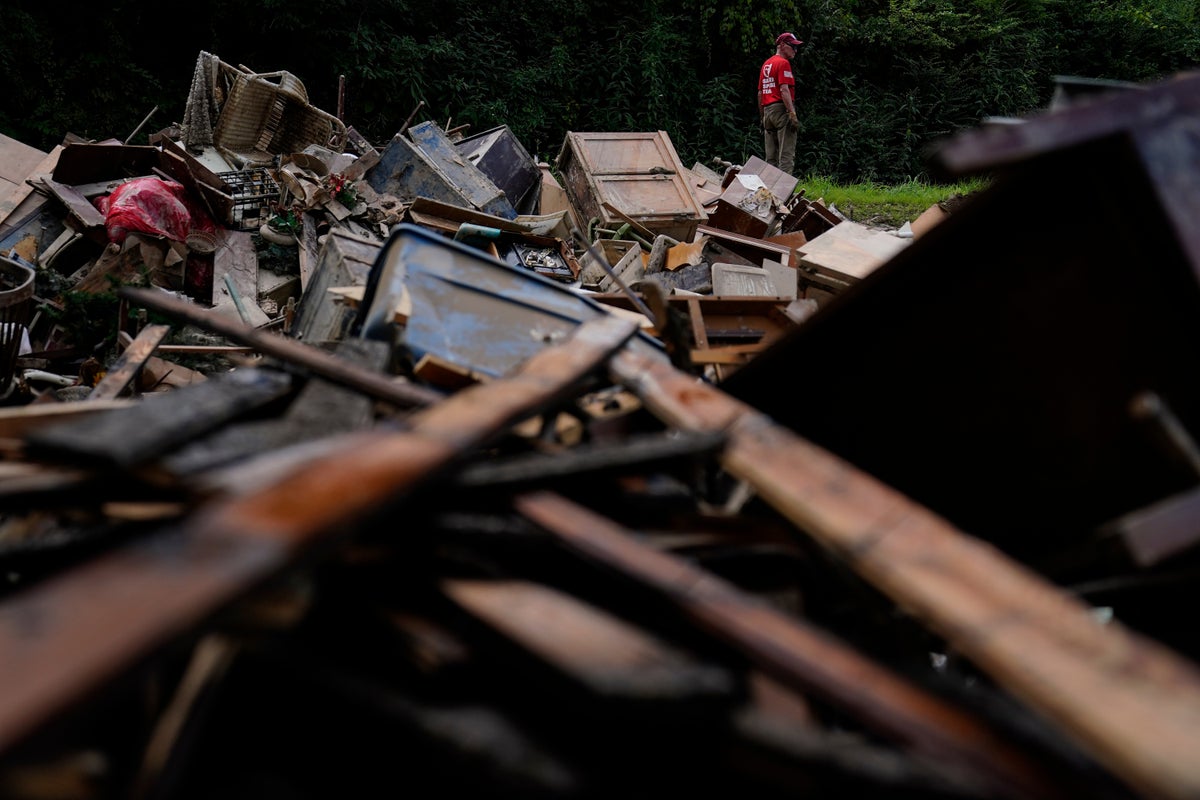
Photo via Toronto Star

Millions who need flood insurance the most don’t have it as flawed federal program raises prices

Read the original at Toronto Star ↗
Cite

Phillis, M., & Wildeman, M. (2026, September 29). Millions who need flood insurance the most don’t have it as flawed federal program raises prices. Toronto Star. https://www.thestar.com/news/world/united-states/millions-who-need-flood-insurance-the-most-don-t-have-it-as-flawed-federal-program-raises-prices/article_8e2f9799-c098-54e0-99dc-0d443660ab46.html

Dated when The Aporia collected the article, usually within hours of publication. Check the original for its exact date and byline.

Toronto Star · collected 2026-09-29 · by Michael Phillis, M.k. Wildeman

Quick Summary

The article reports that many people affected by floods do not have federal flood insurance, with just 2.4% of properties nationwide covered by such policies despite 8.4% being at severe or extreme risk of flooding. In eastern Kentucky and other high-risk areas, fewer than 5% of properties are insured, exacerbating the financial burden on those hit by disasters like the July 2022 flood. The article highlights how price increases have led to a decline in policy numbers, while climate change intensifies flood risks. It also notes that proposals to reform the flawed insurance program have stalled due to lack of consensus on solutions.
Written by AI on 2026-09-29, from this article's own text only (the story summary below draws on all the coverage).

AI analysis

Story summary

In July 2022, severe floods devastated eastern Kentucky, isolating communities by knocking out cell service and causing significant property damage. Victims like Libby Honeycutt, Ronald Conley, and Jennifer Campbell faced urgent rescue needs and extensive cleanup efforts without flood insurance, which only 2.4% of U.S. properties have despite 8.4% being at severe or extreme flooding risk. This gap highlights flaws in the federal flood insurance program managed by FEMA, making recovery more challenging for those affected. The number of flood insurance policies has dropped by roughly 500,000 over five years, further exacerbating the issue.

Written for “Flood Insurance Program Issues” on 2026-11-04, grounded in this article and the 1 other(s) covering the same event.

Story

📰 Flood Insurance Program Issues
Environment · 2 article(s) covering the same event. See how they differ ↓

Compared with similar articles

This article reads leans left and hedges 6% of its claims. Each row says how that neighbour differs.
The Independent
⚖️ Leans left Hedges 6 of 95 claims Outlet record 59/100
The Independent
Hedges 6 of 20 claims Outlet record 59/100
“Article A describes the aftermath of a flood that occurred in July 2022 in eastern Kentucky, while Article B reports on current forecasted flooding from remnants of Hurricane Polo affecting multiple regions through the weekend.”
NBC News
Outlet record 78/100
“Article A discusses a September nor'easter flood alert, while Article B refers back to the July 2022 floods in Kentucky.”
Toronto Star
⚖️ Leans left Hedges 1 of 34 claims Outlet record 64/100
“Article A discusses the broader issues with the national flood insurance program, while Article B describes a specific flood event that occurred in July 2022.”
How this article was measured signals, leaning charts, publisher record, byline, topics and claims

Signals How these are calculated →

Claims extracted
95
sentences that state something as happening or true
Uncertain
6%
6 of 95 hedged ("reportedly", "may", "according to")
Leaning
Leans left
of the writing, not the subject · beta estimate
Publisher signals
64/100
Toronto Star's corrections and hedging, across everything collected from it. Not a measure of accuracy.
Outlets on this story
2
Environment
Same framing elsewhere
1
articles that frame the event the way this one does
Analyzed 2026-09-29 · how these are computed

How this is being covered How these are calculated →

Article leaning vs. publisher reliability
Source leaning vs. consistency

Publisher

Toronto Star · 11416 article(s) · 28 correction(s) detected
Running correction rate · 28 correction(s)
2026-10-26
Correction
2026-10-24
Correction
2026-10-07
Correction
2026-09-24
Correction

Who wrote this

Michael Phillis
3 article(s) here · 1 carrying a prediction
🔮 The flood left six inches of “gooey, clay mud” in the house that was so thick it could suck shoes off feet and had to be shoveled out.
🔮 His insurance shot up over time from roughly $900 to $4,000 — an amount he expected to keep climbing.
🔮 The flood left six inches of “gooey, clay mud” in the house that was so thick it could suck shoes off feet and had to be shoveled out.
Also by Michael Phillis
Nothing else under this byline is closely related to this article, so these are simply their most recent.
M.k. Wildeman
3 article(s) here · 1 carrying a prediction
🔮 The flood left six inches of “gooey, clay mud” in the house that was so thick it could suck shoes off feet and had to be shoveled out.
🔮 His insurance shot up over time from roughly $900 to $4,000 — an amount he expected to keep climbing.
🔮 The flood left six inches of “gooey, clay mud” in the house that was so thick it could suck shoes off feet and had to be shoveled out.
Also by M.k. Wildeman
Nothing else under this byline is closely related to this article, so these are simply their most recent.

Topics

Associated Press FEMA Kentucky WASHINGTON the United States

Subjects

Kentucky GPE · 4× FEMA ORG · 3× Associated Press ORG · 1× First Street ORG · 1× Jennifer Campbell PERSON · 1× Libby Honeycutt PERSON · 1× Louisiana GPE · 1× Ronald Conley PERSON · 1× WASHINGTON GPE · 1× the United States GPE · 1×

Narrative

They were living with other people in eastern Kentucky, in the damaged area, or they were having to move to other eastern Kentucky counties, or, you know, out of the region,” said one of the report’s authors, Eric Dixon, a senior researcher at the nonprofit Ohio River Valley Institute.
framing: assertive · carried by 1 article(s) · first seen 2026-09-29
🔮 The flood left six inches of “gooey, clay mud” in the house that was so thick it could suck shoes off feet and had to be shoveled out.

Claims (95 extracted, 6 hedged)

In eastern Kentucky, Libby Honeycutt listened upstairs to the sound of glass breaking below as floodwaters tore apart her house. asserted
floodwaters → listen → house
Twenty-six miles to the south, Ronald Conley rescued his dogs from his elevated house with a pontoon boat. asserted
Conley → rescue → boat
Jennifer Campbell heard the screams from across the river of a neighbor desperate for rescue. asserted
Campbell → hear → rescue
They all remember the horrifying speed of that July 2022 flood that also isolated so many by knocking out cell service, leaving people unable to learn the fate of loved ones. asserted
that → remember → ones
And then the sun rose, the waters receded and thousands of people had to figure out what to do about their damaged homes and upended lives. asserted
thousands → rise → homes
That work was made harder for the vast majority hit by the downpours, including these three people, who did not have flood insurance. asserted
who → make → insurance
Nationwide, just 2.4% of properties are covered by 4.5 million federal flood insurance policies, an Associated Press analysis shows — but 8.4% are at severe or extreme risk of flooding. asserted
% → cover → flooding
The gap illustrates the foundational flaws in a program that fails to balance affordability, flood protection and cost to taxpayers. asserted
that → illustrate → taxpayers
It’s getting worse. asserted
It → get → ?
This downward trend collides with the rising risk of flooding across many areas of the United States, driven by climate change that can strengthen hurricanes and worsen downpours far from the coasts. asserted
that → collide → coasts
The problem is especially bad in eastern Kentucky, where in some ZIP codes, no more than 5% of properties are covered by flood insurance, even though hundreds or thousands of buildings are at extreme risk of flooding, according to figures from the federal government and data provided exclusively to the AP by the risk analysis group First Street. uncertain
hundreds → cover → group
It’s not just Appalachia — coastal areas including parts of southern Louisiana stand out, too. asserted
areas → ’ → Louisiana
Areas at high risk of flooding and where few people are insured tend to be poorer, experts said, as are areas where FEMA’s flood maps don’t properly convey the severity of the risk or mandate that enough people buy coverage. asserted
people → insure → coverage
Proposals to overhaul the program have stalled, including adding options to make it more affordable to low-income buyers. asserted
it → overhaul → buyers
“Everybody agrees it’s broken, but no one can agree how to fix it,” said Jeffrey Schlegelmilch, faculty director of the National Center for Disaster Preparedness at Columbia University. asserted
Schlegelmilch → agree → University
Conley’s double-wide trailer in Kentucky is elevated by stacked cement cinder blocks. asserted
trailer → elevate → blocks
In 2022, when he floated his dogs to safety on a pontoon boat, that wasn’t enough. asserted
that → float → boat
The flood left six inches of “gooey, clay mud” in the house that was so thick it could suck shoes off feet and had to be shoveled out. uncertain
it → leave → feet
Without insurance, he’s mostly lived in a small place FEMA provided and relied on generous church groups and donations, he said. asserted
he → live → groups
With insurance, he is confident the work would have been done much faster. asserted
work → do → insurance
Instead, after that flood, and another that set his repairs back in 2025, he was only able to move back into his home this month. asserted
he → set → home
Why and how the government provides flood insurance Congress set up the National Flood Insurance Program in 1968. asserted
Congress → provide → 1968
It offers flood insurance in participating communities that agree to take steps to manage flood risk, such as restricting construction in high-risk areas. asserted
that → offer → areas
Homeowners insurance doesn’t cover floods. asserted
insurance → cover → floods
Policies are available to renters and businesses, but most are purchased by homeowners covering up to $250,000 for their property and $100,000 for belongings. asserted
most → purchase → belongings
FEMA flood maps determine who is in a high-risk area where flood insurance must be attached to a federally backed mortgage. asserted
insurance → determine → mortgage
When it works, it is life changing. asserted
it → work → ?
Bryant Matthews was up late with a toothache in Letcher, Kentucky, when he noticed the water rising fast during the 2022 flood. asserted
water → notice → flood
Being awake, he managed to get his wife, stepkids and mother to safety. asserted
he → manage → safety
I was aware of what was going on, and I was able to get the family out of the house before it got too bad.” asserted
it → go → house
Friends let them stay in their basement for about three months and they lost a lot. asserted
they → let → lot
Beloved collections of old Metallica recordings and cheesy 80s horror movies were damaged. asserted
collections → damage → recordings
But they had flood insurance, which paid what was left on their mortgage. asserted
what → have → mortgage
That helped them start again, debt free. asserted
them → help → ?
They found a place in nearby Hazard, which was closer to the kids’ school and their work. asserted
which → find → school
“I am very appreciative, very blessed,” he said. asserted
he → say → ?
Experts say flood maps need reform asserted
maps → say → reform
In many places, FEMA’s flood maps don’t do a good job of capturing the extent of severe flood risk. asserted
maps → do → risk
Millions think their homes are safer than they really are and aren’t forced to buy insurance when they probably should. asserted
they → think → insurance
That made rebuilding more difficult in 2022 after more than a foot of rain fell over parts of Kentucky, killing more than 40 people. asserted
foot → make → people
…and 55 more, not listed.

💬Give feedback
🕘History 🎫Support