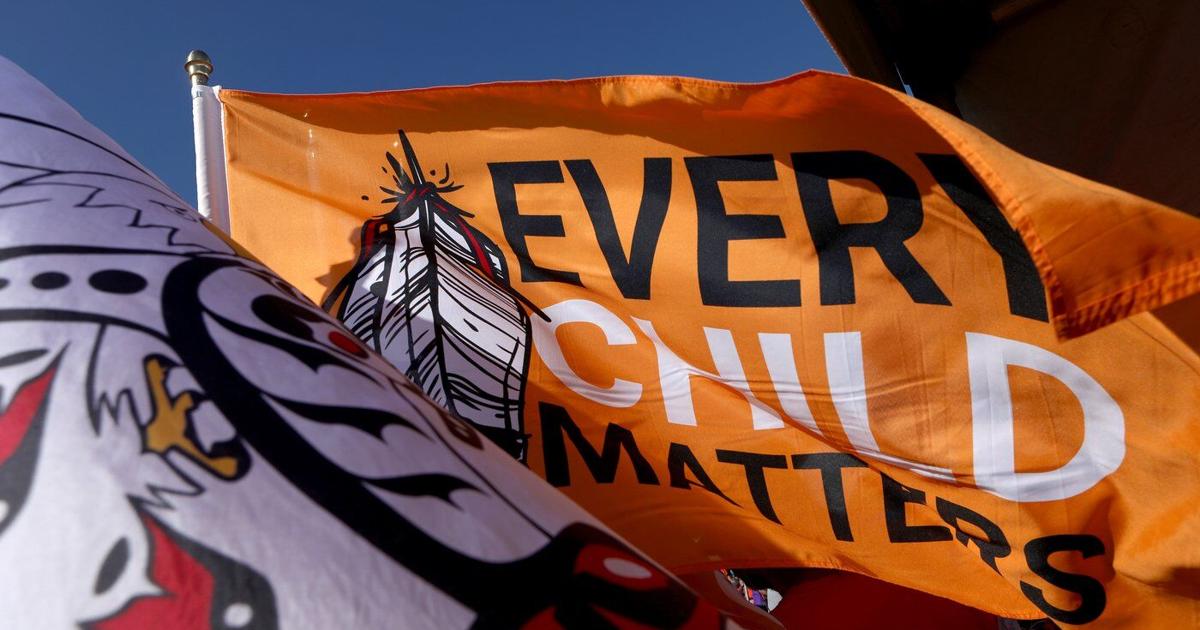
When Wilton Littlechild was co-chairing the landmark Truth and Reconciliation Commission more than a decade ago, he thought a lot about the idea of economic reconciliation and how it could help transform Indigenous communities.
uncertain
it → co → communities
“You may have the best ideas in the world but without a fundamental grounding and foundation to self-determination, you’re missing a very important part,” Littlechild said in an interview with The Canadian Press.
uncertain
Littlechild → have → Press
Littlechild said economic reconciliation is still the key to achieving reconciliation between Indigenous and non-Indigenous Canadians — but not in the way Prime Minister Mark Carney sees it.
asserted
Carney → say → it
The Truth and Reconciliation Commission, launched out of a legal settlement between the federal government and survivors of residential schools, was tasked with researching the history and legacy of those institutions.
asserted
Commission → launch → institutions
It was chaired by Littlechild, Murray Sinclair and Marie Wilson.
asserted
It → chair → Littlechild
Between 1857 and 1996, 150,000 Indigenous children were forced to attend church-run, government-funded schools.
asserted
children → force → schools
They were barred from speaking their languages in institutions often rife with abuse and located far away from their families and communities.
asserted
They → bar → families
The Truth and Reconciliation Commission initially documented the deaths of 3,200 children attending residential schools.
asserted
Commission → document → schools
Experts at the National Centre for Truth and Reconciliation — who continue to comb through millions of records — say the actual number could be much higher.
uncertain
number → continue → records
The Truth and Reconciliation Commission concluded in 2015 the goal of the schools was to erase Indigenous cultures.
asserted
goal → conclude → cultures
MPs unanimously voted to recognize residential schools as a form of genocide in 2022.
asserted
MPs → vote → 2022
Economic reconciliation is mentioned twice in the Truth and Reconciliation Commission’s 94 Calls to Action.
asserted
reconciliation → mention → Action
They call on the corporate sector to engage in meaningful consultations before proceeding with economic development projects, and to ensure Indigenous people have equitable access to jobs in those projects.
asserted
people → call → projects
The federal government under Carney has made economic reconciliation the focus of its efforts to rebuild relations with Indigenous Peoples as it pushes forward an aggressive major projects agenda in the face of U.S. President Donald Trump’s trade war.
asserted
it → make → war
Littlechild said that while Carney has been focused on securing overseas investments, he’s ignoring the rights of Indigenous Peoples at home and sidelining their traditional economies by fast-tracking legislation that would allow for quicker project approvals and environmental reviews.
asserted
that → say → approvals
He said Carney’s approach risks alienating Indigenous communities and the federal government’s idea of economic reconciliation falls short of the efforts industry is making to work in partnership with communities.
asserted
industry → say → communities
He said he also fears traditional economies — hunting, fishing, trapping — could be damaged by an aggressive approach to resource development.
uncertain
economies → say → development
“Right now, it’s like a four-legged stool with one leg missing,” Littlechild said.
asserted
Littlechild → ’ → stool
That missing leg, he said, is true respect for Indigenous rights.
asserted
he → miss → rights
The federal government’s Bill C-39, known as the Building Canada Strong Act, seeks to approve projects within one year.
asserted
Bill → know → year
First Nations chiefs say they worry that will severely compress the timeline for their communities to complete land-use assessments and consultations.
asserted
communities → say → assessments
Similar legislation introduced by Ontario Premier Doug Ford’s government is being challenged by Indigenous and environmental groups in court.
asserted
legislation → introduce → court
And while Ottawa’s focus has shifted to economic reconciliation, the TRC’s Calls to Action that touch more on social issues are languishing, Littlechild said.
asserted
Littlechild → shift → issues
”(Carney is) approaching things by violating treaty rights, by violating the United Nations Declaration on the Rights of Indigenous Peoples, and just steamrolling on national interest strategies that completely exclude us by way of disrespect,” he said.
asserted
he → approach → disrespect
Indigenous Services Minister Mandy Gull-Masty disagreed with the suggestion that Carney does not prioritize Indigenous rights or the social issues faced by communities.
asserted
Carney → disagree → communities
“There is a lot of institutional reconciliation that’s happening,” Gull-Masty told The Canadian Press, citing work on reforming child and family services.
asserted
Masty → be → services
“And to me, that institutional reconciliation is maybe not language people are familiar with, but it is in progress and it is occurring.”
asserted
it → occur → progress
Hayden King, executive director of the Yellowhead Institute, said he wonders what those institutional commitments are — since First Nations are still waiting for the government to pass clean drinking water legislation, improve their access to health care, address the crisis of missing and murdered Indigenous women and girls, and reduce incarceration and over-policing in their communities.
asserted
government → say → communities
“All I’ve heard Carney talk about is resource development,” King said.
asserted
King → hear → ?
“You can look at all of the proposals to improve the relationship, institutionally or otherwise, and it’s just a record of neglect.”
asserted
it → look → neglect
Yellowhead released a report last year on major projects and the conflicts that could arise from Indigenous participation — including the prospect of one First Nation violating the rights of another in order to invest in a controversial project.
uncertain
Nation → release → project
King said Carney’s approach to relations with Indigenous communities puts him more in line with former prime minister Stephen Harper than with Justin Trudeau.
asserted
approach → say → Trudeau
Harper’s government also introduced legislation to speed up project approvals, leading to the Idle No More movement that staged protests across the country in 2012.
asserted
that → introduce → 2012
“Where Harper was the stick, Carney is the carrot,” King said.
asserted
King → say → ?
The “carrot” approach can be seen in how Carney’s cabinet is encouraging First Nations to back the Trans Mountain pipeline through a low-cost loan and a $2.5 million payment for willing investors that some are comparing to a bribe.
asserted
some → see → bribe
“The discourse around (economic reconciliation) is most definitely that Indigenous people are going to be formal partners and this is going to breathe life into Indigenous sovereignty,” King said.
asserted
King → go → sovereignty
“But it’s the reverse of the process that the TRC advocated for — it was, ‘Let’s get this relationship right, and then we can talk about partnerships.’”
asserted
we → ’ → partnerships
King said economic reconciliation can’t be achieved until Indigenous groups no longer have to fight for their rights and their land in court.
asserted
groups → say → court
“If we’re really interested in holding up sovereignty and jurisdiction, then we have to insist on consent, and consent means knowing all the details before we make decisions.”
asserted
we → ’re → decisions
Stephanie Scott heads the National Centre for Truth and Reconciliation, which works to preserve the historical record of residential schools and educate Canadians about what happened in the institutions.
asserted
what → head → institutions
…and 13 more, not listed.
 The Aporia