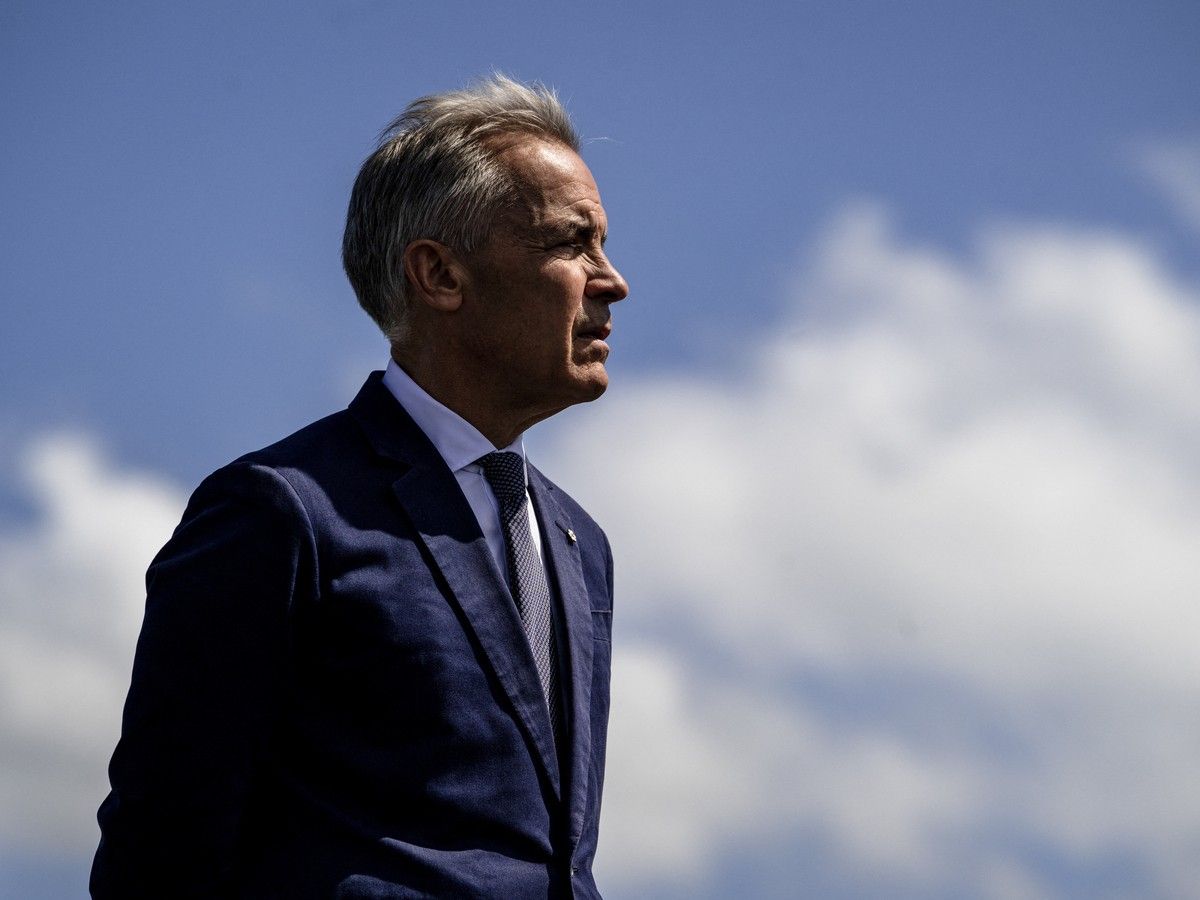
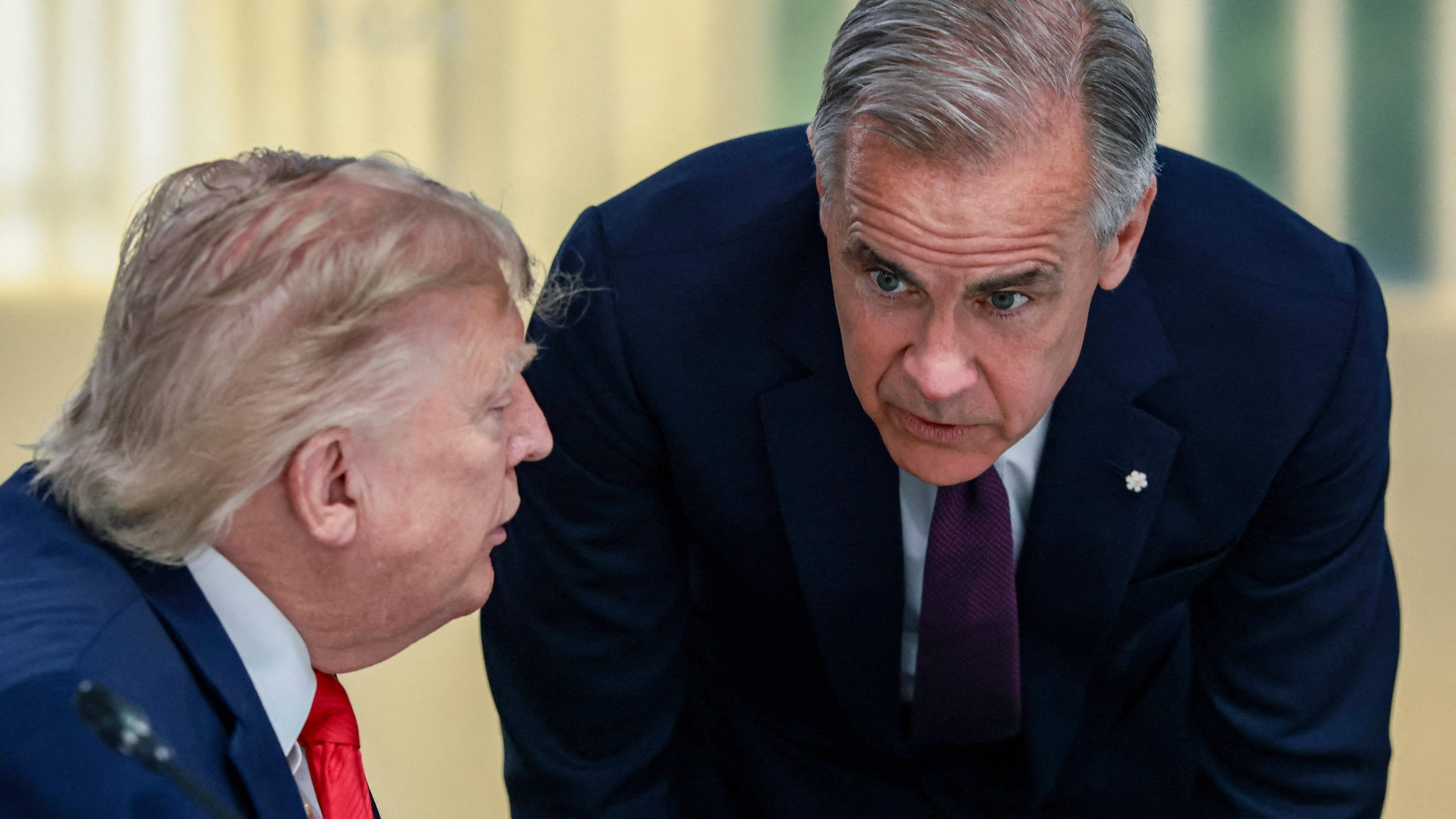
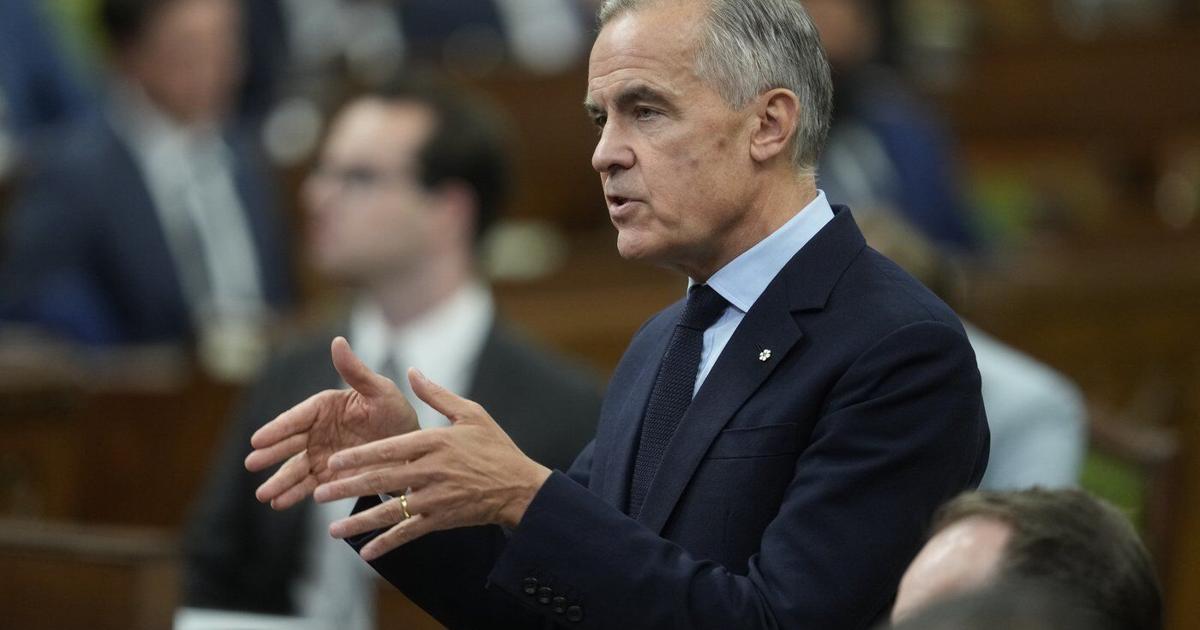
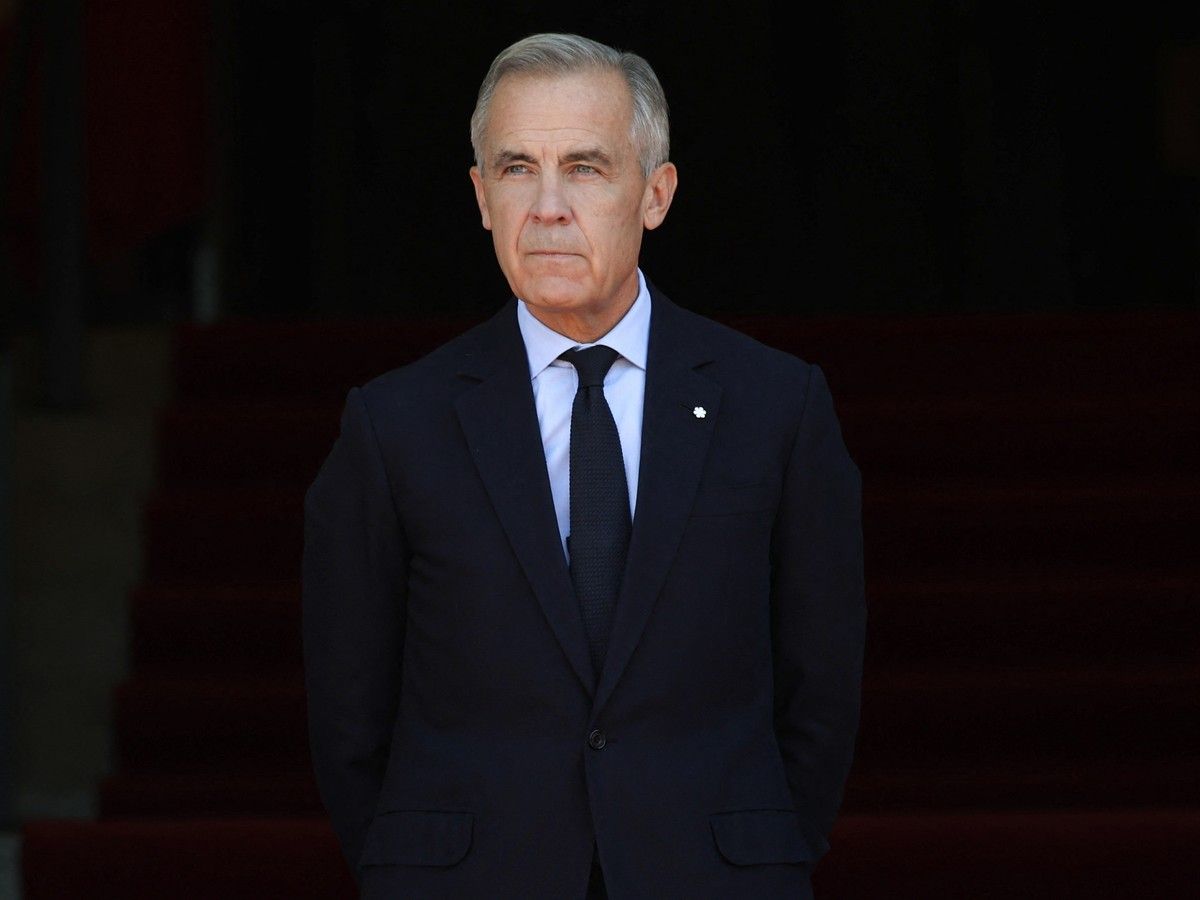
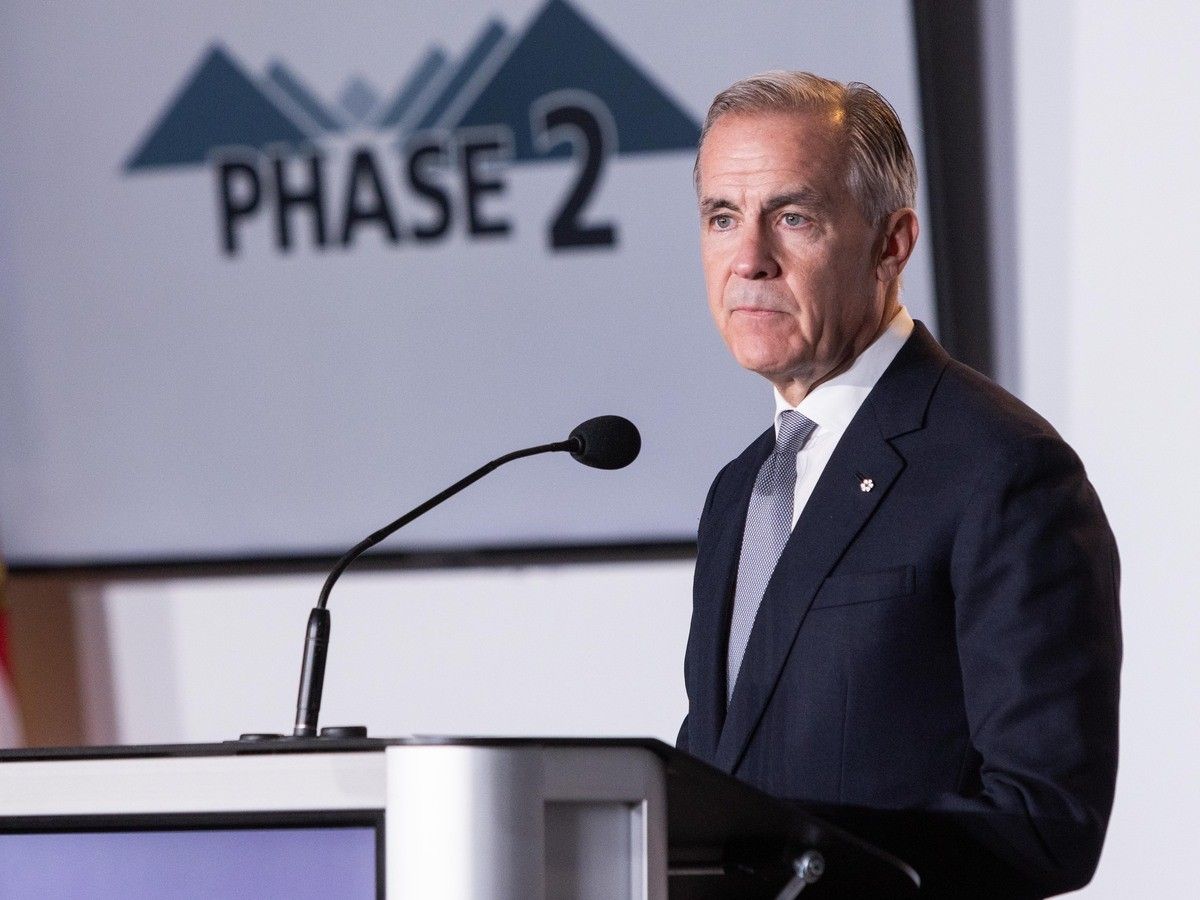
As Canadian Prime Minister Mark Carney races to make the country less dependent on the United States, attract billions in new investment and get major projects built faster, his economic overhaul is running into resistance from a group that says it wants many of the same things: organised labour.
asserted
it → race → things
The latest clash, over the right to strike, comes after months of mounting pressure on Ottawa from Washington, DC.
asserted
clash → strike → Washington
list of 4 items- list 1 of 4Why does Canada want to join the Europe-led JEF military partnership?
- list 2 of 4Canadians warm to EU ‘associate membership’ proposal
- list 3 of 4Trump tariffs hit Canada’s dairy farmers as US sales stall
- list 4 of 4Canada’s BC sues OpenAI over ChatGPT role in Tumbler Ridge school shooting
US President Donald Trump, since taking up a second term in office last year, has imposed steep tariffs on Canadian goods and weakened trade agreements – perilous moves as Canada has historically sent close to 80 percent of its exports to its southern neighbour.
asserted
Canada → want → neighbour
He has repeatedly piled on with the tariff threats to make Canada the 51st US state.
asserted
Canada → pile → threats
Canada has responded with retaliatory tariffs, while a broader movement to “Buy Canadian” has taken hold.
asserted
movement → respond → hold
The hockey-inspired “elbows up” — meaning a readiness to defend against an opponent — has become a national rallying cry.
asserted
elbows → inspire → opponent
With trade talks stalled since August, Carney has moved with urgency to shore up the economy and invite new investments.
asserted
Carney → stall → investments
Last month, he announced Bill C-39, known as the Building Canada Strong Act, promising to bring “speed, certainty and predictability” to investors.
asserted
he → announce → investors
Along with measures to speed up approvals for major projects, the bill would also give Ottawa clearer powers to intervene in legal strikes and lockouts in federally regulated workplaces — a provision that has put Carney on a collision course with unions.
asserted
that → speed → unions
Canada’s largest unions have come together against the changes.
asserted
unions → come → changes
The largest, the Canadian Union of Public Employees (CUPE), had its national executive go as far as voting to defy the bill’s proposed limits on the right to strike if it passes Parliament without amendments.
asserted
it → have → amendments
CUPE National President Mark Hancock credited Carney’s handling of Trump and said the union’s 800,000 members, who work everywhere from hospitals to schools to municipal services, want to be part of “Team Canada”.
asserted
who → credit → Canada
“But at what cost?” he said in an interview with Al Jazeera.
asserted
he → say → Jazeera
A fight over the right to strike
The controversy centres on Section 107 of the Canada Labour Code, which already gives the Labour Minister broad powers to step into disputes if needed to maintain “industrial peace”, end work stoppages and force the two sides into a binding arbitration.
asserted
which → strike → arbitration
Beginning in 2024, Ottawa used the provision eight times to intervene in disputes involving airlines, Canada’s two largest railways, three major ports and Canada Post and again during the Air Canada dispute in 2025 when flight attendants went on strike.
asserted
attendants → begin → strike
Unions have challenged the use of that law in court and had hoped the proposed C-39 would restrict, if not repeal, that clause while businesses wanted it strengthened.
asserted
it → challenge → clause
The bill does neither.
asserted
bill → do → neither
Instead, it introduces two conditions that the government would have to fulfil first before turning to Section 107.
asserted
government → introduce → Section
Before stepping in, the government would have to appoint a special mediator, wait for a public report and consider whether a work stoppage is hurting the “national interest”.
asserted
stoppage → step → interest
Once a strike or lockout is underway, the minister could direct the Canada Industrial Relations Board to get operations running again and impose a binding process, such as arbitration.
uncertain
operations → direct → arbitration
The government says those steps put clearer guardrails around a power that already exists, and Carney has said the bill “absolutely reinforces the right to strike”, according to the Canadian Broadcasting Corporation.
uncertain
bill → say → Corporation
Unions have rejected this defence, pointing out that the meaning of “national interest” would ultimately be decided by the minister.
asserted
meaning → reject → minister
They also argue that the prospect of government intervention is bound to change what happens at the bargaining table.
asserted
what → argue → table
“The political lesson that employers will draw from it is simple,” Larry Savage, a professor of labour studies at Brock University, told Al Jazeera.
asserted
Savage → draw → Jazeera
“Hold out long enough, emphasise the economic damage, and then Ottawa will remove the union’s leverage for you.”
asserted
Ottawa → hold → you
Disruption, Savage said, is precisely what gives a strike its power.
asserted
what → say → power
“Every effective strike is disruptive,” he said.
asserted
he → say → ?
Unions say they have already seen employers expect Ottawa to intervene.
asserted
Ottawa → say → ?
Teamsters Canada alleges the Canadian National Railway (CN) and the Canadian Pacific Kansas City (CPKC) railroad companies were counting on Ottawa to step in when they locked out thousands of workers in 2024.
asserted
they → allege → 2024
Section 107 was invoked within hours.
asserted
Section → invoke → hours
“Companies have gotten used to the idea that if there is a labour dispute, they can just wait for the government to intervene,” Christopher Monette, Teamsters Canada’s director of public affairs, told Al Jazeera.
asserted
Monette → get → Jazeera
CUPE said it saw a similar dynamic at Air Canada in August 2025.
asserted
it → say → August
Hancock said bargaining stalled after more than 10,000 Air Canada flight attendants voted overwhelmingly to strike because the airline was “expecting the government of Canada to step in and end the strike” — an account Air Canada disputed.
asserted
Canada → say → strike
Less than 12 hours after workers walked out, Ottawa invoked Section 107.
asserted
Ottawa → walk → Section
Air Canada CEO Michael Rousseau later told BNN Bloomberg the airline had expected the provision to be enforced and did not expect a strike.
asserted
provision → tell → strike
“That was why they didn’t have a strategy on how to deal with the strike,” Hancock said.
Building Canada faster
The fight over the right to strike is also part of a much bigger argument taking shape around Carney’s economic agenda: Who gets a say in how Canada should change, and how quickly, in the name of making itself less vulnerable to the US?
Critics accuse Carney of using the economic threat from the US to push through changes that go well beyond responding to Trump’s trade war.
asserted
that → have → war
New Democratic Party leader Avi Lewis has accused him of using the “fear and disorientation around the trade war to push through a series of unpopular measures that he did not run on, has no mandate for and would never get away with under normal circumstances”.
asserted
he → accuse → circumstances
That tension was on display in Toronto just a week before C-39 was introduced.
asserted
C-39 → introduce → Toronto
Inside Canada’s first national investment summit, hundreds of global investors met with government officials and executives as Carney pitched a country ready to build.
asserted
Carney → meet → country
Outside, hundreds of protesters marched through downtown towards the summit’s opening gala under the banner “The Many vs The Money”.
asserted
hundreds → march → Money
…and 16 more, not listed.
 The Aporia