The Aporia
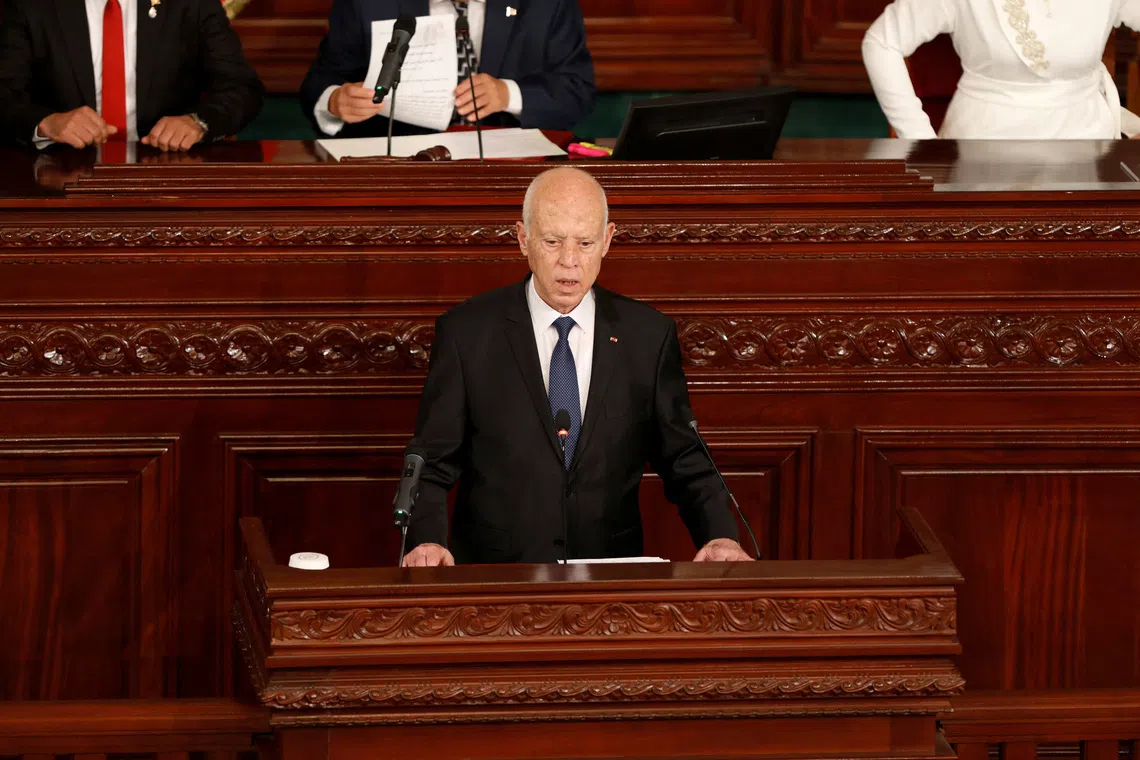
The Straits Times. (2026, September 30). Tunisian president eases cybercrime penalties after rights groups' criticism. The Straits Times. https://www.straitstimes.com/world/europe/tunisian-president-eases-cybercrime-penalties-after-rights-groups-criticism
The Straits Times. “Tunisian president eases cybercrime penalties after rights groups' criticism.” The Straits Times, 30 Sept. 2026, https://www.straitstimes.com/world/europe/tunisian-president-eases-cybercrime-penalties-after-rights-groups-criticism.
The Straits Times. “Tunisian president eases cybercrime penalties after rights groups' criticism.” The Straits Times, September 30, 2026. https://www.straitstimes.com/world/europe/tunisian-president-eases-cybercrime-penalties-after-rights-groups-criticism.
Dated when The Aporia collected the article, usually within hours of publication. Check the original for its exact date and byline.
On September 30, Tunisian President Kais Saied amended a controversial cybercrime decree that had been criticized by human rights groups for stifling dissent. The amendment reduces prison terms of up to 10 years in some cases to financial penalties ranging from 10,000 to 20,000 Tunisian dinars ($3,370 to $6,740) for first-time offenses. This move comes as a rare concession by Saied since he took control of much of Tunisia's political system in 2021. The amendment was announced just hours before civil society groups, led by the UGTT union, planned a national protest march against what they view as restrictions on rights and freedoms. The previous decree had faced widespread criticism for being overly repressive and targeting journalists and activists.