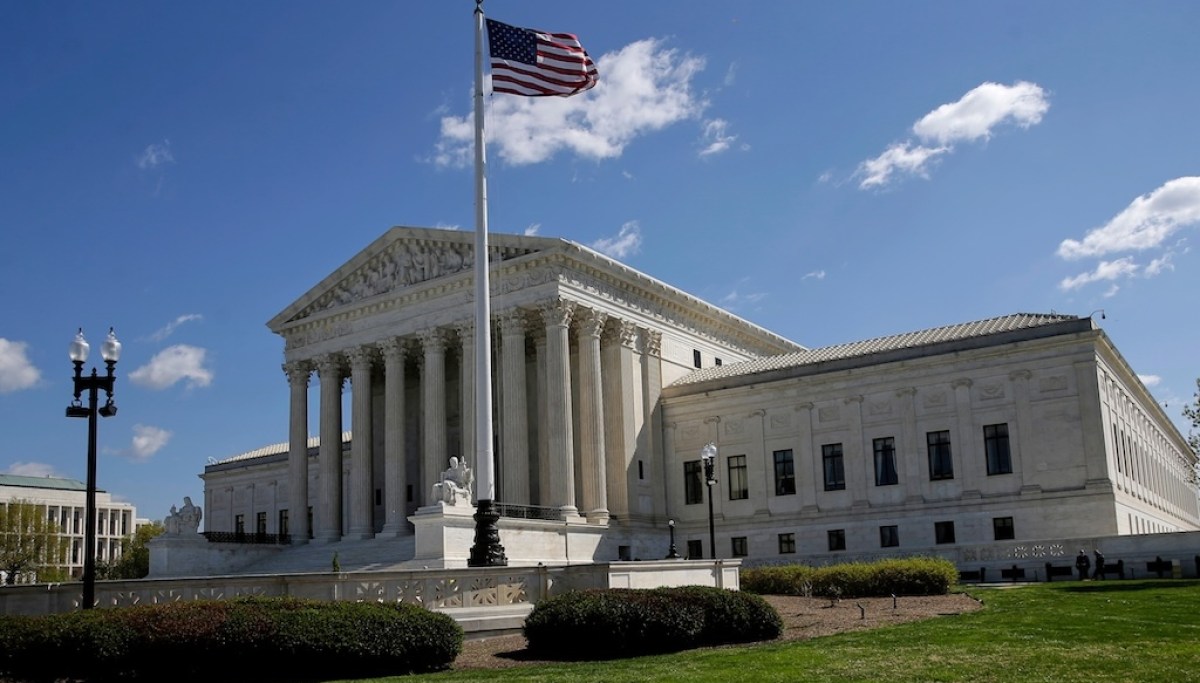
Photo via Reason

2 Supreme Court Cases to Watch This Month

Read the original at Reason ↗
Cite

Root, D. (2026, October 1). 2 Supreme Court Cases to Watch This Month. Reason. https://reason.com/2026/10/01/2-supreme-court-cases-to-watch-this-month/

Dated when The Aporia collected the article, usually within hours of publication. Check the original for its exact date and byline.

Reason · collected 2026-10-01 · by Damon Root

Quick Summary

The U.S. Supreme Court’s new term starts on Monday, marking the resumption of regular oral arguments after summer breaks filled with emergency cases. Two key cases to watch this month include Suncor Energy, Inc. v. County Commissioners of Boulder County, which examines whether state lawsuits against energy companies for climate change damages can proceed under federal law preemption, and Salazar v. Paramount Global, which questions the applicability of the Video Privacy Protection Act to digital platform sharing practices. Both cases are scheduled for oral arguments in early October and have significant implications for environmental litigation and consumer privacy laws.
Written by AI on 2026-10-01, from this article's own text only (the story summary below draws on all the coverage).

AI analysis

Story summary

The U.S. Supreme Court's 2026-2027 term officially begins on Monday, marking the end of a summer filled with high-profile orders and opinions from its emergency docket. One case to watch this month is Suncor Energy, Inc. v. County Commissioners of Boulder County, where county officials in Colorado sued Suncor over alleged environmental violations related to oil extraction. Another notable case involves Paramount Global, highlighting the court's continued engagement with significant legal issues despite the summer break.

Written for “Supreme Court Cases” on 2026-11-01, grounded in this article and the 0 other(s) covering the same event.

Story

📰 Supreme Court Cases
Politics · 1 article(s) covering the same event.

Compared with similar articles

This article reads leans left and hedges 14% of its claims. Each row says how that neighbour differs.
Washington Examiner
Hedges 3 of 26 claims Outlet record 70/100
“The articles discuss different aspects of the Supreme Court's activities over a period of time and do not describe the exact same conference or event.”
Reason
Hedges 4 of 13 claims Outlet record 67/100
“Article A discusses Justice Alito recusing himself from a specific case (Suncor Energy v. Boulder County) set to be heard in October, while Article B provides an overview of upcoming Supreme Court cases for the term without mentioning Suncor specifically.”
CBS News
Hedges 9 of 102 claims Outlet record 66/100
“Both articles discuss the upcoming Supreme Court term but mention different cases and issues, indicating they are describing related topics rather than the exact same event.”
ABC News (US)
⚖️ Leans left Hedges 1 of 30 claims Outlet record 70/100
“The articles discuss different aspects and cases related to the Supreme Court's new term, but do not describe the exact same opening ceremony or initial proceedings.”
Toronto Star
⚖️ Leans left Hedges 1 of 29 claims Outlet record 64/100
“The articles discuss different aspects of the Supreme Court's new term; Article A mentions past cases and orders, while Article B focuses on upcoming cases for the beginning of the new term.”
Washington Examiner
Hedges 7 of 40 claims Outlet record 70/100
“The articles describe different aspects of the Supreme Court's activities; one discusses ongoing cases from the emergency docket while the other focuses on the new term starting with a climate case.”
CBS News
Hedges 6 of 88 claims Outlet record 66/100
“Article A is about upcoming Supreme Court cases for the month, while Article B discusses Justice Alito's interview and mentions the start of the new term but focuses on different topics.”
Fox News
⚖️ Leans right further right than this Hedges 11 of 35 claims Outlet record 69/100
“The articles describe different events happening on different dates during the Supreme Court term.”
CBS News
Hedges 0 of 3 claims Outlet record 66/100
“The articles discuss different aspects of the Supreme Court's upcoming term and do not describe the same specific incident.”
NBC News
Hedges 4 of 42 claims Outlet record 60/100
“While both articles discuss the upcoming Supreme Court term starting in October 2026, they are focused on different aspects and do not describe the exact same incident or occurrence.”
How this article was measured signals, leaning charts, publisher record, byline, topics and claims

Signals How these are calculated →

Claims extracted
28
sentences that state something as happening or true
Uncertain
14%
4 of 28 hedged ("reportedly", "may", "according to")
Leaning
Leans left
of the writing, not the subject · beta estimate
Publisher signals
67/100
Reason's corrections and hedging, across everything collected from it. Not a measure of accuracy.
Outlets on this story
1
Politics
Same framing elsewhere
1
articles that frame the event the way this one does
Analyzed 2026-10-01 · how these are computed

How this is being covered How these are calculated →

Article leaning vs. publisher reliability
Source leaning vs. consistency

Publisher

Reason · 1046 article(s) · 4 correction(s) detected
Running correction rate · 4 correction(s)

Who wrote this

Damon Root
7 article(s) here · 1 carrying a prediction
🔮 The 5th Circuit also denied that the federal ban on home distilling could be saved by the government's appeal to the Necessary and Proper Clause, which says that Congress has the authority "To make all Laws which shall be necessary and proper for carrying into Execution the foregoing Powers, and all other Powers vested by this Constitution in the Government of the United States, or in any Department or Officer thereof.
🔮 So declared a recent attention-grabbing headline at Politico, which probably caused a blood pressure spike among those readers who got the mistaken impression that the retirement under consideration might be imminent.
2026-10-06 · mixed framing · Alito Talks Retirement
🔮 But you may be forgiven if you didn't realize the justices had actually gone away on a summer break.
2026-10-01 · assertive framing · 2 Supreme Court Cases to Watch This Month
🔮 Last year, President Donald Trump issued an executive order directing federal officials to create new systems that would allow state and local authorities to check the immigration status of both registered voters and would-be voters who were seeking to register.
2026-09-29 · assertive framing · A Limited Supreme Court Win for Trump's Voter Database
🔮 Last month, the U.S. Supreme Court ruled 6–3 that the executive branch may begin to implement President Donald Trump's executive order that seeks to restrict the use of mail-in ballots in the fast-approaching midterm elections this November.
🔮 Article III, Section 1, of the U.S. Constitution says that "the judicial Power of the United States shall be vested in one supreme Court, and in such inferior courts as the Congress may from time to time ordain and establish."
🔮 "The Declaration [of Independence] charged that George III 'has made Judges dependent on his Will alone, for the tenure of their offices, and the amount and payment of their salaries,'" Roberts observed in his 2025 report.
Also by Damon Root
Alito Talks Retirement
2026-10-06 · Reason
Nothing else under this byline is closely related to this article, so these are simply their most recent.
All 7 articles by Damon Root →

Topics

Colorado Court Paramount Global The U.S. Supreme Court's White House

Subjects

Colorado GPE · 3× Taney PERSON · 3× Court ORG · 2× Curtis PERSON · 2× Paramount Global ORG · 2× Damon Root PERSON · 1× Donald Trump PERSON · 1× The U.S. Supreme Court's ORG · 1× White House ORG · 1× the Supreme Court's ORG · 1×

Narrative

"At the time of the ratification of the Articles of Confederation," Curtis noted, "all free native-born inhabitants of the States of New Hampshire, Massachusetts, New York, New Jersey, and North Carolina, though descended from African slaves, were not only citizens of those States, but such of them as had the other necessary qualifications possessed the franchise of electors, on equal terms with other citizens."
framing: assertive · carried by 1 article(s) · first seen 2026-10-01
🔮 But you may be forgiven if you didn't realize the justices had actually gone away on a summer break.
2026-10-01 · Reason
2 Supreme Court Cases to Watch This Month · assertive framing

Claims (28 extracted, 4 hedged)

The U.S. Supreme Court's 2026–2027 term officially kicks off on Monday. asserted
term → kick → Monday
But you may be forgiven if you didn't realize the justices had actually gone away on a summer break. uncertain
justices → forgive → break
After all, the Court has certainly stayed busy enough over the past two months, issuing a number of high-profile orders and opinions on issues ranging from President Donald Trump's efforts to restrict the use of mail-in ballots to the president's ongoing construction of a new White House ballroom. asserted
Court → stay → ballroom
Those cases, however, were all from the Supreme Court's emergency docket, sometimes also known among its critics as the shadow docket. asserted
cases → know → docket
The Court's regular docket, in which the justices only decide cases after reading several rounds of briefs and hearing lengthy oral arguments, was in fact on pause over the summer. asserted
justices → decide → summer
That pause will be lifted on Monday when oral arguments start again. asserted
arguments → lift → Monday
So what's coming on the regular docket? asserted
what → come → docket
Here are two notable cases that I'll be watching this month. asserted
I → watch → that
You’re reading Injustice System from Damon Root and Reason. asserted
You → read → Root
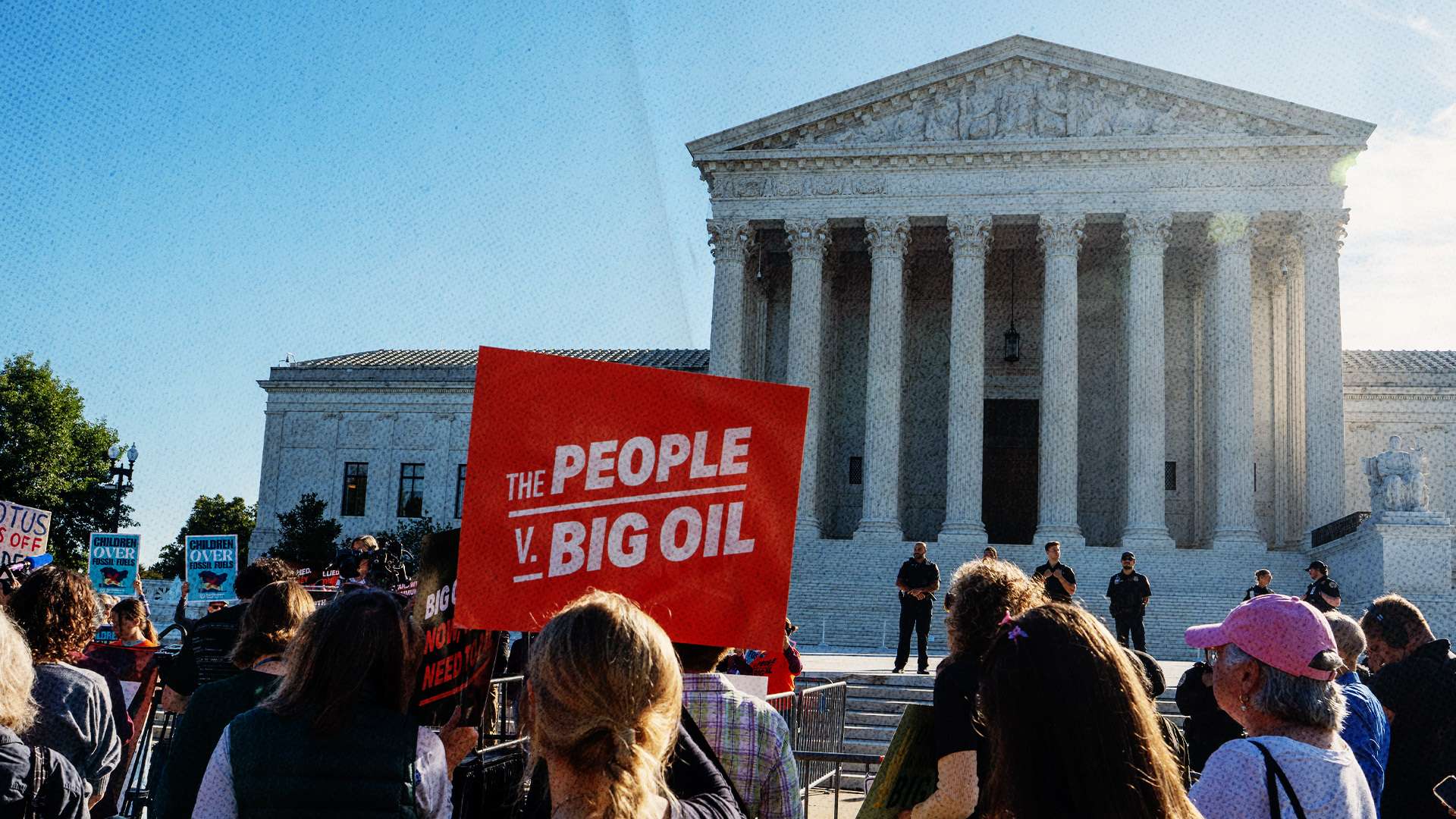
County officials in Colorado sued Suncor Energy for damages under Colorado law over injuries allegedly caused by the effects of greenhouse gas emissions and climate change. uncertain
officials → sue → emissions
The energy company countered by arguing that this kind of state lawsuit is preempted by federal law because the alleged conduct at issue did not originate in Colorado. asserted
conduct → counter → Colorado
In other words, if a state seeks to sue an energy company under state law over damages allegedly caused by interstate or even international pollution or greenhouse gas emissions, may the state lawsuit proceed, or must it be dropped because federal law, not state law, controls? uncertain
law → seek → pollution
Needless to say, the importance of this case for future climate change-related litigation is significant. asserted
importance → say → litigation
Oral arguments are scheduled for October 5. 2. asserted
arguments → schedule → October
The Video Privacy Protection Act of 1988 (VPPA), which was passed after a video store clerk leaked to a journalist a list of films that then-Supreme Court nominee Robert Bork had rented, prohibits a "video tape service provider" from "knowingly disclos[ing], to any person, personally identifiable information concerning any consumer of such provider." asserted
Bork → pass → provider
At issue in this case is whether Paramount Global, doing business as the website 247Sports, violated this federal law when it shared user Michael Salazar's private information, including what videos he watched, with Facebook. asserted
he → do → Facebook
Here is how that legal question is presented in the case: "whether the phrase 'goods or services from a video tape service provider,' as used in the VPPA's definition of 'consumer,' refers to all of a video tape service provider's goods or services or only to its audiovisual goods or services. asserted
refers → present → goods
Oral arguments are scheduled for October 14. asserted
arguments → schedule → October
On September 30, 1857—169 years ago yesterday—Justice Benjamin Curtis resigned from the Supreme Court in protest over its decision in Dred Scott v. Sandford (1857), the notorious case that held that African Americans "had no rights which the white man was bound to respect." asserted
man → resign → which
Curtis was one of two dissenters in Dred Scott, and his judicial objections still make for illuminating reading today. asserted
objections → make → reading
The Dred Scott opinion was written by Chief Justice Roger Taney. asserted
opinion → write → Taney
He held that neither Scott nor any other black person could ever count as a U.S. citizen because they were, in Taney's words, "beings of an inferior order" who could never qualify as any part of that "We the People" for whom the U.S. Constitution was written. uncertain
Constitution → hold → whom
Black Americans "are not included, and were not intended to be included," Taney asserted, "under the word 'citizens' in the Constitution." asserted
Taney → include → Constitution
Writing in dissent, Curtis laid bare the historical illiteracy of Taney's argument. asserted
Curtis → write → argument
"At the time of the ratification of the Articles of Confederation," Curtis noted, "all free native-born inhabitants of the States of New Hampshire, Massachusetts, New York, New Jersey, and North Carolina, though descended from African slaves, were not only citizens of those States, but such of them as had the other necessary qualifications possessed the franchise of electors, on equal terms with other citizens." asserted
qualifications → note → citizens
In other words, when the Constitution was up for ratification, a number of black Americans were literally among the "We the People" who brought the document into existence because they were among the ratifying populations of those five ratifying states. asserted
they → bring → states
Taney's opinion is now widely remembered as among the Supreme Court's very worst. asserted
opinion → remember → Court
It's also worth remembering Curtis' wise dissent, which opposed Taney's crimes against the Constitution in real time. asserted
which → remember → time

💬Give feedback
🕘History 🎫Support