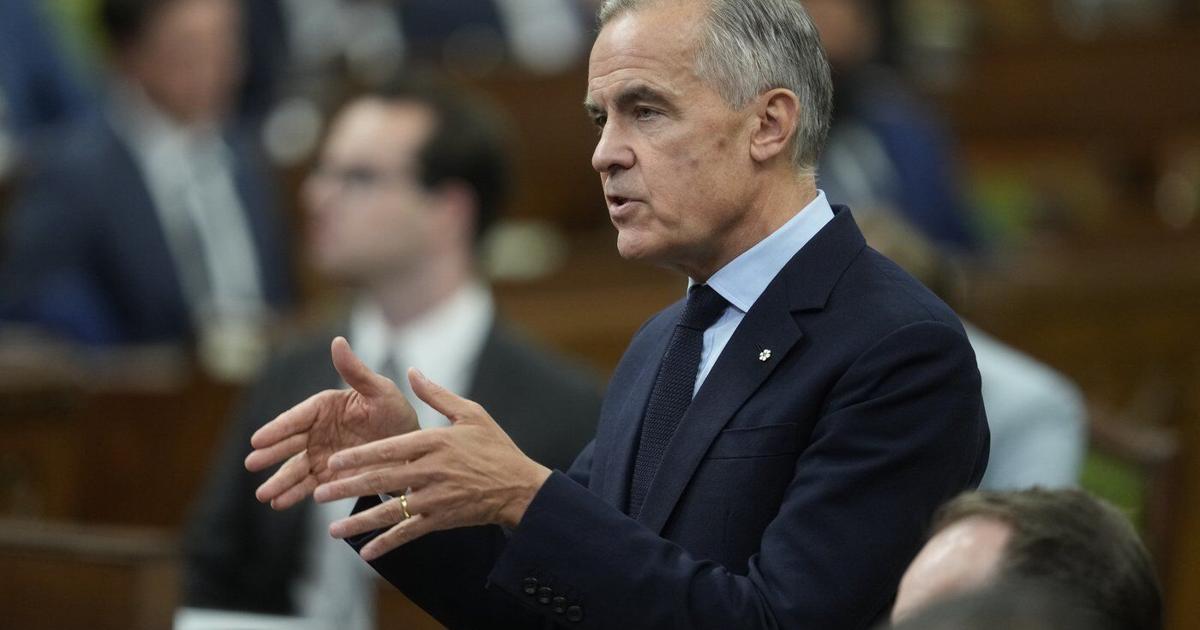
In the same week Ottawa revealed that immigration numbers weren’t contracting nearly as much as they’d said, Prime Minister Mark Carney mused about raising them back to never-before-seen highs.
asserted
Carney → reveal → highs
Earlier this year, Government of Canada figures showed that, for the first time, Canada’s population had contracted over the course of a calendar year.
asserted
population → show → year
In 2025, according to those estimates, the Canadian population had gone down by about 102,000.
uncertain
population → accord → 102,000
Then, earlier this month, Statistics Canada revised the figures and reported that Canada was actually still adding people by the hundreds of thousands.
asserted
Canada → revise → thousands
Only a few days later, on Sept. 27, the New York Times published a lengthy interview with Carney in which he pledged to eventually “resume some controlled increase in the population, which is the nature of Canada.”
asserted
which → publish → Canada
“So that will happen, and we just want to make sure that we’ve got it under control,” he said.
asserted
he → happen → control
In the New York Times interview, Carney acknowledged the unprecedented migration surge that entered Canada in the years immediately following the COVID-19 pandemic, saying it had put undue pressure on housing and the education system – and that the Canadian student visa program was being exploited by “degree factories.”
But he framed the problem as one of unanticipated “overshoots,” and anticipated being able to raise targets once immigration was “under control.”
asserted
immigration → acknowledge → control
Even if 2025 had indeed been a year of population contraction, even that statistic would have only been possible because Canada was coming off the most dramatic migration surge in its history.
asserted
Canada → come → history
In just three years between 2022 and 2025, the Canadian population surged from 38,559,788 to 41,435,888 – an increase of 2.8 million.
asserted
population → surge → million
Put another way, at the beginning of 2025, roughly one in every 16 people in Canada had arrived in the country within the last three years.
asserted
people → put → years
If Canada’s meteoric population growth has tapered off, it’s largely due to new federal constraints on temporary migration streams, particularly student visas.
asserted
it → taper → streams
In contrast to the record high 684,000 student permits handed out in 2023, in 2025 Ottawa set the target closer to 437,000.
asserted
Ottawa → hand → 437,000
Nevertheless, as was revealed by Statistics Canada’s recent revision of its population numbers, it’s hard to know exactly how many people who entered Canada as students are still in the country.
asserted
who → reveal → country
Statistics Canada wrote in a Sept. 23 statement that it had raised its 2025 population estimates due to a new calculation accounting for the large numbers of temporary migrants who had either left the country before their permit expired, or were remaining in Canada on expired papers “while their extension application is being processed.”
asserted
application → write → papers
But the StatCan figures are all just educated guesses.
asserted
figures → educate → ?
Because, as has been pointed out by critics in the Conservative party, Canada doesn’t actually have any reliable figures on whether temporary migrants are leaving the country at the expiry of their visa.
asserted
migrants → point → visa
At a House of Commons hearing earlier this year, a Tory critic asked Immigration Minister Lena Diab why Canada wasn’t tracking migrant exits, prompting Diab to call it a “good question.”
asserted
Canada → ask → it
“I wondered the same thing, but that’s how Canada has been throughout its history,” she replied, before saying Ottawa was working on a pilot program to do just that.
asserted
Ottawa → wonder → that
All the while, the rate of asylum-seekers living in Canada continues to reach all-time highs.
asserted
rate → live → highs
In his New York Times interview, Carney said that asylum-seekers “are down by one-third on a flow basis.”
asserted
seekers → say → basis
But here again, the reduction is only coming after a meteoric surge in the category, while the net number of asylum-seekers in the country is officially larger than the population of Halifax.
asserted
number → come → Halifax
This is up 50,000 from when Carney first took office in April 2025.
asserted
Carney → take → April
It’s also more than three times higher than the 160,000 asylum-seekers counted as recently as 2022.
asserted
It → ’ → 2022
It also means that several other indicators are slightly worse, including unemployment and GDP per capita.
asserted
indicators → mean → capita
According to Better Dwelling, the population revision means that the latest unemployment rate, officially estimated at 6.7 per cent, is probably closer to 7.6 per cent.
uncertain
rate → accord → cent
“That would make it the third-highest report since the pandemic,” it read.
asserted
it → make → pandemic
IN OTHER NEWS
Sept. 20 witnessed the first time that a Canadian prime minister visited Saint-Pierre-et-Miquelon, two small French islands located just off the coast of Newfoundland.
asserted
minister → witness → Newfoundland
Prime Minister Mark Carney had gone there for a summit with French President Emmanuel Macron.
asserted
Carney → go → Macron
But just a week later, France would enrage Newfoundlanders by authorizing its fishermen to start harvesting more than $20 million of snow crab on an underwater chunk of land that is just outside Canadian territorial waters.
asserted
that → enrage → waters
As Newfoundland and Labrador Premier Tony Wakeham said in a statement, “let me be clear: France has no authority to fish snow crab on Canada’s continental shelf.
asserted
France → say → shelf
And Newfoundland and Labrador will not stand for it.”
asserted
Newfoundland → stand → it
 The Aporia