The poll is yet more evidence of a uniquely Canadian phenomenon of young people becoming increasingly right-wing while the reverse happens among their elders.
asserted
reverse → become → elders
Overall, the Abacus poll released Sunday confirmed what every other pollster is finding: Prime Minister Mark Carney’s Liberals are enjoying a near-indomitable lead, and would likely win any snap election call in a landslide.
asserted
Liberals → release → landslide
Poll respondents backed the Liberals at a rate of 46 per cent – a 12 point lead over the Conservatives’ 34 per cent.
asserted
respondents → back → cent
But it was an entirely different story among Canadians aged 18-29 – which is to say, Canadians born between 1997 and 2008.
asserted
which → say → 1997
Those respondents backed the Conservatives at a rate of 42 per cent, with the Liberals in a distant second place with 32 per cent.
asserted
respondents → back → cent
This means that an election decided exclusively by Canadian 20-somethings would likely install a Conservative majority government.
asserted
election → mean → government
It also means that a voter under 30 is second only to an Albertan in the category of Canadians most likely to vote Conservative.
asserted
voter → mean → Conservative
Abacus found that Canadians over 60 are endorsing the Liberals at a near record-high of 59 per cent, against the 26 per cent still backing the Tories.
asserted
Canadians → find → Tories
The whole phenomenon is an inversion of how these things usually go.
asserted
things → go → ?
It wasn’t too long ago that Canadian electoral demographics followed the more conventional pattern of young people favouring progressive options while older people favoured conservative ones.
asserted
people → follow → ones
But the phenomenon of disproportionately conservative Canadian youth first began showing up in 2022, after Pierre Poilievre became Tory leader on a “fire the gatekeepers” leadership campaign that stressed the issue of housing unaffordability for younger generations.
asserted
that → show → generations
In the immediate wake of Poilievre’s installation as opposition leader, Abacus Data published its first poll showing a plurality of 18-29 voters backing the Conservatives as compared to the cohort’s usual favourites of the Liberals or the NDP.
asserted
plurality → publish → Liberals
One Leger poll from last November, for instance, found that a young Canadian was about as likely to vote Tory (38 per cent) as a rural Canadian (39 per cent) – and both were noticeably more Conservative than the average senior (34 per cent).
As to what’s driving the generational divide, young Canadians have been at the sharper end of some of Canada’s most conspicuous economic woes, be it rising rental prices or skyrocketing youth unemployment.
asserted
it → find → prices
The latest unemployment data showed youth unemployment was more than double the national average.
asserted
unemployment → show → ?
Last week, Canada’s dearth of entry-level jobs was most noticeably illustrated by a lineup of more 1,000 job seekers massing outside a newly opened Windsor, Ont., Costco.
asserted
dearth → illustrate → Costco
The 18-29 cohort also neatly comprises a group of people most likely to have been affected by extended school shutdowns during the COVID-19 pandemic.
asserted
cohort → comprise → pandemic
A 25-year-old voter would have been in Grade 11 when Canada first imposed major pandemic lockdowns in 2020.
asserted
Canada → impose → 2020
Young voters are also least likely to care about the one issue on which Carney has typically done best: U.S. relations and the tariffs imposed on Canada by U.S. President Donald Trump.
asserted
Carney → care → Trump
An Abacus Data poll from last September, for instance, found that when respondents were asked about the greatest “threat” to Canada’s future, a majority of young voters readily identified “domestic problems” like health care and affordability, while a majority of voters over 60 instead identified “Trump’s policies and unpredictability.”
asserted
majority → find → policies
At the very outset of the current trade war, in January 2025, a particularly illuminating Ipsos survey found that more than four in 10 Canadians aged 18 to 34 would endorse some kind of union with the United States if it meant access to comparative U.S. prosperity.
asserted
it → find → prosperity
Although 77 per cent of under-34 respondents initially said they would “never” vote for Canada to become part of the United States, that figure dropped to 43 per cent when they were offered the option of U.S. citizenship and the automatic conversion of their assets into U.S. dollars.
asserted
they → say → dollars
Canada is not the only developed country to see a rightward shift among its youth, but Canada remains unique for producing younger voters who are consistently more conservative than older voters.
asserted
who → develop → voters
In both the U.K. and U.S., for instance, polls continue to track the more conventional pattern of older voters leaning for right-wing options as younger voters lean for left-wing ones.
asserted
voters → continue → ones
In the upcoming U.S. midterm elections, for instance, voters under 29 were largely a lock for Democratic candidates, including those endorsed by the far-left Democratic Socialists of America.
asserted
voters → include → America
One of the few exceptions to the rule would be Japan, where conservative Prime Minister Sanae Takaichi won election last year thanks in part to an explosion of youth support, with some polls finding her with a 90 per cent approval rating among Japanese voters under 30.
asserted
polls → win → 30
IN OTHER NEWS
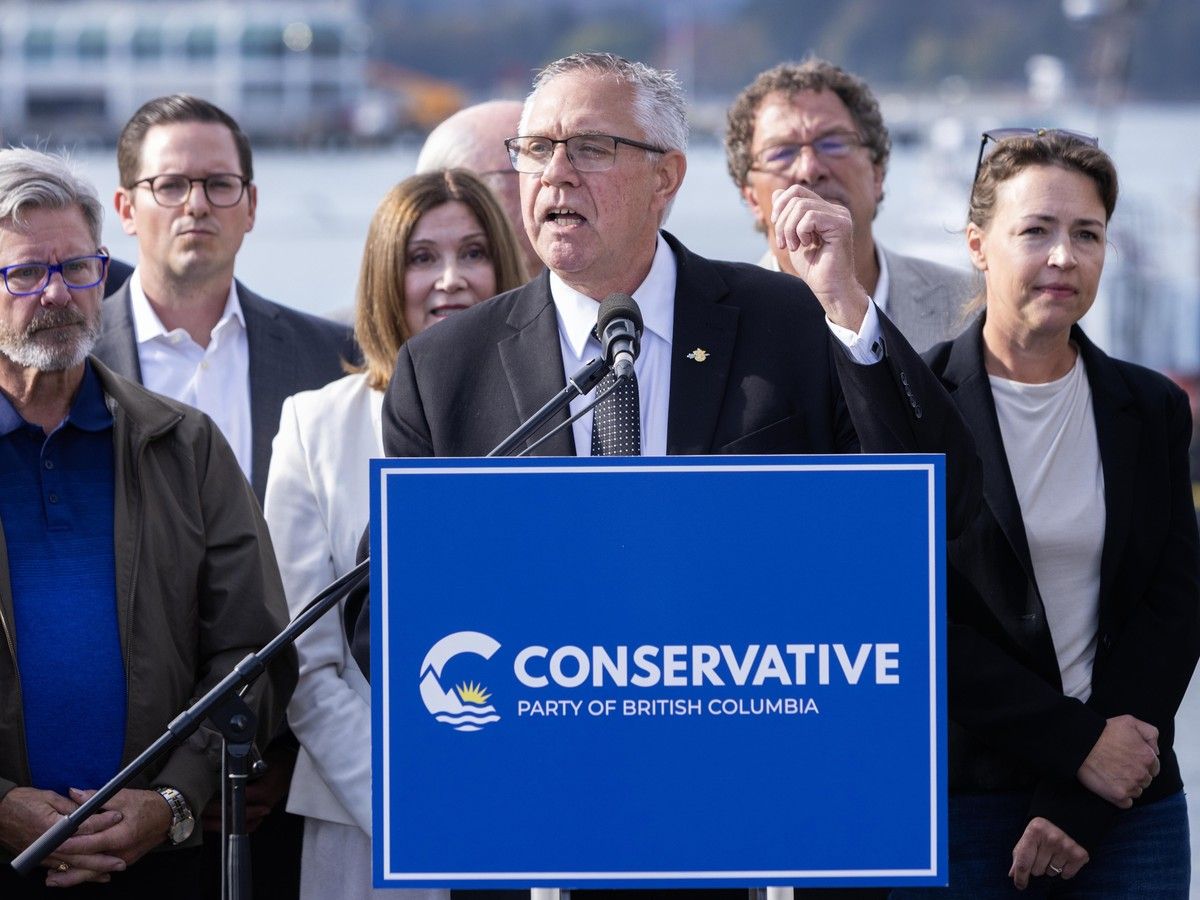
At the exact same time that the B.C. Conservatives appear to be suddenly poised to take power in B.C. after nine years of NDP government, the precise opposite seems to be happening in Alberta.
asserted
opposite → appear → Alberta
The Alberta NDP is now tied with the incumbent UCP in a new poll by Janet Brown Opinion Research (both are polling at 35 per cent).
asserted
both → tie → cent
The most likely reason for this being the issue of Alberta separatism, which is set for a preliminary referendum vote next month.
asserted
which → set → vote
(Voters will choose whether or not to hold a second vote on full independence).
asserted
Voters → choose → independence
The UCP government of Premier Danielle Smith has come out strongly against separation, but the issue has lost her support on two fronts: Separatists who no longer support the UCP, and federalists who now see the UCP as too tainted by separatists.
asserted
who → come → separatists
 The Aporia