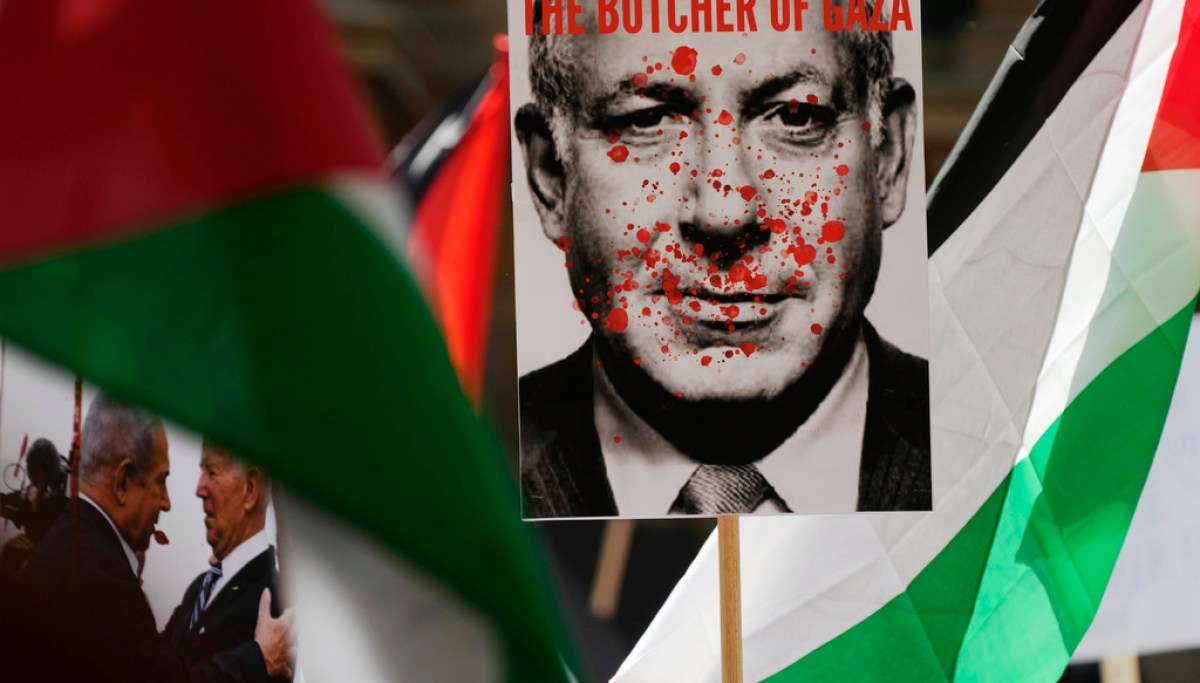
Photo via Washington Examiner

Before you applaud NAZA: A standing ovation is not proof of a war crime

Read the original at Washington Examiner ↗
Cite

Blitz, A. (2026, October 1). Before you applaud NAZA: A standing ovation is not proof of a war crime. Washington Examiner. https://www.washingtonexaminer.com/op-eds/4748795/naza-documentary-venice-fact-check/

Dated when The Aporia collected the article, usually within hours of publication. Check the original for its exact date and byline.

Washington Examiner · collected 2026-10-01 · by Arie Blitz

Quick Summary

The Gaza documentary NAZA received significant acclaim at the Venice Film Festival, including a lengthy standing ovation and a Special Jury Prize. Directed by Israeli filmmakers Yuval Abraham and Rachel Szor, the film portrays Israel's military actions in Gaza as calculated mass killings of Palestinian civilians but faces criticism for its sourcing methods and lack of corroborative evidence. Critics argue that NAZA relies heavily on anonymous testimonies without providing sufficient context or verification, which raises questions about the credibility of its claims.
Written by AI on 2026-10-01, from this article's own text only (the story summary below draws on all the coverage).

AI analysis

Story summary

At the Venice Film Festival, the Gaza documentary NAZA received a standing ovation and won a Special Jury Prize. Directed by Israeli filmmakers Yuval Abraham and Rachel Szor, the film portrays Israel's military operations in Gaza as causing "calculated mass killing of Palestinian civilians." However, critics argue that this portrayal is premature without thorough investigation. Arie Blitz from the Washington Examiner questions the reliability of NAZA's evidence, which relies heavily on anonymous testimonies from 24 Israeli military and intelligence personnel. The film's sourcing issues include lack of precise details about interviewees' roles and whether allegations are corroborated independently. One controversial claim suggests approval for a strike expected to kill 500 civilians to eliminate one Hamas target, but Blitz argues this needs more evidence before acceptance.

Written for “Malaysia War Crimes Trial” on 2026-11-02, grounded in this article and the 0 other(s) covering the same event.

Story

📰 Malaysia War Crimes Trial
Entertainment · 1 article(s) covering the same event.

Compared with similar articles

This article reads unscored and hedges 6% of its claims. Each row says how that neighbour differs.
Al Jazeera
⚖️ Leans strongly left Hedges 0 of 2 claims Outlet record 60/100
“The articles describe different aspects of the Gaza situation and focus on distinct pieces of media coverage rather than a single incident.”
New York Post
Hedges 4 of 22 claims Outlet record 66/100
“Article A describes protesters gathering outside the New York Film Festival premiere, while Article B discusses the reception and controversy surrounding the film at the Venice Film Festival.”
Off to elect another people Different event
Dawn
⚖️ Leans strongly left Hedges 3 of 45 claims Outlet record 72/100
“Article A discusses Netanyahu's reaction to the documentary and its filmmakers, while Article B focuses on the reception of the film at the Venice Film Festival.”
The Guardian
⚖️ Leans left Hedges 1 of 18 claims Outlet record 66/100
“Article A discusses the reception and controversy surrounding the film NAZA at the Venice Film Festival, while Article B focuses on the filmmakers' response to criticism from the Israeli military.”
How this article was measured signals, leaning charts, publisher record, byline, topics and claims

Signals How these are calculated →

Claims extracted
63
sentences that state something as happening or true
Uncertain
6%
4 of 63 hedged ("reportedly", "may", "according to")
Leaning
withheld
no quote in the article backed the model's score
Publisher signals
70/100
Washington Examiner's corrections and hedging, across everything collected from it. Not a measure of accuracy.
Outlets on this story
1
Entertainment
Same framing elsewhere
1
articles that frame the event the way this one does
Analyzed 2026-10-01 · how these are computed

How this is being covered How these are calculated →

Article leaning vs. publisher reliability
Source leaning vs. consistency

Publisher

Washington Examiner · 3906 article(s) · 7 correction(s) detected
Running correction rate · 7 correction(s)

Who wrote this

Arie Blitz
9 article(s) here · 1 carrying a prediction
🔮 “I was trying to save my own life, but I knew I could not let all those people die.”
🔮 A president may consider judicial philosophy when choosing a nominee.
🔮 Consider the film’s most explosive claim: that approval was once given for a strike expected to kill 500 civilians to eliminate one Hamas target.
🔮 Game theory asks a simple question: When one player changes the rewards and penalties, how will the others respond?
🔮 Before Israeli Prime Minister Benjamin Netanyahu could make Israel’s case to the United Nations on Thursday, scores of diplomats got up and left.
🔮 His explanation was not that the images were unverifiable or that publication would endanger the hostages.
🔮 There was also reason to believe Hamas understood that Oct. 7 would be fought not only with guns and rockets, but with images.
Also by Arie Blitz
Nothing else under this byline is closely related to this article, so these are simply their most recent.
All 9 articles by Arie Blitz →

Topics

Gaza Hamas Israel Israeli Palestinian

Subjects

Israel GPE · 8× Gaza GPE · 6× Israeli NORP · 6× Hamas ORG · 4× Ahmad PERSON · 2× Palestinian NORP · 2× Hebrew NORP · 1× Rachel Szor PERSON · 1× U.N. ORG · 1× Yuval Abraham PERSON · 1×

Narrative

Warnings carried a severe military — and human — price One fact is especially difficult to reconcile with the portrait of a military indifferent to civilian life: Israel repeatedly warned Gazans before major operations and strikes.
framing: assertive · carried by 1 article(s) · first seen 2026-10-01
🔮 Consider the film’s most explosive claim: that approval was once given for a strike expected to kill 500 civilians to eliminate one Hamas target.
2026-10-01 · Washington Examiner
Before you applaud NAZA: A standing ovation is not proof of a war crime · assertive framing

Claims (63 extracted, 4 hedged)

At the Venice Film Festival, the Gaza documentary NAZA received a roughly 25-minute standing ovation and won the Special Jury Prize. asserted
documentary → receive → Prize
Even its title announces the film’s frame. asserted
title → announce → frame
NAZA is a Hebrew military acronym meaning “collateral damage.” asserted
NAZA → mean → damage
The film was directed by Israeli filmmakers Yuval Abraham and Rachel Szor. asserted
film → direct → filmmakers
Before most of the public had seen it, it was already being promoted as an exposé of Israel’s “calculated mass killing of Palestinian civilians. asserted
it → see → civilians
That is not a question being investigated. asserted
That → investigate → ?
It is a verdict being announced. asserted
It → announce → ?
The evidence problem NAZA relies heavily on testimony from 24 anonymous Israeli military and intelligence personnel. asserted
NAZA → rely → personnel
Whistleblowers sometimes need anonymity. asserted
Whistleblowers → need → anonymity
But anonymity raises the burden of corroboration because viewers cannot independently assess a source’s role, access, or reliability. asserted
viewers → raise → role
A detailed review of the film’s sourcing found that viewers often are not told an interviewee’s precise role, proximity to the event described, or whether several witnesses independently corroborate a particular allegation. asserted
witnesses → find → allegation
Consider the film’s most explosive claim: that approval was once given for a strike expected to kill 500 civilians to eliminate one Hamas target. uncertain
approval → consider → target
Yet the film reportedly supplies no date, target, or location. uncertain
film → supply → date
The Israeli military says no such strike was ever planned or carried out. asserted
strike → say → ?
Even the subtitles deserve criticisms. asserted
subtitles → deserve → criticisms
In one example, a statement that “Ahmad and his entire family” were in a home reportedly becomes “Ahmad and his entire family will die.” uncertain
Ahmad → become → home
Those are not trivial differences in a film accusing a military of systematic killing. asserted
Those → accuse → killing
Context is evidence, too Civilian casualties are not, by themselves, proof that civilians were deliberately targeted. asserted
civilians → target → themselves
Israel did not enter Gaza in a vacuum. asserted
Israel → enter → vacuum
On Oct. 7, Hamas-led attackers, other armed groups, and some civilians from Gaza attacked Israeli communities, murdered civilians, burned homes, abducted people, and committed sexual violence. asserted
attackers → lead → violence
An independent U.N. investigation found that civilians from Gaza directly participated in attacks and abductions at Be’eri, Nir Oz, and the Nova festival. asserted
civilians → find → Be’eri
Israel knew from the first day that roughly 250 people had been dragged into Gaza, some already wounded. asserted
some → know → Gaza
The details of their treatment emerged over time, but the danger did not. asserted
danger → emerge → time
Hostages were held incommunicado and later found or reported in tunnels, residential buildings, and other civilian locations. asserted
Hostages → hold → tunnels
As I have argued previously in these pages, acknowledging that some Palestinian civilians participated in Oct. 7 does not make every Gazan guilty. asserted
Gazan → argue → Oct.
But erasing that participation distorts the battlefield Israel confronted. asserted
Israel → erase → battlefield
What, exactly, was Israel supposed to do? asserted
Israel → suppose → What
Allow the people who murdered and abducted its citizens to disappear into tunnels and prepare another attack? asserted
who → allow → attack
Hamas and other armed groups fought from dense civilian terrain while hostages were hidden within that same environment. asserted
hostages → fight → environment
That does not relieve Israel of its obligations under the laws of war. asserted
That → relieve → war
It does mean civilian casualties cannot honestly be assessed without considering who created the battlefield and how it was used. asserted
it → mean → battlefield
Warnings carried a severe military — and human — price One fact is especially difficult to reconcile with the portrait of a military indifferent to civilian life: Israel repeatedly warned Gazans before major operations and strikes. asserted
Israel → carry → operations
The Israeli military used phone calls, text messages, leaflets, and evacuation instructions, and established routes intended to move civilians away from combat. asserted
military → use → combat
Those warnings carried a severe military price: surprise. asserted
warnings → carry → price
Warn civilians that an attack is coming, and Hamas hears the warning too. asserted
Hamas → warn → warning
Fighters can move. asserted
Fighters → move → ?
Commanders can escape. asserted
Commanders → escape → ?
Weapons can be relocated. asserted
Weapons → relocate → ?
Defensive positions and ambushes can be prepared. asserted
positions → prepare → ?
Israeli soldiers may enter an area where the enemy has had time to get ready. uncertain
enemy → enter → time
…and 23 more, not listed.

💬Give feedback
🕘History 🎫Support