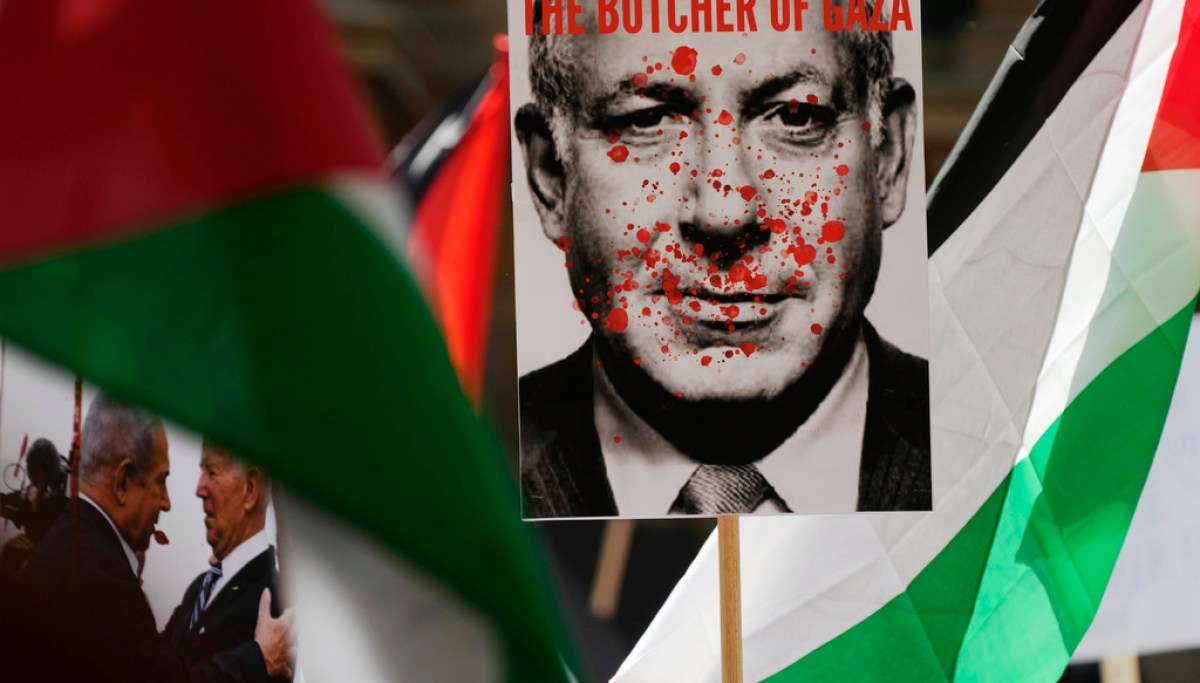
Photo via The Guardian

NAZA film-makers say they spoke to more than 100 sources about Israeli actions in Gaza

Read the original at The Guardian ↗
Cite

Beaumont, P. (2026, October 1). NAZA film-makers say they spoke to more than 100 sources about Israeli actions in Gaza. The Guardian. https://www.theguardian.com/film/2026/oct/01/makers-naza-film-spoke-more-than-100-sources-israeli-actions-gaza

Dated when The Aporia collected the article, usually within hours of publication. Check the original for its exact date and byline.

The Guardian · collected 2026-10-01 · by Peter Beaumont

Quick Summary

NAZA film-makers, creators of a documentary detailing Israeli military actions in Gaza, revealed they interviewed over 100 sources with knowledge of military systems used during the conflict. This disclosure came after an Israel Defense Forces (IDF) statement that criticized the documentary for alleged substantial errors and misrepresentations. The IDF claimed the film relied on interviews with only 24 individuals who had incomplete information about target approval processes, denying any deliberate targeting of civilians or planning attacks expecting high civilian casualties. In response to these claims, the Guardian, which produced NAZA, provided further details on how they verified their allegations through extensive interviewing of various ranks involved in different stages of targeting and authorization processes.
Written by AI on 2026-10-01, from this article's own text only (the story summary below draws on all the coverage).

AI analysis

Story summary

The directors of the award-winning film NAZA, Yuval Abraham and Rachel Szor, revealed they interviewed more than 100 sources with knowledge of Israeli military systems used during actions in Gaza. The film highlights the Israeli military's targeting policies and alleged acceptance of high numbers of civilian deaths. In response to criticism from the Israel Defense Forces (IDF), which accused the documentary of having “substantial errors,” the filmmakers defended their extensive research and anonymity practices for sources, common in media investigations. Some Israeli politicians, including Prime Minister Benjamin Netanyahu, have threatened the directors with citizenship revocation over the film's content. The IDF’s statement also echoed concerns raised by some Israeli journalists about anonymized military sources in the documentary.

Written for “Israeli Actions In Gaza” on 2026-11-04, grounded in this article and the 0 other(s) covering the same event.

Story

📰 Israeli Actions In Gaza
Politics · 1 article(s) covering the same event.

Compared with similar articles

This article reads leans left and hedges 6% of its claims. Each row says how that neighbour differs.
Al Jazeera
⚖️ Leans strongly left further left than this Hedges 6 of 20 claims Outlet record 60/100
“The articles discuss different aspects related to the conflict in Gaza but describe distinct events, one about a film and its criticism by the IDF and another about a former general's opinion on negotiations.”
Al Jazeera
⚖️ Leans right further right than this Hedges 1 of 9 claims Outlet record 60/100
“Article A discusses the film NAZA and its portrayal of Israeli military actions in Gaza, while Article B focuses on Netanyahu's narrative control during an election period.”
Al Jazeera
⚖️ Leans strongly left further left than this Hedges 0 of 2 claims Outlet record 60/100
“The articles describe different aspects related to the situation in Gaza but do not report on the same specific incident.”
NPR
⚖️ Leans strongly left further left than this Hedges 0 of 38 claims Outlet record 60/100
“The articles discuss different aspects of the documentary 'NAZA' - one focuses on the filmmakers speaking to sources, while the other describes anonymous interviews with Israeli soldiers featured in the film.”
Zeteo
⚖️ Leans left Hedges 1 of 5 claims
“The articles describe different aspects of related events involving criticisms and responses to a film about Israel's actions in Gaza and subsequent debates.”
Washington Examiner
Hedges 4 of 63 claims Outlet record 69/100
“Article A discusses the reception and controversy surrounding the film NAZA at the Venice Film Festival, while Article B focuses on the filmmakers' response to criticism from the Israeli military.”
How this article was measured signals, leaning charts, publisher record, byline, topics and claims

Signals How these are calculated →

Claims extracted
18
sentences that state something as happening or true
Uncertain
6%
1 of 18 hedged ("reportedly", "may", "according to")
Leaning
Leans left
of the writing, not the subject · beta estimate
Publisher signals
66/100
The Guardian's corrections and hedging, across everything collected from it. Not a measure of accuracy.
Outlets on this story
1
Politics
Same framing elsewhere
1
articles that frame the event the way this one does
Analyzed 2026-10-01 · how these are computed

How this is being covered How these are calculated →

Article leaning vs. publisher reliability
Source leaning vs. consistency

Publisher

The Guardian · 2937 article(s) · 6 correction(s) detected
Running correction rate · 6 correction(s)

Who wrote this

Peter Beaumont
6 article(s) here · 1 carrying a prediction
🔮 “This escalation validates our fears that the arrest and continued detention of the six Matsadaash journalists would signal a crackdown of unprecedented magnitude,” said Bahgat.
🔮 Exit polls published on Tuesday evening suggested that the opposition bloc of parties led by the former chief of staff of the Israel Defense Forces, Gadi Eisenkot, would win most seats in the Knesset by a slight margin, edging out Benjamin Netanyahu’s right and far-right coalition despite the prime minister’s Likud emerging as the largest party.
🔮 The IDF statement follows previous efforts by Israeli politicians to dismiss NAZA – a military acronym euphemistically used by Israeli intelligence to indicate the number of civilians that it expects will be killed in an airstrike – which have accompanied death threats against the film’s directors, Yuval Abraham and Rachel Szor, and calls by the country’s prime minister, Benjamin Netanyahu, for them to be stripped of their Israeli citizenship. It also echoed previous complaints by some Israeli critics – including journalists – that the film’s military sources were anonymised, despite the fact that source protection in media investigations is commonplace and regarded by much of the media as an ethical requirement.
🔮 Until May, food supplies were still getting through to residents of a city that had once been home to 24,000.
🔮 The film’s title comes from an Israeli military acronym used euphemistically to refer to the civilians expected to be killed in a military attack.
🔮 A report by the International Institute for Strategic Studies in May reached a similar conclusion: “The recent deterioration of maritime security followed a prolonged period of relative calm in the waters off the Somali coast, which resulted in the redeployment of international anti-piracy fleets and the relaxation of commercial risk-management practices.
Also by Peter Beaumont
Nothing else under this byline is closely related to this article, so these are simply their most recent.
All 6 articles by Peter Beaumont →

Topics

Gaza Hamas IDF Israel Defense Forces Israeli

Subjects

IDF ORG · 11× Israeli NORP · 6× Gaza GPE · 5× Guardian ORG · 3× Benjamin Netanyahu PERSON · 1× Hamas ORG · 1× Israel Defense Forces ORG · 1× NAZA ORG · 1× Rachel Szor PERSON · 1× Yuval Abraham PERSON · 1×

Narrative

The IDF statement follows previous efforts by Israeli politicians to dismiss NAZA – a military acronym euphemistically used by Israeli intelligence to indicate the number of civilians that it expects will be killed in an airstrike – which have accompanied death threats against the film’s directors, Yuval Abraham and Rachel Szor, and calls by the country’s prime minister, Benjamin Netanyahu, for them to be stripped of their Israeli citizenship. It also echoed previous complaints by some Israeli critics – including journalists – that the film’s military sources were anonymised, despite the fact that source protection in media investigations is commonplace and regarded by much of the media as an ethical requirement.
framing: assertive · carried by 1 article(s) · first seen 2026-10-01
🔮 The IDF statement follows previous efforts by Israeli politicians to dismiss NAZA – a military acronym euphemistically used by Israeli intelligence to indicate the number of civilians that it expects will be killed in an airstrike – which have accompanied death threats against the film’s directors, Yuval Abraham and Rachel Szor, and calls by the country’s prime minister, Benjamin Netanyahu, for them to be stripped of their Israeli citizenship. It also echoed previous complaints by some Israeli critics – including journalists – that the film’s military sources were anonymised, despite the fact that source protection in media investigations is commonplace and regarded by much of the media as an ethical requirement.

Claims (18 extracted, 1 hedged)

The team behind the award-winning film NAZA, which details the Israeli military’s targeting policies in Gaza and its alleged acceptance of high numbers of civilian deaths, have revealed they spoke to more than 100 sources with knowledge of the military systems used in the war. asserted
they → win → war
The disclosure came in response to an Israel Defense Forces statement seeking to discredit the documentary. asserted
disclosure → come → documentary
In its response, which the IDF said was based on statements made by the film-makers and a review made by a representative who had attended a viewing, the Israeli military claimed there were “substantial errors” in the film and that it had relied on interviews with two dozen intelligence and other troops who had only a partial picture of the target approval process. asserted
who → say → process
At the centre of the IDF’s rebuttal was its often repeated claim that its rules of engagement explicitly distinguish between militants and civilians and prohibit deliberately targeting civilians, while requiring commanders to take steps to minimise civilian harm, claims that have long been challenged over the years by critics. uncertain
that → repeat → critics
While acknowledging that it used AI to help recommend potential targets in Gaza, the IDF also said final decisions made on strikes, and the risk of civilian casualties, were signed off by officers. asserted
decisions → acknowledge → officers
The IDF also denied that it had approved, planned or carried out an attack anticipating 500 civilian casualties in pursuit of a single Hamas target. asserted
it → deny → target
The IDF statement follows previous efforts by Israeli politicians to dismiss NAZA – a military acronym euphemistically used by Israeli intelligence to indicate the number of civilians that it expects will be killed in an airstrike – which have accompanied death threats against the film’s directors, Yuval Abraham and Rachel Szor, and calls by the country’s prime minister, Benjamin Netanyahu, for them to be stripped of their Israeli citizenship. It also echoed previous complaints by some Israeli critics – including journalists – that the film’s military sources were anonymised, despite the fact that source protection in media investigations is commonplace and regarded by much of the media as an ethical requirement. asserted
protection → follow → requirement
“The film NAZA presents a distorted, misleading, and unrealistic picture of the IDF’s target planning and strike processes. asserted
film → present → planning
The film’s narrative is based on fundamental factual errors stemming from a skewed and manipulative portrayal,” the statement added. asserted
statement → base → portrayal
Responding to the IDF statement, the Guardian, which produced the film, disclosed further details of how the team had verified the allegations which involved scores of interviews with those with knowledge of IDF targeting and authorisation processes. asserted
which → respond → processes
A spokesperson said: “The IDF’s attempt to portray the 24 participants in NAZA as junior-ranking officers involved only in the early stages of the targeting process is false. asserted
attempt → say → process
“They include officers and soldiers who were involved in multiple stages of the targeting process in Gaza, including intelligence, operations and the final authorisation process. asserted
who → include → intelligence
“The process of assessing the credibility of the testimonies was rigorous. asserted
process → assess → testimonies
It included leaked classified documents, detailed verification of specific strikes and corroboration via a wider pool of confidential journalistic sources who did not appear on camera in the film. asserted
who → include → film
“Over the past three years we have together interviewed more than 100 sources familiar with IDF systems used in the war in Gaza, including senior-ranking commanders directly involved in the authorisation of strikes. asserted
we → interview → strikes
“The Guardian stands fully behind the film, which builds on three years of detailed reporting by the Guardian and our partners. asserted
which → stand → Guardian
Several highly respected news organisations have subsequently confirmed the IDF’s use of AI-driven systems in the Gaza offensive and the loosening of safeguards to protect civilians, including the New York Times, Washington Post and Associated Press.” asserted
organisations → confirm → Times
While Netanyahu has claimed that Israeli military safeguards have led to one of the lowest civilian-combatant ratios in modern warfare, that has been challenged by the IDF’s own leaked casualty assessments, by the UN’s commission of inquiry in 2024 and research by NGOs including Action on Armed Violence. asserted
that → claim → Violence

💬Give feedback
🕘History 🎫Support