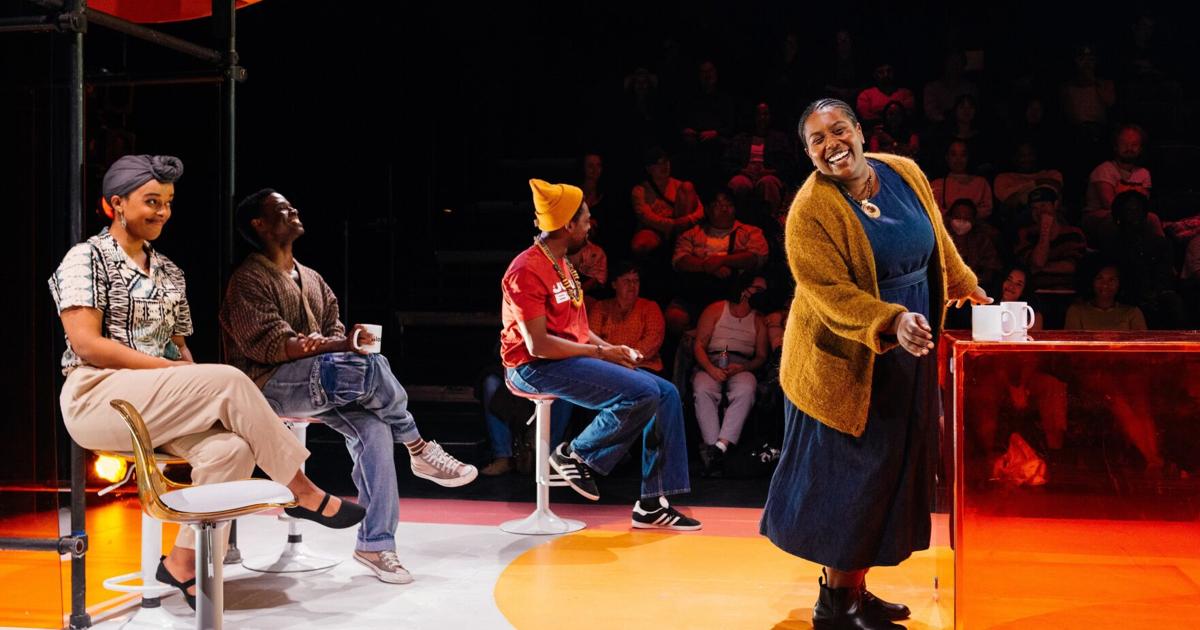
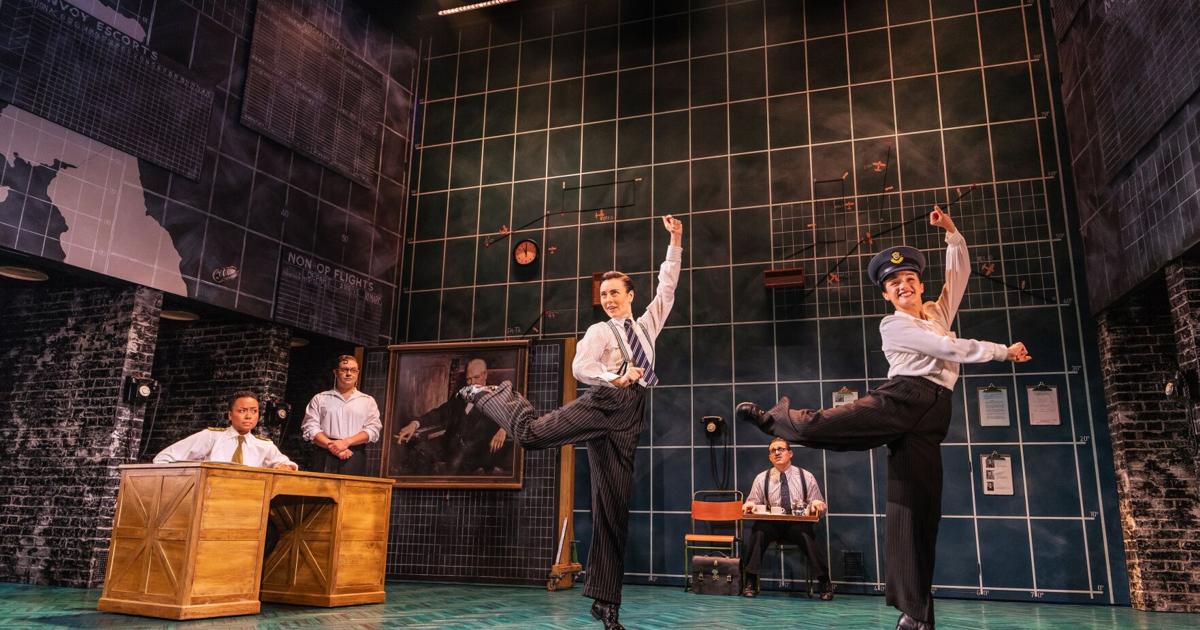
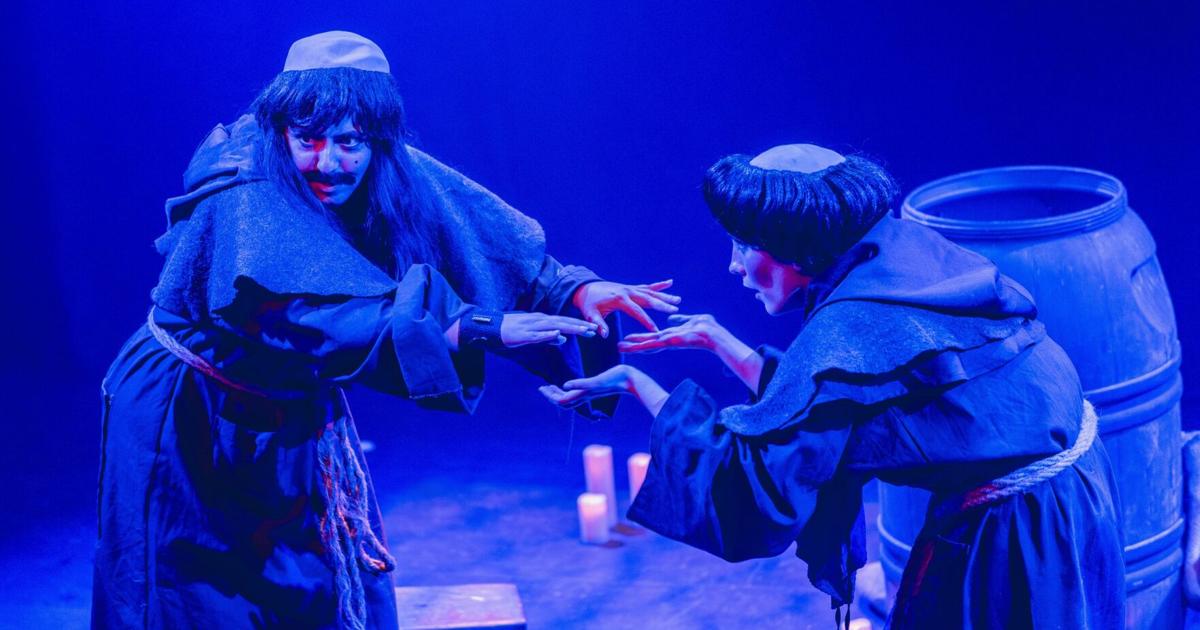
The penis is right there when you enter the theatre: a 17-foot phallic sculpture that dangles above the stage — scrotum, shaft and all — and is the centrepiece of Nick Blais’ purposefully tacky set.
asserted
that → enter → set
In director Jay Northcott’s Canadian premiere of “Bootycandy,” co-produced by Buddies in Bad Times Theatre and Obsidian Theatre, the sculpture warns of what’s to come.
asserted
what → co → Theatre
It’s certainly not the only penis we’ll see in Robert O’Hara’s sardonic comedy, which, unless we get a surprise revival of “Oh! Calcutta!” in the next three months, is likely the lewdest show to grace a Toronto stage this year
asserted
we → ’ → stage
But for all its lewdness, glorious distastefulness and occasional head-scratching absurdity, O’Hara’s play is so much more than a raunchy comedy.
asserted
play → scratch → comedy
As subtle as it is broad and bawdy, “Bootycandy” tickles you in the ribs before punching you in the gut.
asserted
Bootycandy → tickle → gut
It’s a show that feels like a three-dimensional puzzle, stretching through time and space, and only coming together in its final moments.
asserted
that → ’ → moments
It’s also a visceral interrogation of Black queer identity and how one reckons with childhood trauma.
asserted
one → ’ → trauma
The play unfolds as a series of seemingly unrelated vignettes and fragmentary narratives.
asserted
play → unfold → vignettes
In one early scene, presented entirely as a monologue, we meet a Black church minister (Christopher Allen) who comes out to his gossipy, bigoted congregation in barn-burning fashion.
asserted
who → present → fashion
In another, we’re introduced to Eudarrie (Meghan Swaby), who admonishes her friend Adella (Helen Belay) over the phone for wanting to name her baby girl Genitalia (more specifically: Genitalia Lakeitha Shalama Abdul).
asserted
who → introduce → girl
But the story that gives “Bootycandy” an arc is Sutter’s (Kyle Brown), whom we meet at three stages of his life: as a young child, a teenager and an adult.
asserted
we → give → child
In the show’s most disturbing scene, we’re a fly on the wall as a teenage Sutter tells his parents that a stranger followed him home from the library.
asserted
stranger → ’re → library
But instead of showing a shred of concern, Sutter’s parents blame their son for attracting the white man’s gaze.
asserted
parents → show → gaze
Sutter, they suggest, is too queer, too feminine, too petite.
asserted
they → suggest → ?
And his stepdad’s: “You need to start bending your knees when you pick stuff up.”
asserted
you → need → stuff
If this all sounds like a bewildering, dramatic hodgepodge, know that the first act of “Bootycandy” is exactly that.
asserted
act → sound → Bootycandy
It’s made all the more confusing in its final scene when O’Hara reveals, in an absurd, meta-theatrical twist, that we’re actually watching several plays within a play.
asserted
we → make → play
(We’re at a playwriting workshop with several dramatists, including Sutter, writing what appears to be a semi-autobiographical comedy.
asserted
what → ’re → Sutter
But after intermission, “Bootycandy” takes shape, its disparate storylines coming together to form a cohesive whole.
asserted
storylines → take → whole
Those characters introduced in Act 1 return, but different from before.
asserted
characters → introduce → Act
And that Black pastor, Rev. Benson, is like a monarch butterfly fully emerged from its chrysalis.
asserted
butterfly → emerge → chrysalis
In its second act, the play explores how these characters process their trauma.
asserted
characters → explore → trauma
Some find liberation.
asserted
Some → find → liberation
Others live with a heavy burden.
asserted
Others → live → burden
O’Hara’s absurdist humour also begins to make sense after intermission: it’s meant to magnify the absurdity and incongruities of our lives, and also the hypocrisy of our parents and the communities around us.
asserted
it → begin → us
Northcott’s production, which I caught before its official opening, works best when it leans into the material’s absurdity and broad humour.
asserted
it → catch → absurdity
Belay and Swaby, in particular, earn big laughs in several ensemble roles.
asserted
Belay → earn → roles
Dan Mousseau is also a standout, especially as a character who sounds like a blockheaded frat bro who’s downed a few too many Coronas.
asserted
who → sound → Coronas
But the production falters in its quieter moments.
asserted
production → falter → moments
Northcott’s staging, with audiences sitting on opposite sides of the theatre, sometimes feels too static, struggling to fully use Blais’ set, which features a long, extendable catwalk.
asserted
which → sit → catwalk
Northcott also tries too hard to force a Canadian lens onto this play, which is specifically grounded in an American context.
asserted
which → try → context
In one scene, a character wears a Jully Black T-shirt.
asserted
character → wear → shirt
(Arianna Moodie designed the costumes.)
asserted
Moodie → design → costumes
Another scene features a six-pack of Molson Canadian beer.
asserted
scene → feature → beer
After a crushing, eleventh-hour twist that reframes Sutter’s narrative, I could sense O’Hara struggling to find a natural conclusion to his story.
uncertain
O’Hara → reframe → story
He vacillates, lingers, then pads his final scene.
asserted
He → vacillate → scene
But instead of embracing the play’s absurdist tone, he opts for realism, in an ending that feels like a cop out and that lets his central character off the hook.
asserted
character → embrace → hook
Northcott, thankfully, doesn’t follow O’Hara’s lead.
asserted
Northcott → follow → lead
They stage this moment with an abstract, non-naturalistic touch that’s both messy and absurd, fitting perfectly with the overall tone of the play: Brown’s Sutter stands on stage, tucked among the other characters, all under the shadow of a giant orange penis.
asserted
Sutter → stage → penis
 The Aporia