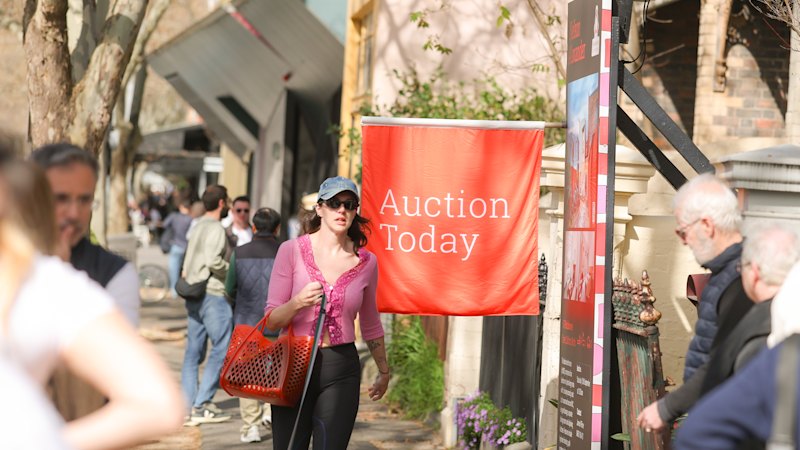
Photo via The Sydney Morning Herald

The Melbourne suburbs where property owners are selling in distress

Read the original at The Sydney Morning Herald ↗
Cite

Mountain, W. (2026, October 2). The Melbourne suburbs where property owners are selling in distress. The Sydney Morning Herald. https://www.smh.com.au/property/news/the-melbourne-suburbs-where-property-owners-are-selling-in-distress-20261003-p611dm.html?ref=rss&utm_medium=rss&utm_source=rss_feed

Dated when The Aporia collected the article, usually within hours of publication. Check the original for its exact date and byline.

The Sydney Morning Herald · collected 2026-10-02 · by Wes Mountain

Quick Summary

In Melbourne, property owners in certain suburbs are experiencing financial pressure, leading them to list homes as distressed sales. According to Domain data from August, areas such as Melbourne City Council, Dandenong, and parts of Stonnington and Casey have seen over 2% of their listings marked with urgent or motivated sale conditions. Despite a slight decrease in distressed properties overall, experts like AMP’s Shane Oliver predict this trend will worsen as interest rates remain high.
Written by AI on 2026-10-02, from this article's own text only (the story summary below draws on all the coverage).

AI analysis

Story summary

In August 2023, Melbourne saw an uptick in distressed property sales, with over 2% of listings in areas like Dandenong, parts of Stonnington, and Casey noting that sellers were motivated to sell urgently or at a lower price. Notably, Melbourne City Council regions had the highest rate of distressed sales at 2.4%, particularly for units in the CBD and Docklands. Jalin Realty agent Ernest Towle observed an increasing number of people approaching him interested in selling, with investors often willing to accept losses to minimize further declines. AMP chief economist Shane Oliver warned that as interest rates remain high, more homeowners may face financial difficulties, potentially leading to a rise in distressed sales across Melbourne.

Written for “Melbourne Property Market Distress” on 2026-11-03, grounded in this article and the 0 other(s) covering the same event.

Story

📰 Melbourne Property Market Distress
Economy/Business · 1 article(s) covering the same event.

Compared with similar articles

This article reads unscored and hedges 11% of its claims. Each row says how that neighbour differs.
Daily Mail
Hedges 5 of 18 claims Outlet record 69/100
“Article A discusses general warnings about house price crashes and rate increases, while Article B reports on specific distressed property sales in Melbourne suburbs.”
The Sydney Morning Herald
Hedges 4 of 44 claims Outlet record 61/100
“Article A discusses general trends of distressed property sales across various suburbs in Melbourne, while Article B reports on a specific property sale in Richmond that occurred at a loss compared to its previous selling price six years ago.”
ABC News (AU)
Hedges 3 of 25 claims Outlet record 68/100
“The articles describe different aspects of the property market and do not refer to the same specific incident or time.”
How this article was measured signals, leaning charts, publisher record, byline, topics and claims

Signals How these are calculated →

Claims extracted
27
sentences that state something as happening or true
Uncertain
11%
3 of 27 hedged ("reportedly", "may", "according to")
Leaning
not political
takes no side on a contested political question
Publisher signals
61/100
The Sydney Morning Herald's corrections and hedging, across everything collected from it. Not a measure of accuracy.
Outlets on this story
1
Economy/Business
Same framing elsewhere
1
articles that frame the event the way this one does
Analyzed 2026-10-02 · how these are computed

How this is being covered How these are calculated →

Article leaning vs. publisher reliability
Source leaning vs. consistency

Publisher

The Sydney Morning Herald · 5874 article(s) · 15 correction(s) detected
Running correction rate · 15 correction(s)

Who wrote this

Wes Mountain
9 article(s) here · 1 carrying a prediction
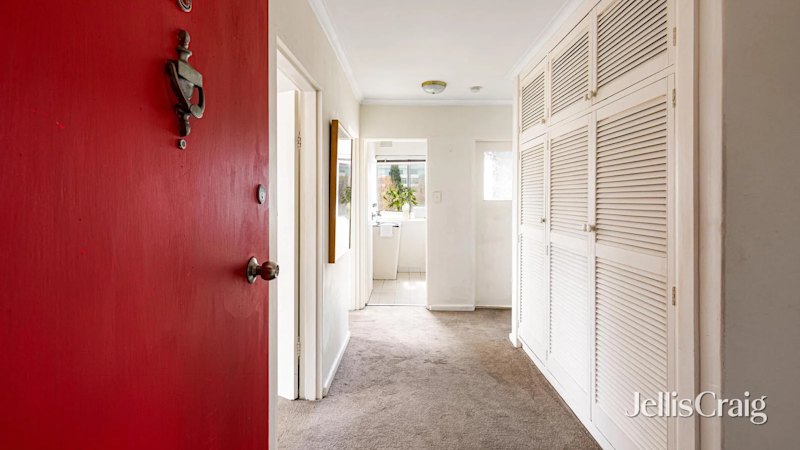
🔮 Minutes from Hawksburn train station and a short walk to both Toorak and Williams roads, the preserved Victorian weatherboard at 3 Hopetoun Grove features a striking red door.
🔮 “Maybe vendors have come down a little bit more, maybe buyers have been waiting around too long, and there might be multiple moving parts that are contributing right now
🔮 Under the old system, the price range would have likely still been in place on auction day, and the reserve would have been set on the day.
🔮 He said two other parties had indicated they would be keen to negotiate post auction, but the high bidders, local downsizers, met the reserve and sealed the deal.
🔮 Home sellers in pockets of Melbourne are dropping prices and saying they “must sell”, as experts warn the number of distressed listings will increase as the property downturn continues.
🔮 While this means the low preliminary clearance rate is not necessarily indicative, agents warned the threat of another rate hike from the Reserve Bank on Tuesday could lead to more vendors choosing to hold back on selling their properties, further shrinking supply in what is traditionally the busiest period of the year for auctions.
🔮 “Values rose by just 0.8 per cent over the five years to June, so owners who bought during that period have had little or no gain to absorb a fall,” she said, noting even a modest decline could mean a loss for some sellers.
🔮 While last week saw the preliminary clearance rate above 60 per cent for the first time since before the May budget, this week saw it fall below that benchmark – generally considered to indicate a balanced market – and return to the mid-50s, despite peak Spring auction season. 50 and 52 Lang Street had a price guide of $2.1 million to $2.3 million, with a $2.3 million reserve.
Also by Wes Mountain
Nothing else under this byline is closely related to this article, so these are simply their most recent.
All 9 articles by Wes Mountain →

Topics

Casey Dandenong Melbourne Melbourne City Council Stonnington

Subjects

Dandenong GPE · 2× Melbourne City Council ORG · 2× AMP ORG · 1× CBD ORG · 1× Casey PERSON · 1× Docklands ORG · 1× Domain ORG · 1× Melbourne GPE · 1× Shane Oliver PERSON · 1× Stonnington ORG · 1×

Narrative

Vendors in Melbourne City Council – which includes the CBD, Docklands, North, East and West Melbourne, Carlton and surrounds – were the most likely to be looking for an urgent or motivated sale, with 2.4 per cent of listings distressed. Jalin Realty agent Ernest Towle said the market had been falling – particularly units in the CBD and Docklands – for some time, driving sellers to consider their options. “There’s an increasing number of people approaching me that are interested in selling,” he said, noting that investors were often willing to make a loss, hoping to minimise the “pain” of further falls.
framing: assertive · carried by 1 article(s) · first seen 2026-10-02
🔮 Home sellers in pockets of Melbourne are dropping prices and saying they “must sell”, as experts warn the number of distressed listings will increase as the property downturn continues.
2026-10-02 · The Sydney Morning Herald
The Melbourne suburbs where property owners are selling in distress · assertive framing

Claims (27 extracted, 3 hedged)

Home sellers in pockets of Melbourne are dropping prices and saying they “must sell”, as experts warn the number of distressed listings will increase as the property downturn continues. asserted
downturn → drop → listings
Melbourne City Council, Dandenong and parts of Stonnington and Casey topped the list for distressed listings in Domain data for August, with over 2 per cent of listings in these areas noting sellers were “motivated to sell”, pursuing an “urgent sale”, drawing attention to a price drop or noting a vendor “must sell”. asserted
vendor → top → drop
Most areas experienced a small decrease in the share of distressed properties over the past year, despite falling property prices and three rate hikes during the reporting window – with another handed down on Tuesday. asserted
areas → experience → Tuesday
AMP chief economist Shane Oliver said distressed listings had remained low overall so far because interest rates had not yet hit a threshold that would cause significant problems for home owners – but that could be set to change. uncertain
that → say → owners
“People have been able to get by with the rate hikes so far, but obviously the longer they stay up at these levels, or go up, the higher the risk. asserted
they → get → levels
And I think we’re getting closer to that tipping point now,” he said. asserted
he → think → point
“I suspect as time goes by, distressed listings will start to go up.” asserted
listings → suspect → ?
Vendors in Melbourne City Council – which includes the CBD, Docklands, North, East and West Melbourne, Carlton and surrounds – were the most likely to be looking for an urgent or motivated sale, with 2.4 per cent of listings distressed. Jalin Realty agent Ernest Towle said the market had been falling – particularly units in the CBD and Docklands – for some time, driving sellers to consider their options. “There’s an increasing number of people approaching me that are interested in selling,” he said, noting that investors were often willing to make a loss, hoping to minimise the “pain” of further falls. asserted
investors → include → falls
He said many investors thought they had bought at the bottom of the market, expecting to see a reasonable rental return as prices turned around, only to watch prices drop even further. asserted
prices → say → return
He said buyers were making offers well below asking price. asserted
buyers → say → price
“They’re [also] making offers on multiple properties at the same time, and waiting to see which property comes back first at the price they want,” he said. asserted
he → make → price
In the Dandenong area, 2.2 per cent of listings were considered distressed. asserted
cent → consider → listings
Grand Real Estate agent Dr Bhimsen Kurukundi said he found properties in the $600,000 to $650,000 bracket were still selling, mostly to owner-occupier first home buyers, but those at the top end were struggling. “Most of them are owner-occupiers,” he said, and thought cost-of-living increases and rate hikes were forcing stressed owners to downsize. asserted
increases → say → owners
Oliver said the jobs market has been strong, so many households having trouble affording their mortgage have been able to work more hours. asserted
households → say → hours
But at 4.6 per cent, the unemployment rate is the highest for a few years and appears to be rising, which he thought could mean more problems ahead for home borrowers, with buyers in mortgage belt areas more stretched than those in high-income areas. uncertain
buyers → appear → areas
Kurukundi thought vendors felt more pressure to take lower offers rather than holding out for more in a falling market. asserted
vendors → think → market
“The interest rate hike [on Tuesday] is just another stab in the back,” he said. asserted
he → say → back
He thought some investors who were selling had bought recently hoping to make short-term profits, only to find flat growth exacerbated by recent legislative changes. asserted
growth → think → changes
One vendor he knew had spent a significant amount renovating only to find the price roughly the same after owning it for five years. asserted
price → know → years
“So there’s not too many properties on the market now, mostly because vendors are worried that they won’t get what they want,” he said. asserted
he → ’ → what
Casey Estate Agents agent Vas Selvaraj said there was an urgency among sellers to “offload” properties in the Casey – South region – where 2.2 per cent of listings were distressed, across suburbs like Cranbourne, Clyde, Rosedale and Tooradin. asserted
cent → say → Cranbourne
“I don’t think most people can foresee any growth in the next five years,” he said, despite thinking the area was previously a good investment. asserted
area → think → years
He thought rate hikes were only part of the picture, with sellers’ fears compounded by changes to negative gearing and capital gains tax, as well as previous Victorian land tax increases for investors and the war in the Middle East. asserted
fears → think → East
He said vendors were increasingly willing to cut prices, and was surprised the share of listings considered distressed in Casey was so low. asserted
share → say → Casey
“There’s been a price reduction on more than 50 per cent of my listings,” he said. asserted
he → say → listings
“And I think there’s still nervousness that it could go down even further. uncertain
it → think → ?
People are still holding off, especially first home buyers.” asserted
People → hold → ?

💬Give feedback
🕘History 🎫Support