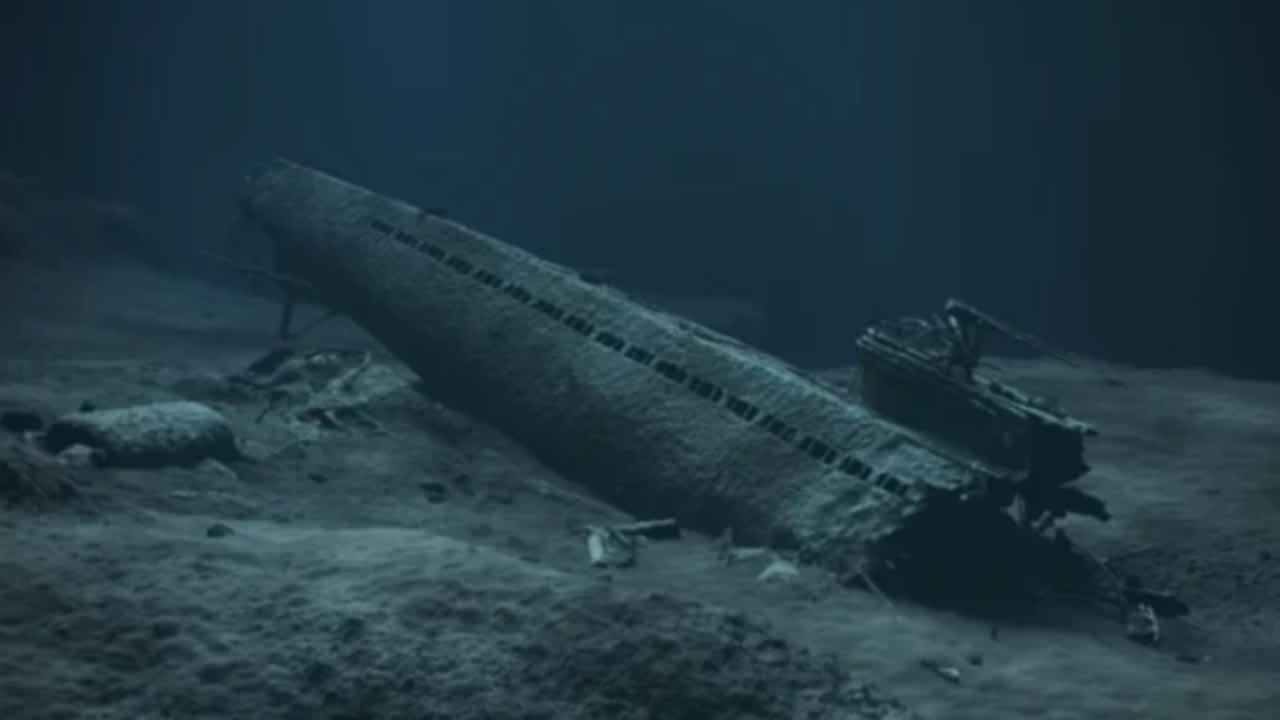
In February 1945, the British submarine HMS Venturer sank the German U-boat U-864 off Norway’s Fedje island, killing all 73 people aboard.
asserted
submarine → sink → people
More than eight decades later, the wreck has become the centre of a very different problem: a potentially massive mercury cargo that remains on the seabed.
asserted
that → become → seabed
In June 2026, Norwegian authorities recovered 22 mercury containers from the wreck during an underwater investigation, as per a report by Diario AS.
asserted
authorities → recover → AS
If the entire shipment was loaded, it would have amounted to between 65 and 67 tonnes of metallic mercury.
asserted
it → load → mercury
However, there are no surviving loading documents that confirm exactly how much mercury was actually aboard when the submarine sank.
asserted
submarine → be → ?
The submarine’s final mission
U-864 was a German Type IXD2 submarine that was travelling from Germany via Norway towards Japan during the final months of
World War II.
asserted
that → travel → II
Its mission, known as Operation Caesar, involved transporting specialists, military equipment and materials intended to support Japan’s wartime industry.
asserted
mission → know → industry
The submarine never reached Japan.
asserted
submarine → reach → Japan
On February 9, 1945, HMS Venturer located U-864 off the Norwegian coast.
asserted
Venturer → locate → coast
The British submarine fired torpedoes while both submarines were submerged, striking U-864 and breaking it apart.
asserted
submarines → fire → it
Norwegian authorities describe the encounter as a unique event in naval history: the first known instance of one submerged submarine sinking another submerged submarine.
asserted
authorities → describe → submarine
All 73 people aboard U-864 died, including two Japanese engineers.
asserted
people → die → engineers
The wreck came to rest at approximately 150 metres below the surface, around 4 kilometres west of Fedje.
asserted
wreck → come → Fedje
It remained undiscovered for decades.
asserted
It → remain → decades
Wreck found nearly 60 years later
U-864 was located by the Norwegian Navy’s vessel KNM Tyr in 2003.
asserted
U-864 → find → 2003
Investigations subsequently established that the submarine had broken into two major sections, with additional debris scattered around the site.
asserted
submarine → establish → site
The potential mercury cargo quickly became the central concern.
asserted
cargo → become → ?
Norwegian authorities say the Japanese wartime order discovered in British archives called for 1,867 containers.
asserted
order → say → containers
If all had been loaded, the mercury cargo would have weighed approximately 65-67 tonnes.
asserted
cargo → load → tonnes
But because the original loading documents have not been found, the figure remains an estimate rather than a confirmed inventory.
asserted
figure → find → ?
The wreck is believed to have carried up to 67 tonnes, rather than authorities having established that precisely 67 tonnes went down with it.
asserted
tonnes → believe → it
What is certain is that mercury remains in and around the wreck.
asserted
mercury → remain → wreck
Norwegian government records say an area of approximately 47,000 square metres around U-864 is contaminated with mercury.
asserted
area → say → mercury
Analyses and calculations have indicated that about 4 kilograms of mercury per year are leaking from the contaminated area.
asserted
kilograms → indicate → area
Unlike many substances that degrade naturally, mercury can remain in the environment and move between water, sediments and living organisms.
asserted
mercury → degrade → water
Of particular concern is methylmercury, a form that can be produced by microorganisms under certain environmental conditions.
asserted
that → produce → conditions
It can accumulate in aquatic organisms and become increasingly concentrated higher up the food chain.
asserted
It → accumulate → chain
That is why mercury contamination around a marine wreck can become an issue extending beyond the immediate site.
asserted
contamination → become → site
Norway has monitored fish and shellfish around U-864 for years.
asserted
Norway → monitor → years
Authorities have also imposed precautionary dietary advice relating to seafood caught close to the wreck site.
asserted
Authorities → impose → site
The Norwegian government's historical overview records that such advice was introduced in 2005 for pregnant and breastfeeding women and young children.
asserted
advice → record → women
Robots reach the mercury cargo
asserted
Robots → reach → cargo
The latest chapter began after Norway commissioned a new investigation of U-864.
asserted
Norway → begin → U-864
In August 2024, the Norwegian Ministry of Trade, Industry and Fisheries instructed Kystverket to conduct further surveys of the wreck and surrounding seabed.
asserted
Ministry → instruct → wreck
The objective was to reduce uncertainty around the condition of the submarine, its mercury containers, the surrounding sediment and the feasibility of recovering some of the cargo.
asserted
objective → reduce → cargo
A seabed survey was carried out in May 2025.
uncertain
survey → carry → May
Kystverket used remotely operated underwater equipment to examine the wreck and its surroundings, including the keel structures where the mercury containers were believed to be stored.
asserted
containers → use → structures
The next stage brought investigators directly to the cargo.
asserted
stage → bring → cargo
In June 2026, workers focused on the bow section and exposed six keel boxes.
asserted
workers → focus → boxes
In two of the forward boxes, they found mercury containers.
asserted
they → find → containers
…and 20 more, not listed.
 The Aporia