Energy Secretary Chris Wright has a “dream”: to use natural gas to save the lives of millions of the world’s poorest.
asserted
Wright → have → poorest
“[T]he biggest challenge [is] 2 billion people on the planet cook their daily meals and warm their houses the same way all our ancestors did, burning wood, dung, and agricultural waste indoors,” causing “2 to 3 million easily preventable deaths alone.”
asserted
ancestors → cook → deaths
Wright has taken giant steps to make his dream a reality.
asserted
dream → take → steps
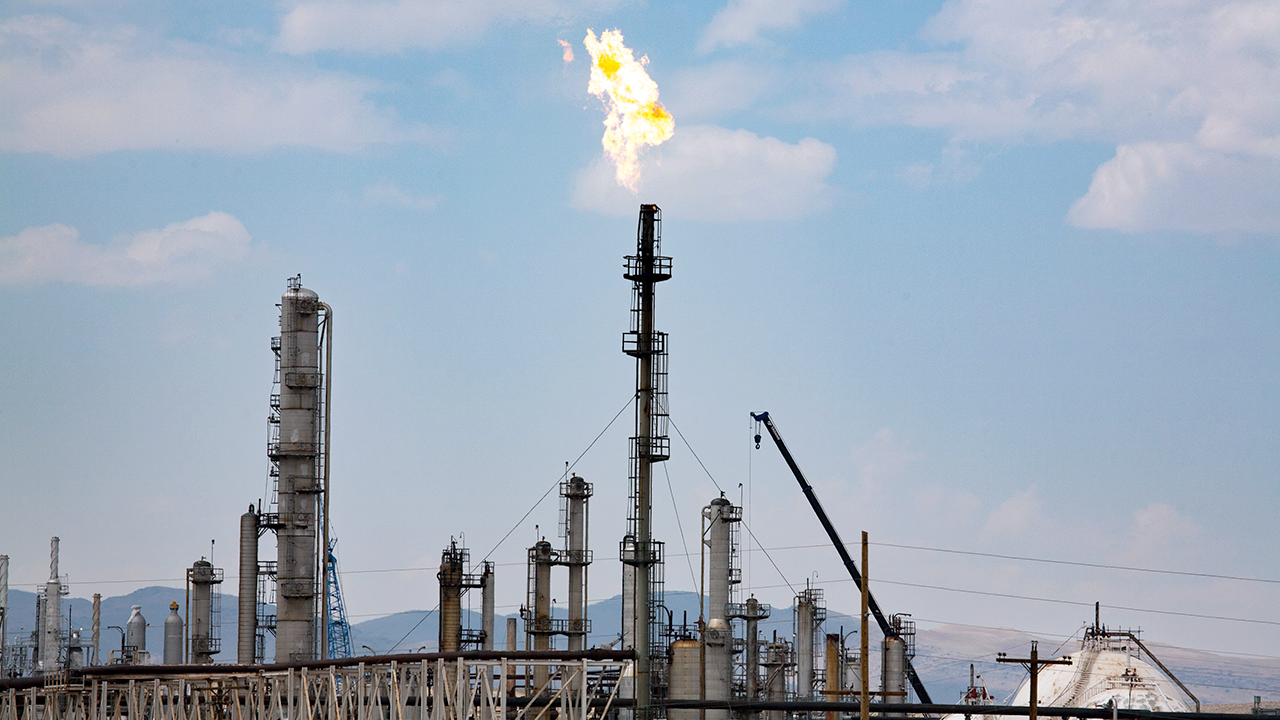
As a pioneer in the use of fracking and then as secretary of energy, Wright has been a leader in dramatically expanding the production of natural gas.
In 2025, he implemented policies that have unleashed record-setting U.S natural gas (and oil) production, even as natural gas prices have remained low (and as oil prices declined, until the conflict with Iran began).
asserted
conflict → expand → Iran
This work has made natural gas plentiful, widely available, and inexpensive.
asserted
gas → make → ?
But accelerating availability of natural gas, particularly for those who need it most, requires overcoming decades of worldwide governmental, academic, and media opposition based on climate change hysteria, such as Al Gore’s “An Inconvenient Truth,” and then-President Joe Biden’s claim that climate change is an “existential threat.”
uncertain
change → accelerate → Truth
Wright is the tip of the spear, eviscerating this hysteria.
asserted
Wright → eviscerate → hysteria
In July 2025, the Department of Energy issued “A Critical Review of Impacts of Greenhouse Gas Emissions on the U.S. Climate,” a comprehensive scientific report prepared at Wright’s request by five eminent independent scientists that dispassionately examined a vast array of scientific data on global warming and rising carbon dioxide emissions.
asserted
that → issue → warming
The secretary’s foreword to the report is very measured: “Climate change … is not the greatest threat facing humanity.
asserted
change → face → humanity
That distinction belongs to global energy poverty.
asserted
distinction → belong → poverty
As someone who values data, I know that improving the human condition depends on expanding access to reliable, affordable energy.
asserted
improving → value → energy
But misguided policies based on fear rather than facts could truly endanger human well-being.”
The report’s data, analysis, and conclusions, however, dismantle the supposed bases for climate-related regulations that restrict production and use of natural gas (and oil) and strangle liberty and prosperity.
uncertain
that → base → liberty
Scientific data, such as those analyzed in the DOE report, indeed show that, instead of causing harm, global warming and increased CO2 emissions are beneficial.
asserted
warming → analyze → harm
Global warming saves lives.
asserted
warming → save → lives
The DOE report discusses a 2015 study, published in the Lancet, that examined over 74 million deaths in 1985 — 2012 in the U.S. and 12 other nations around the world and found that while 0.42% of the deaths were attributable to warmer temperatures, 7.29% — over 17 times as many — were attributable to cooler temperatures.
asserted
% → discuss → temperatures
The Earth’s 1.37 degrees Celsius higher average temperature since 1880, and any future warming, has thus been saving and will continue to save millions of lives.
asserted
temperature → save → lives
Increased CO2 emissions improve agricultural productivity.
asserted
emissions → improve → productivity
The DOE report explains that CO2 emissions increase global greening.
asserted
emissions → explain → greening
“CO2-induced warming will be a net benefit to U.S. agriculture” and has “boosted productivity of all major U.S. crop types.”
asserted
warming → induce → types
Global warming and increased CO2 emissions do not cause more natural disasters.
asserted
warming → increase → disasters
Concerning fires, the DOE report states: “Global data show that wildfire coverage is constant or declining on every continent.”
asserted
coverage → concern → continent
As for tornadoes, “there is a noticeable downward trend in the number of severe tornadoes in the U.S. since 1950,” and since 1990, “the number of weak tornadoes in the U.S. has remained roughly constant.”
asserted
number → be → U.S.
The DOE report also debunks the dramatized assertion in “An Inconvenient Truth” that rising sea levels will swallow cities.
asserted
levels → debunk → cities
“Since 1900, global average sea level has risen by about 8 inches.”
asserted
level → rise → inches
As the “global average rate of absolute sea level rise is estimated to be 0.12 inches/year,” it will take another century for sea levels to rise by a single foot.
asserted
levels → estimate → foot
The most important fact regarding natural disasters, however, comes from data compiled by Oxford University scholars Hannah Ritchie, Pablo Rosado, and Max Roser: Since 1920, as temperatures and CO2 emissions have increased — and the world’s population has quadrupled — average deaths per year from natural disasters have decreased by over 90%.
asserted
deaths → regard → %
The natural gas needed to make Wright’s dream a reality is plentiful, widely available, and inexpensive.
asserted
dream → need → ?
We must stop allowing climate change hysteria to stand in the way.
asserted
hysteria → stop → way
 The Aporia