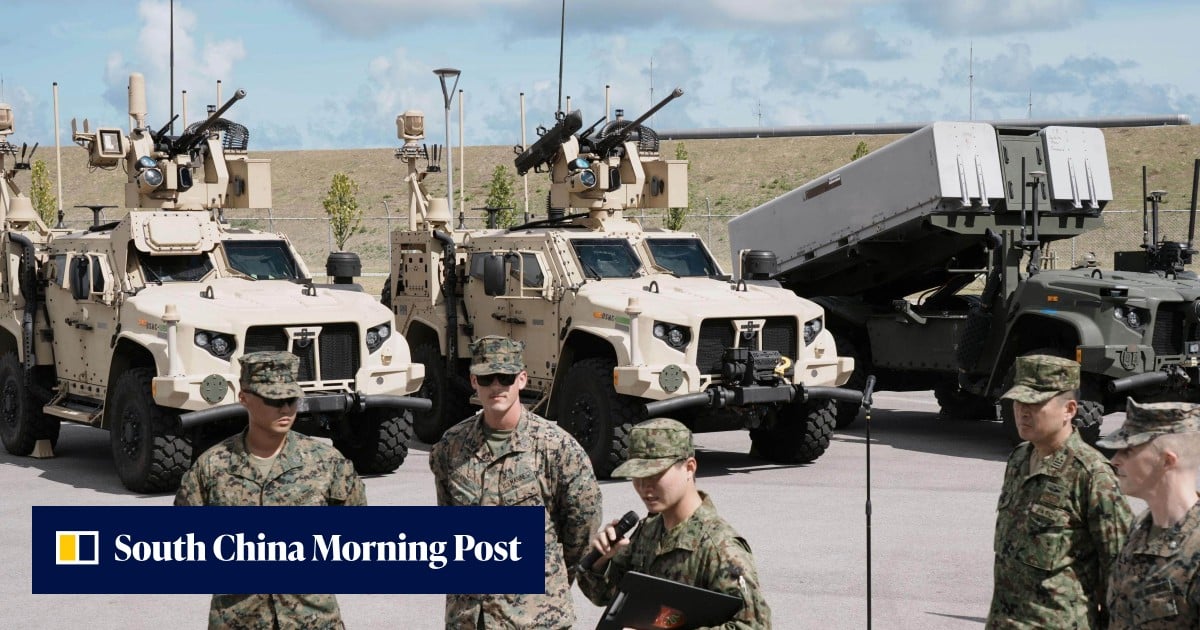
Photo via South China Morning Post

US to deploy NMESIS anti-ship system on Japanese island closest to Taiwan for first time

Read the original at South China Morning Post ↗
Cite

Wang, O. (2026, October 3). US to deploy NMESIS anti-ship system on Japanese island closest to Taiwan for first time. South China Morning Post. https://www.scmp.com/news/china/diplomacy/article/3369666/us-deploy-nmesis-anti-ship-system-japanese-island-closest-taiwan-first-time?utm_source=rss_feed

Dated when The Aporia collected the article, usually within hours of publication. Check the original for its exact date and byline.

South China Morning Post · collected 2026-10-03 · by Orange Wang

Quick Summary

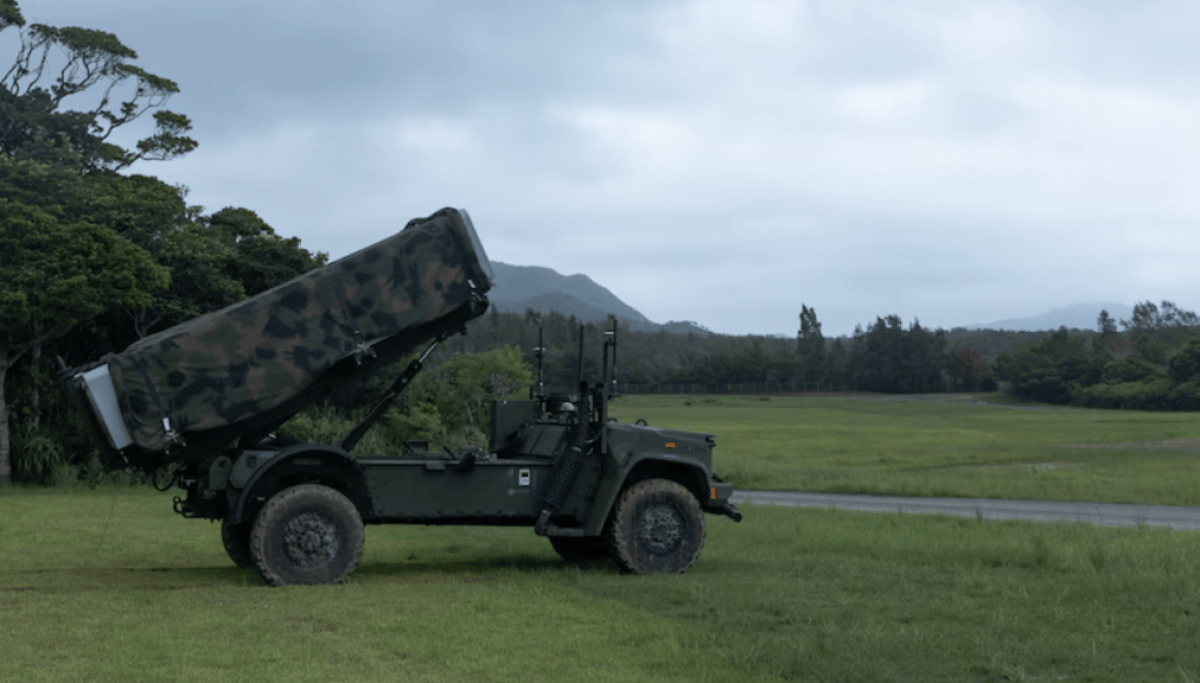
The US will deploy the Navy-Marine Expeditionary Ship Interdiction System (NMESIS) for the first time on Yonaguni Island, Japan, which is just 110 kilometers from Taiwan, during joint military exercises this month. This deployment marks a significant move compared to previous drills where NMESIS was placed farther east at Ishigaki Island, about 240 kilometers from Taiwan. The decision comes amid increased tensions between China and Japan.
Written by AI on 2026-10-03, from this article's own text only (the story summary below draws on all the coverage).

AI analysis

Story summary

The US will deploy its unmanned missile system called NMESIS on Yonaguni Island, located in Japan's Okinawa prefecture, during a joint military exercise from October 19 to 29, 2023. This deployment is part of the biennial Keen Sword exercises and marks the first time NMESIS will be stationed so close to Taiwan; Yonaguni is approximately 110km (60 nautical miles) from Taiwan's coast. Previously, during the Resolute Dragon drills in September 2022, NMESIS was positioned on Ishigaki Island, which is about 240km away from Taiwan and 127km east of Yonaguni.

NMESIS uses anti-ship missiles developed by Norway’s Kongsberg company, capable of penetrating advanced air defenses and targeting critical naval assets like sensors and control centers. The system's range extends at least 100 nautical miles, with future upgrades aiming to extend it beyond 150 nautical miles. This strategic move comes amid heightened tensions between Beijing and Tokyo, as China views the deployment near Taiwan as a direct challenge to its interests in the region.
Written for “US Deployments Near Taiwan” on 2026-11-03, grounded in this article and the 1 other(s) covering the same event.

Story

📰 US Deployments Near Taiwan
Politics · 2 article(s) covering the same event. See how they differ ↓

Compared with similar articles

This article reads unscored and hedges 50% of its claims. Each row says how that neighbour differs.
Washington Examiner
⚖️ Leans right Hedges 5 of 37 claims Outlet record 70/100
How this article was measured signals, leaning charts, publisher record, byline, topics and claims

Signals How these are calculated →

Claims extracted
2
sentences that state something as happening or true
Uncertain
50%
1 of 2 hedged ("reportedly", "may", "according to")
Leaning
not political
takes no side on a contested political question
Publisher signals
63/100
South China Morning Post's corrections and hedging, across everything collected from it. Not a measure of accuracy.
Outlets on this story
2
Politics
Same framing elsewhere
1
articles that frame the event the way this one does
Analyzed 2026-10-03 · how these are computed

How this is being covered How these are calculated →

Article leaning vs. publisher reliability
Source leaning vs. consistency

Publisher

South China Morning Post · 3630 article(s) · 7 correction(s) detected
Running correction rate · 7 correction(s)

Who wrote this

Orange Wang
14 article(s) here · 1 carrying a prediction
🔮 In FocusWill ‘strategic stability’ with China go out the window if Trump loses the midterms?
🔮 Could a midterm defeat tame Trump?
🔮 The official television network stated that the drill had focused on foreign vessels “illegally” entering the waters around the two shoals, while covering surveillance, tracking, maritime traffic control and tactical manoeuvres by small boats. It also included practising water cannon use, drone operations and optoelectronic evidence collection – a technique that uses optical and electronic sensors to detect and record evidence that may not be visible to the naked eye – according to the report.
🔮 The storm approached Shanghai and other major coastal cities on Saturday and was expected to head towards Japan Flights from airports in Shanghai as well as Fujian and Zhejiang provinces were grounded.
🔮 US to deploy NMESIS anti-ship system on Japanese island closest to Taiwan for first time Unprecedented deployment to Yonaguni, 110km from Taiwan, during joint drills this month comes amid high tensions between Beijing and Tokyo The ground-based US uncrewed missile platform known as the Navy-Marine Expeditionary Ship Interdiction System (NMESIS) will be deployed on Yonaguni Island in Japan’s Okinawa prefecture during biennial joint exercises this month, according to the regional bureau of the Japanese defence ministry. The deployment during the Keen Sword joint exercise moves the system closer to Taiwan than during the Resolute Dragon joint drills in September last year.
🔮 Chinese state media stresses stability to set the tone for Xi-Trump summit Front-page article in Communist Party’s top newspaper says leaders would drive forward ‘constructive strategic stability’
🔮 “[Both sides] expressed willingness to strengthen practical exchanges and cooperation between the two militaries, and enhanced mutual understanding and trust,” the ministry added.
Also by Orange Wang
Nothing else under this byline is closely related to this article, so these are simply their most recent.
All 14 articles by Orange Wang →

Topics

Japanese NMESIS Okinawa Taiwan Yonaguni

Subjects

Taiwan GPE · 4× Japanese NORP · 2× Okinawa GPE · 2× Yonaguni GPE · 2× Beijing GPE · 1× Japan GPE · 1× Tokyo GPE · 1×

Narrative

Then, NMESIS was stationed on Okinawa’s Ishigaki Island – roughly 127km east of Yonaguni and about 240km from Taiwan.
framing: mixed · carried by 1 article(s) · first seen 2026-10-03
🔮 US to deploy NMESIS anti-ship system on Japanese island closest to Taiwan for first time Unprecedented deployment to Yonaguni, 110km from Taiwan, during joint drills this month comes amid high tensions between Beijing and Tokyo The ground-based US uncrewed missile platform known as the Navy-Marine Expeditionary Ship Interdiction System (NMESIS) will be deployed on Yonaguni Island in Japan’s Okinawa prefecture during biennial joint exercises this month, according to the regional bureau of the Japanese defence ministry. The deployment during the Keen Sword joint exercise moves the system closer to Taiwan than during the Resolute Dragon joint drills in September last year.

Claims (2 extracted, 1 hedged)

US to deploy NMESIS anti-ship system on Japanese island closest to Taiwan for first time Unprecedented deployment to Yonaguni, 110km from Taiwan, during joint drills this month comes amid high tensions between Beijing and Tokyo The ground-based US uncrewed missile platform known as the Navy-Marine Expeditionary Ship Interdiction System (NMESIS) will be deployed on Yonaguni Island in Japan’s Okinawa prefecture during biennial joint exercises this month, according to the regional bureau of the Japanese defence ministry. The deployment during the Keen Sword joint exercise moves the system closer to Taiwan than during the Resolute Dragon joint drills in September last year. uncertain
deployment → deploy → September
Then, NMESIS was stationed on Okinawa’s Ishigaki Island – roughly 127km east of Yonaguni and about 240km from Taiwan. asserted
NMESIS → station → Taiwan
💬Give feedback
🕘History 🎫Support