Photo via Deutsche Welle

Pakistan vs. Afghanistan: From allies and neighbors to war

Read the original at Deutsche Welle ↗
Cite

Knipp, K. (2026, October 3). Pakistan vs. Afghanistan: From allies and neighbors to war. Deutsche Welle. https://www.dw.com/en/pakistan-vs-afghanistan-from-allies-and-neighbors-to-war/a-79532115?maca=en-rss-en-world-4025-rdf

Dated when The Aporia collected the article, usually within hours of publication. Check the original for its exact date and byline.

Deutsche Welle · collected 2026-10-03 · by Kersten Knipp

Quick Summary

Pakistan attacked targets in Afghanistan during early October, resulting in disputes over casualties; while Pakistan claims 22 militants were killed, the Taliban reports nine to ten civilians died. This conflict escalated from a September attack by the Pakistani Taliban (TTP) on a police compound in Kohat, killing 31 people and injuring more than 100 others. Despite Pakistan accusing Afghanistan of harboring TTP, the Afghan government denies this claim, complicating efforts for cooperation between the nations due to their complex historical ties and current ideological alliances.
Written by AI on 2026-10-03, from this article's own text only (the story summary below draws on all the coverage).

AI analysis

Story summary

On Thursday, October 1, 2026, the Pakistani Information Ministry announced that its forces had conducted "well-planned and calibrated" air strikes against terrorist hideouts in two locations within Afghanistan as part of Operation Ghazab lil Haq. According to Pakistan, these attacks targeted militants belonging to Fitna al Khawarij (Tehreek-i-Taliban Pakistan or TTP) and Fitna al Hindustan, resulting in the deaths of 22 terrorists and destruction of weapons depots. However, Afghanistan's government reported that nine women and children were killed and eleven civilians wounded during these strikes on Wednesday night in Kunar and Helmand provinces. The conflicting casualty reports highlight the ongoing tensions between Pakistan and Afghanistan over cross-border militant activities and the disputed use of territory by extremist groups like TTP.

Written for “Pakistani Airstrikes In Afghanistan” on 2026-11-04, grounded in this article and the 7 other(s) covering the same event.

Story

📰 Pakistani Airstrikes In Afghanistan
World · 8 article(s) covering the same event. Compare every outlet's account →

Compared with similar articles

This article reads unscored and hedges 4% of its claims. Each row says how that neighbour differs.
Al Jazeera
Hedges 1 of 9 claims Outlet record 60/100
The Hindu
Hedges 0 of 18 claims Outlet record 60/100
Toronto Star
⚖️ Leans left Hedges 1 of 3 claims Outlet record 64/100
Al Jazeera
Hedges 0 of 2 claims Outlet record 60/100
Times of India
Hedges 2 of 21 claims Outlet record 59/100
“The articles describe different events with conflicting claims regarding civilian and militant casualties, occurring on separate days in distinct locations.”
Times of India
⚖️ Leans right Hedges 1 of 19 claims Outlet record 59/100
“The articles describe different events: one is about Pakistan's advice to Afghanistan's Taliban government, while the other describes an attack by Pakistan on targets in Afghanistan.”
Times of India
Hedges 3 of 15 claims Outlet record 59/100
“The articles describe separate events: one involving Pakistani security forces killing TTP militants within Pakistan, and another describing an attack by Pakistan into Afghanistan with conflicting reports on casualties.”
How this article was measured signals, leaning charts, publisher record, byline, topics and claims

Signals How these are calculated →

Claims extracted
56
sentences that state something as happening or true
Uncertain
4%
2 of 56 hedged ("reportedly", "may", "according to")
Leaning
not political
takes no side on a contested political question
Publisher signals
95/100
Deutsche Welle's corrections and hedging, across everything collected from it. Not a measure of accuracy.
Outlets on this story
8
World
Same framing elsewhere
1
articles that frame the event the way this one does
Analyzed 2026-10-03 · how these are computed

How this is being covered How these are calculated →

Article leaning vs. publisher reliability
Source leaning vs. consistency

Publisher

Deutsche Welle · 579 article(s) · 0 correction(s) detected
No corrections detected for this publisher. That may mean careful reporting, or simply that nothing has been checked.

Who wrote this

Kersten Knipp
7 article(s) here · 1 carrying a prediction
🔮 However, Ali suggested that it wouldn't be inconceivable that irregular migrants could be used as leverage in these kinds of geopolitical conflicts.
🔮 London offered aerial refueling for Saudi fighter jets, while Paris announced it would provide troops, radar systems and air defense technology to protect the Yanbu oil terminal.
🔮 An analysis by the US-based Council on Foreign Relations notes that the Taliban are worried that if they crack down on the TTP too hard, they will drive the group towards another extremist militant group, the Islamic State in Khorasan Province or IS-K.
🔮 In fact, it may send the Saudis back to the Strait of Hormuz to try to ship their oil, even though that route is still heavily restricted.
2026-09-30 · assertive framing · Are the Houthis winning against Saudi Arabia?
🔮 Any and all ships may pass, at least at first.
2026-09-16 · assertive framing · How the Houthis are also putting Egypt under pressure
🔮 About ten years after the attacks in New York and Washington, al-Qaeda's most famous figure, Osama bin Laden, was killed in May 2011.
2026-09-11 · assertive framing · 25 years after 9/11: Al-Qaeda weakened but not gone
🔮 However, as early as April 2025, Reuters news agency cited anonymous sources saying Turkey had inspected at least three air bases in Syria where it might want to station troops as part of a planned joint defense pact.
Also by Kersten Knipp
Nothing else under this byline is closely related to this article, so these are simply their most recent.
All 7 articles by Kersten Knipp →

Topics

Afghanistan Pakistan Pakistani TTP Taliban

Subjects

Afghanistan GPE · 15× Pakistan GPE · 15× Taliban ORG · 12× TTP ORG · 7× Pakistani NORP · 4× India GPE · 3× Afghan NORP · 2× Islamabad GPE · 2× Kohat GPE · 2× Schetter PERSON · 2×

Narrative

The current border between Afghanistan and Pakistan follows the Durand Line and also divides an area on both sides, homeland to Pashtuns, who make up the largest ethnic group in Afghanistan and second largest in Pakistan. So the border dispute here isn't just about territory, it's also about identity.
framing: assertive · carried by 1 article(s) · first seen 2026-10-03
🔮 An analysis by the US-based Council on Foreign Relations notes that the Taliban are worried that if they crack down on the TTP too hard, they will drive the group towards another extremist militant group, the Islamic State in Khorasan Province or IS-K.
2026-10-03 · Deutsche Welle
Pakistan vs. Afghanistan: From allies and neighbors to war · assertive framing

Claims (56 extracted, 2 hedged)

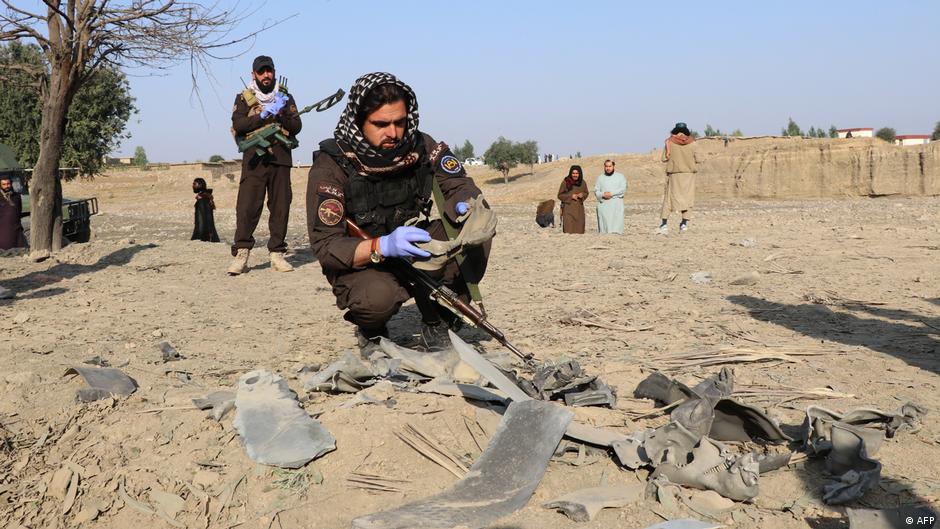
On Thursday night, Pakistan attacked targets in Afghanistan. asserted
Pakistan → attack → Afghanistan
The results of that attack are disputed. asserted
results → dispute → attack
The Taliban, the Islamic fundamentalist nationalist movement that controls Afghanistan, says that between nine and 10 civilians were killed, including women and children. asserted
civilians → control → women
But Pakistan claims the strike killed 22 militants and destroyed weapons and ammunition depots. uncertain
strike → claim → weapons
These early October attacks are just the latest escalation in a conflict between the two countries that reignited mid-September, after months of comparative calm. asserted
that → reignite → calm
The conflict was sparked again after a series of attacks on Pakistani security forces. asserted
conflict → spark → forces
On September 18, an attack on a police compound in the northwestern city of Kohat resulted in the deaths of 31 people and more than 100 injured. asserted
100 → result → people
A splinter group belonging to the Pakistani Taliban, also known as Tehreek-e-Taliban Pakistan, or TTP, claimed responsibility for the attack in Kohat, in Khyber Pakhtunkhwa province, bordering Afghanistan. asserted
group → belong → Afghanistan
Pakistan accused Afghanistan of providing the TTP with a safe haven. asserted
Pakistan → accuse → haven
Afghanistan denies this but clashes at the border and then airstrikes by Pakistan followed. asserted
clashes → deny → Pakistan
Although it does have close ideological and personnel ties to the Afghan Taliban, it is an independent organization that fights the Pakistani state. asserted
that → have → state
Many of its fighters sided with the Taliban during that country's long-running insurgency against international and US troops. asserted
Many → side → troops
This is why, after the Taliban returned to power in 2021, the TTP gained more room and more leverage. asserted
TTP → return → room
This has meant that Afghanistan — a former ally of Pakistan — has increasingly become a threat to its neighbor. asserted
Afghanistan → mean → neighbor
Pakistan has asked the Taliban to take action against the TTP, but the close connection between the two make this difficult. asserted
this → ask → two
"Because of these personal connections and networks, it is extremely difficult for the Afghan Taliban to break away," says Conrad Schetter, director of the Bonn International Center for Conflict Studies, or BICC. asserted
Schetter → break → Studies
The connections don't mean that the Taliban has any control over the TTP. asserted
Taliban → mean → TTP
There are certainly historical connections between the two, but Schetter doesn't believe that equals any sort of strong, direct influence. asserted
that → be → influence
"The Taliban are simply not prepared to take orders from Islamabad," adds Thomas Ruttig, co-director of the Afghanistan Analysts Network, a think tank working between Kabul and Berlin. asserted
Ruttig → prepare → Kabul
"They won't let anyone outside interfere." asserted
anyone → let → ?
This means the Pakistani policy of supporting the Taliban in order to gain influence in Afghanistan hasn't worked. asserted
policy → mean → Afghanistan
There's also another older conflict that has an impact on the current situation. asserted
that → be → situation
This involves what is known as the Durand Line, drawn in 1893 by a British diplomat and an Afghan emir to mark spheres of influence between British India and Afghanistan. asserted
what → involve → India
The current border between Afghanistan and Pakistan follows the Durand Line and also divides an area on both sides, homeland to Pashtuns, who make up the largest ethnic group in Afghanistan and second largest in Pakistan. So the border dispute here isn't just about territory, it's also about identity. asserted
it → follow → identity
"Ethnic and nationalist elements play a significant role in the conflict," Schetter tells DW. asserted
Schetter → play → DW
Many Pashtuns still refuse to accept the border that the Durand Line created. asserted
Line → refuse → that
In Pakistan, the country's long-running rivalry with India also plays a part. asserted
rivalry → run → part
But India has also strengthened its ties to the Taliban. asserted
India → strengthen → Taliban
"While Islamabad once viewed Afghanistan as a source of 'strategic depth' in its rivalry with India, it now increasingly views its north-western neighbor as a liability," an analysis by British think tank Chatham House notes. asserted
analysis → view → House
Pakistan exerts pressure asserted
Pakistan → exert → pressure
Pakistan still has power over Afghanistan, though. asserted
Pakistan → have → Afghanistan
As a landlocked country, Afghanistan relies on trade routes through neighboring countries, and Pakistan in particular. asserted
Afghanistan → rely → countries
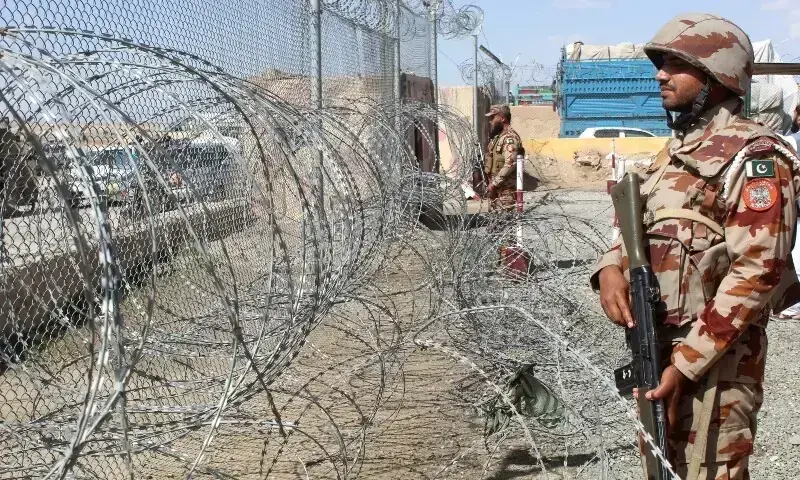
Pakistan can use border closures and trade restrictions to exert pressure even as the Taliban regime is trying to reduce dependence on Pakistan and find new economic and political partners. asserted
regime → use → partners
Trade and security considerations are now becoming tangled. asserted
considerations → become → ?
Pakistan has held talks with the TTP that were mediated by the Taliban and ceasefires were agreed upon. asserted
ceasefires → hold → Taliban
Talks between Pakistan and Afghanistan also took place. asserted
Talks → take → place
But none of the temporary agreements resolved the crucial question of how to prevent attacks on Pakistan from Afghan territory. asserted
none → resolve → territory
So in parallel with diplomacy, Pakistan has also been relying on economic and political pressure, for example, by closing borders and restricting trade and by sending Afghan refugees back into Afghanistan. asserted
Pakistan → rely → Afghanistan
An analysis by the US-based Council on Foreign Relations notes that the Taliban are worried that if they crack down on the TTP too hard, they will drive the group towards another extremist militant group, the Islamic State in Khorasan Province or IS-K. asserted
they → base → Province
This group opposes the Taliban. asserted
group → oppose → Taliban
…and 16 more, not listed.

💬Give feedback
🕘History 🎫Support