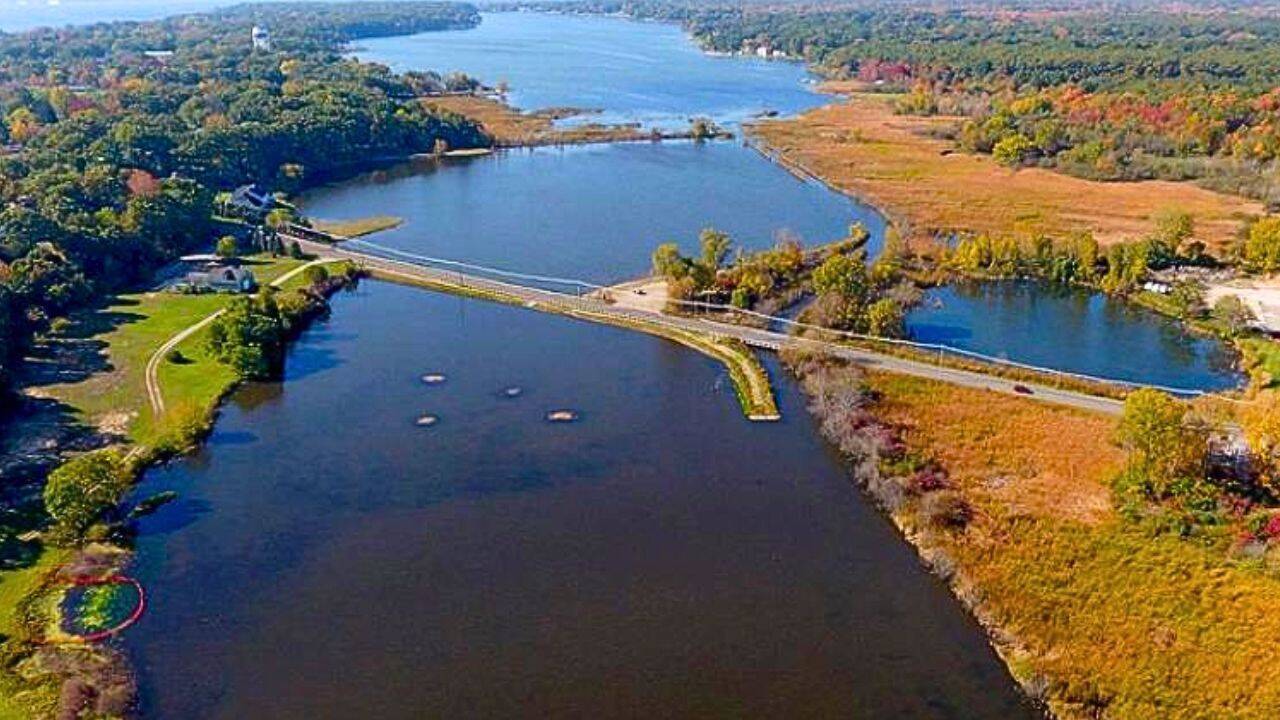
Photo via Times of India

Muskegon Lake had 347,350 tons of debris and 190,000 tons of contaminated soil removed

Read the original at Times of India ↗
Cite

TOI World Desk. (2026, October 4). Muskegon Lake had 347,350 tons of debris and 190,000 tons of contaminated soil removed. Times of India. https://timesofindia.indiatimes.com/world/us/after-40-years-as-one-of-the-great-lakes-most-degraded-sites-muskegon-lake-had-347350-tons-of-debris-and-190000-tons-of-contaminated-soil-removed/articleshow/134619771.cms

Dated when The Aporia collected the article, usually within hours of publication. Check the original for its exact date and byline.

Times of India · collected 2026-10-04 · by TOI World Desk

Quick Summary

Muskegon Lake in Michigan has been removed from the US Environmental Protection Agency’s Areas of Concern list after decades of restoration efforts. Restoration projects since 2008 have involved removing 347,350 tons of debris and 190,000 tons of contaminated soil, restoring over 134 acres of wetland habitat, and reconnecting more than 7,000 feet of shoreline. The article highlights the lake's journey from one of the most environmentally degraded sites in the Great Lakes to a restored ecosystem, focusing on the extensive cleanup efforts and funding sources that contributed to its recovery.
Written by AI on 2026-10-04, from this article's own text only (the story summary below draws on all the coverage).

AI analysis

Story summary

In September 2025, Muskegon Lake in Michigan was officially removed from the US Environmental Protection Agency’s (EPA) Areas of Concern list after about four decades of restoration work. Initially designated as one of the most environmentally degraded sites in the Great Lakes, the lake faced issues such as habitat loss, contaminated soils, and hardened shorelines.

Restoration efforts were funded by NOAA Fisheries through the Great Lakes Commission, with oversight from the West Michigan Shoreline Regional Development Commission. These initiatives restored and reconnected 134 acres of wetland and offshore habitat, improved over 7,000 feet of shoreline, removed 347,350 tons of debris, and remediated 190,000 tons of contaminated soil. The projects also enhanced habitats for fish and wildlife, marking a significant environmental success in the Great Lakes region.

Written for “Muskegon Lake Cleanup” on 2026-11-03, grounded in this article and the 0 other(s) covering the same event.

Story

📰 Muskegon Lake Cleanup
Environment · 1 article(s) covering the same event.

Compared with similar articles

Nothing to compare against. No article is close enough to this one for the pipeline to have linked or judged the pair.
How this article was measured signals, leaning charts, publisher record, byline, topics and claims

Signals How these are calculated →

Claims extracted
31
sentences that state something as happening or true
Uncertain
3%
1 of 31 hedged ("reportedly", "may", "according to")
Leaning
not political
takes no side on a contested political question
Publisher signals
59/100
Times of India's corrections and hedging, across everything collected from it. Not a measure of accuracy.
Outlets on this story
1
Environment
Same framing elsewhere
1
articles that frame the event the way this one does
Analyzed 2026-10-04 · how these are computed

How this is being covered How these are calculated →

Article leaning vs. publisher reliability
Source leaning vs. consistency

Publisher

Times of India · 3982 article(s) · 3 correction(s) detected
Running correction rate · 3 correction(s)

Who wrote this

TOI World Desk
1379 article(s) here · 0 carrying a prediction
🔮 Origins of the emergency relief campaign The project started in early 2020 when Dozier realised that federal emergency support money could take months to reach low-income workers who were at immediate risk of losing their homes.
🔮 Before that, visitors could participate in organised activities such as guided hikes, birdwatching, educational programmes and public hunts.
🔮 While their decision to buy an abandoned French hamlet might appear like an unexpected adventure, Yip and Paul's official website reveals that their story together began decades earlier.
🔮 Hundreds of polar bears are expected to gather near the Canadian town of Churchill in Manitoba as temperatures fall and the animals wait for Hudson Bay to freeze.
🔮 Together they would support the reforestation of Mutuba trees in Uganda for three years.
🔮 In the letter, he apologised for forgetting to send his greetings earlier and expressed hope that they would meet the following year again.
🔮 Meeker told Signal Akron that the sculpture contained details that people could continue discovering over time.
🔮 The possibility that the farm could eventually reach another generation now seems less remote.
🔮 According to his plea agreement, he repeatedly gave investors false information about how their money would be used.
🔮 The couple challenged the move in court, and a judge subsequently ordered that the fence could not be removed or relocated while the legal dispute continued.
Wire or desk byline, not an individual reporter.
Also by TOI World Desk
Nothing else under this byline is closely related to this article, so these are simply their most recent.
All 1379 articles by TOI World Desk →

Topics

Areas of Concern Michigan NOAA Fisheries the Great Lakes Commission the US Environmental Protection Agency’s

Subjects

NOAA Fisheries ORG · 4× Areas of Concern ORG · 2× Amoco ORG · 1× Michigan GPE · 1× Muskegon GPE · 1× Muskegon Lake GPE · 1× Muskegon Lake Watershed Partnership/ ORG · 1× the Great Lakes Commission ORG · 1× the US Environmental Protection Agency’s ORG · 1× the West Michigan Shoreline Regional Development Commission ORG · 1×

Narrative

Why was Muskegon Lake removed from the Areas of Concern list Muskegon Lake was officially removed from the EPA’s Areas of Concern list in September 2025, marking the end of a process that began after its designation about 40 years earlier.
framing: assertive · carried by 1 article(s) · first seen 2026-10-04

Claims (31 extracted, 1 hedged)

Muskegon Lake in Michigan has been removed from the US Environmental Protection Agency’s Areas of Concern list after about decades of restoration work. asserted
Lake → remove → work
The lake was designated one of the most environmentally degraded sites in the Great Lakes about 40 years ago. asserted
lake → designate → Lakes
In September 2025, it was officially removed from the list after restoration efforts addressed problems including habitat loss, contaminated soils, and hardened shorelines. asserted
efforts → remove → loss
Since 2008, NOAA Fisheries has funded restoration projects around the lake through the Great Lakes Commission, with local oversight from the West Michigan Shoreline Regional Development Commission. asserted
Fisheries → fund → Commission
The work has restored and reconnected 134 acres of wetland and offshore habitat and more than 7,000 feet of shoreline. asserted
work → restore → shoreline
It also removed 347,350 tons of debris and 190,000 tons of contaminated soil, while improving habitat for fish and wildlife. asserted
It → remove → fish
How much habitat and shoreline was restored around Muskegon Lake The restoration work changed several parts of the Muskegon Lake area. asserted
work → restore → area
Since 2008, projects restored and reconnected 134 acres of wetland and offshore habitat and restored more than 7,000 feet of shoreline. asserted
projects → restore → shoreline
They also removed 347,350 tons of debris and 190,000 tons of contaminated soil. asserted
They → remove → soil
At Veterans Memorial Park, partners restored more than 15 acres of habitat and more than 6,000 feet of shoreline. asserted
partners → restore → shoreline
They also removed more than 40,200 metric tons of sediment. asserted
They → remove → sediment
At the former Amoco site, work restored 9.8 acres of habitat and 575 feet of shoreline while removing 1,700 feet of concrete wall. asserted
work → restore → wall
Other projects restored wetlands, improved water flow and fish passage, removed dikes, and cleared logging-era sawmill debris across Muskegon. PC: asserted
projects → restore → PC
Why was Muskegon Lake removed from the Areas of Concern list Muskegon Lake was officially removed from the EPA’s Areas of Concern list in September 2025, marking the end of a process that began after its designation about 40 years earlier. asserted
that → remove → designation
The lake was listed because environmental conditions were affecting the waterway, fish and wildlife, human health, and the local economy. asserted
conditions → list → waterway
Partners worked for decades to address the problems required for delisting. asserted
Partners → work → delisting
These included fish and wildlife habitat loss, contaminated soils, and hardened shorelines. asserted
These → include → loss
According to NOAA Fisheries, partners raised approximately $80 million for restoration in Muskegon Lake. uncertain
partners → accord → Lake
More than $36 million came from NOAA Fisheries, primarily through the Great Lakes Restoration Initiative. asserted
million → come → Initiative
Industrial pollution damaged Muskegon Lake’s water and wildlife habitat Muskegon Lake’s environmental problems developed as industries expanded around the lake in the late 1800s. asserted
industries → damage → 1800s
Lumber mills, chemical companies, foundries, a coal-fired power plant, and a paper mill filled parts of the shoreline and contaminated the water and sediment. asserted
mills → fire → water
The contamination included compounds such as mercury and polycyclic aromatic hydrocarbons. asserted
contamination → include → mercury
These conditions contributed to habitat loss and degradation, water quality concerns, and declines in fish and wildlife populations. asserted
conditions → contribute → populations
In 1987, Muskegon Lake was listed as a Great Lakes Area of Concern. asserted
Lake → list → Concern
The designation was based on beneficial use impairments, which indicate how poor waterway conditions affect the environment, human health, and the local economy. asserted
conditions → base → environment
Wetland restoration reconnected habitats and improved fish passage Projects also focused on reconnecting wetlands and improving habitat for fish and wildlife. asserted
Projects → reconnecte → fish
At Lower Muskegon River, three dikes were removed from a former celery farm, reconnecting nearly 58 acres of wetland habitat with the river. asserted
dikes → remove → river
At Bear Creek, more than 36 acres of coastal wetlands were reconnected, improving water flow and fish passage to Muskegon Lake. asserted
acres → reconnecte → Lake
The project removed roughly 120,000 cubic yards of sediment containing harmful levels of phosphorus. asserted
project → remove → phosphorus
At Muskegon Lake Nature Preserve, nearly 8 acres of wetland habitat were restored. asserted
acres → restore → habitat
Another project removed more than 300,600 metric tons of logging-era sawmill debris from four sites. asserted
project → remove → sites

💬Give feedback
🕘History 🎫Support