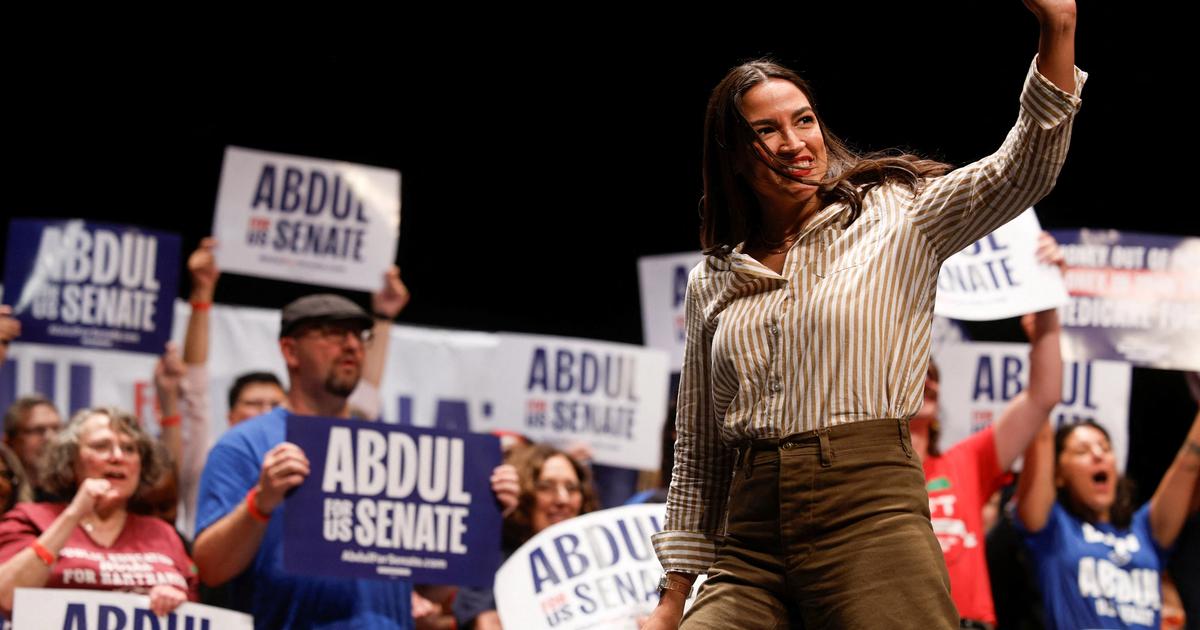
Last week, 1,500 unionized nurses gathered in a large conference room at the Marriott Marquis in San Francisco to cheer for a cause they’ve championed for years: Medicare for All.
asserted
they → gather → All
Considered a radical and even fringe idea for decades, interest in sweeping healthcare reform has surged as progressive Democrats have won a series of primary victories ahead of November’s crucial midterm elections.
asserted
Democrats → consider → elections
Most prominent among its advocates is Democratic US Senate nominee from Michigan Abdul El-Sayed – who took the lectern before these nurses.
asserted
who → take → nurses
“Medicare for who?” asked El-Sayed – “ALL!” the crowd shouted back.
asserted
crowd → ask → who
El-Sayed went on to describe why he wrote a book about Medicare or All: to answer questions about “the very simple idea that in the richest, most powerful country in the world you should not have to suffer for your healthcare”.
asserted
you → go → healthcare
As progressive candidates like El-Sayed prevail in primaries, and the Democratic party stresses unity in the face of its midterm challenge to Republicans, Medicare for All remains a pressure point – embraced by the party’s left but often considered a liability by centrists.
“There’s too many unnecessary illnesses and unnecessary costs,” said Michelle Gutierrez Vo, president of the California Nurses Association, the National Nurses Organizing Committee and vice-president of National Nurses United – all unions which represent nurses attending the San Francisco conference.
asserted
which → prevail → conference
“What are we doing?”
asserted
we → do → What
These unions have advocated for Medicare for All for years, and watched interest swell as candidates like El-Sayed picked up steam.
asserted
candidates → advocate → steam
By contrast, centrist Democrat groups, such as Third Way, consider Medicare for All an unattainable albatross.
asserted
Medicare → consider → All
“Medicare for All has a lot of political and substantive issues,” said Gabe Horwitz, senior vice-president for the economic program at Third Way.
asserted
Horwitz → have → Way
The party is unanimous in opposition to the $1tn in healthcare cuts made by Donald Trump’s One Big Beautiful Bill Act which Democrats have taken to calling the “big, ugly bill”.
asserted
Democrats → make → Act
The legislation is expected to result in an additional 16 million people becoming uninsured by 2034.
asserted
people → expect → 2034
“We want to get everyone insured, we want to lower costs and want to make care easier to use,” said Horwitz, who also said the party acknowledges that it needs to make reforms for people struggling to afford employer-sponsored health insurance.
asserted
it → want → insurance
“I don’t know if there’s one Democrat in the party who wouldn’t agree with that.
asserted
who → know → that
“There is unanimity in the goals – the ends – there’s just not necessarily unanimity in the means to get there,” said Horwitz.
asserted
Horwitz → be → means
This divide was most recently evident in an 84-page memo sent to Hakeem Jeffries, the House minority leader, from the cost of living healthcare working group.
asserted
divide → send → group
“Members of the Democratic Caucus hold a diversity of views on how to achieve universal coverage,” the memo read, “including Medicare for All”, and a wide range of other more incremental policies.
asserted
memo → hold → policies
Centrist Democrats have sought to answer the gnawing question of what to do about soaring healthcare costs and reviled insurance company practices by proposing incremental reform – a strategy that builds off the Affordable Care Act (ACA) passed by the Obama administration.
asserted
that → seek → administration
A healthcare bill of rights, more government subsidies to health insurance companies to offset costs to consumers, and some version of a “public option”, or a government-sponsored health insurance plan that people could buy into.
uncertain
people → offset → that
For years, the party’s left has offered a proposition at once seen as radical by US standards and typical by many of the world’s industrialized democracies: a single-payer health system sponsored by the government.
asserted
left → offer → government
“All Democrats from 1948 on have been in favor of universal healthcare – that’s been in every democratic platform since literally Harry Truman,” said Elaine Kamarck, a senior fellow at the Brookings Institute, whose recent analysis of primary victories across the political spectrum found mainstream candidates continue to win.
asserted
candidates → say → spectrum
“That’s not the issue – the issue is how do you do it.”
asserted
you → ’ → it
What’s more, said Kamarck, the issue is one likely to simmer long past the primaries.
asserted
issue → ’ → primaries
US health reform is a virtual nonstarter while Republicans hold the Oval Office.
asserted
Republicans → hold → Office
But if Democrats won a “trifecta” in 2028, “then this is going to be a really big issue”.
asserted
this → win → 2028
At present, the US health system is a patchwork of different insurers, or “payers”, all of which are subsidized by US taxpayers.
asserted
all → subsidize → taxpayers
Four large programs dominate the mix: employer-sponsored health insurance covers almost half of Americans (48% of the population), Medicare covers people older than 65 (14.8%), Medicaid covers low-income and disabled people (20.4%) and Obamacare allows people to buy private insurance as individuals (6.6%), all according to Kaiser Family Foundation
uncertain
all → dominate → Foundation
About 27 million people (8.2%) lack insurance entirely.
asserted
people → lack → insurance
About one-in-four Americans are “underinsured”, or have high health costs relative to their income.
asserted
Americans → have → income
Across these various programs, the US government plans to spend $33.6tn through 2034.
asserted
government → plan → 2034
This includes subsidies for the private insurance Americans get through their jobs, for which employers receive a tax break.
asserted
employers → include → break
As a point of reference, the United Kingdom spends about 11.9% of GDP to insure everyone in the country, according to the Commonwealth Fund.
uncertain
Kingdom → spend → Fund
Although the slogan Medicare for All has a somewhat loose definition, a bill repeatedly introduced in Congress provides for a Medicare-style single-payer system, with universal health coverage.
asserted
bill → have → coverage
Private insurers would be barred from duplicating services.
asserted
insurers → bar → services
Because healthcare as an industry represents 18% of US gross domestic product (GDP), and such a dramatic transition would inevitably disrupt thousands of jobs, the bill also provides for temporary worker compensation.
asserted
bill → represent → compensation
But for advocates of Medicare for All, such as Gutierrez Vo, anything else is, “a patch-up – it’s not a fix”.
asserted
it → ’ → Vo
“Just like nurses take care of the whole patient– that’s like taking care of a leg and letting the rest be ill.
asserted
rest → take → leg
That’s silly.”
asserted
That → ’ → ?
 The Aporia