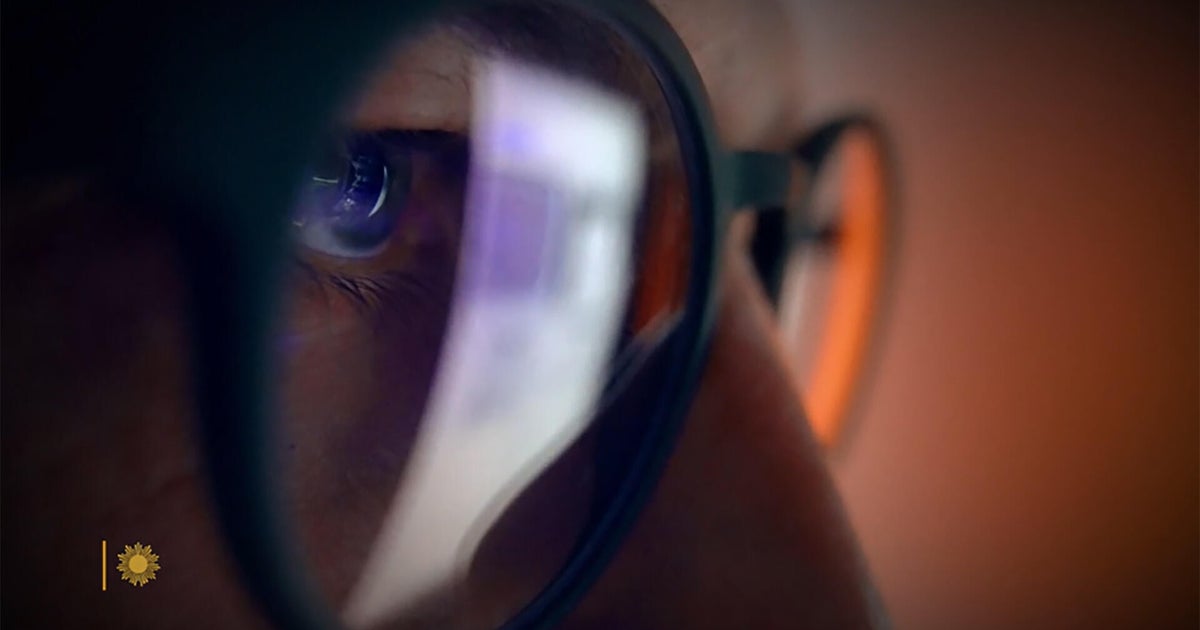
Photo via CBS News

Detecting deepfakes, in a world where even reality is suspect

Read the original at CBS News ↗
Cite

Detecting deepfakes, in a world where even reality is suspect. (2026, October 4). CBS News. https://www.cbsnews.com/video/detecting-deepfakes-in-a-world-where-even-reality-is-suspect/

Dated when The Aporia collected the article, usually within hours of publication. Check the original for its exact date and byline.

CBS News · collected 2026-10-04

Quick Summary

Hany Farid, an expert on deepfakes and digital manipulation, tells "Sunday Morning" that approximately half of internet content is fake. The discussion covers the challenges in detecting AI-generated images, the dangers of weaponizing artificial intelligence imagery, and the prospects for accepting AI as a substitute for human interaction.
Written by AI on 2026-10-04, from this article's own text only (the story summary below draws on all the coverage).

AI analysis

Story summary

Hany Farid, a leading expert on deepfakes and digital manipulation, estimates that half of the widely viewed content online is fake. In an interview with Ted Koppel on CBS's "Sunday Morning," Farid discusses the challenges and tolls of identifying manipulated images and videos, known as deepfakes. The conversation also delves into how artificial intelligence-generated imagery could be weaponized for malicious purposes. Farid questions whether society will ever fully accept AI agents as replacements for humans in various roles, given concerns over authenticity and trust.
Written for “Deepfake Detection Technology” on 2026-11-04, grounded in this article and the 0 other(s) covering the same event.

Story

📰 Deepfake Detection Technology
Technology · 1 article(s) covering the same event.

Compared with similar articles

This article reads unscored and hedges 0% of its claims. Each row says how that neighbour differs.
Fox News
Hedges 1 of 22 claims Outlet record 68/100
“The articles discuss different aspects of AI and deepfakes, with Article A focusing on Hany Farid's work on detecting deepfakes and the impact of digital manipulation, while Article B emphasizes cybersecurity expert Morgan Wright's advice on human skepticism against AI scams.”
How this article was measured signals, leaning charts, publisher record, byline, topics and claims

Signals How these are calculated →

Claims extracted
3
sentences that state something as happening or true
Uncertain
0%
0 of 3 hedged ("reportedly", "may", "according to")
Leaning
not political
takes no side on a contested political question
Publisher signals
65/100
CBS News's corrections and hedging, across everything collected from it. Not a measure of accuracy.
Outlets on this story
1
Technology
Same framing elsewhere
1
articles that frame the event the way this one does
Analyzed 2026-10-04 · how these are computed

How this is being covered How these are calculated →

Article leaning vs. publisher reliability
Source leaning vs. consistency

Publisher

CBS News · 4615 article(s) · 7 correction(s) detected
Running correction rate · 7 correction(s)

Who wrote this

No reporter is named on this article.

Topics

No topics tagged.

Subjects

Farid PERSON · 1× Hany Farid PERSON · 1× Ted Koppel PERSON · 1×

Narrative

"Sunday Morning" senior contributor Ted Koppel talks with Farid about the toll of studying deepfakes; about the weaponization of AI imagery; and about whether AI agents will ever be accepted as replacements for humans.
framing: assertive · carried by 1 article(s) · first seen 2026-10-04
🔮 "Sunday Morning" senior contributor Ted Koppel talks with Farid about the toll of studying deepfakes; about the weaponization of AI imagery; and about whether AI agents will ever be accepted as replacements for humans.
2026-10-04 · CBS News
Detecting deepfakes, in a world where even reality is suspect · assertive framing

Claims (3 extracted, 0 hedged)

Detecting deepfakes, in a world where even reality is suspect Hany Farid, a leading expert on deepfakes and digital manipulation, estimates that half of the content widely viewed on the Internet is fake. asserted
half → detect → Internet
What does this mean for our ability to detect images generated or hallucinated by artificial intelligence? asserted
this → mean → intelligence
"Sunday Morning" senior contributor Ted Koppel talks with Farid about the toll of studying deepfakes; about the weaponization of AI imagery; and about whether AI agents will ever be accepted as replacements for humans. asserted
agents → talk → humans
💬Give feedback · no sign-in needed

No sign-in needed for now. Your note is sent without a name, so it cannot be answered.

🕘History 🎫Support