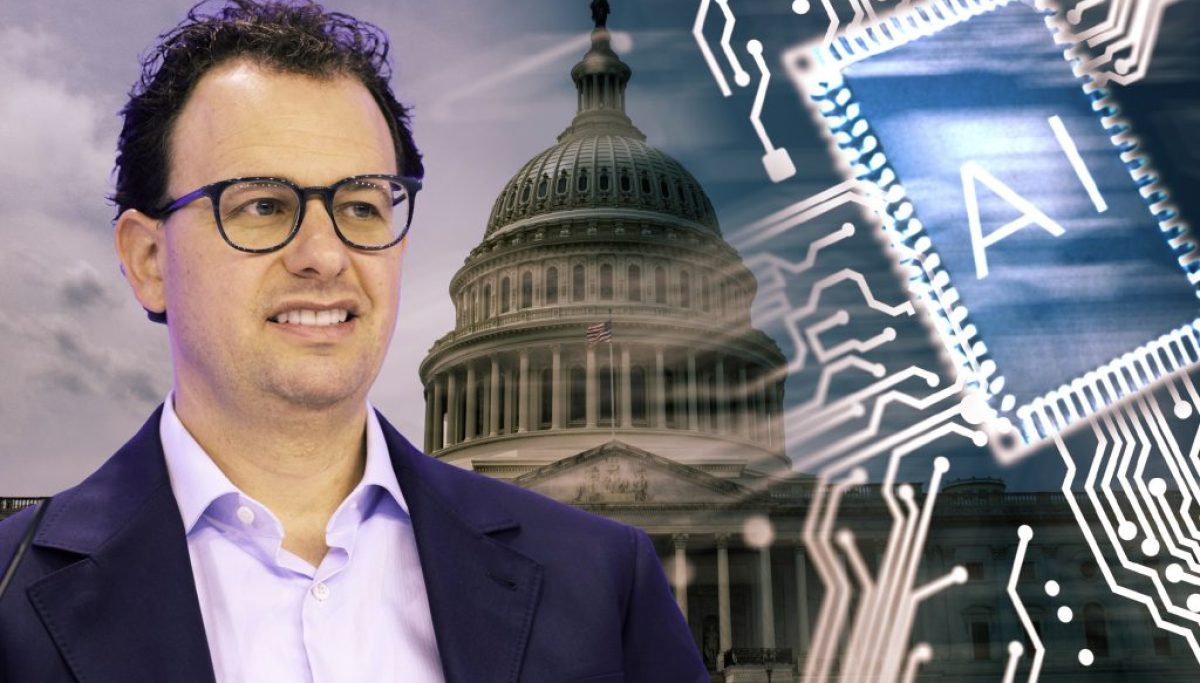
Photo via Fox News

The best defense against high-tech AI scams is low-tech skepticism, expert warns

Read the original at Fox News ↗
Cite

Casiano, L. (2026, October 7). The best defense against high-tech AI scams is low-tech skepticism, expert warns. Fox News. https://www.foxnews.com/tech/best-defense-against-high-tech-ai-scams-low-tech-skepticism-expert-warns

Dated when The Aporia collected the article, usually within hours of publication. Check the original for its exact date and byline.

Fox News · collected 2026-10-07 · by Louis Casiano

Quick Summary

Cybersecurity expert Morgan Wright warns that as AI technology enables more sophisticated financial scams, the best defense remains human skepticism rather than advanced detection software. Scammers use AI to personalize and scale fraud schemes, such as cloning voices from social media to carry out convincing kidnapping hoaxes. In a notable case, a California mother lost thousands of dollars after scammers used her daughter’s voice in an urgent scam call. Wright advises people to pause and think before reacting to any suspicious communication, noting that official agencies never send unsolicited texts about arrests or legal actions.
Written by AI on 2026-10-07, from this article's own text only (the story summary below draws on all the coverage).

AI analysis

Story summary

Cybersecurity expert Morgan Wright warns that as artificial intelligence (AI) evolves, making financial scams more realistic and widespread, the best defense for average Americans is not high-tech solutions but human skepticism. Wright, trained in behavioral analysis by agencies like the FBI and NSA, notes that despite adversarial states such as China and Russia leveraging AI on a global scale, typical targets remain everyday citizens who are exploited through personalized fraud schemes. These scams use generative tools to draft convincing phishing texts and replicate voices with just seconds of audio scraped from social media platforms. For instance, Wright highlighted the case of Deborah Del Mastro, a California mother who lost thousands of dollars after scammers used AI to convincingly mimic her family member's voice.

Written for “AI Scam Warning” on 2026-10-31, grounded in this article and the 0 other(s) covering the same event.

Story

📰 AI Scam Warning
Technology · 1 article(s) covering the same event.

Compared with similar articles

This article reads unscored and hedges 5% of its claims. Each row says how that neighbour differs.
New York Post
Hedges 3 of 26 claims Outlet record 66/100
“The articles discuss different approaches to AI safety; one focuses on engineering solutions while the other emphasizes human skepticism.”
New York Post
⚖️ Leans strongly right Hedges 3 of 14 claims Outlet record 66/100
“The articles discuss different aspects of AI concerns, with Article A focusing on President Trump's stance against AI-related misinformation and Article B highlighting a cybersecurity expert's advice on combating AI scams.”
TIME
⚖️ Leans strongly left Hedges 24 of 100 claims Outlet record 59/100
“The articles discuss different aspects of AI risks; one focuses on existential threats from advanced AI, while the other addresses the use of AI in financial scams and recommends skepticism.”
Washington Examiner
⚖️ Leans left Hedges 3 of 47 claims Outlet record 70/100
“The articles discuss different topics related to AI, with Article A focusing on the impact of AI fear on the stock market and industry response, while Article B focuses on using skepticism as a defense against AI scams.”
Washington Examiner
Hedges 10 of 43 claims Outlet record 70/100
“The articles discuss different topics related to AI, with Article A focusing on a resignation claim about AI's potential dangers and an activist group's response, while Article B addresses cybersecurity advice against AI scams.”
Washington Examiner
Hedges 11 of 89 claims Outlet record 70/100
“The articles discuss different topics related to AI, with Article A focusing on a security breach at Hugging Face and Article B discussing defense against AI scams.”
CBS News
Hedges 0 of 3 claims Outlet record 66/100
“The articles discuss different aspects of AI and deepfakes, with Article A focusing on Hany Farid's work on detecting deepfakes and the impact of digital manipulation, while Article B emphasizes cybersecurity expert Morgan Wright's advice on human skepticism against AI scams.”
Fox News
⚖️ Leans left Hedges 4 of 32 claims Outlet record 69/100
“The articles discuss different aspects of AI-related issues without focusing on the same specific incident.”
Washington Examiner
⚖️ Leans left Hedges 12 of 58 claims Outlet record 70/100
“The articles discuss different aspects of AI concerns without describing the same specific incident or occurrence.”
Fox News
Hedges 7 of 28 claims Outlet record 69/100
“The articles discuss different aspects of AI concerns; one focuses on senators' reactions to Bill Gates' warning about AI's potential dangers, while the other addresses cybersecurity and skepticism towards high-tech AI scams.”
How this article was measured signals, leaning charts, publisher record, byline, topics and claims

Signals How these are calculated →

Claims extracted
22
sentences that state something as happening or true
Uncertain
5%
1 of 22 hedged ("reportedly", "may", "according to")
Leaning
not political
takes no side on a contested political question
Publisher signals
69/100
Fox News's corrections and hedging, across everything collected from it. Not a measure of accuracy.
Outlets on this story
1
Technology
Same framing elsewhere
1
articles that frame the event the way this one does
Analyzed 2026-10-07 · how these are computed

How this is being covered How these are calculated →

Article leaning vs. publisher reliability
Source leaning vs. consistency

Publisher

Fox News · 6056 article(s) · 11 correction(s) detected
Running correction rate · 11 correction(s)

Who wrote this

Louis Casiano
53 article(s) here · 1 carrying a prediction
🔮 In September, OpenAI and Anthropic warned that their advanced systems could pose a direct threat to humanity.
🔮 During a Manhattan press conference, New York Attorney General Letitia James, Queens District Attorney Melinda Katz and Brooklyn District Attorney Eric Gonzalez faced questions regarding claims that city prosecutors altered or reduced charges to help noncitizens avoid convictions that would trigger removal.
🔮 The Pinellas County Sheriff’s Office confirmed that the woman was escorted from the premises without further incident and will not face any criminal charges.
🔮 Campaign advisors and the DSCC also weighed creating a third-party "MAGA party" to siphon votes from the incumbent senator before abandoning the idea in May, according to the report.
🔮 The district remembered her as a bright light for her "students, family, and our community," adding, "She will be missed beyond words can express." The district also praised Becky Drury, an inclusion educational assistant who was injured during the attack and is currently recovering.
🔮 Federal prosecutors cited his travel plans when asking a federal judge to seal the criminal complaint and arrest warrant against him, arguing that public knowledge of the case would prompt him to possibly flee the country. "Disclosure of the specified documents might jeopardize the defendant's arrest," court documents state.
🔮 In the background, a crowd can be heard voicing anger and dismay at the shooting.
🔮 Stephen Federico is championing "Logan’s Law," a legislative proposal that would mandate a public database for repeat violent offenders, force cross-county and interstate communication, and hold prosecutors accountable when handling habitual criminals.
🔮 New York City Mayor Zohran Mamdani dined Wednesday at a Palestinian restaurant whose sister location faced intense criticism in 2023 over menu language that critics called anti-Semitic.
🔮 Instead, she was killed because two adult men resorted to deadly violence to resolve an argument over a parking spot," Baltimore Mayor Brandon Scott said.
Also by Louis Casiano
Nothing else under this byline is closely related to this article, so these are simply their most recent.
All 53 articles by Louis Casiano →

Topics

Americans California China Fox News Digital Russia

Subjects

Wright PERSON · 6× Del Mastro PERSON · 2× Americans NORP · 1× California GPE · 1× China GPE · 1× Deborah Del Mastro PERSON · 1× Edgar Allan Poe PERSON · 1× Fox News Digital ORG · 1× Morgan Wright PERSON · 1× Russia GPE · 1×

Narrative

Wright, who has trained federal, state, and local law enforcement in behavioral analysis, interviewing, and interrogation — including teams at the FBI and the National Security Agency — emphasized that every scam relies on basic psychological triggers.
framing: assertive · carried by 1 article(s) · first seen 2026-10-07
🔮 What you see today will be drastically different tomorrow."

Claims (22 extracted, 1 hedged)

As artificial intelligence rapidly evolves to make financial scams hyper-realistic, cybersecurity experts warn that the best defense isn't sophisticated detection software — it's good old-fashioned human skepticism. asserted
it → evolve → ?
While adversarial states like China and Russia leverage AI on a global scale, average Americans are most frequently targeted by cybercriminals looking to exploit personal vulnerabilities for a quick payout, according to cybersecurity expert Morgan Wright. uncertain
Americans → leverage → Wright
"Let's go back to around 1860, when Edgar Allan Poe wrote: ‘Believe nothing that you hear and only one half that you see,’" Wright told Fox News Digital. asserted
Wright → go → Digital
AI technology has allowed bad actors to automate and scale personalized fraud schemes against everyday citizens. asserted
actors → allow → citizens
Generative tools eliminate language barriers, draft convincing phishing texts, and generate hyper-realistic voice and video clones. asserted
tools → eliminate → clones
By capturing just a few seconds of audio — often scraped from social media — fraudsters can convincingly replicate the voice of a family member. asserted
fraudsters → capture → member
Wright pointed to the case of Deborah Del Mastro, a California mother who lost thousands of dollars after scammers used AI to clone her daughter’s voice to stage a terrifying kidnapping hoax. asserted
scammers → point → hoax
"It's my daughter's voice," Del Mastro recalled during an interview on The CyberGuy Report podcast. asserted
Mastro → recall → podcast
"And she's having a panic attack." asserted
she → have → attack
Convinced her daughter was in immediate danger, Del Mastro transferred more than $5,000 to the scammers before realizing she had been swindled. asserted
she → convince → scammers
"When you can fool a mother, that's how good these things are getting," Wright said of the voice-cloning technology. asserted
Wright → fool → technology
"What they do is use manipulation, influence, and deceit. asserted
do → use → manipulation
The more urgent I can make it sound, the more you're going to lower your guard and take action." asserted
you → make → action
Wright, who has trained federal, state, and local law enforcement in behavioral analysis, interviewing, and interrogation — including teams at the FBI and the National Security Agency — emphasized that every scam relies on basic psychological triggers. asserted
scam → train → triggers
His primary advice for anyone on the receiving end of a suspicious call or message is to pause before reacting. asserted
advice → receive → call
"We're not storming the beaches at Normandy; you're not going to get arrested," Wright said. asserted
Wright → storm → Normandy
"No law enforcement agency sends you an unsolicited text saying you're about to get arrested." asserted
you → send → text
While AI platforms roll out updated security features, scammers continuously find ways around them, making software-based detection a constant moving target. asserted
detection → roll → them
"We hear about all the different models from xAI, Anthropic, OpenAI, and Gemini—they change models constantly," Wright said. asserted
Wright → hear → models
"So when the model changes, how effective is [detection software]? asserted
software → change → ?
We don't know, because this stuff is moving so fast. asserted
stuff → know → ?
What you see today will be drastically different tomorrow." asserted
see → see → What

💬Give feedback
🕘History 🎫Support