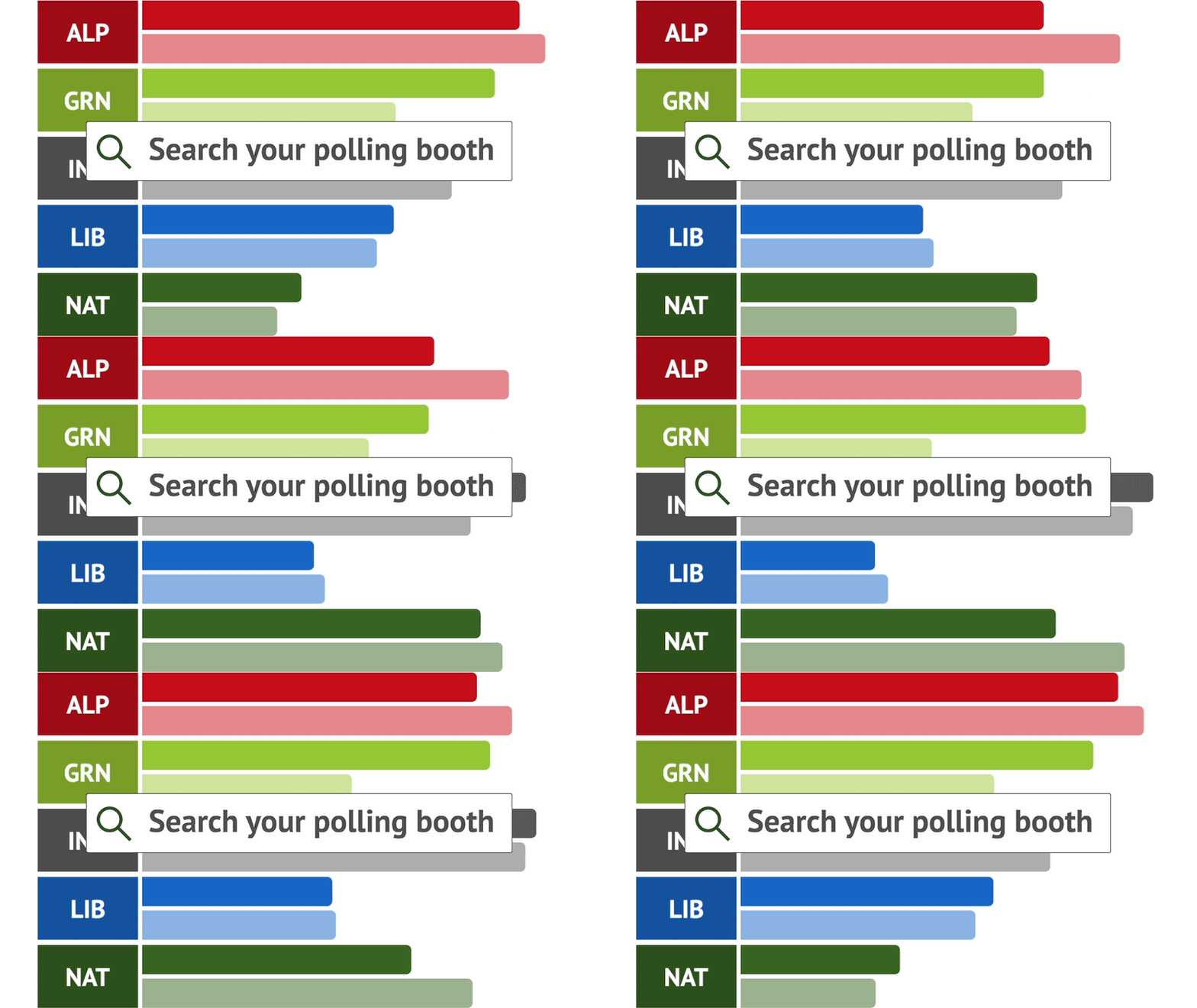
Photo via The Sydney Morning Herald

What do Sydneysiders in your area, and age group, earn?

Read the original at The Sydney Morning Herald ↗
Cite

Butt, C., Wade, M., & Scott, N. (2026, October 4). What do Sydneysiders in your area, and age group, earn? The Sydney Morning Herald. https://www.smh.com.au/politics/nsw/what-do-sydneysiders-in-your-area-and-age-group-earn-20261005-p611v7.html?ref=rss&utm_medium=rss&utm_source=rss_feed

Dated when The Aporia collected the article, usually within hours of publication. Check the original for its exact date and byline.

The Sydney Morning Herald · collected 2026-10-04 · by Craig Butt, Matt Wade, Nathanael Scott

Quick Summary

An analysis by an Australian publication reveals that in Sydney, male workers between ages 45 and 54 earn the highest median income at $102,309 annually, while women in the same age group have a median income of $74,860. The data shows significant variations across different districts, with Leichhardt having the highest median annual income at $88,888 and Fairfield the lowest at $48,502. Professor Rae Cooper from the University of Sydney notes that unpaid domestic work during peak family care years contributes to a "motherhood penalty" in pay, exacerbating gender wage disparities throughout working life.
Written by AI on 2026-10-04, from this article's own text only (the story summary below draws on all the coverage).

AI analysis

Story summary

For workers in Sydney, men aged between 45 and 54 have the highest median income at $102,309 annually. In contrast, women's median income peaks at a lower rate of $74,860 within the same age group, which is about 27% less than men’s earnings. The overall median annual income across Greater Sydney is $62,180, with men earning $70,343 and women earning $55,209 on average.

The analysis also found that the highest annual median income in Sydney was in the Leichhardt district at $88,888, while the lowest was in Fairfield at $48,502. Notably, men earned more than women in every age cohort and district in Sydney.

Written for “Sydney Earnings By Age Group” on 2026-11-02, grounded in this article and the 0 other(s) covering the same event.

Story

📰 Sydney Earnings By Age Group
Economy/Business · 1 article(s) covering the same event.

Compared with similar articles

Nothing to compare against. No article is close enough to this one for the pipeline to have linked or judged the pair.
How this article was measured signals, leaning charts, publisher record, byline, topics and claims

Signals How these are calculated →

Claims extracted
29
sentences that state something as happening or true
Uncertain
0%
0 of 29 hedged ("reportedly", "may", "according to")
Leaning
Leans left
of the writing, not the subject · beta estimate
Publisher signals
61/100
The Sydney Morning Herald's corrections and hedging, across everything collected from it. Not a measure of accuracy.
Outlets on this story
1
Economy/Business
Same framing elsewhere
1
articles that frame the event the way this one does
Analyzed 2026-10-04 · how these are computed

How this is being covered How these are calculated →

Article leaning vs. publisher reliability
Source leaning vs. consistency

Publisher

The Sydney Morning Herald · 5845 article(s) · 15 correction(s) detected
Running correction rate · 15 correction(s)

Who wrote this

Craig Butt
8 article(s) here · 0 carrying a prediction
🔮 “It may well be that part of the frustration for parents is the transport to get their kids to school, and the traffic and the congestion.
🔮 If the polls are to be believed, law and order will be a decisive factor when voters decide on November 28 whether to turf Labor out.
🔮 If you looked at the figures for your area across several age brackets, you may have noticed how earnings track.
🔮 Education Minister Jason Clare said recent funding agreements would result in $20 billion flowing into public schools in coming decade under the needs-based Gonski funding model.
🔮 The Commonwealth has now agreed to fund 80 per cent of the SRS of non-government schools, while the states’ target is 20 per cent, but the transition back to their actual entitlement is being done in stages until 2029. Melbourne Grammar School will receive about $986,000 more than the SRS this year, $40,000 more than previous Senate estimates figures revealed.
🔮 A dialogue box will pop up in the interactive if you enter the name of a small school and flag that its performance may not be comparable with larger schools, and that it may not be possible to observe a trend in results over the 10-year time frame.
🔮 “The analogy I use is you don’t run onto the football field thinking about what the score will be at the end because if you do that, you’re not concentrating on the things that create the score.
Also by Craig Butt
Nothing else under this byline is closely related to this article, so these are simply their most recent.
All 8 articles by Craig Butt →
Matt Wade
19 article(s) here · 0 carrying a prediction
🔮 Sydney’s professional heartland is set to be reshaped by automation with hundreds of thousands of workers in the city’s inner suburbs more exposed to artificial intelligence-driven disruption than anywhere else in Australia.
2026-11-01 · assertive framing · The Sydney suburbs most exposed to AI disruption
🔮 Many aspiring home buyers will welcome the recent pullback in prices, although four interest rate hikes by the Reserve Bank this year, which has driven the downturn, have made it harder for new home borrowers to service a mortgage.
🔮 If not for a fall in the labour force participation rate – the share of people in work or looking for work – last month’s jobless rate in NSW would have been higher.
🔮 If you looked at the figures for your area across several age brackets, you may have noticed how earnings track.
🔮 “For the first time … ordinary Australians will be able to build a decent nest egg for their retirement,” said the then-Prime Minister.
2026-10-09 · assertive framing · Is Australia saving too much for retirement?
🔮 But the home building sector has this year been hit by a series of interest rate hikes, higher construction prices due to the Middle East war and uncertainty prompted by the May budget’s housing tax changes which are yet to properly flow through to the figures.
🔮 Households will face “recession-like” conditions next year, a leading forecaster has warned, as fresh evidence shows consumers are losing confidence in the economy amid growing cost-of-living pressures.
🔮 That followed hikes in February, March and May.
🔮 Australia’s inflation rate has jumped to a four-month high, increasing the chances the Reserve Bank will lift interest rates again this year.
🔮 She even acknowledged the possibility the RBA’s ongoing inflation fight could push Australia into recession if the public’s expectations of inflation cannot be contained.
Also by Matt Wade
The Sydney suburbs most exposed to AI disruption
2026-11-01 · The Sydney Morning Herald
Nothing else under this byline is closely related to this article, so these are simply their most recent.
All 19 articles by Matt Wade →
Nathanael Scott
3 article(s) here · 0 carrying a prediction
🔮 Polls suggest the party will be banished to the opposition benches – and replaced by a government led by Wilson.
🔮 If you looked at the figures for your area across several age brackets, you may have noticed how earnings track.
Also by Nathanael Scott
Nothing else under this byline is closely related to this article, so these are simply their most recent.

Topics

Balmain Greater Sydney Manly Rozelle Sydney

Subjects

Sydney GPE · 7× Greater Sydney GPE · 3× Manly ORG · 2× Annandale GPE · 1× Balmain ORG · 1× Fairfield GPE · 1× Leichhardt GPE · 1× Rae Cooper PERSON · 1× Rozelle GPE · 1× the University of Sydney ORG · 1×

Narrative

“A gender income gap that persists and widens through working life leads to the gender wealth gap, affecting women’s economic security not only today but across their entire lifetime and into retirement.” Women also tend to work in sectors with lower wages than industries favoured by men, which contributes to the gender income gap.
framing: assertive · carried by 1 article(s) · first seen 2026-10-04
2026-10-04 · The Sydney Morning Herald
What do Sydneysiders in your area, and age group, earn? · assertive framing

Claims (29 extracted, 0 hedged)

For workers in Sydney, it pays to be a bloke aged between 45 and 54. asserted
it → pay → 45
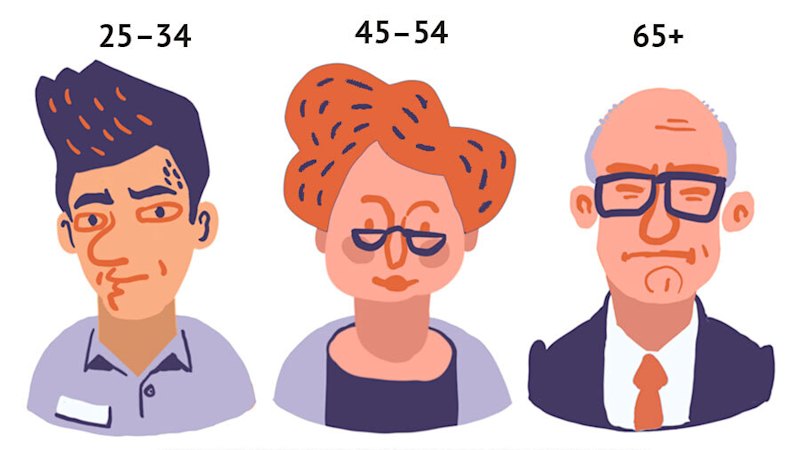
Men in that age group have the city’s highest median income at $102,309 a year, a little more than males aged 35 to 44 at $99,906. asserted
Men → have → 99,906
The median is the middle value of all incomes so it includes full-time and part-time workers. asserted
it → include → workers
Womens’ income in Sydney also peaks between 45 and 54 years, at a median of $74,860 – about 27 per cent lower than for men in the same age group. asserted
income → peak → group
Analysis of official income data by this masthead reveals how earnings vary by age and sex across the city. asserted
earnings → reveal → city
You can search the median income for your age group and suburb here: asserted
You → search → group
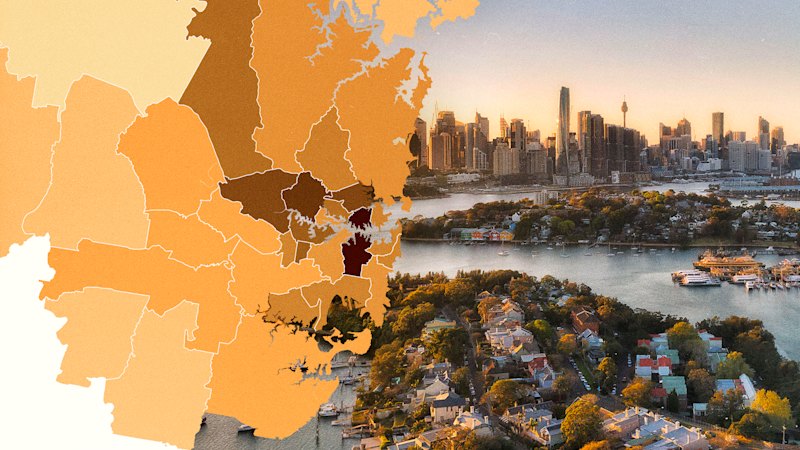
Sydney’s highest annual median income was in the Leichhardt district, which includes Balmain, Rozelle and Annandale, at $88,888 per year. asserted
which → include → year
Men in Sydney had higher median incomes than women in every age cohort and every district. asserted
Men → have → cohort
The analysis shows male earnings rise sharply from the mid-30s, but for women, the increase at that stage of life is much more subdued. asserted
increase → show → life
Rae Cooper, professor of gender, work and employment relations at the University of Sydney, said women shoulder much more unpaid domestic work during “the prime working years” in the 30s and 40s when family care is most intense. asserted
care → say → 30s
“This can constrain their participation, working hours and career choices, contributing to a ‘motherhood penalty’ in pay,” she said. asserted
she → constrain → pay
“A gender income gap that persists and widens through working life leads to the gender wealth gap, affecting women’s economic security not only today but across their entire lifetime and into retirement.” Women also tend to work in sectors with lower wages than industries favoured by men, which contributes to the gender income gap. asserted
which → persist → gap
In the Leichhardt district, women aged 45 to 54 had a median income of $121,019, which was the highest for any female age bracket in any locality. asserted
which → age → locality
The Marrickville-Sydenham-Petersham area had the smallest median income gap between all men and women at 7.6 per cent. asserted
area → have → cent
The highest median income for any age bracket and sex was males aged 45 to 54 in the Manly district, which includes Balgowlah and Seaforth, at $198,291 (that’s 34 per cent more than the median for women aged 45 to 54 in the area of $148,369). asserted
that → age → 148,369
Men aged 45 to 54 had the highest median incomes across most of Greater Sydney; in the Manly, Ku-ring-gai and North Sydney-Mosman districts, median earnings for males aged 45 to 54 were more than 20 per cent higher than for males in the 35 to 44 age bracket. asserted
earnings → age → bracket
But that pattern switches in a band of suburbs across Sydney’s west and south-west, where men aged 35 to 44 had the highest median incomes. asserted
men → switch → incomes
KPMG urban economist Terry Rawnsley said these trends reflected the high share of trades workers who live in that region of Sydney. asserted
who → say → Sydney
“This is a tradie story,” he said. asserted
he → say → ?
“When you look at your builders, electricians, carpenters and plumbers, their income profile by age is a bit flatter than the average – they tend to get to a higher level of income in that 35 to 44 age range, then it trails off a bit for many after that age. asserted
it → look → age
Demographer Matthew Deacon, of Demographic Solutions, said many people aged 35 to 44 who had moved into Sydney’s western suburbs had higher income levels and better job prospects than older, existing residents who were more likely to be working in declining industries such as manufacturing. asserted
who → say → manufacturing
The local area income analysis also draws attention to broader inequalities across Greater Sydney: median incomes in the city’s best paid districts were about 80 per cent higher than in areas with the lowest median earnings. asserted
incomes → draw → earnings
Separate Australian Bureau of Statistics data shows Sydney is Australia’s most unequal capital city for income: the top 1 per cent of earners received 12.1 per cent of the city’s income in 2022-23. asserted
cent → show → 2022
Some Sydney districts adjacent to each other have stark income differences. asserted
districts → have → differences
The median income in Canada Bay ($71,098) was 44 per cent higher than the neighbouring Auburn region ($49,043), while in the Parramatta district, the median income was 30 per cent higher than nearby Merrylands-Guilford ($49,043). asserted
income → neighbour → Guilford
The analysis draws on ABS personal income data for local area statistical districts (called Statistical Area Level 3); it does not include assets owned by individuals, such as housing and shares. asserted
it → draw → housing
Also, it doesn’t distinguish between part-time and full-time workers, which is one factor in the gap between men and women, since women are more likely to work part-time than men. asserted
women → distinguish → men
The data covers 2022-23, the most recent year for which it is available. asserted
it → cover → which
It covers only individual pre-tax income. asserted
It → cover → income

💬Give feedback
🕘History 🎫Support