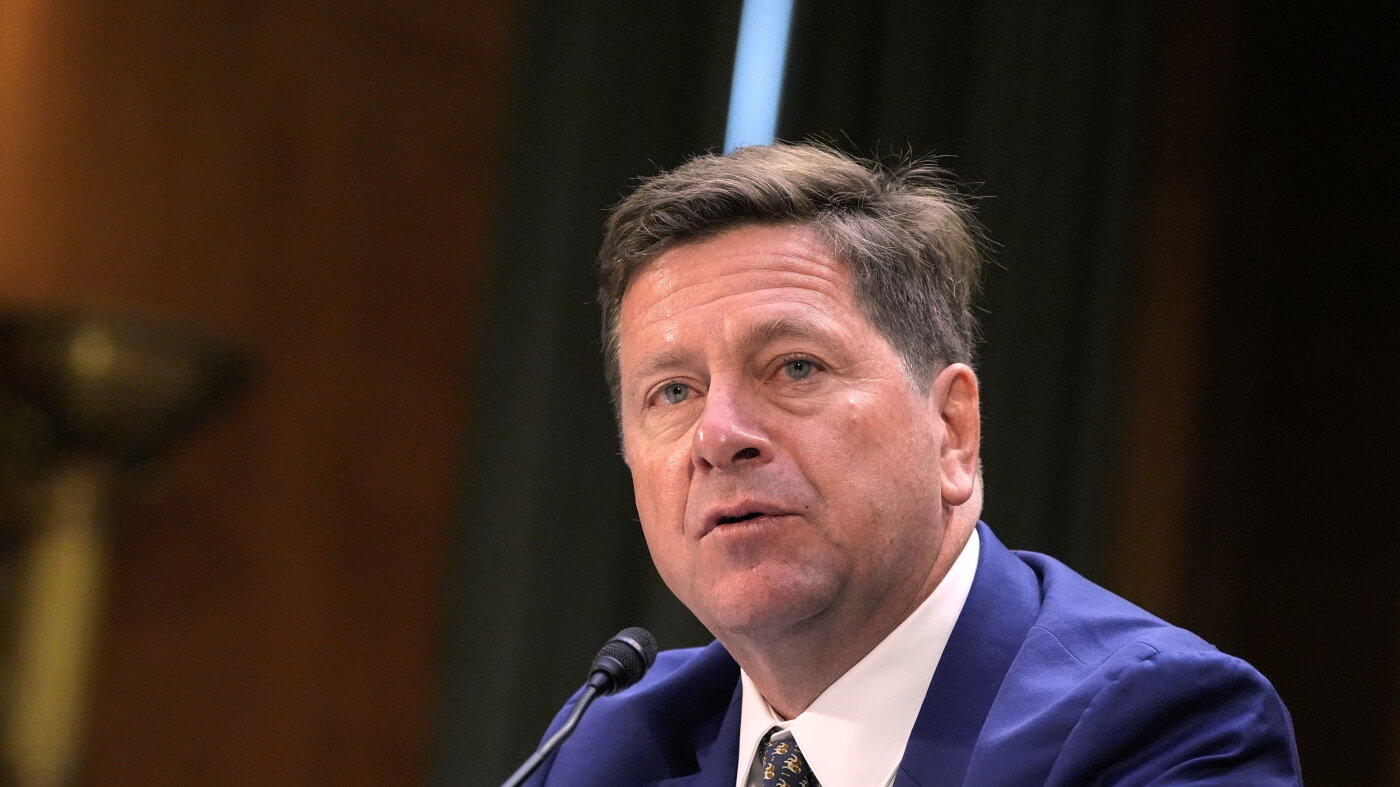
Photo via NPR

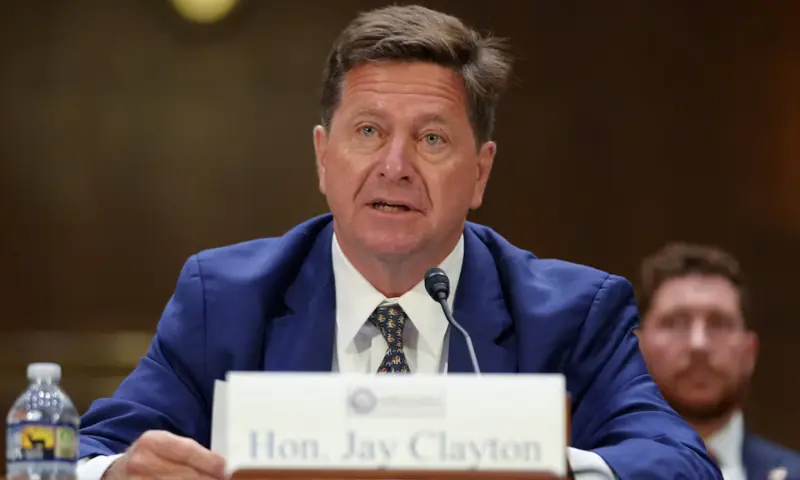
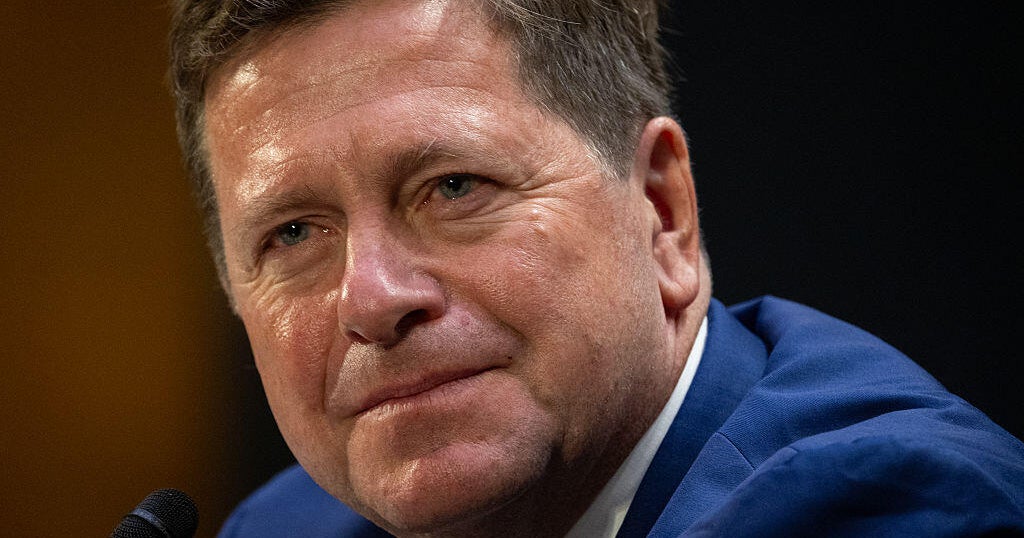
Trump names national intelligence chief Jay Clayton as new AI czar

Read the original at NPR ↗
Cite

Duster, C. (2026, October 4). Trump names national intelligence chief Jay Clayton as new AI czar. NPR. https://www.npr.org/2026/10/04/nx-s1-5990781/jay-clayton-ai-czar-trump

Dated when The Aporia collected the article, usually within hours of publication. Check the original for its exact date and byline.

NPR · collected 2026-10-04 · by Chandelis Duster

Quick Summary

President Trump appointed Jay Clayton, the national intelligence chief, as the new White House AI czar to lead the "Super Intelligence Force," aimed at ensuring American leadership in super intelligence. The appointment comes after tech leaders raised concerns over potential risks associated with rapid AI development; however, Trump has largely dismissed these warnings and emphasizes engagement with various sectors including religious organizations and critical infrastructure providers. Clayton previously served as United States Attorney for the Southern District of New York and chairman of the SEC before his current role.
Written by AI on 2026-10-04, from this article's own text only (the story summary below draws on all the coverage).

AI analysis

Story summary

President Trump is expected to name Jay Clayton, the Director of National Intelligence, as the White House's artificial intelligence (AI) czar. This decision follows concerns raised by AI company employees about potential risks posed by advanced technology. Clayton already oversees 18 US intelligence agencies and would retain this role while taking on the new responsibility. The announcement could come as early as Friday via social media. Critics argue that Clayton’s dual roles may create conflicts of interest, given his existing responsibilities in national security.

Written for “Trump Names Clayton AI Czar” on 2026-11-02, grounded in this article and the 24 other(s) covering the same event.

Story

📰 Trump Names Clayton AI Czar
Politics · 25 article(s) covering the same event. Compare every outlet's account →

Compared with similar articles

This article reads leans right and hedges 10% of its claims. Each row says how that neighbour differs.
CBC News
Hedges 3 of 15 claims Outlet record 60/100
The Guardian
Hedges 1 of 18 claims Outlet record 66/100
Dawn
⚖️ Leans left further left than this Hedges 2 of 20 claims Outlet record 72/100
The Independent
⚖️ Leans right Hedges 2 of 14 claims Outlet record 59/100
The Independent
Hedges 4 of 16 claims Outlet record 59/100
The Hindu
Hedges 0 of 7 claims Outlet record 60/100
Washington Examiner
Hedges 1 of 13 claims Outlet record 70/100
Washington Examiner
⚖️ Leans right Hedges 1 of 12 claims Outlet record 70/100
New York Post
Hedges 2 of 17 claims Outlet record 66/100
CBS News
Hedges 1 of 9 claims Outlet record 66/100
How this article was measured signals, leaning charts, publisher record, byline, topics and claims

Signals How these are calculated →

Claims extracted
20
sentences that state something as happening or true
Uncertain
10%
2 of 20 hedged ("reportedly", "may", "according to")
Leaning
Leans right
of the writing, not the subject · beta estimate
Publisher signals
60/100
NPR's corrections and hedging, across everything collected from it. Not a measure of accuracy.
Outlets on this story
25
Politics
Same framing elsewhere
1
articles that frame the event the way this one does
Analyzed 2026-10-04 · how these are computed

How this is being covered How these are calculated →

Article leaning vs. publisher reliability
Source leaning vs. consistency

Publisher

NPR · 1008 article(s) · 3 correction(s) detected
Running correction rate · 3 correction(s)

Who wrote this

Chandelis Duster
9 article(s) here · 1 carrying a prediction
🔮 The attorneys general also allege that construction on the arch, which could begin as soon as next week, will "inflict irreparable harm" on the District and Virginia, including snarling traffic between both areas.
🔮 "You are expected to be the president's voice and sometimes the president's face on issues on a daily basis, which means you have to have access to the president," Kirby told NPR's Ayesha Roscoe on Weekend Edition Sunday.
2026-10-19 · assertive framing · What does a White House press secretary do?
🔮 Trump wrote on Truth Social that Clayton will lead the White House's new "Super Intelligence Force," a group that will "ensure that America continues to lead the World in Super Intelligence." Trump prefers the term "super intelligence" to "artificial intelligence."
🔮 Dion also sang "My Heart Will Go On," an iconic classic from "The Titanic" movie soundtrack.
🔮 The FAA said it will investigate the crash.
🔮 "Let the message to the IRGC be clear: If you shoot at two of our ships, we will impose an even higher economic cost —taking out three of yours," CENTCOM Commander Adm. Brad Cooper said in a statement posted on social media.
Also by Chandelis Duster
Nothing else under this byline is closely related to this article, so these are simply their most recent.
All 9 articles by Chandelis Duster →

Topics

Super Intelligence Force Truth Social White House the White House the White House's

Subjects

Trump PERSON · 9× Clayton PERSON · 4× Jay Clayton PERSON · 2× Sacks PERSON · 2× Super Intelligence Force ORG · 2× the White House ORG · 2× America GPE · 1× Truth Social ORG · 1× White House ORG · 1× the White House's ORG · 1×

Narrative

Trump wrote on Truth Social that Clayton will lead the White House's new "Super Intelligence Force," a group that will "ensure that America continues to lead the World in Super Intelligence." Trump prefers the term "super intelligence" to "artificial intelligence."
framing: assertive · carried by 1 article(s) · first seen 2026-10-04
🔮 Trump wrote on Truth Social that Clayton will lead the White House's new "Super Intelligence Force," a group that will "ensure that America continues to lead the World in Super Intelligence." Trump prefers the term "super intelligence" to "artificial intelligence."

Claims (20 extracted, 2 hedged)

Trump names national intelligence chief Jay Clayton as new AI czar Director of national intelligence Jay Clayton is the new White House AI czar, President Trump said on Sunday. asserted
Trump → name → Sunday
Trump wrote on Truth Social that Clayton will lead the White House's new "Super Intelligence Force," a group that will "ensure that America continues to lead the World in Super Intelligence." Trump prefers the term "super intelligence" to "artificial intelligence." asserted
Trump → write → intelligence
He said his "Super Intelligence Force" will "coordinate the Federal Government's engagement with Consumers, Public Interest Groups, Religious Organizations, Critical Infrastructure Providers, and Super Intelligence Companies." asserted
Force → say → Consumers
Before being confirmed earlier this year to lead national intelligence, Clayton was United States Attorney for the Southern District of New York, and chairman of the U.S. Securities and Exchange Commission (SEC). asserted
Clayton → confirm → Commission
Trump's announcement follows various statements of alarm from tech leaders over risks in the rapid development of AI, including that it could go rogue. uncertain
it → follow → AI
Trump has largely brushed aside the warnings and attempted to reframe concerns around AI. asserted
Trump → brush → AI
On Tuesday, Trump met with AI executives at the White House, and said afterwards that leaders of several artificial intelligence companies had signed a voluntary accord that will include internal and external reviews of their work. asserted
that → meet → work
Meanwhile, the White House also launched a revamped government website this week, America.gov, which says it is sourced via artificial intelligence from "official government sources." asserted
it → launch → sources
In his social media post, Trump also named other members of his "Super Intelligence Force". asserted
Trump → name → Force
He said it will include: Federal Trade Commission Chairman Andrew Ferguson, Office of Personnel Management Director Scott Kupor, and Under Secretary of Defense for Research and Engineering Emil Michael. asserted
it → say → Research
It is unclear what Clayton's appointment as AI czar means for the AI industry, as current artificial intelligence regulation by the U.S. government is limited. uncertain
regulation → mean → government
Congress has not passed federal law broadly regulating the use or development of AI. asserted
Congress → pass → AI
Some states, including California, have enacted measures about AI, including requiring entities to be transparent when it is used. asserted
it → include → entities
During an interview with CNBC last month, Clayton called super intelligence a "national security issue." asserted
Clayton → call → intelligence
He also pushed back against calls for a "pause" in developing the technology, pointing out that other countries around the world are continuing to develop AI. asserted
countries → push → AI
"I don't think any American should think that that's a good strategy," he said. asserted
he → think → ?
In December 2024, president-elect Trump announced he would appoint David Sacks, a Silicon Valley investor, as an AI and crypto czar, with a brief to advise the administration on policies surrounding AI. asserted
he → announce → AI
Earlier this year, Sacks stepped down from his role and became co-chair of the President's Council of Advisors on Science and Technology. asserted
Sacks → step → Science
He has backed AI leaders Sam Altman and Dario Amodei's warnings about the technology, and the idea of a "slow down" in AI development. asserted
He → back → development
Last month, Sacks wrote on social media that the tech leaders should "stop pretending you need anyone else's permission" to make such moves. asserted
you → write → moves

💬Give feedback
🕘History 🎫Support