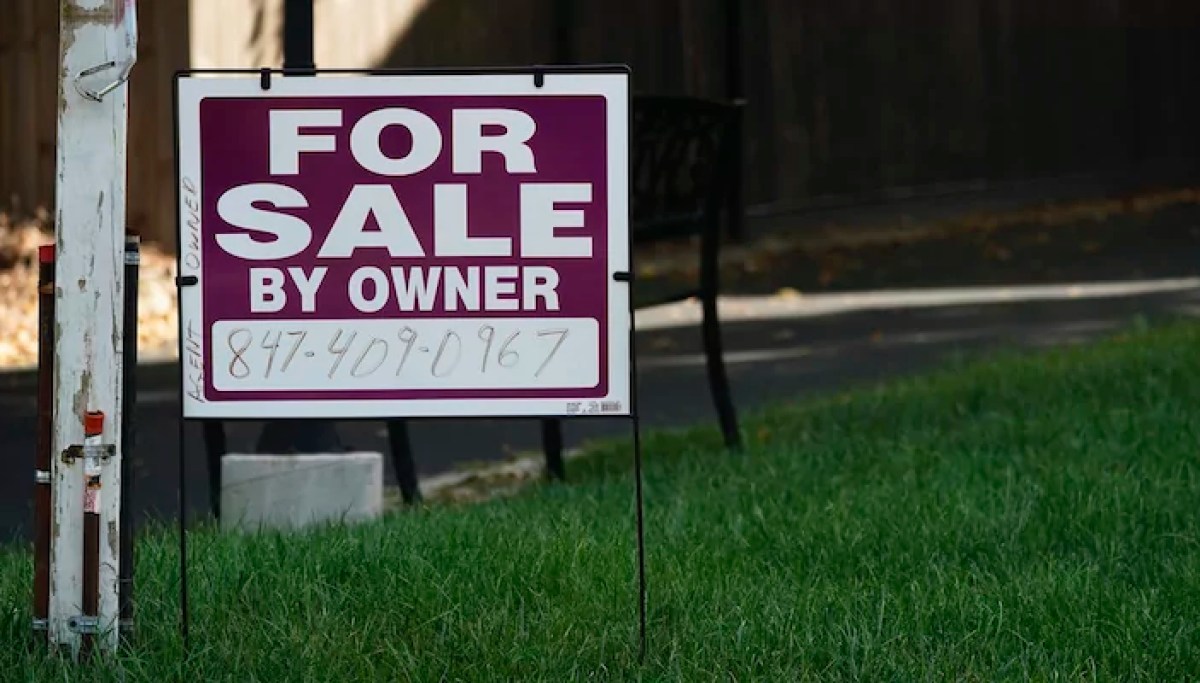
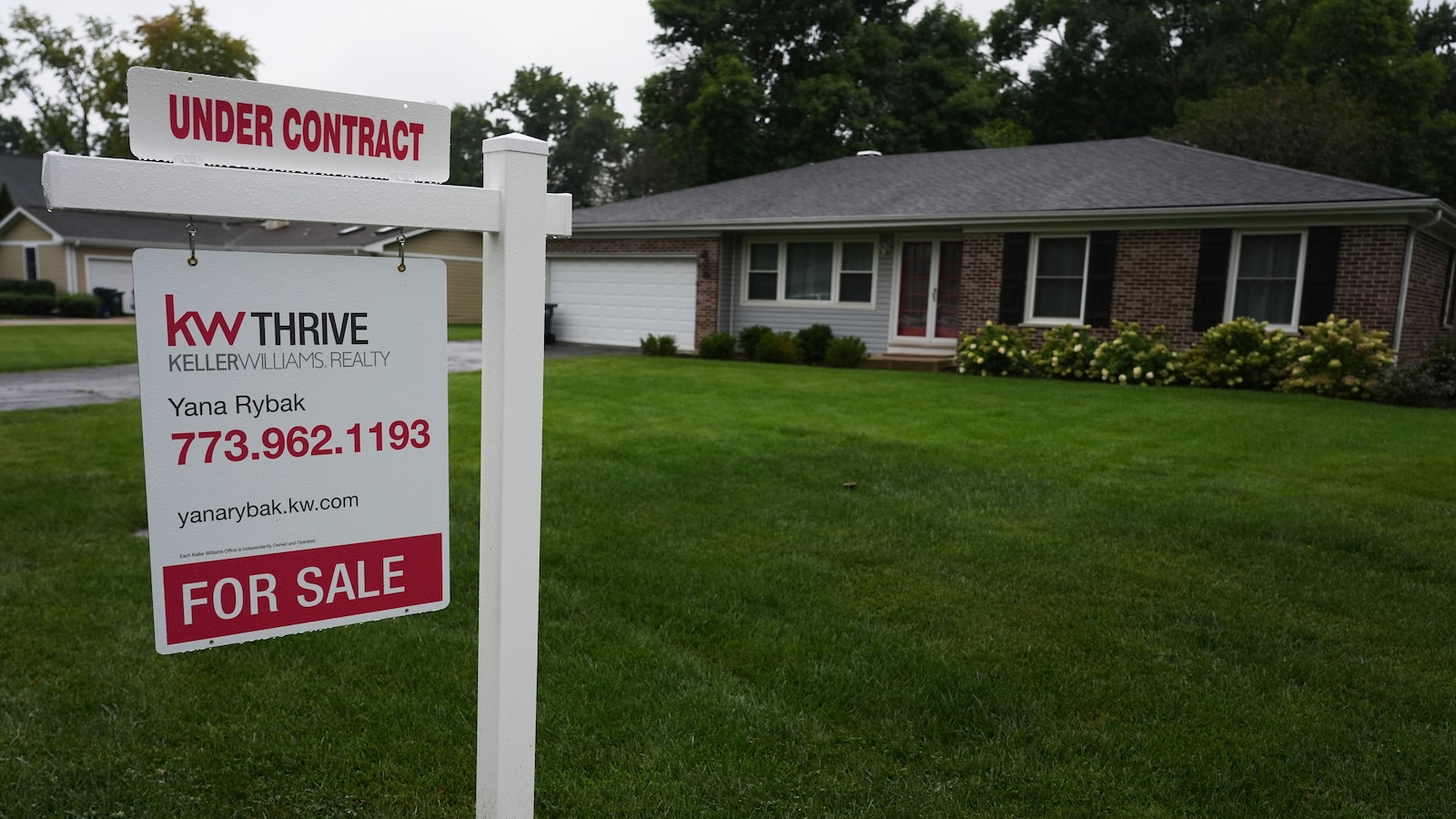
Photo via Washington Examiner

Spike in mortgage rates compounds inflation and debt woes

Read the original at Washington Examiner ↗
Cite

Halaschak, Z. (2026, October 5). Spike in mortgage rates compounds inflation and debt woes. Washington Examiner. https://www.washingtonexaminer.com/news/4752575/spike-mortgage-rates-inflation-debt-woes/

Dated when The Aporia collected the article, usually within hours of publication. Check the original for its exact date and byline.

Washington Examiner · collected 2026-10-05 · by Zach Halaschak

Quick Summary

Mortgage rates have reached their highest level since 2023, currently at 7.53%, a significant increase from early 2023 when they were around 6%. This spike is attributed to higher inflation due to the conflict with Iran and subsequent increases in oil prices, which led the Federal Reserve to raise interest rates. Additionally, concerns about high U.S. deficits and debt are pushing up bond yields; the yield on the 10-year Treasury recently surpassed 5%, marking its highest level since before the financial crisis. This rise is impacting homebuyers, with increased mortgage rates likely slowing down housing market activity as potential buyers may be priced out or wait for rates to fall further.
Written by AI on 2026-10-05, from this article's own text only (the story summary below draws on all the coverage).

AI analysis

Story summary

Mortgage rates have reached their highest level since 2023, rising to 7.53% for a 30-year fixed-rate mortgage by Friday, according to Mortgage News Daily. This spike marks the largest weekly gain in four years and complicates economic challenges like high inflation and concerns over the federal government's fiscal health. Mike Fratantoni from the Mortgage Bankers Association attributes the increase partly to higher inflation due to the war with Iran driving up oil prices. Additionally, the Federal Reserve’s interest rate hikes are influencing mortgage rates across the economy. The national debt recently surpassed $40 trillion, contributing to a rise in bond yields and raising concerns about U.S. deficits and debt levels.

Written for “Economic Inflation Debt Worries” on 2026-11-04, grounded in this article and the 0 other(s) covering the same event.

Story

📰 Economic Inflation Debt Worries
Economy/Business · 1 article(s) covering the same event.

Compared with similar articles

This article reads unscored and hedges 24% of its claims. Each row says how that neighbour differs.
The Guardian
Hedges 3 of 15 claims Outlet record 66/100
“The articles describe different types of mortgage rates (30-year fixed vs. five-year fixed) with distinct data and sources.”
BBC News
Hedges 2 of 14 claims Outlet record 68/100
“The articles discuss different types of mortgage rates (30-year fixed vs. five-year fixed) that have changed at distinct times and levels, indicating separate events.”
New York Post
Hedges 7 of 21 claims Outlet record 66/100
“The articles discuss different aspects of economic issues related to mortgage rates and debt levels but do not describe the same specific incident or occurrence.”
NBC News
Hedges 2 of 31 claims Outlet record 78/100
“While both articles discuss high mortgage rates and rising Treasury yields, they refer to different time periods with distinct rate values.”
Toronto Star
Hedges 3 of 43 claims Outlet record 64/100
“The articles discuss related economic trends but cover different time frames and aspects of the situation.”
Al Jazeera
⚖️ Leans right Hedges 4 of 15 claims Outlet record 60/100
“The articles discuss similar events but refer to different dates and slightly different rate levels.”
ABC News (US)
Hedges 3 of 21 claims Outlet record 67/100
“The articles describe mortgage rates rising but give different dates and specific rate figures.”
Semafor
⚖️ Leans left Hedges 1 of 4 claims Outlet record 59/100
“The articles discuss similar economic conditions but describe different aspects of the financial situation, including mortgage rates and broader borrowing costs.”
How this article was measured signals, leaning charts, publisher record, byline, topics and claims

Signals How these are calculated →

Claims extracted
34
sentences that state something as happening or true
Uncertain
24%
8 of 34 hedged ("reportedly", "may", "according to")
Leaning
withheld
no quote in the article backed the model's score
Publisher signals
69/100
Washington Examiner's corrections and hedging, across everything collected from it. Not a measure of accuracy.
Outlets on this story
1
Economy/Business
Same framing elsewhere
1
articles that frame the event the way this one does
Analyzed 2026-10-05 · how these are computed

How this is being covered How these are calculated →

Article leaning vs. publisher reliability
Source leaning vs. consistency

Publisher

Washington Examiner · 4074 article(s) · 8 correction(s) detected
Running correction rate · 8 correction(s)

Who wrote this

Zach Halaschak
21 article(s) here · 1 carrying a prediction
🔮 The economy has been the biggest concern for voters this election cycle, with Democrats hoping that discontent will propel them to victory on Tuesday.
2026-11-03 · assertive framing · Where the Trump economy stands on Election Day
🔮 While they are unlikely able to get Trump to sign bills undoing his own agenda, they could force Republicans to take difficult votes on the tariffs, from which they have been shielded thus far by GOP leadership.
🔮 The Federal Reserve voted to hold its interest rate target steady, a decision that investors mostly anticipated, but that nonetheless had markets on edge because of the off-chance that the central bank could hike rates just before the midterm elections in light of the high rate of inflation.
🔮 Republicans had hoped that the passage of new tax cuts would buoy them in the midterm elections, but their ability to campaign on their signature legislation has been diminished by the war with Iran and high gas prices.
🔮 Voters in Florida, Oklahoma, North Carolina, Wyoming, and other states will all vote on ballot measures in the midterm elections that would lower property tax burdens for homeowners.
🔮 “They cooled off in 2024, and now in 2025 and 2026, food price inflation has overall been about normal, about what we would expect for year-over-year inflation,” Volpe said, noting that despite that, there have been “pain points” for specific food items.
🔮 The report is clearly bad news for the Trump administration, which has been working to reassure voters weary of price hikes, especially given that the November election will determine if Republicans hold the House of Representatives and the Senate.
🔮 A White House memo said the group will look into whether Cook made “false statements in connection with one or more mortgage instruments” and will conduct an in-person hearing in November.
🔮 The Federal Reserve will not publicly disclose communications between its chairman and President Donald Trump unless they are scheduled telephone calls or meetings.
Also by Zach Halaschak
Where the Trump economy stands on Election Day
2026-11-03 · Washington Examiner
Nothing else under this byline is closely related to this article, so these are simply their most recent.
All 21 articles by Zach Halaschak →

Topics

Iran Mortgage Bankers Association Mortgage News Daily Treasury the Washington Examiner

Subjects

Treasury ORG · 4× Fratantoni PERSON · 3× Lachman GPE · 3× the Washington Examiner ORG · 3× Fed ORG · 2× Iran GPE · 2× Mike Fratantoni PERSON · 1× Mortgage Bankers Association ORG · 1× Mortgage News Daily ORG · 1× the Federal Reserve ORG · 1×

Narrative

Desmond Lachman, a senior fellow at the American Enterprise Institute, pointed out that mortgage rates tend to track the 10-year Treasury, which explains why this past week marked the largest weekly gain for mortgage rates in four years. “It means that the Treasury secretary needs to raise more money every moment to cover a big budget deficit,” Lachman told the Washington Examiner.
framing: mixed · carried by 1 article(s) · first seen 2026-10-05
🔮 On one hand, they might price out some potential buyers who may be waiting until they come down some before they buy.
2026-10-05 · Washington Examiner
Spike in mortgage rates compounds inflation and debt woes · mixed framing

Claims (34 extracted, 8 hedged)

Mortgage rates just hit the highest level since 2023, further complicating the economic picture as inflation remains high and investors grow increasingly concerned about the federal government’s fiscal footing. asserted
investors → hit → footing
As of Friday, the average rate on a 30-year fixed-rate mortgage has risen to 7.53%, according to Mortgage News Daily, which tracks rates daily. uncertain
which → fix → rates
Mike Fratantoni, chief economist at the Mortgage Bankers Association, told the Washington Examiner that the spike in mortgage rates is attributable to a confluence of factors, including higher inflation stemming from the ongoing war with Iran, which has driven up oil prices. asserted
which → tell → prices
That increase in inflation has led the Federal Reserve to raise its interest rate target, he noted, which influences interest rates across the economy. asserted
which → lead → economy
“And then you have the real challenge, which is on the fiscal side, that U.S. deficits and debt are extraordinarily high, and that is true around the world,” Fratantoni added. asserted
Fratantoni → have → world
The national debt recently hit $40 trillion, a psychological milestone that has caused a run-up in bond yields. asserted
that → hit → yields
Last month, the yield on the benchmark 10-year Treasury crossed 5%, the highest yield on that security since the summer of 2007, near the start of the financial crisis and the Great Recession. asserted
yield → cross → crisis
As of Friday, the yield on the 10-year was clocking in at 5.28%, while the 20-year was up to 5.68%. asserted
year → clock → %
The longer-run 30-year Treasury yield rose to 5.63%. asserted
yield → rise → %
Desmond Lachman, a senior fellow at the American Enterprise Institute, pointed out that mortgage rates tend to track the 10-year Treasury, which explains why this past week marked the largest weekly gain for mortgage rates in four years. “It means that the Treasury secretary needs to raise more money every moment to cover a big budget deficit,” Lachman told the Washington Examiner. asserted
Lachman → point → Examiner
And the higher rates the market is experiencing came after a protracted period of ultra-low mortgage rates following the COVID-19 pandemic — at times below 3% — which juiced housing demand, causing prices to soar and many to lock in great deals on home mortgages. asserted
many → experience → mortgages
The higher rates have had a dual effect on the market. asserted
rates → have → market
On one hand, they might price out some potential buyers who may be waiting until they come down some before they buy. uncertain
they → price → buyers
But on the other hand, potential sellers might be holding off on putting their homes on the market because they don’t want to lose those low, pandemic-era mortgages. uncertain
they → hold → mortgages
“If you look at our applications data, it really has slowed the last couple of weeks,” Fratantoni said. asserted
Fratantoni → look → weeks
“When rates were down toward [6%], you saw a ton of purchase activity, and that’s where we were right before the war started in February,” he said. asserted
he → see → February
“And when rates get up to [7%] and beyond, like we are now, things really slow down. asserted
things → get → %
And most experts don’t think there will be much relief for homebuyers in the next year or so, absent some big changes, such as the war in Iran ending or oil prices dramatically falling. asserted
prices → think → Iran
Still, they might not move too much higher in the coming weeks. uncertain
they → move → weeks
“The mortgage rates could be very close to top of this cycle,” Lawrence Yun, chief economist at the National Association of Realtors, told the Washington Examiner. uncertain
Yun → tell → Examiner
“Even though uncertainty remains, the mortgage rates have already risen by 120 basis points while the Fed rate hike to date has been only 25 basis points. asserted
hike → remain → date
The mortgage rates have largely incorporated the upcoming Fed rate hike decisions.” asserted
rates → incorporate → decisions
Fratantoni said his group’s forecast is that mortgage rates might fall a bit, but that indications are they probably won’t drop much below 7% for the full year of 2027. uncertain
they → say → 2027
But Lachman emphasized the debt situation and said there is the potential for mortgage rates to punch even higher than they are right now. asserted
they → emphasize → situation
“Because what’s very concerning is that the government’s running these huge budget deficits, which could get bigger, particularly if Trump goes ahead and wants to spend money on defense,” Lachman said. uncertain
Lachman → ’ → defense
Yun also emphasized underlying factors that might keep mortgage rates elevated for homebuyers over a longer period of time. uncertain
that → emphasize → time
“Over the longer term, persistent federal budget deficits and stronger economic growth, including significant investment in AI and data centers, are likely to keep upward pressure on longer-term interest rates and prevent mortgage rates from falling meaningfully,” he said. asserted
he → include → rates
Some argue that the United States is in the throes of a housing crisis, given that young people have been largely priced out of the market. asserted
people → argue → market
The bigger issue overshadowing all of this is the need for more housing supply, many experts argue. asserted
experts → overshadow → supply
Most of the effort to increase that and boost housing construction and supply comes from the state and local level, rather than something Congress can do at the national level. asserted
Congress → increase → level
Still, Congress has made an effort on the supply front. asserted
Congress → make → front
This year, the House and Senate passed the biggest bipartisan housing bill in recent memory — the 21st Century ROAD to Housing Act. asserted
House → pass → Housing
That legislation streamlines environmental reviews to speed up affordable housing development and makes it cheaper and easier to build manufactured homes. asserted
it → streamline → homes
In addition to easing federal regulations, the bill also encourages states and cities to reform their land-use rules, which would mark a significant change in the federalist system with respect to city planning. asserted
which → ease → planning

💬Give feedback
🕘History 🎫Support