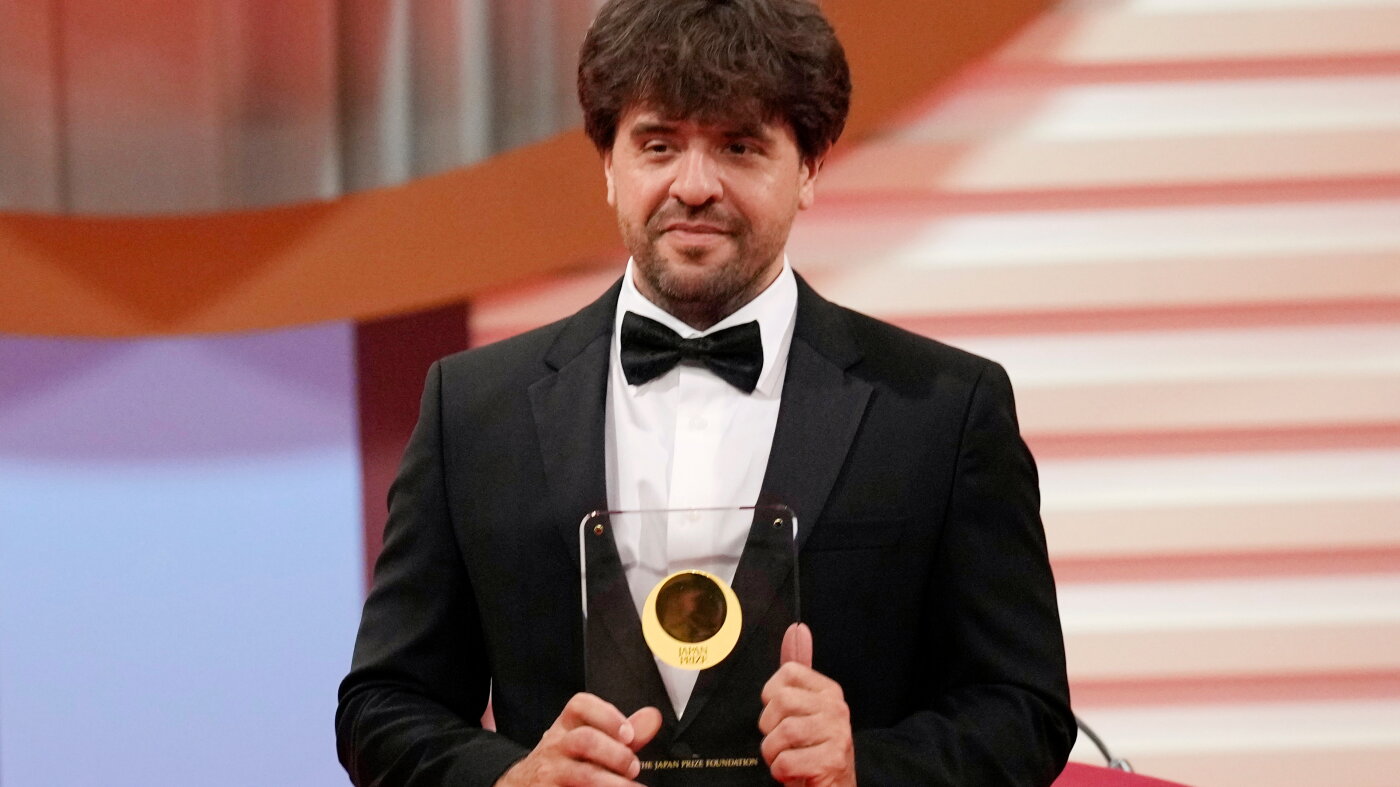
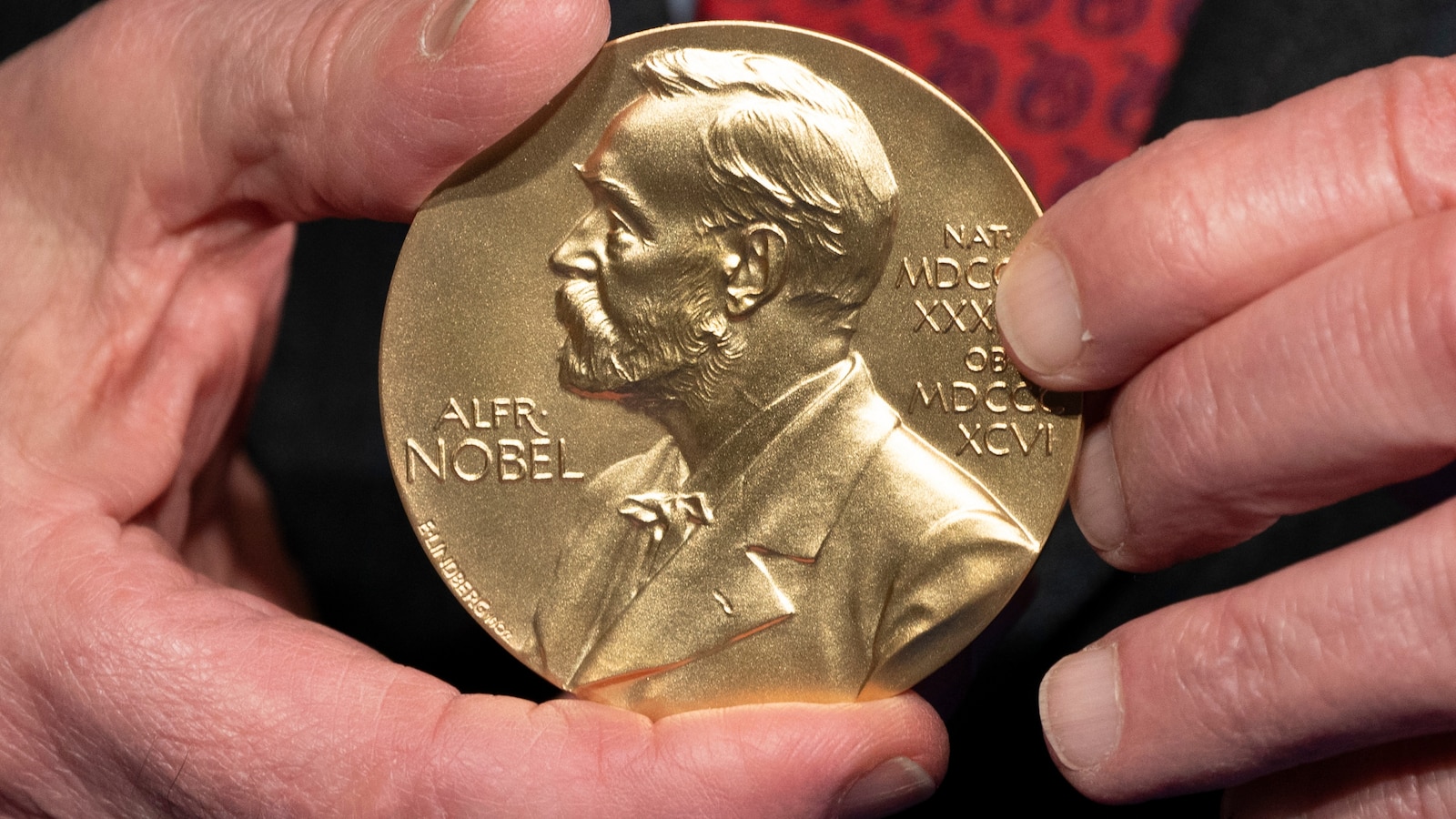
Photo via The Guardian

Nobel prize in medicine 2026 awarded for research into mysteries of brain

Read the original at The Guardian ↗
Cite

correspondent, N. D. S. (2026, October 5). Nobel prize in medicine 2026 awarded for research into mysteries of brain. The Guardian. https://www.theguardian.com/science/2026/oct/05/nobel-prize-medicine-2026-winner

Dated when The Aporia collected the article, usually within hours of publication. Check the original for its exact date and byline.

The Guardian · collected 2026-10-05 · by Nicola Davis Science correspondent

Quick Summary

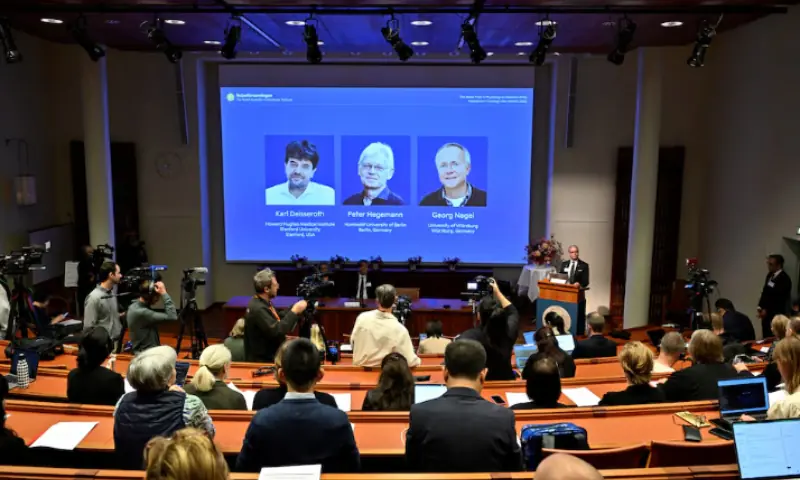
The Nobel prize in physiology or medicine for 2026 was awarded to Karl Deisseroth, Peter Hegemann, and Georg Nagel for their groundbreaking work on light-gated ion channels and optogenetics. The scientists will share a prize of approximately £901,500, which was announced by the Nobel assembly at the Karolinska Institute in Stockholm on Monday. This is the 117th time the prize has been awarded, with only 14 women among the 235 laureates to date.
Written by AI on 2026-10-05, from this article's own text only (the story summary below draws on all the coverage).

AI analysis

Story summary

On October 5, 2026, the Nobel Prize in Physiology or Medicine was awarded to Karl Deisseroth of Stanford University, Peter Hegemann of Humboldt University in Berlin, and Georg Nagel of the University of Würzburg. The trio received the prize "for their discoveries concerning light-gated ion channels and optogenetics," which allows scientists to control individual nerve cells using light. This method is now widely used globally to study brain activity and understand neurological disorders. Each winner will share a prize of 12 million Swedish kronor (about $1.2 million). The award kicked off Nobel Week, with subsequent prizes for physics, chemistry, literature, peace, and economics to be announced from October 6-12.

Written for “Nobel Prize Brain Research” on 2026-11-02, grounded in this article and the 14 other(s) covering the same event.

Story

📰 Nobel Prize Brain Research
Science · 15 article(s) covering the same event. Compare every outlet's account →

Compared with similar articles

This article reads unscored and hedges 0% of its claims. Each row says how that neighbour differs.
The Independent
Hedges 0 of 11 claims Outlet record 59/100
NPR
Hedges 0 of 11 claims Outlet record 60/100
ABC News (US)
Hedges 0 of 8 claims Outlet record 70/100
BBC News
Hedges 0 of 4 claims Outlet record 68/100
ABC News (AU)
Hedges 0 of 3 claims Outlet record 68/100
New York Post
Hedges 0 of 17 claims Outlet record 66/100
The Globe and Mail
Hedges 2 of 16 claims Outlet record 52/100
Al Jazeera
Hedges 3 of 14 claims Outlet record 60/100
How this article was measured signals, leaning charts, publisher record, byline, topics and claims

Signals How these are calculated →

Claims extracted
6
sentences that state something as happening or true
Uncertain
0%
0 of 6 hedged ("reportedly", "may", "according to")
Leaning
not political
takes no side on a contested political question
Publisher signals
66/100
The Guardian's corrections and hedging, across everything collected from it. Not a measure of accuracy.
Outlets on this story
15
Science
Same framing elsewhere
1
articles that frame the event the way this one does
Analyzed 2026-10-05 · how these are computed

How this is being covered How these are calculated →

Article leaning vs. publisher reliability
Source leaning vs. consistency

Publisher

The Guardian · 2814 article(s) · 6 correction(s) detected
Running correction rate · 6 correction(s)

Who wrote this

Nicola Davis Science correspondent
11 article(s) here · 1 carrying a prediction
🔮 But if campaigners get their way, this could be the last blast for bangers in the back yard.
🔮 However “a level below 50 might be a pointer of iron deficiency,” said Sue Pavord, professor of practice in medical haematology at Oxford University hospitals.
🔮 Cartmill said the preference could be rooted in the sound of laughter putting the orangutans in a more positive emotional state when they learned to associate the substance with food.
🔮 “Nobody of lower rank would have been buried in anything like that,” he said, adding that the lid was another clue.
🔮 Livestreaming an execution could cause post-traumatic stress disorder in the viewing public, mental health experts have said after the US confirmed plans to broadcast the death by firing squad of a man who shot dead 13 unarmed soldiers.
🔮 They will share a prize of 12m Swedish kronor (about £901,500).
🔮 Court officials and craftspeople serving early Egyptian kings may have been sacrificed when their ruler died, according to research that found fractures in several ancient skulls.
🔮 But such woes could soon be a thing of the past, with gene-edited bananas that keep their freshly peeled colour now one step closer to reaching British shoppers.
🔮 Drones could help cut the time it takes to get a defibrillator to people experiencing cardiac arrests when not in hospital, researchers have suggested.
🔮 Now experts are hoping a database of canine DNA could offer vital leads.
Also by Nicola Davis Science correspondent
Nothing else under this byline is closely related to this article, so these are simply their most recent.
All 11 articles by Nicola Davis Science correspondent →

Topics

Howard Hughes Medical Institute Stanford University the Humboldt University of Berlin the Karolinska Institute the University of Würzburg

Subjects

Georg Nagel PERSON · 1× Howard Hughes Medical Institute ORG · 1× Karl Deisseroth PERSON · 1× Nobel ORG · 1× Peter Hegemann PERSON · 1× Stanford University ORG · 1× Stockholm GPE · 1× the Humboldt University of Berlin ORG · 1× the Karolinska Institute ORG · 1× the University of Würzburg ORG · 1×

Narrative

Karl Deisseroth of both Howard Hughes Medical Institute and Stanford University, Peter Hegemann of the Humboldt University of Berlin, and Georg Nagel of the University of Würzburg have been awarded the prize “for their discoveries concerning light-gated ion channels and optogenetics.”.
framing: assertive · carried by 1 article(s) · first seen 2026-10-05
🔮 They will share a prize of 12m Swedish kronor (about £901,500).
2026-10-05 · The Guardian
Nobel prize in medicine 2026 awarded for research into mysteries of brain · assertive framing

Claims (6 extracted, 0 hedged)

The Nobel prize in physiology or medicine 2026 has been awarded to three scientists for their work on investigating the mysteries of the brain. asserted
prize → award → brain
Karl Deisseroth of both Howard Hughes Medical Institute and Stanford University, Peter Hegemann of the Humboldt University of Berlin, and Georg Nagel of the University of Würzburg have been awarded the prize “for their discoveries concerning light-gated ion channels and optogenetics.”. asserted
Deisseroth → award → channels
The Nobel assembly at the Karolinska Institute in Stockholm, Sweden, announced the winners on Monday. asserted
assembly → announce → Monday
They will share a prize of 12m Swedish kronor (about £901,500). asserted
They → share → kronor
The 2026 award is the 117th time the prize has been given. asserted
prize → give → ?
Out of the 235 laureates – including the latest winners – only 14 have been women. asserted
14 → include → winners
💬Give feedback
🕘History 🎫Support