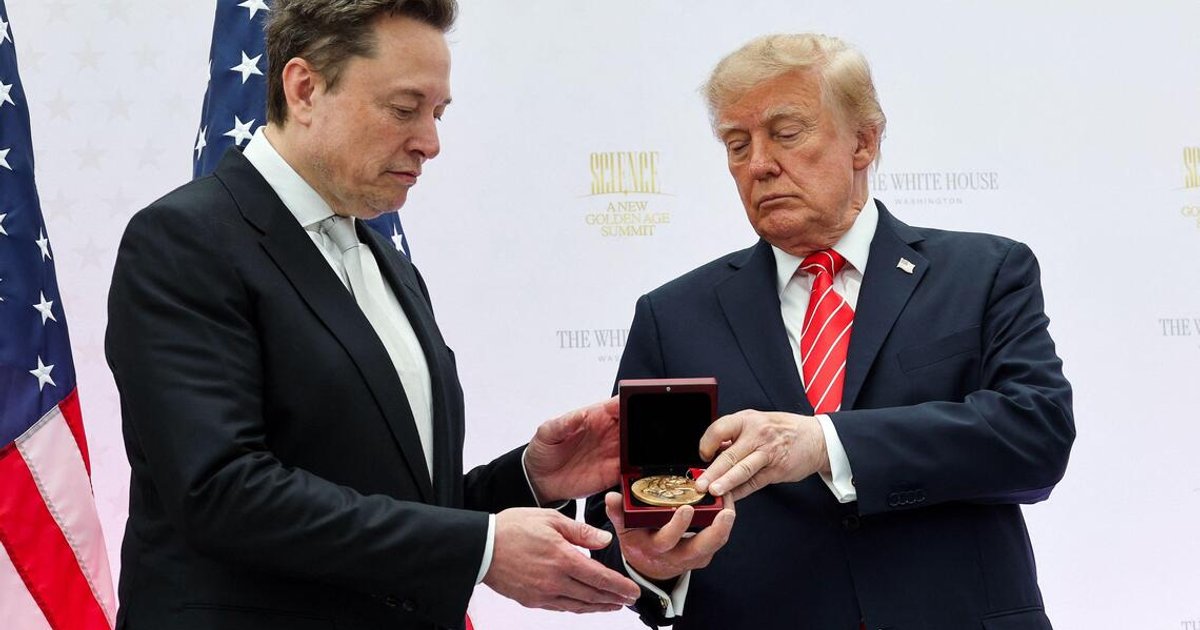
Photo via New York Post

Hedge fund giant Bridgewater emerges as advocate for ‘little guy’ in AI debate — pushes taxes to boost ‘citizen equity’

Read the original at New York Post ↗
Cite

Vartabedian, M. (2026, October 5). Hedge fund giant Bridgewater emerges as advocate for ‘little guy’ in AI debate — pushes taxes to boost ‘citizen equity’. New York Post. https://nypost.com/2026/10/05/business/hedge-fund-giant-bridgewater-emerges-as-advocate-for-little-guy-in-ai-debate/

Dated when The Aporia collected the article, usually within hours of publication. Check the original for its exact date and byline.

New York Post · collected 2026-10-05 · by Marc Vartabedian

Quick Summary

Bridgewater Associates, a large hedge fund known for its secretive culture, is advocating for policies to protect ordinary Americans from the risks posed by artificial intelligence (AI). The firm’s chief investment officer and CEO published an essay calling for immediate policy action, including a proposed "token tax" on AI usage that could generate up to $600 billion by 2030. This revenue would be used to buy shares of major tech companies and distribute them among the public, aiming to mitigate economic disruption caused by AI advancements. Bridgewater’s approach contrasts with proposals like universal basic income from other tech leaders, arguing that distributing equity directly to citizens takes power away from politicians and bureaucracy.
Written by AI on 2026-10-05, from this article's own text only (the story summary below draws on all the coverage).

AI analysis

Story summary

Bridgewater Associates, a prominent hedge fund firm founded by billionaire Ray Dalio, has become an unexpected advocate for ordinary Americans in the debate over artificial intelligence (AI). In a recent essay, Bridgewater’s chief investment officer Greg Jensen and CEO Nir Bar Dea proposed "immediate policy action to mitigate risks such as job displacement and safety issues caused by AI. The firm's ideas have sparked interest among lawmakers on Capitol Hill.

One key proposal is the introduction of a 35% tax on AI usage, which could generate up to $600 billion in revenue by 2030. This money would be used to purchase shares of major AI companies and distribute them to the public, aiming to create what they call "citizen equity." The initiative seeks to ensure that the benefits of AI development are more widely shared among citizens rather than concentrated among a few tech giants.

Written for “AI Tax Debate” on 2026-11-02, grounded in this article and the 0 other(s) covering the same event.

Story

📰 AI Tax Debate
Politics · 1 article(s) covering the same event.

Compared with similar articles

This article reads leans strongly left and hedges 28% of its claims. Each row says how that neighbour differs.
The Straits Times
⚖️ Leans right further right than this Hedges 2 of 21 claims Outlet record 66/100
“The articles describe different events: one focuses on Bridgewater's advocacy for regulating AI and protecting citizens, while the other reports on Trump securing a $2.4 billion pledge from tech executives for AI research.”
New York Post
⚖️ Leans strongly right further right than this Hedges 4 of 62 claims Outlet record 66/100
“The articles discuss different aspects of AI policy and its implications, with Article A focusing on Bridgewater's advocacy for protecting citizens from AI dangers and spreading wealth, while Article B discusses a White House summit and the launch of America.gov.”
How this article was measured signals, leaning charts, publisher record, byline, topics and claims

Signals How these are calculated →

Claims extracted
29
sentences that state something as happening or true
Uncertain
28%
8 of 29 hedged ("reportedly", "may", "according to")
Leaning
Leans strongly left
of the writing, not the subject · beta estimate
Publisher signals
66/100
New York Post's corrections and hedging, across everything collected from it. Not a measure of accuracy.
Outlets on this story
1
Politics
Same framing elsewhere
1
articles that frame the event the way this one does
Analyzed 2026-10-05 · how these are computed

How this is being covered How these are calculated →

Article leaning vs. publisher reliability
Source leaning vs. consistency

Publisher

New York Post · 16054 article(s) · 35 correction(s) detected
Running correction rate · 35 correction(s)

Who wrote this

Marc Vartabedian
12 article(s) here · 1 carrying a prediction
🔮 The DHS order said the Chinese company’s models “present multiple threat vectors” and that use of its products “may result in the transfer of sensitive data to the [People’s Republic of China] if used by US government employees or vendors.”
🔮 The OpenAI engineer who was fired after being charged this week with bugging a conference room at the AI giant and was nabbed by the FBI only three days before his one-way flight to Saudi Arabia was set to take off, according to reports.
🔮 Meanwhile, warnings that AI could harm humanity — and opposition to the massive data centers powering the tech — have only grown louder on both sides of the aisle.
🔮 The 31-year-old’s revelations come amid a bitter real-life ‘Succession’ feud that could determine the future of one of Europe’s biggest fortunes.
🔮 Jeff Bezos says his rocket company Blue Origin will likely go public within the next few years – after one of his $150 million rockets recently exploded into a massive fireball, setting the company back in the race to catch up to Elon Musk’s SpaceX. Bezos said the inking of a massive $10 billion funding round last month – which for the first time included outside investors and $2 billion of his own cash – was a signal it’s nearing time for a public listing. “I see the financial future of Blue with some clarity now,” the billionaire Amazon founder told Fox News on Wednesday at Blue Origin’s Florida factory.
🔮 Three tribes in California and one in Oklahoma are launching tribal-branded prediction market apps powered by Kalshi, saying the tie-ups would allow them to capture a slice of revenue in the booming business of prediction markets – which offers wagers across a slew of real-world events, from sports and the Oscars to the weather.
🔮 Wang’s edgy style could be entirely strategic as Meta has struggled to reel in younger users to Facebook and Instagram platforms.
🔮 The revenue from a 35% tax could reach $600 billion by 2030 and could be used to acquire shares of AI giants and distribute them to members of the public, according to the paper.
🔮 The party might be coming to a halt, as Holtec Nuclear, Bamboo Insurance and now Oura postponed their planned listings over just the past few days.
🔮 The bot even gave advice on reloading time and potential casualties, according to the article: “Assuming each shell results in one hit, you might down 10 to 20 people max, depending on spacing, density, reaction times, and chaos.
Also by Marc Vartabedian
Nothing else under this byline is closely related to this article, so these are simply their most recent.
All 12 articles by Marc Vartabedian →

Topics

Americans Bridgewater Bridgewater Associates Connecticut The Post

Subjects

Bridgewater ORG · 8× Jensen PERSON · 5× Americans NORP · 2× OpenAI ORG · 2× The Post ORG · 2× Bridgewater Associates ORG · 1× Connecticut GPE · 1× Post ORG · 1× Ray Dalio PERSON · 1× Washington GPE · 1×

Narrative

Last month, Bridgewater’s chief investment officer Greg Jensen, CEO Nir Bar Dea and others published a lengthy essay that called for “immediate policy action” in order to realize the “full potential of artificial intelligence by mitigating the risks of widespread societal disruption and catastrophic safety accidents.” The concepts have caught the attention of lawmakers on Capitol Hill and have spurred informal talks with Bridgewater about the need to create “citizen equity” in the AI boom, a source told The Post.
framing: mixed · carried by 1 article(s) · first seen 2026-10-05
🔮 The revenue from a 35% tax could reach $600 billion by 2030 and could be used to acquire shares of AI giants and distribute them to members of the public, according to the paper.

Claims (29 extracted, 8 hedged)

The giant hedge fund Bridgewater Associates has emerged as an unlikely voice for the little guy in the AI debate, calling for protecting everyday Americans from the dangers of the technology — and spreading the wealth that tech giants are reaping from it. asserted
giants → emerge → it
The firm founded by billionaire Ray Dalio — famous for the insular, secretive culture at its posh Connecticut headquarters — has held talks with Washington policymakers from both parties about proposals to avert an AI-driven job apocalypse, The Post has learned. asserted
Post → found → apocalypse
Last month, Bridgewater’s chief investment officer Greg Jensen, CEO Nir Bar Dea and others published a lengthy essay that called for “immediate policy action” in order to realize the “full potential of artificial intelligence by mitigating the risks of widespread societal disruption and catastrophic safety accidents.” The concepts have caught the attention of lawmakers on Capitol Hill and have spurred informal talks with Bridgewater about the need to create “citizen equity” in the AI boom, a source told The Post. asserted
source → publish → Post
Among its proposals is a so-called “token tax” on AI usage. asserted
tax → call → usage
The revenue from a 35% tax could reach $600 billion by 2030 and could be used to acquire shares of AI giants and distribute them to members of the public, according to the paper. uncertain
revenue → reach → paper
Bridgewater’s token tax contrasts with calls for “universal basic income” from tech luminaries including OpenAI CEO Sam Altman and SpaceX CEO Elon Musk – a form of social welfare where every citizen receives a set, recurring payment from the government. asserted
citizen → contrast → government
In a Bridgewater Q&A, Jensen said UBI would hand too much control to the government. asserted
UBI → say → government
“You’re still dependent on a bureaucrat deciding how much and when you get your check,” Jensen said. asserted
Jensen → ’re → check
“If we actually distribute the equity to all citizens it once again takes the power away from the politicians to use that in ways that you might not want and it gets power directly to the citizens.” Jensen and Bar Dea wrote in the report that their proposals are coming now because time is running out to ensure everyday Americans get to share in the upside of the AI boom. uncertain
Americans → distribute → boom
“Absent intervention today, mitigation of that danger will become nearly impossible as diffusion of the technology accelerates and models themselves become capable of improving and acting autonomously. asserted
models → become → technology
Ensuring smooth adoption of AI could ultimately benefit Bridgewater’s own investments in the sector by limiting long-term public backlash and stemming more onerous restrictions on the tech, AI observers say. uncertain
observers → ensure → tech
Jeremy Bearer-Friend, an associate law professor at George Washington University, lauded Bridgewater’s proposals, telling The Post that one of the overlooked benefits of a public equity stake in AI is its benefit to public safety. asserted
one → laud → safety
“Public equity could give public voice within traditional corporate governance structures on top of the needed regulation of the sector,” Bearer-Friend said. uncertain
Friend → give → sector
“An AI equity tax could give the public a role in boardroom decisions about public safety.” uncertain
tax → give → safety
Bridgewater says AI-generated work is increasingly substituting for human labor, even though human workers and employers remain subject to payroll taxes. asserted
workers → say → taxes
The firm said proceeds from a token tax could be used to cut taxes on human workers and help people who are put out of work by AI. uncertain
who → say → AI
“I think it just is common sense that we don’t want to incentivize machine labor over human labor,” Jensen said in an internal Bridgewater Q&A about the proposal, adding that a division within the Internal Revenue Service should be created to enforce it. asserted
division → think → it
Jensen took his regulatory calls a step further in subsequent comments this month to the news site The Information, arguing that AI giants that control more than, say, 5% of US or global AI computing power, ought to receive heightened oversight, similar to how banking heavyweights with sway over the economy receive increased scrutiny. asserted
heavyweights → take → scrutiny
“In two years, OpenAI and Anthropic are going to control 35% to 50% of the world’s compute. asserted
OpenAI → go → compute
That’s a crazy outcome for a society to allow on something as powerful as compute,” Jensen said. asserted
Jensen → ’ → compute
“Would we let one entity control that much of some other form of energy or commodity?” asserted
entity → let → energy
“I’m no big fan of government regulation, but if the problem’s big enough and society bears the risk, you need government regulation,” Jensen told the Information. asserted
Jensen → ’m → Information
Bridgewater said in it’s post that it would be “disproportionately subject to the taxes and regulations we recommend” and was promoting the policies “in order for the benefits of AI to be realized in the long run.” asserted
benefits → say → run
Bridgewater also called for a more active government role in policing AI safety, with regulators “regularly conducting sworn (subject to penalty of perjury) interviews of AI lab staff members about safety risks in emerging models and steps the labs are taking to address those risks,” the firm wrote. asserted
firm → call → risks
Meanwhile, Bearer-Friend cautioned against “giving AI companies even more public funding by requiring government to purchase AI shares.” asserted
Friend → caution → shares
Cyril Gorlla, founder and CEO of AI startup CTGT – which advises clients including big banks on AI – said Bridgewater’s idea to spread the AI wealth and bolster safety could help instill confidence in AI, further fueling the industry’s growth. uncertain
idea → advise → growth
Gorlla added that implementation could be tricky, particularly in regards to a token tax. uncertain
implementation → add → tax
“Jensen mentions that they basically have to build a way to collect those taxes which I think is fundamentally correct,” Gorlla told The Post. asserted
Gorlla → mention → Post
“But there is no universal metering standard with AI like you have with utilities where you can walk out and you have a meter box.” asserted
you → be → box

💬Give feedback
🕘History 🎫Support