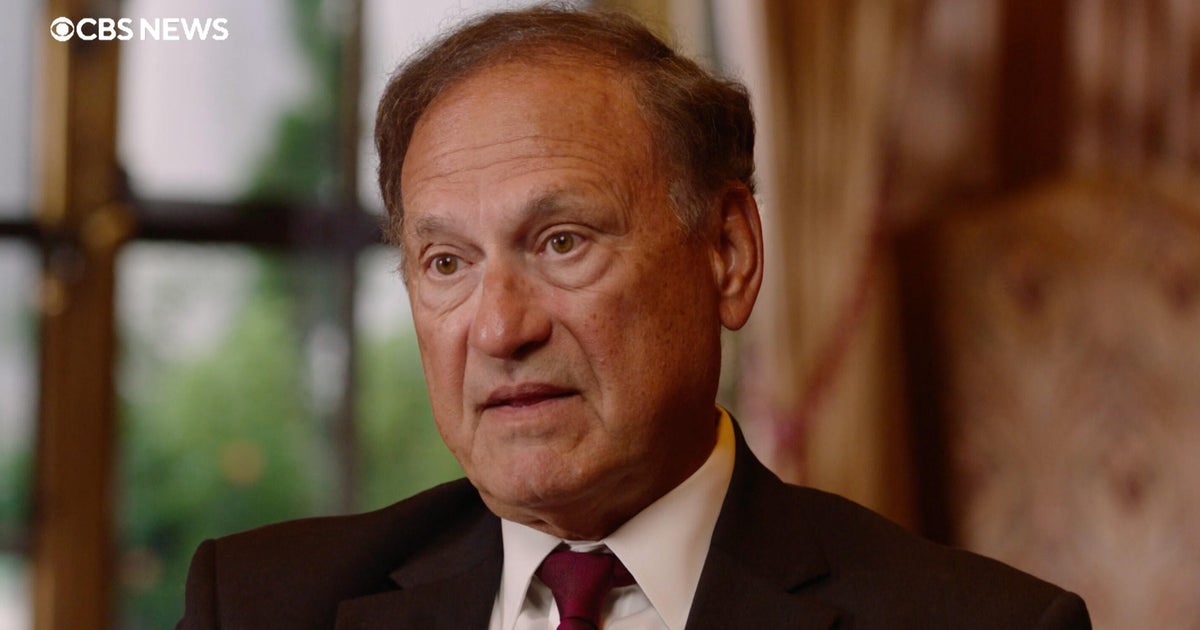
Photo via Reason

Justice Alito on Originalism

Read the original at Reason ↗
Cite

Somin, I. (2026, October 6). Justice Alito on Originalism. Reason. https://reason.com/volokh/2026/10/05/justice-alito-on-originalism/

Dated when The Aporia collected the article, usually within hours of publication. Check the original for its exact date and byline.

Reason · collected 2026-10-06 · by Ilya Somin

Quick Summary

Supreme Court Justice Samuel Alito wrote an article in the Wall Street Journal discussing his views on constitutional originalism from his forthcoming book. He argues for a populist version of originalism, suggesting judges should consider how average citizens at the time of ratification would understand the Constitution's text rather than focusing on elite legal interpretations. However, critics point out potential drawbacks such as ordinary people’s ignorance about technical legal terms and their inability to address issues unforeseen by the framers.
Written by AI on 2026-10-06, from this article's own text only (the story summary below draws on all the coverage).

AI analysis

Story summary

In a recent Wall Street Journal article previewing his forthcoming book, Supreme Court Justice Samuel Alito discusses constitutional originalism but raises more questions than provides definitive answers. He debates whether courts should interpret the Constitution based on how ordinary people understood it in 1789 or how legal experts would have interpreted it at that time. This debate is known as the "elitist" versus "populist" versions of originalism, with Alito leaning towards the populist view. Alito suggests that when interpreting the First Amendment and other parts of the Constitution, one should consider what ordinary people at the time would have understood by its language, rather than focusing on legal experts' interpretations. This discussion is significant as it impacts how courts apply constitutional principles to modern issues, potentially influencing a wide range of cases from free speech to gun rights under the Bill of Rights.

Written for “Originalism Debate” on 2026-11-04, grounded in this article and the 0 other(s) covering the same event.

Story

📰 Originalism Debate
Politics · 1 article(s) covering the same event.

Compared with similar articles

This article reads unscored and hedges 16% of its claims. Each row says how that neighbour differs.
CBS News
Hedges 6 of 88 claims Outlet record 65/100
“Article A discusses Justice Alito's CBS News interview, while Article B refers to his Wall Street Journal article and book release.”
Daily Mail
Hedges 1 of 18 claims Outlet record 69/100
“The articles discuss different events involving Justice Alito: one about his views on constitutional originalism and another about his public denunciation of rhetoric aimed at the Supreme Court.”
Reason
Hedges 9 of 32 claims Outlet record 67/100
“Article A discusses Justice Alito's views on constitutional originalism, while Article B covers an interview where he explains his recusal in Suncor Energy v. Boulder County.”
How this article was measured signals, leaning charts, publisher record, byline, topics and claims

Signals How these are calculated →

Claims extracted
70
sentences that state something as happening or true
Uncertain
16%
11 of 70 hedged ("reportedly", "may", "according to")
Leaning
withheld
no quote in the article backed the model's score
Publisher signals
67/100
Reason's corrections and hedging, across everything collected from it. Not a measure of accuracy.
Outlets on this story
1
Politics
Same framing elsewhere
1
articles that frame the event the way this one does
Analyzed 2026-10-06 · how these are computed

How this is being covered How these are calculated →

Article leaning vs. publisher reliability
Source leaning vs. consistency

Publisher

Reason · 1116 article(s) · 4 correction(s) detected
Running correction rate · 4 correction(s)

Who wrote this

Ilya Somin
30 article(s) here · 1 carrying a prediction
🔮 I address a variety of counterarguments, including claims that voting for a lesser evil makes you morally complicit in that candidate's wrongdoing, arguments that it's better to cast a "protest vote" for a candidate that has no chance of winning, arguments based on the very low probability that your vote will be decisive, and more.
🔮 If Section 338 is still valid and does grant the kind of nearly unlimited authority Trump claims, that would violate the constitutional "nondelegation" doctrine, which restricts delegation of legislative power to the executive…
🔮 Today, in United States v. Alaska, federal district Judge Sharon Gleason ruled against the Trump administration's lawsuit seeking to block certification of Alaska Senate election results on the grounds that doing so might be necessary to prevent "voter confusion" caused by the presence of two candidates with very similar names on the ballot.
🔮 In the original series, the Klingons and Romulans are mostly depicted as evil and irreconcilable enemies of the Federation, in TNG the Klingons have become allies and there is hope that there will be peace with the Romulans, as well.
2026-10-31 · assertive framing · Sir Patrick Stewart, RIP
🔮 But I have a few additions and caveats that I will append after quoting a few key passages from Dan's post.
2026-10-30 · assertive framing · A Libertarian Perspective on the 2026 Election
🔮 I would add, as I did in this article, that invocations of emergency powers should be subject to nondeferential judicial review, to ensure that they are used only in the event of genuine emergencies, not bogus ones.
2026-10-30 · assertive framing · New Brennan Center Report on Curbing Executive Power
🔮 Some of those who vote for the "wrong" Dan Sullivan might rank the "right" one second.
🔮 It also adopts a properly restrictive definition of "rebellion" (which is one of the conditions that might justify federalization of the National Guard).
🔮 Today, the Trump Justice Department filed a federal lawsuit seeking to block Alaska Senate election results on the grounds they might be influenced by voter "confusion" between incumbent Republican Senator Dan S. Sullivan and a separate Republican candidate with a very similar name (Dan L. Sullivan).
🔮 And I think he actually agrees with me more than the framing of his post might suggest.
2026-10-17 · assertive framing · Who Should Defend Democracy?
Also by Ilya Somin
Nothing else under this byline is closely related to this article, so these are simply their most recent.
All 30 articles by Ilya Somin →

Topics

Congress Supreme Court Wall Street Journal the Bill of Rights the First Amendment

Subjects

Alito PERSON · 5× Congress ORG · 2× John Locke's PERSON · 1× Samuel Alito PERSON · 1× Supreme Court ORG · 1× Wall Street Journal ORG · 1×

Narrative

There is a longstanding debate among originalists as to whether the proper original meaning courts should apply is that understood by ordinary people at the time of ratification, that understood by lawyers and other well-informed experts, or that understood by hypothetical "reasonable" readers (many advocates of the latter approach assume the "reasonable" reader is highly knowledgeable about legal doctrine and methodology).
framing: assertive · carried by 1 article(s) · first seen 2026-10-06
🔮 What would they make of that language?
2026-10-06 · Reason
Justice Alito on Originalism · assertive framing

Claims (70 extracted, 11 hedged)

In a recent Wall Street Journal article, based on his forthcoming book on the same subject, Supreme Court Justice Samuel Alito offers his take on constitutional originalism. asserted
Alito → base → originalism
But in so doing, he raises more questions than compelling answers. asserted
he → do → answers
Nonetheless, he makes a number of interesting points, about how to do originalism generally, and about specific constitutional issues. asserted
he → make → issues
Here, I note a few of particular interest. asserted
I → note → interest
There is a longstanding debate among originalists as to whether the proper original meaning courts should apply is that understood by ordinary people at the time of ratification, that understood by lawyers and other well-informed experts, or that understood by hypothetical "reasonable" readers (many advocates of the latter approach assume the "reasonable" reader is highly knowledgeable about legal doctrine and methodology). asserted
reader → be → doctrine
I call this the divide between "elitist" and "populist" versions of originalism. asserted
I → call → originalism
Alito clearly comes down on the populist side asserted
Alito → come → side
: When I think about the original public meaning of constitutional provisions, I sometimes envision a scene at a colonial-era tavern. asserted
I → think → tavern
After dinner, travelers and area residents gather around the fireplace and read newspapers that discuss the Bill of Rights. asserted
that → gather → Rights
They read the text of the First Amendment and see that it prohibits Congress from making any law that impairs the free exercise of religion. asserted
that → read → religion
What would they make of that language? asserted
they → make → language
How likely is it that these men had read John Locke's writing on church-state issues? asserted
men → read → issues
Even if they had some rough awareness of his ideas, how likely is it that they would assume that Congress had incorporated those ideas in the First Amendment? asserted
Congress → have → Amendment
Originalism looks for the original public meaning, not the meaning that the most well-read and philosophically minded men of the day might have adduced. uncertain
men → look → day
In taking this position Alito seems to ignore the potential downsides of the populist approach. asserted
Alito → take → approach
Among other things, ordinary people may be ignorant about a variety of constitutional issues, and may have particular difficulty interpreting technical legal terms embedded in the Constitution, such as "writ of habeas corpus" or "bill of attainder." uncertain
people → have → attainder
Populist approaches to original meaning are also less likely than elitist ones to offer insight on how to deal with issues unanticipated at the time of enactment, such as new technologies, and new information. asserted
approaches → offer → technologies
Elitist approaches have their own downsides, of course. asserted
approaches → have → course
But those who advocate one or the other should grapple with these issues. asserted
who → advocate → issues
I go into the relevant tradeoffs in more detail in my 2012 law review article "Originalism and Political Ignorance" and also in my earlier blog post on this topic. asserted
I → go → topic
My own view is that it may be best to adopt a hybrid approach, balancing elite and popular understandings. uncertain
it → adopt → understandings
Elite understandings are preferable when it comes to terms that ordinary people are likely to recognize as technical legal phrases that require a lawyer or other expert to understand. asserted
lawyer → come → phrases
But the issue is a difficult one, and originalists need to consider it more. asserted
originalists → need → it
Maybe Alito's book will stimulate new analysis of this crucial issue. asserted
book → stimulate → issue
Alito's analysis also elides the distinction, emphasized by many originalists, between original public and original "expected applications." asserted
analysis → elide → public
The former is the linguistic meaning of the words, and the latter how they are expected to apply to particular issues. asserted
they → expect → issues
Expected applications depend in part on factual understandings, distinct from the meaning of the words. asserted
applications → depend → words
As facts or our understanding of them change, the same words may have different implications for particular cases, including some that were not and could not be expected at the time of drafting and ratification. uncertain
that → change → drafting
For example, Alito assumes it is obvious that originalism rejects a constitutional right to same-sex marriage, because almost no one expected such a thing back when the Fourteenth Amendment was ratified in 1868. asserted
Amendment → assume → 1868
Thus, he doubles down on his view that Obergfell v. Hodges, the 2015 ruling striking down laws banning same-sex marriage, is wrong. asserted
Obergfell → double → marriage
But, as discussed in the amicus brief I filed in that case (together with Andrew Koppelman), there is a strong originalist case for Obergefell once you combine the original linguistic understanding of the words with new knowledge about the nature of same-sex relationships. asserted
you → discuss → relationships
This is particularly true if you accept (as many originalists now do) that the the Fourteenth Amendment bans most, if not all, forms of sex discrimination. asserted
Amendment → accept → discrimination
On another Fourteenth Amendment issue, Alito also reiterates his longstanding view that the Due Process Clause, not the Privileges or Immunities Clause, is the proper source of various "unenumerated" rights, including "incorporation" of the Bill of Rights against state governments: asserted
Clause → reiterate → governments
If we simply read the text of the 14th Amendment, the Due Process Clause seems an unlikely home for substantive rights. asserted
Clause → read → rights
Another provision, the Privileges or Immunities Clause, declares that no state "shall make or enforce any law which shall abridge the privileges or immunities of citizens of the United States." asserted
which → declare → States
But in the Slaughter- House Cases (1873), the Supreme Court reduced that clause to minor importance. asserted
Court → reduce → importance
In McDonald [v. City of Chicago], prominent scholars filed a brief urging the court to jettison Due Process incorporation and revive Privileges or Immunities. asserted
scholars → file → Privileges
During oral arguments, the attorney representing Otis McDonald latched onto this argument. asserted
attorney → represent → argument
He didn't get far. asserted
He → get → ?
Justice Scalia interrupted him and said that while the Privileges or Immunities argument was "the darling of the professoriate," it was contrary to a century of case law. asserted
it → interrupt → law
…and 30 more, not listed.

💬Give feedback · no sign-in needed

No sign-in needed for now. Your note is sent without a name, so it cannot be answered.

🕘History 🎫Support