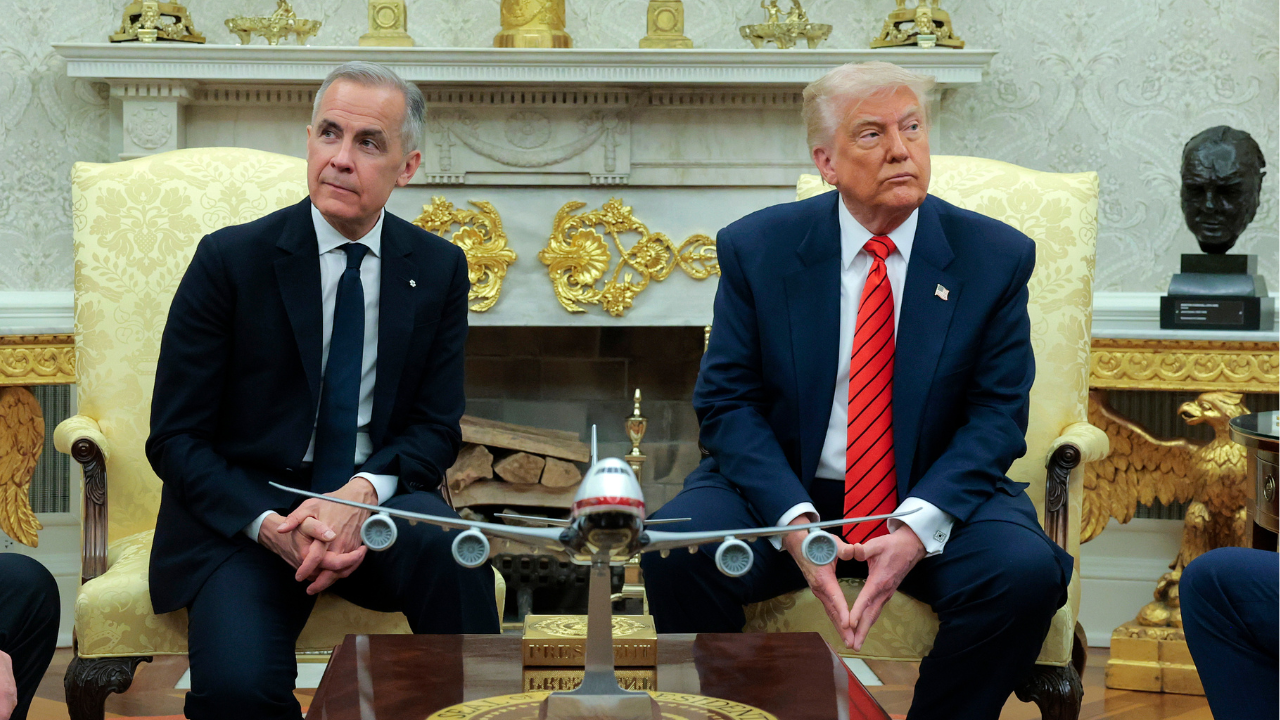
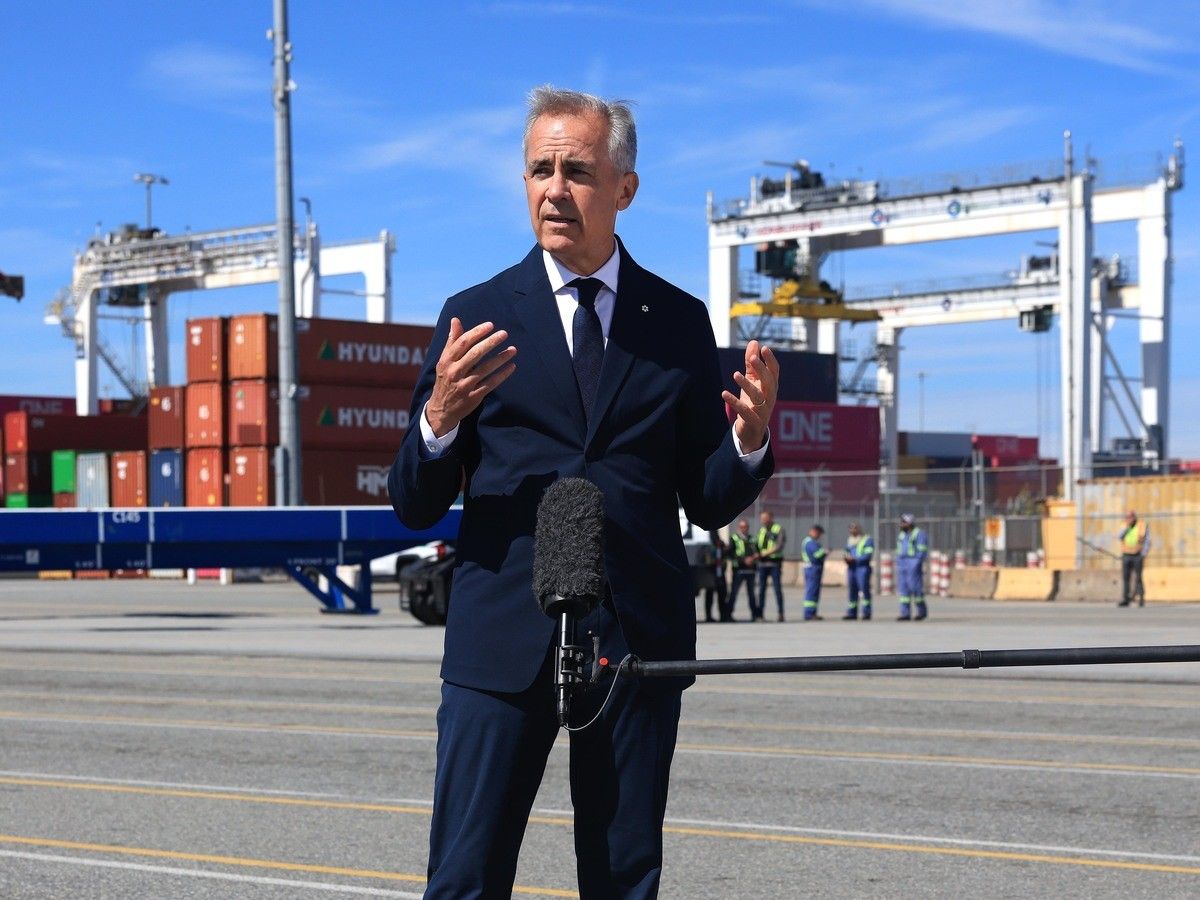
Photo via CBC News

How the Canada-U.S. trade war could affect Canadian consumers

Read the original at CBC News ↗
Cite

Stevenson, V. (2026, October 7). How the Canada-U.S. trade war could affect Canadian consumers. CBC News. https://www.cbc.ca/news/canada/trade-war-tariffs-bans-counter-tariffs-store-shelves-9.7368187?cmp=rss

Dated when The Aporia collected the article, usually within hours of publication. Check the original for its exact date and byline.

CBC News · collected 2026-10-07 · by Verity Stevenson

Quick Summary

The latest escalation in the Canada-U.S. trade war has seen new retaliatory levies and import bans affecting a range of goods including steel, aluminum, dairy products, appliances, and motorcycles. The U.S. imposed $27.6 billion worth of tariffs on Canadian goods, prompting Canada to implement counter-tariffs ranging from 15% to 50%. Experts predict this could result in higher prices, fewer product choices, and longer wait times for consumers.
Written by AI on 2026-10-07, from this article's own text only (the story summary below draws on all the coverage).

AI analysis

Story summary

The Canada-U.S. trade war has escalated with new tariffs and bans affecting Canadian consumers starting Sept. 8. The U.S. imposed 50% tariffs on $27.6 billion worth of Canadian goods, prompting Canada to retaliate with its own set of counter-tariffs ranging from 15 to 50%. Additionally, the U.S. banned imports of certain products like alcohol, whey, molasses, and motorcycles. These actions could lead to higher prices, fewer product choices, and longer wait times for Canadians. The trade war has also impacted national unity and election outcomes across Canada. Retail experts are now assessing how these changes will affect consumer access to goods and potentially accelerate diversification of trade partners.

Written for “Canada Us Trade War Effects” on 2026-11-05, grounded in this article and the 0 other(s) covering the same event.

Story

📰 Canada Us Trade War Effects
Economy/Business · 1 article(s) covering the same event.

Compared with similar articles

This article reads leans left and hedges 36% of its claims. Each row says how that neighbour differs.
Fox News
⚖️ Leans strongly left further left than this Hedges 5 of 19 claims Outlet record 68/100
“The articles discuss different aspects of the trade war's impact—one on Michigan's economy and another focusing on Canadian consumers' perspective.”
Toronto Star
⚖️ Leans left Hedges 2 of 42 claims Outlet record 64/100
“The articles discuss different aspects of the trade war with distinct focuses and timings.”
National Post
Hedges 0 of 19 claims Outlet record 60/100
“Article A discusses general concerns about various threats to Canada as reported by a poll, while Article B focuses on the impact of a specific ongoing trade war between Canada and the U.S.”
Global News
Hedges 1 of 16 claims Outlet record 63/100
“Article A discusses American officials' concerns about Trump's stance towards Canada, while Article B focuses on how the trade war between Canada and the U.S. affects Canadian consumers.”
Global News
⚖️ Leans left Hedges 0 of 13 claims Outlet record 63/100
“The articles discuss different aspects of trade relations between Canada and the U.S., with Article A focusing on survey results regarding 'Buy Canadian' sentiment during the holiday season, while Article B discusses broader impacts of the trade war on consumers.”
National Post
Hedges 6 of 139 claims Outlet record 60/100
“The articles discuss different aspects of the Canada-U.S. trade situation, with Article A focusing on how the latest escalation affects Canadian consumers and Article B discussing economic forecasts in light of recent tariff expansions.”
Toronto Star
⚖️ Leans right further right than this Hedges 2 of 29 claims Outlet record 64/100
“The articles discuss different aspects of the Canada-U.S. trade conflict, with Article A focusing on the impact on Canadian consumers and Article B analyzing the legal implications of counter-tariffs.”
Toronto Star
⚖️ Leans left Hedges 3 of 32 claims Outlet record 64/100
“The articles discuss related themes but describe different aspects of consumer sentiment and product sourcing in Canada under a trade war, not the same specific incident.”
How this article was measured signals, leaning charts, publisher record, byline, topics and claims

Signals How these are calculated →

Claims extracted
58
sentences that state something as happening or true
Uncertain
36%
21 of 58 hedged ("reportedly", "may", "according to")
Leaning
Leans left
of the writing, not the subject · beta estimate
Publisher signals
71/100
CBC News's corrections and hedging, across everything collected from it. Not a measure of accuracy.
Outlets on this story
1
Economy/Business
Same framing elsewhere
1
articles that frame the event the way this one does
Analyzed 2026-10-07 · how these are computed

How this is being covered How these are calculated →

Article leaning vs. publisher reliability
Source leaning vs. consistency

Publisher

CBC News · 1891 article(s) · 6 correction(s) detected
Running correction rate · 6 correction(s)

Who wrote this

Verity Stevenson
11 article(s) here · 1 carrying a prediction
🔮 Horse-drawn carriages are still a tradition in some Canadian cities You can take a horse-drawn carriage tour in places like Victoria, Vancouver, Quebec City and Charlottetown The horse-drawn carriage industry is again getting a lot of neigh-sayers, after New York City council passed a bill last week that would ban the rides by June 2028.
🔮 "This is likely an attempt to sow doubt about the elections in advance of an election in which the president and his administration might fear the voters might reject them," Becker said.
🔮 Her ex-husband and bookstore co-founder, Adrian King Edwards, pointed out that most of Carson's books do not feature a biography of the writer, only a simple sentence: "Anne Carson lives in Canada." Still, her books, enigmatic as they may be, rarely last a few hours on the shelves before being picked up by customers, he says.
🔮 How the Canada-U.S. trade war could affect Canadian consumers
🔮 It's just one of the many ways his life has taken a turn since he and hundreds of other Iranians living in Canada received letters on Aug. 6 and 7 informing them they may be inadmissible to stay in the country because of mandatory military service they were forced to complete in Iran as young men.
🔮 Like, when the trees can't provide enough water to its parts and like some parts will just drop," said Hariramani, who documents fruit trees and the people who tend to them across the city on a social media account called Fruity Walks.
🔮 Members of the group, which included women and some toddlers, said they'd been camping out in the nearby woods for months, waiting for a break in the wind and waves so they could try to board a boat to cross the English Channel.
🔮 "Most people would think, 'Oh, well, the U.K. is such a rainy place' … we're kind of famous for it.
🔮 "Everything was orange and since it was all so dry, even the smallest bush would instantly burst into flames," said Dhont, whose husband had left only hours before, around 1 a.m. local time, to rescue the couple's 15-year-old daughter from an evacuation order at her summer camp in Biscarosse, south down the coast, where another wildfire had broken out.
🔮 'All we could see was smoke'
Also by Verity Stevenson
Nothing else under this byline is closely related to this article, so these are simply their most recent.
All 11 articles by Verity Stevenson →

Topics

Canada Canadian Canadians U.S. the United States

Subjects

U.S. GPE · 12× Canada GPE · 9× Canadian NORP · 6× Concordia University ORG · 2× Trump PERSON · 2× CBC News ORG · 1× Canadians NORP · 1× Montreal ORG · 1× Xiaodon Pan PERSON · 1× the United States GPE · 1×

Narrative

Trump says 'very bad' Canada is being 'taught a little lesson' as trade action escalates Canada scores a dairy win on U.S. soil as farmers grumble about Trump's trade war The incoming U.S. import bans on Canadian alcohol, whey, molasses and motorcycles, by the numbers The counter-tariffs are meant to focus on products where Canadian alternatives are available, and range from 15 to 25 to 50 per cent.
framing: mixed · carried by 1 article(s) · first seen 2026-10-07
🔮 How the Canada-U.S. trade war could affect Canadian consumers
2026-10-07 · CBC News
How the Canada-U.S. trade war could affect Canadian consumers · mixed framing

Claims (58 extracted, 21 hedged)

How the Canada-U.S. trade war could affect Canadian consumers uncertain
war → affect → consumers
Latest trade war escalation could lead to higher prices, fewer choices and longer waits for some products The Canada-U.S. trade war has reshaped Canadians' view of their country, somewhat rekindled coast-to-coast-to-coast unity and dominated federal and provincial elections. uncertain
war → lead → elections
For more than a year it has been steeped in the national psyche, and just when we thought a deal was near with our friend-to-foe southern neighbour, we instead face a new — steeper — round of tariffs, bans and counter-tariffs. asserted
we → steep → tariffs
Canada began imposing a new round of retaliatory levies on U.S. goods on Sept. 8, after the United States imposed new 50 per cent tariffs on $27.6 billion worth of Canadian goods. asserted
States → begin → goods
The U.S. then responded late last month with a set of bans on Canadian imports on some alcoholic drinks, dairy byproducts, molasses and motorcycles, among others. asserted
U.S. → respond → others
So, how could the latest in the dispute continue to reshape the Canadian economy? uncertain
latest → continue → economy
Could the scramble to adapt help us diversify trade partners more quickly? uncertain
us → adapt → partners
And, what products, if any, could become more difficult to access? uncertain
products → become → ?
CBC News spoke to four experts in supply chains and retail to get a sense of what products could go up in price and how consumers may have to change their habits in the next few months. uncertain
consumers → speak → months
They say the escalation between the two countries last month — which involved the U.S. raising tariffs after Canada and the U.S. failed to sign a new trade deal, then Canada imposing counter-tariffs, then the U.S. imposing full-scale bans — may be felt less in empty store shelves than in higher prices, fewer choices and longer waits for some products. uncertain
U.S. → say → products
"Most goods should remain available, although some brands, models or specifications may disappear from the market," said Xiaodon Pan, an associate professor in supply chain and business technology management at Concordia University in Montreal. uncertain
Pan → remain → Montreal
Trump says 'very bad' Canada is being 'taught a little lesson' as trade action escalates Canada scores a dairy win on U.S. soil as farmers grumble about Trump's trade war The incoming U.S. import bans on Canadian alcohol, whey, molasses and motorcycles, by the numbers The counter-tariffs are meant to focus on products where Canadian alternatives are available, and range from 15 to 25 to 50 per cent. asserted
alternatives → say → cent
They cover areas such as steel and aluminum, dairy, appliances, agricultural equipment, pulp and paper, plastics and electronics — and include finished products as well as some components used to make other goods. asserted
They → cover → goods
One analysis out of North Carolina found that toilet paper in the U.S. could become "more expensive, less soft" because of President Donald Trump's 50 per cent levy on northern bleached softwood kraft imported from Canada. uncertain
paper → find → Canada
'Prices are going up,' business prof says asserted
prof → go → ?
Back at home though, Matt Poirier of the Retail Council of Canada says shop owners began stocking up as soon as they knew tariffs were coming after the trade deal fell through between Canada and the U.S. in August. asserted
deal → say → August
The bulk of goods could prevent prices from significantly rising for at least couple months, he said. uncertain
he → prevent → months
"They've been working overtime to find either alternate sources of supply, domestic or global," Poirier said. asserted
Poirier → work → supply
"But it does take a while for those supply chains to reroute." While the impacts of the tariffs could take a bit of time, they could still be significant once those inventory supplies dwindle by the end of the year. uncertain
supplies → take → year
Fraser Johnson, a professor at Ivey Business School at Western University in London, Ont., said retailers won't want to shock consumers and lose business in the short term, but, "in the medium to long term, prices are going up." asserted
prices → say → term
Johnson explained that while alternatives to U.S. products exist elsewhere, the increase of costs of U.S. goods will eventually lead businesses to boost prices on models from other countries as well. asserted
increase → explain → countries
Pan, of Concordia University, agrees. asserted
Pan → agree → University
She said that while clothing and cosmetics, for example, may have more international alternatives, consumers are likely to start seeing "higher prices and fewer brands, styles, shades," in those areas. uncertain
consumers → say → areas
Outdoor gear fanatics could see similar phenomena, the experts said. uncertain
experts → see → phenomena
Whether it's Maytag, GE, Frigidaire or high-end Wolf stoves, American companies take up a significant share the North American appliance market — but in Canada that could change very soon. uncertain
that → take → Canada
While there are many South Korean and Chinese alternatives already readily available, prices for those products could go up as well as retailers try to recoup lost costs, as Johnson mentioned. uncertain
Johnson → be → costs
As for parts for people who already own appliances from American brands, that could get a little tricky. uncertain
that → own → brands
"A specific control board, pump, sensor or repair component may have very few direct alternatives," said Pan of Concordia University. uncertain
Pan → have → University
She says the same goes for electronics and furniture. asserted
same → say → electronics
What about shortages? Construction materials are where things start to get more dicey. asserted
things → start → shortages
Canada buys a lot of those from the U.S. — things like metal, plastic and foam building materials, paints, coats and adhesive, cement products and types of prefabricated wood. asserted
Canada → buy → wood
They're bulky goods that our shared border makes it easy to transport. asserted
it → share → that
That's one industry facing possible shortages, says Saibal Ray, the James McGill Chair professor for supply chain management at McGill University in Montreal. asserted
Ray → face → Montreal
Car parts could be another, due to levies on steel and aluminum, Ray said, as "availability might be an issue." uncertain
availability → say → steel
Johnson agrees. asserted
Johnson → agree → ?
"If you're thinking about making a major purchase; if you're going through a home renovation — buying and locking in your prices earlier rather than later makes a lot of sense," he said. asserted
he → think → sense
Aluminum cans are shown after being filled with craft beer during a production run at Black Plague Brewery in Oceanside, Calif., last year. asserted
cans → show → Oceanside
Again, it's not just finished products affected here. asserted
it → finish → ?
Source materials may cross the border several times before becoming, say, a car part or food container, Pan explained. uncertain
Pan → cross → border
She gave the example of aluminum cans for soda and beer. asserted
She → give → soda
…and 18 more, not listed.

💬Give feedback · no sign-in needed

No sign-in needed for now. Your note is sent without a name, so it cannot be answered.

🕘History 🎫Support