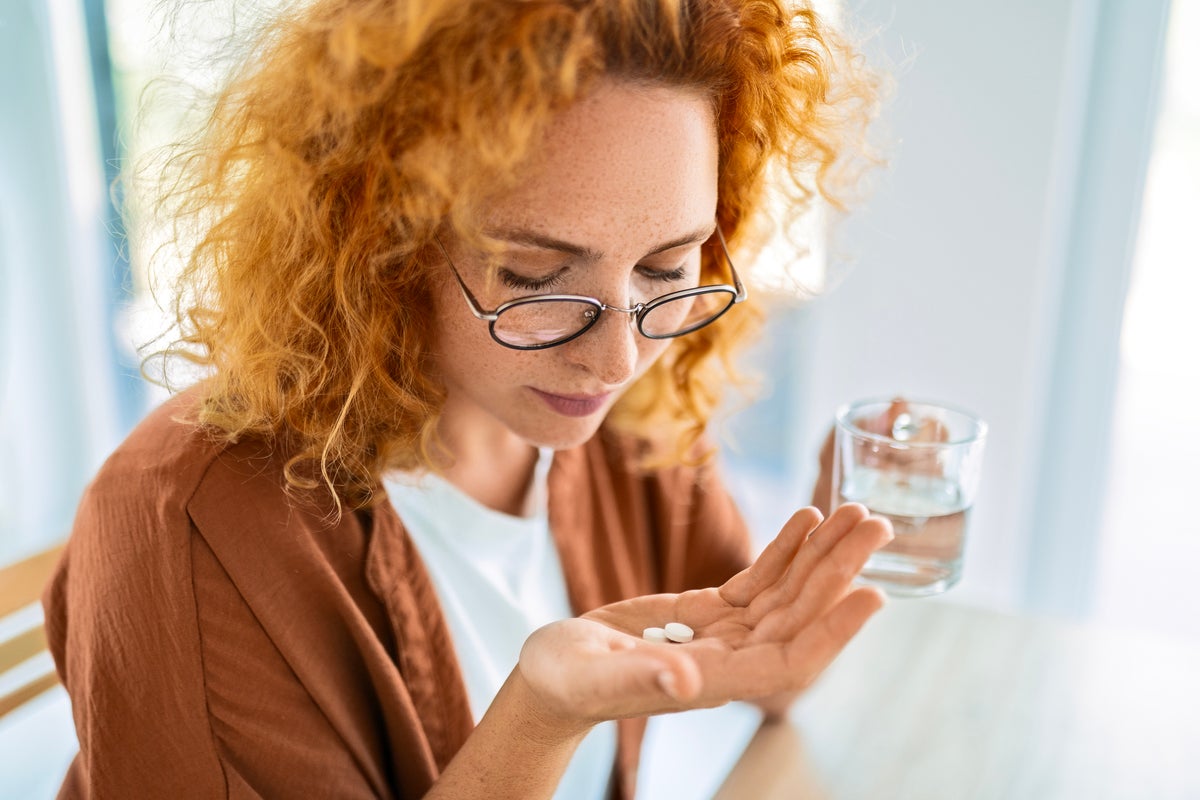
Photo via The Independent

Major Parkinson’s breakthrough as new pill offers hope of treating symptoms and has fewer side-effects

Read the original at The Independent ↗
Cite

Dalton, J. (2026, October 7). Major Parkinson’s breakthrough as new pill offers hope of treating symptoms and has fewer side-effects. The Independent. https://www.independent.co.uk/news/uk/home-news/parkinsons-disease-symptoms-daily-pill-treatment-solengepras-b3062881.html

Dated when The Aporia collected the article, usually within hours of publication. Check the original for its exact date and byline.

The Independent · collected 2026-10-07 · by Jane Dalton

Quick Summary

Scientists have developed a new pill called solengepras that shows promise in reducing Parkinson’s disease symptoms without causing common side effects like nausea or hallucinations. In a trial involving 341 participants across four continents, those taking the higher dose of solengepras experienced nearly 37 fewer minutes each day of debilitating “off” periods compared to placebo users. The drug works by blocking the GPR6 receptor and appears well-tolerated with no serious side effects reported. Cerevance plans to discuss these results with the FDA, potentially making the pill available within three years.
Written by AI on 2026-10-07, from this article's own text only (the story summary below draws on all the coverage).

AI analysis

Story summary

A new pill called solengepras is showing promise in treating symptoms of Parkinson’s disease, potentially offering a significant breakthrough. During clinical trials, patients taking solengepras experienced nearly 37 minutes less “off” time each day compared to those on placebo, and about an hour-and-a-half less than before the trial began. This means they had reduced periods when their dopamine drugs were not effective, leading to fewer symptoms like stiffness, slowness, or shaking. The drug works by blocking a receptor called GPR6, reducing side effects associated with existing treatments that increase dopamine levels in the brain but often cause nausea, hallucinations, and involuntary movements. Developed by Cerevance, an American biopharmaceutical company based in Boston, solengepras could mark the first major new class of treatment for Parkinson’s disease in decades, improving quality of life for sufferers worldwide.

Written for “Parkinson's Breakthrough Pill” on 2026-11-02, grounded in this article and the 1 other(s) covering the same event.

Story

📰 Parkinson's Breakthrough Pill
Health · 2 article(s) covering the same event. See how they differ ↓

Compared with similar articles

This article reads unscored and hedges 26% of its claims. Each row says how that neighbour differs.
How this article was measured signals, leaning charts, publisher record, byline, topics and claims

Signals How these are calculated →

Claims extracted
19
sentences that state something as happening or true
Uncertain
26%
5 of 19 hedged ("reportedly", "may", "according to")
Leaning
not political
takes no side on a contested political question
Publisher signals
59/100
The Independent's corrections and hedging, across everything collected from it. Not a measure of accuracy.
Outlets on this story
2
Health
Same framing elsewhere
1
articles that frame the event the way this one does
Analyzed 2026-10-07 · how these are computed

How this is being covered How these are calculated →

Article leaning vs. publisher reliability
Source leaning vs. consistency

Publisher

The Independent · 3503 article(s) · 8 correction(s) detected
Running correction rate · 8 correction(s)

Who wrote this

Jane Dalton
1 article(s) here · 1 carrying a prediction
🔮 Existing treatments for Parkinson’s work by increasing dopamine, which is reduced in the brains of sufferers, but those drugs may cause nausea, hallucinations and involuntary movements, usually of the limbs.
The only article under this byline in the corpus.

Topics

Australia Cerevance Independent Parkinson's UK solengepras

Subjects

Cerevance ORG · 2× Australia GPE · 1× Ceverance ORG · 1× Craig Thompson PERSON · 1× Independent ORG · 1× Parkinson's UK ORG · 1× the US Food and Drug Administration ORG · 1×

Narrative

Both the patients taking solengepras and those taking the placebo improved over the trial, but the higher-dose solengepras group reported having nearly 37 minutes less “off” time each day, when their dopamine drugs were not working properly, than those on the placebo, and about an hour-and-a-half less “off” time than before the trial.
framing: mixed · carried by 1 article(s) · first seen 2026-10-07
🔮 Existing treatments for Parkinson’s work by increasing dopamine, which is reduced in the brains of sufferers, but those drugs may cause nausea, hallucinations and involuntary movements, usually of the limbs.

Claims (19 extracted, 5 hedged)

A new pill for Parkinson’s disease is raising hopes of a breakthrough in treatment after a trial suggested it reduced the symptoms that hit sufferers’ quality of life. uncertain
that → raise → life
The drug, called solengepras, cut the time when patients had “off” periods, when they felt unwell or stiff, slow or shaky. asserted
they → call → periods
Patients also felt less sleepy and functioned better, the scientists said. asserted
scientists → feel → ?
Existing treatments for Parkinson’s work by increasing dopamine, which is reduced in the brains of sufferers, but those drugs may cause nausea, hallucinations and involuntary movements, usually of the limbs. uncertain
drugs → exist → limbs
Solengepras works differently, blocking a receptor called GPR6 that slows down movement. asserted
that → work → movement
It was developed to reduce the risk of such side-effects. asserted
It → develop → effects
Cerevance, the US clinical-stage biopharmaceutical company that developed the new drug, said it offered great hope for future treatments. asserted
it → develop → treatments
Parkinson's is the world’s fastest growing neurological condition. asserted
Parkinson → grow → ?
Around 166,000 people in the UK have been diagnosed with Parkinson’s, according to Parkinson's UK and 21,000 more have it without a formal diagnosis. uncertain
21,000 → diagnose → diagnosis
More than 10 million people worldwide live with the disease. asserted
people → live → disease
The randomised, double-blind, placebo-controlled trial involved 341 people with Parkinson’s across the US, Europe, UK and Australia. asserted
trial → control → US
They were randomly assigned to receive either 75mg or 150mg of solengepras or a placebo, once a day for 12 weeks. asserted
They → assign → weeks
They continued to take their dopamine-based drugs. asserted
They → continue → drugs
Both the patients taking solengepras and those taking the placebo improved over the trial, but the higher-dose solengepras group reported having nearly 37 minutes less “off” time each day, when their dopamine drugs were not working properly, than those on the placebo, and about an hour-and-a-half less “off” time than before the trial. asserted
drugs → take → trial
They also had about 36 extra minutes a day of “on” time without dyskinesia – movement problems – compared with the placebo group. asserted
They → have → group
Activities such as dressing, eating and getting around were easier, as well. asserted
Activities → dress → dressing
The drug appeared well tolerated, with no serious side effects, the researchers said, although some people reported headaches and urinary tract infections. asserted
people → appear → headaches
Ceverance says it will discuss the results with the US Food and Drug Administration to determine the next steps, and the pill could potentially be prescribed to patients within three years. Doctors say motor – or movement - fluctuations are one of the hardest side-effects to control in Parkinson’s patients, but solengepras offers hope of doing so. Loss of smell, constipation and involuntary movements during sleep may all be early signs of the disease. Craig Thompson, chief executive of Cerevance, said the trial showed a consistent pattern of benefit across “off” time, “on” time, daily motor function, daytime alertness and quality of life. uncertain
trial → say → life
“As a potential first-in-class, non-dopaminergic therapy, solengepras gives us the opportunity to evaluate what a new mechanism may offer people with Parkinson’s.” uncertain
mechanism → give → Parkinson

💬Give feedback
🕘History 🎫Support