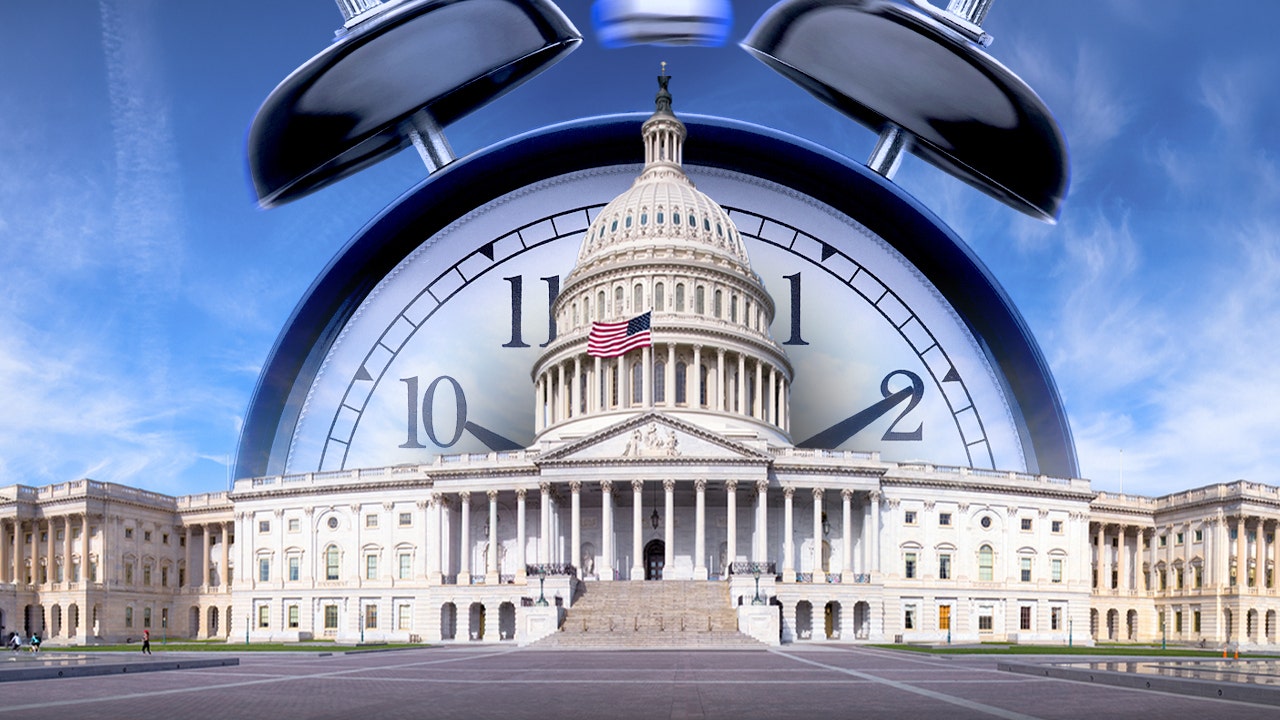
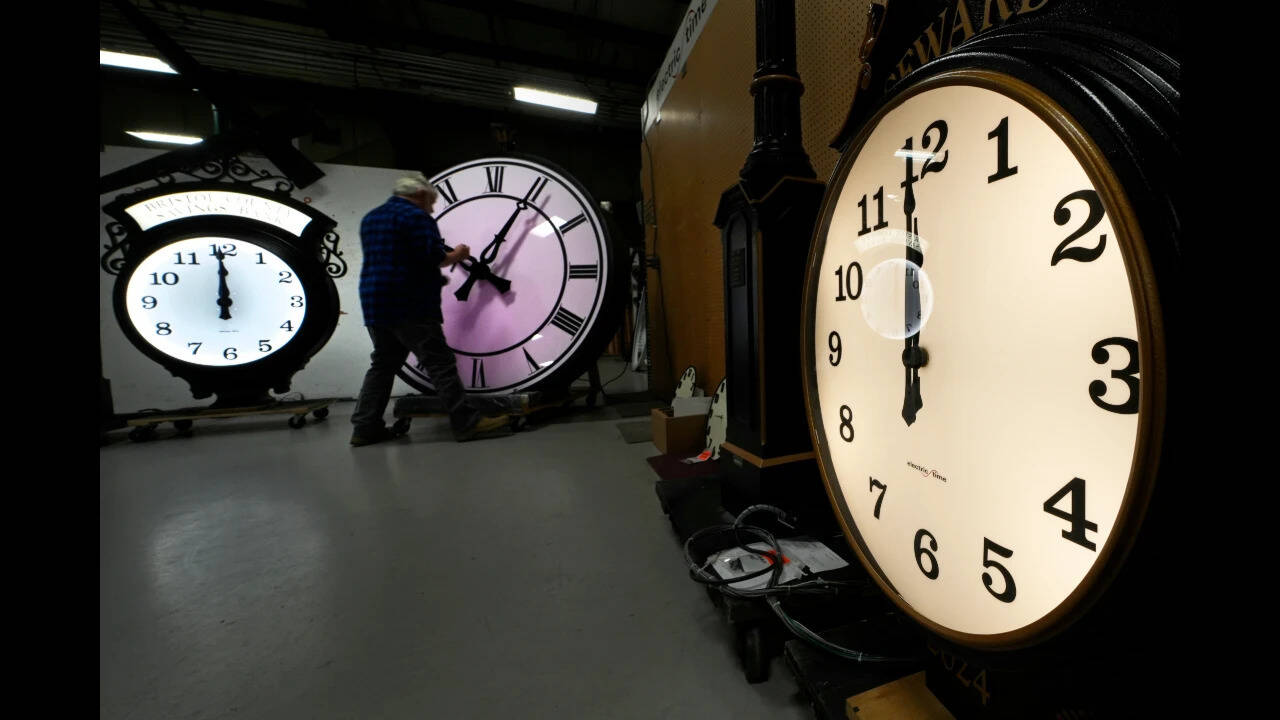
In less than a month, most of the U.S. will fall back an hour, continuing the cycle of biannual clock changes.
asserted
most → fall → changes
Some lawmakers are trying to end that practice—but are facing pushback from others.
asserted
lawmakers → try → others
In July, the House passed a bill with bipartisan support that would instate Daylight Saving Time year-round across the U.S.—the latest step forward in a yearslong effort to eliminate the clock change.
asserted
that → pass → change
President Donald Trump has repeatedly urged Congress to pass the bill.
asserted
Trump → urge → bill
But the legislation now faces an uncertain future in the upper chamber.
asserted
legislation → face → chamber
Earlier this week, Senate Majority Leader John Thune told POLITICO that there is no “consensus” among his colleagues on whether to advance the measure.
asserted
Thune → tell → measure
“The President feels strongly on it like he does a lot of issues,” Thune said.
asserted
Thune → feel → issues
“It’s something we’re having conversations about, but there’s no clear path forward or consensus on it yet.”
asserted
we → ’ → it
Here’s what the bill would do, why some senators are backing it, and why others aren’t.
asserted
others → ’ → it
What would the Sunshine Protection Act do?
asserted
Act → do → What
Most of the country follows the practice of changing the clocks twice a year, jumping forward an hour every March when Daylight Saving Time begins and falling back every November when it ends to observe Standard Time.
asserted
it → follow → Time
Polling conducted by the Associated Press/NORC last year shows that more Americans oppose the current biannual clock change than those who support it—47% compared to just 12%.
asserted
who → conduct → %
Americans are a bit more divided on whether they would rather observe Daylight Saving Time or Standard Time year-round, though the former tends to garner more support.
asserted
former → divide → support
Fifty-six percent support permanent Daylight Saving Time, compared to 42% for Standard Time, according to last year's AP/NORC poll.
uncertain
percent → support → poll
Currently, federal law allows states to forgo Daylight Saving Time and stay in Standard Time throughout the year; Hawaii and most of Arizona have chosen to do so.
asserted
Hawaii → allow → Arizona
States aren’t allowed, though, to observe Daylight Saving Time permanently.
asserted
States → allow → Time
The legislation that passed the lower chamber over the summer, called the Sunshine Protection Act, would change that.
asserted
that → pass → that
If the bill succeeds in the Senate and is signed into law by the President, it would make Daylight Saving Time permanent nationwide—though it would allow states to opt out if they choose.
asserted
they → succeed → President
Why are some senators supporting permanent Daylight Saving Time?
asserted
senators → support → Time
Senators who have expressed support for making Daylight Saving Time year-round in the past have argued that most Americans dislike the biannual clock changes, calling the practice “antiquated.”
asserted
Americans → express → practice
They have also pointed out that remaining in Daylight Saving Time permanently would mean that the sun would appear to set later throughout the year, rather than just in the summer, which, they claim, would encourage people to engage in more outdoor activity.
uncertain
they → point → activity
In a statement last year, when he introduced a version of the bill in the upper chamber, Scott said that he hears from constituents that “they are sick and tired of changing their clocks twice a year—it’s an unnecessary, decades-old practice that’s more of an annoyance to families than benefit to them.”
asserted
that → introduce → them
He added that he believes this is a “common-sense change that will simplify and benefit the lives of American families.”
asserted
that → add → families
“For many Americans, an extra hour of daylight means more time to play outside with their kids, walk their dog, or spend time with neighbors,” he said in a post on X on Wednesday.
asserted
he → mean → Wednesday
“Americans work hard, and they deserve more free time to enjoy all the outdoors has to offer.
asserted
outdoors → work → all
It’s time to pass my Sunshine Protection Act [so] they can enjoy every ounce of sunshine.
asserted
they → ’ → sunshine
In July, Sen. Patty Murray, a Democrat from Washington, applauded the House for passing the bill, saying that the lower chamber “delivered on something Americans all across the country actually want: to never have to change their clocks again.”
asserted
Americans → applaud → clocks
“It’s not lost on me that Republicans still refuse to do literally anything to make life more affordable for families or to hold the Trump administration accountable for its daily abuse of power, but if Congress can enact permanent Daylight Saving Time, I will take this opportunity to make it happen,” she said in a statement.
asserted
she → lose → statement
She went on to say that, in her home state, it often gets dark around 4 p.m. in the winter months.
asserted
it → go → months
Her constituents, she said, have “made it abundantly clear” that they want to observe Daylight Saving Time year-round.
asserted
they → say → Time
When Scott introduced a version of the bill last year, other senators from both parties also expressed their support for the measure.
asserted
senators → introduce → measure
“The head-spinning ritual of falling back and springing forward has a very real impact on our economy, our health, and our happiness,” Sen. Ed Markey, a Democrat from Massachusetts, said in a statement at the time.
asserted
Markey → spin → time
“Let’s say goodbye to 4pm winter sunsets and pass the Sunshine Protection Act for permanent Daylight Saving Time—permanently springing forward for brighter evenings year-round.”
asserted
’s → let → evenings
While it’s true that permanent Daylight Saving Time would mean later sunsets year-round, what that would look like for Americans depends on where in the country they live.
asserted
they → ’ → country
Some places already experience sunrises and sunsets an hour or so after other places in the same time zone do, which means that some parts of the U.S. wouldn’t see daylight until much later in the morning than others.
asserted
parts → experience → others
In Indianapolis, for instance, residents would only see the sunrise after 9 a.m. local time on Jan. 15, 2027, if Daylight Saving Time were made permanent, AccuWeather predicted, while other parts of the country would see the sunrise around 8 a.m. their time.
asserted
parts → see → a.m.
Because of that discrepancy, some senators have objected to legislation that would establish year-round Daylight Saving Time.
asserted
that → object → Time
The most vocal opponent of the Sunshine Protection Act in the upper chamber has been Sen. Tom Cotton, a Republican from Arkansas, who has previously said that observing permanent Daylight Saving Time would “again make winter a dark and dismal time for millions of Americans.”
asserted
winter → say → Americans
Cotton has also pointed out that the U.S. has unsuccessfully tried this move before.
asserted
U.S. → point → move
In 1974, the U.S. began observing Daylight Saving Time year-round, but it was unpopular among Americans and Congress repealed the legislation that had instituted the change just months after it took effect.
asserted
it → begin → effect
…and 7 more, not listed.
 The Aporia