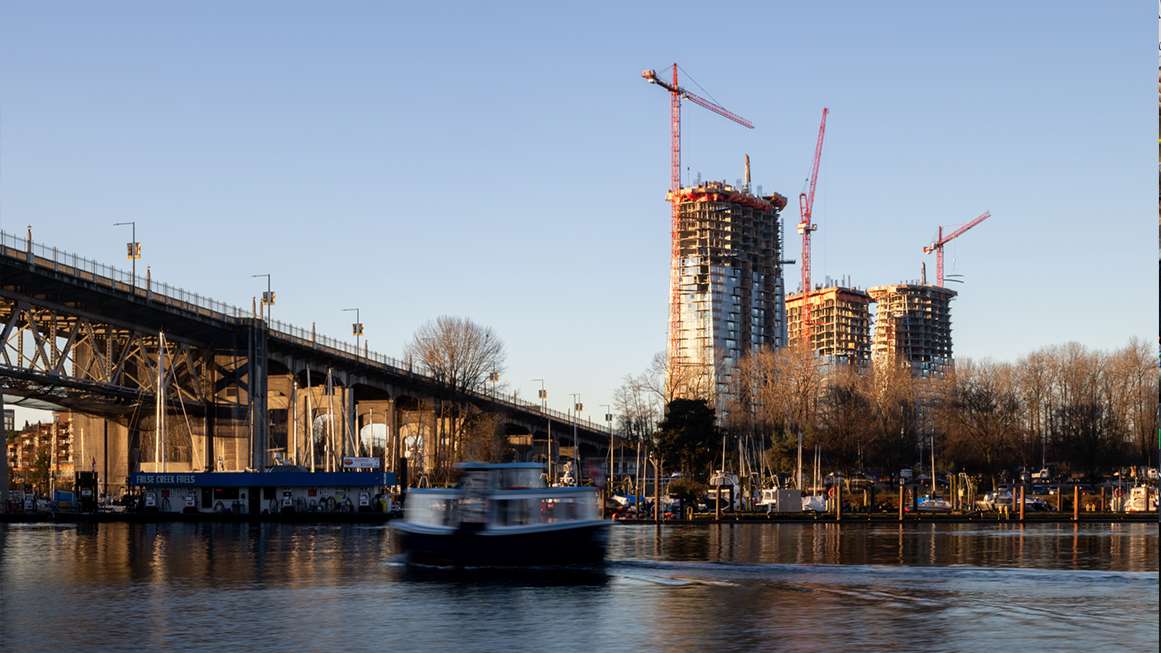
Photo via The Globe and Mail

The population is shrinking in pockets of Vancouver and Toronto. What if we put more housing there?

Read the original at The Globe and Mail ↗
Cite

Bozikovic, A., & Sun, Y. (2026, October 8). The population is shrinking in pockets of Vancouver and Toronto. What if we put more housing there? The Globe and Mail. https://www.theglobeandmail.com/canada/article-the-population-is-shrinking-in-pockets-of-vancouver-and-toronto-what/

Dated when The Aporia collected the article, usually within hours of publication. Check the original for its exact date and byline.

The Globe and Mail · collected 2026-10-08 · by Alex Bozikovic, Yang Sun

Quick Summary

The article reports on population declines in established neighborhoods within Vancouver and Toronto despite overall regional population growth. For instance, Kerrisdale, an affluent area in Vancouver, has seen a 38% drop in residents since the 1970s. Across both regions, census data shows that many areas have lost significant numbers of people—Vancouver's region saw declines in 21% of its dissemination areas, while Toronto’s experienced declines in nearly three-quarters of such areas. The article argues that this trend suggests underutilized infrastructure and unused capacity in these neighborhoods, raising questions about where new housing should be prioritized to maximize efficiency and address needs effectively.
Written by AI on 2026-10-08, from this article's own text only (the story summary below draws on all the coverage).

AI analysis

Story summary

In affluent areas like Kerrisdale in Vancouver and other parts of Toronto, local populations have significantly declined despite overall urban growth. For instance, Kerrisdale has seen a decrease of 380 residents, or 38%, since the 1970s. While both cities have grown substantially—Vancouver and Toronto doubling their populations over half a century—the trend of population decline in certain established neighborhoods remains largely unnoticed. The Canadian government has pledged significant funding to address housing shortages and infrastructure needs, including $50 billion promised in last year's federal budget and an additional $4.4 billion from Prime Minister Mark Carney for housing initiatives. However, these efforts may not adequately target the specific issue of declining populations in certain neighborhoods.

Written for “Canadian Population Shifts” on 2026-11-03, grounded in this article and the 0 other(s) covering the same event.

Story

📰 Canadian Population Shifts
Politics · 1 article(s) covering the same event.

Compared with similar articles

This article reads unscored and hedges 10% of its claims. Each row says how that neighbour differs.
Reason
⚖️ Leans strongly right Hedges 2 of 24 claims Outlet record 67/100
“The articles discuss different aspects of housing and population changes in Vancouver but do not describe the same specific incident or time.”
The Sydney Morning Herald
⚖️ Leans left Hedges 4 of 39 claims Outlet record 61/100
“The articles discuss different locations and topics related to urban development and population changes, without describing the same specific incident.”
How this article was measured signals, leaning charts, publisher record, byline, topics and claims

Signals How these are calculated →

Claims extracted
182
sentences that state something as happening or true
Uncertain
10%
18 of 182 hedged ("reportedly", "may", "according to")
Leaning
not political
takes no side on a contested political question
Publisher signals
52/100
The Globe and Mail's corrections and hedging, across everything collected from it. Not a measure of accuracy.
Outlets on this story
1
Politics
Same framing elsewhere
1
articles that frame the event the way this one does
Analyzed 2026-10-08 · how these are computed

How this is being covered How these are calculated →

Article leaning vs. publisher reliability
Source leaning vs. consistency

Publisher

The Globe and Mail · 1056 article(s) · 36 correction(s) detected
Running correction rate · 36 correction(s)

Who wrote this

Alex Bozikovic
6 article(s) here · 1 carrying a prediction
🔮 The mayor trounced her conservative challenger, Brad Bradford, to win re-election by almost 130,000 votes.
2026-10-30 · assertive framing · What kind of Toronto does Chow want to build?
🔮 Then-mayor John Tory launched a program by that name to urgently build mixed-income housing on city land.
🔮 In 1991, The Globe’s John Bentley Mays wrote about the city’s Port Lands as a “wilderness of trees and rust.”
2026-10-09 · assertive framing · Waterfront Toronto gets design right. We should learn
🔮 This trend of local population declines has been largely overlooked, even as Canadian governments work to create more homes and build the infrastructure – pipes, roads, community facilities – to serve the people who will occupy them.
🔮 At Spring House, a new supportive and transitional housing building in Toronto’s Parkdale neighbourhood, the hospital and three governments will bring that ideal home.
2026-10-05 · assertive framing · Designing a solution to homelessness
🔮 The division will spend $440-million this year on construction projects.
2026-09-18 · assertive framing · Is there a design for Toronto’s parks?
Also by Alex Bozikovic
What kind of Toronto does Chow want to build?
2026-10-30 · The Globe and Mail
Designing a solution to homelessness
2026-10-05 · The Globe and Mail
Nothing else under this byline is closely related to this article, so these are simply their most recent.
All 6 articles by Alex Bozikovic →
Yang Sun
2 article(s) here · 1 carrying a prediction
🔮 Five months after Alberta Premier Danielle Smith announced her government would call a vote on whether the province should pursue secession from Canada, Albertans at last know the results of its historic referendum.
2026-10-21 · assertive framing · The Alberta referendum by the numbers
🔮 This trend of local population declines has been largely overlooked, even as Canadian governments work to create more homes and build the infrastructure – pipes, roads, community facilities – to serve the people who will occupy them.
Also by Yang Sun
The Alberta referendum by the numbers
2026-10-21 · The Globe and Mail
Nothing else under this byline is closely related to this article, so these are simply their most recent.

Topics

Canadian Globe and Mail Kerrisdale Toronto Vancouver

Subjects

Vancouver GPE · 5× Kerrisdale GPE · 3× Toronto GPE · 3× British Columbia GPE · 1× Canadian NORP · 1× Globe ORG · 1× Globe and Mail ORG · 1× Hamilton GPE · 1× Mark Carney PERSON · 1× Ontario GPE · 1×

Narrative

As new houses have been built across the Lower Mainland and the Greater Toronto and Hamilton Area, as apartment towers have swelled the populations of formerly desolate industrial districts, each city has maintained an archipelago of neighbourhoods where neighbours have become increasingly scarce.
framing: assertive · carried by 1 article(s) · first seen 2026-10-08
🔮 This trend of local population declines has been largely overlooked, even as Canadian governments work to create more homes and build the infrastructure – pipes, roads, community facilities – to serve the people who will occupy them.

Claims (182 extracted, 18 hedged)

Kerrisdale looks much the same as ever. asserted
Kerrisdale → look → ?
In this affluent pocket of Vancouver’s west side, gable-roofed houses stand behind tall hedges and shelter under mature maples. asserted
houses → stand → maples
Yet a subtle change has occurred: In many corners of the neighbourhood, there are fewer people. asserted
change → occur → neighbourhood
On the side streets of Kerrisdale, many blocks have lost between 10 and 30 per cent of their population since the 1970s. asserted
blocks → lose → 1970s
One section near the Marine Drive Golf Club fell from 1,010 residents to 630 – down 380 people, or 38 per cent. asserted
section → fall → 630
Over the past half-century, both the Vancouver and Toronto regions have doubled in population. asserted
regions → double → population
But a Globe and Mail analysis of census data shows that within these growing metropolises, there are shrinking cities: established areas where populations have fallen as much as 40 per cent. asserted
populations → show → metropolises
This trend of local population declines has been largely overlooked, even as Canadian governments work to create more homes and build the infrastructure – pipes, roads, community facilities – to serve the people who will occupy them. asserted
who → overlook → them
In last year’s federal budget, the government promised $50-billion toward such projects. asserted
government → promise → projects
In March, Prime Minister Mark Carney pledged $4.4-billion to “housing-related infrastructure” in Ontario, and in June, the government pledged $1.6-billion over 10 years for such projects in British Columbia. asserted
government → pledge → Columbia
But experts suggest some of this spending could be put to better use, or avoided entirely. uncertain
some → suggest → use
That is because governments rarely ask a fundamental question: Where do we have unused capacity? asserted
we → ask → capacity
Many urban neighbourhoods have water systems, roads, parks and schools that were built for larger populations than today’s. asserted
that → have → today
As new houses have been built across the Lower Mainland and the Greater Toronto and Hamilton Area, as apartment towers have swelled the populations of formerly desolate industrial districts, each city has maintained an archipelago of neighbourhoods where neighbours have become increasingly scarce. asserted
neighbours → build → neighbourhoods
The Globe compared figures from the 1971 and 2021 censuses for both Toronto and Vancouver, examining the population of “dissemination areas” – each one an area of a few blocks, typically home to about 500 people. asserted
one → compare → people
In the Vancouver region, 21 per cent of those areas declined in population over those 50 years, losing 76,424 people in total. asserted
cent → decline → total
Many other areas failed to keep up with the quick growth of the region. asserted
areas → fail → region
In the Toronto region, the pattern is much more stark: Almost three-quarters of those established areas had declined by 2021, shedding a total of 540,789 people. asserted
quarters → establish → people
This pattern is hard to discern on the streetscape; these prosperous cities generally do not have crumbling, empty buildings or vacant lots. asserted
cities → discern → buildings
But the declines are subtly reflected in empty public-school classrooms, a lack of foot traffic and the closing of neighbourhood retailers. asserted
declines → reflect → retailers
The history of growth and shrinkage is shaped by a combination of demographic changes and specific urban planning policies. asserted
history → shape → changes
But nothing is set in stone: Experts say these places could yet absorb more residents, often at a lower cost than building entirely new communities. uncertain
places → set → communities
Several demographic trends contribute to the pattern of the shrinking city. asserted
trends → contribute → city
Canadians today are living longer, having fewer children and occupying more square footage than previous generations. asserted
Canadians → live → generations
A general contractor, he was raised on the west side of Vancouver. asserted
he → raise → Vancouver
He and his wife raised their two sons in a 3,400-square-foot house in Kerrisdale; they remain there as empty nesters, though their son’s dog Hershy is often around the house. asserted
dog → raise → house
“We live in the same space as when we had two boys who walked to school,” said Mr. Haebler, 65. asserted
Haebler → live → school
Their pandemic project was to convert their coach house into a music studio. asserted
project → convert → studio
“And now we have a spare bedroom, and I’ve moved my study from the basement into one of the other bedrooms.” asserted
I → have → bedrooms
Prof. Maxwell Hartt, a geographer at Queen’s University who studies population decline, says that this story is quite typical. asserted
story → study → decline
In the shrinking zones of Toronto and Vancouver, “there aren’t a lot of vacant homes,” he said. asserted
he → shrink → homes
Canadians are having fewer children. asserted
Canadians → have → children
Young parents often choose to move from cities to suburbs. asserted
parents → choose → suburbs
And seniors – whose lifespan has increased from an average of about 75 to 82 in the past four decades – are largely remaining in place, by choice or by necessity. asserted
lifespan → increase → necessity
The COVID-19 pandemic prompted thousands of people to migrate out of large cities, particularly Toronto and its adjacent communities. asserted
pandemic → prompt → cities
However, that pattern was outweighed until 2025 by high levels of international migration; both the Toronto and Vancouver metro areas have continued to grow in each year of the past decade except for last year. asserted
areas → outweigh → year
“There are, I’m sure, many retired people who would be happy to move down,” Dr. Hartt said, “but there isn’t a condo or an apartment nearby to move into in their community.” asserted
Hartt → be → community
Mr. Haebler was surprised to learn that most blocks in his neighbourhood have lost people. asserted
blocks → learn → people
Some of his neighbours have divided up their lots to make room for new apartments, often for their children. asserted
Some → divide → children
“Everybody’s got a laneway suite now, and everybody’s got a basement suite,” he remarked. asserted
he → get → suite
…and 142 more, not listed.

💬Give feedback
🕘History 🎫Support