Photo via Toronto Star

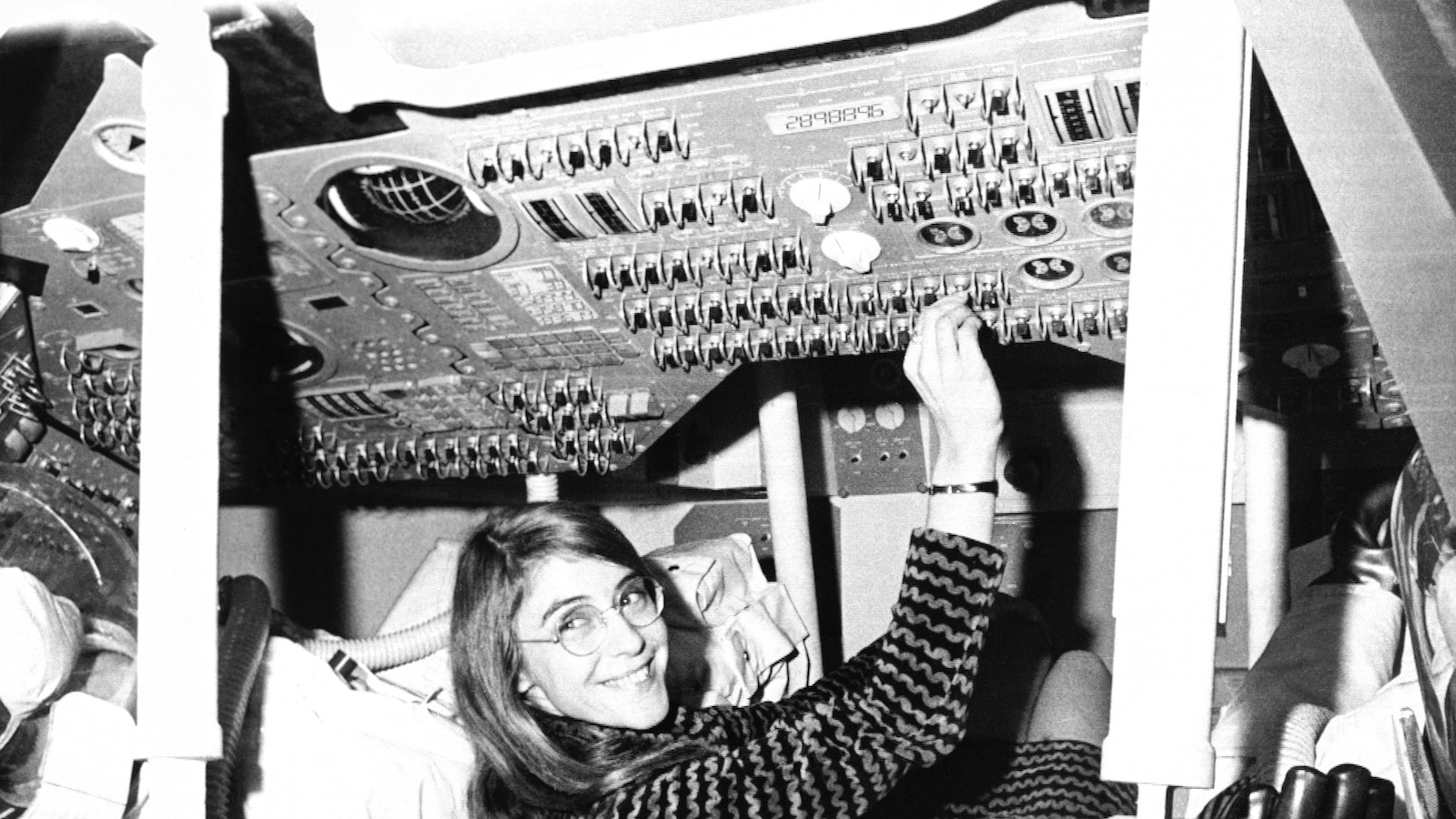
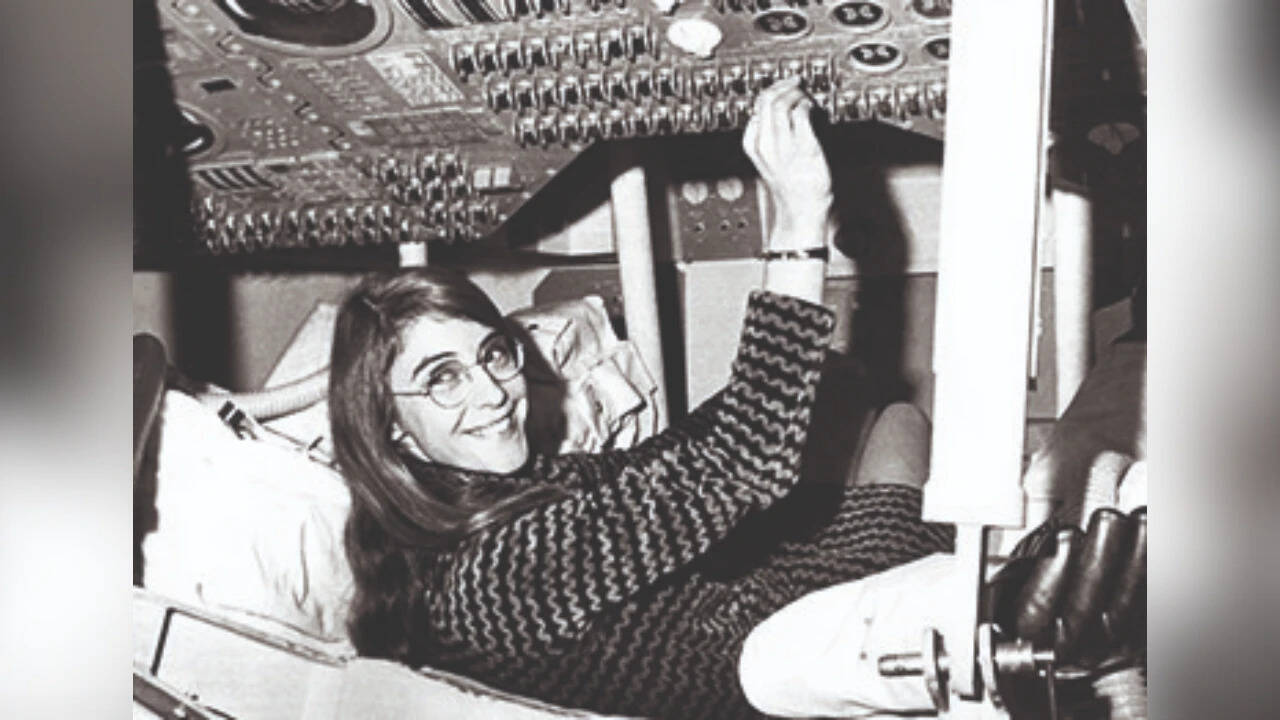
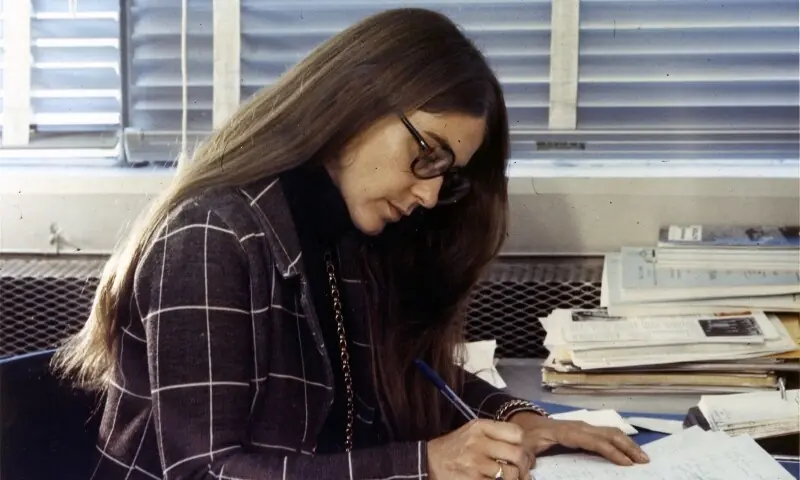
Margaret Hamilton, who led a software team for NASA's Apollo program, dies at 90

Read the original at Toronto Star ↗
Cite

Stengle, J. (2026, October 8). Margaret Hamilton, who led a software team for NASA's Apollo program, dies at 90. Toronto Star. https://www.thestar.com/news/world/united-states/margaret-hamilton-who-led-a-software-team-for-nasa-s-apollo-program-dies-at-90/article_b25aca68-379a-566b-8535-461d6fd708b1.html

Dated when The Aporia collected the article, usually within hours of publication. Check the original for its exact date and byline.

Toronto Star · collected 2026-10-08 · by Jamie Stengle

Quick Summary

Margaret Hamilton, who led the software development for NASA’s Apollo program that sent humans to the moon, died on September 30 in Cambridge, Massachusetts. She was 90 years old at the time of her death. Hamilton’s work, which included creating advanced onboard flight software, is celebrated as a pioneering achievement in early computer science and for inspiring women in technology fields. NASA Administrator Jared Isaacman highlighted her significant contributions to making humanity's first lunar missions possible.
Written by AI on 2026-10-08, from this article's own text only (the story summary below draws on all the coverage).

AI analysis

Story summary

Margaret Hamilton, a pioneering computer scientist who developed critical software for NASA's Apollo program, died at age 90 on September 30. Born in Indiana in 1936, she studied mathematics and later joined MIT where she became the first programmer hired by NASA for the Apollo project in 1965. Her work was crucial during the historic moon landing of Apollo 11 in 1969, particularly when her software successfully managed hardware issues, ensuring the mission's success. Hamilton’s contributions made her a symbol of women in technology and were celebrated widely posthumously by NASA and MIT, who recognized her as a trailblazer in an era before "software engineering" was even a common term.

Written for “Margaret Hamilton Dies” on 2026-10-31, grounded in this article and the 5 other(s) covering the same event.

Story

📰 Margaret Hamilton Dies
Science · 6 article(s) covering the same event. Compare every outlet's account →

Compared with similar articles

This article reads unscored and hedges 12% of its claims. Each row says how that neighbour differs.
ABC News (US)
Hedges 3 of 27 claims Outlet record 70/100
Times of India
Hedges 1 of 16 claims Outlet record 59/100
Dawn
Hedges 1 of 21 claims Outlet record 72/100
BBC News
Hedges 3 of 12 claims Outlet record 68/100
The Guardian
Hedges 2 of 15 claims Outlet record 66/100
How this article was measured signals, leaning charts, publisher record, byline, topics and claims

Signals How these are calculated →

Claims extracted
26
sentences that state something as happening or true
Uncertain
12%
3 of 26 hedged ("reportedly", "may", "according to")
Leaning
not political
takes no side on a contested political question
Publisher signals
64/100
Toronto Star's corrections and hedging, across everything collected from it. Not a measure of accuracy.
Outlets on this story
6
Science
Same framing elsewhere
1
articles that frame the event the way this one does
Analyzed 2026-10-08 · how these are computed

How this is being covered How these are calculated →

Article leaning vs. publisher reliability
Source leaning vs. consistency

Publisher

Toronto Star · 10757 article(s) · 28 correction(s) detected
Running correction rate · 28 correction(s)
2026-10-26
Correction
2026-10-24
Correction
2026-10-07
Correction
2026-09-24
Correction

Who wrote this

Jamie Stengle
12 article(s) here · 1 carrying a prediction
🔮 Sheridan said her nephew would climb and jump off anything and was an “incredibly fast” runner, even from a young age.
🔮 “To say Margaret Hamilton was a pioneer — to say she was ahead of her time — would be a dramatic understatement,” Olivier de Weck, the Apollo program professor at the Massachusetts Institute of Technology and interim head of its aeronautics and astronautics department, told MIT News, a publication of the university’s communications office.
🔮 A Texas man convicted of fatally shooting a convenience store clerk during a robbery caught on surveillance video is set to be executed Wednesday, in what would be the nation’s 30th execution this year.
🔮 DALLAS (AP) — A Texas man who fatally shot a convenience store clerk is set to die by lethal injection on Wednesday in what would be the nation’s 30th execution this year.
🔮 “I didn’t get justice for my daughter,” May Martinez said Thursday.
🔮 Criminal charges against five pro-Palestinian activists involved in a 2024 Stanford University protest will be dismissed after they complete community service and pay restitution, California officials said Monday.
🔮 Five pro-Palestinian demonstrators whose trial earlier this year over a 2024 protest at Stanford University ended in a mistrial will have their charges dismissed if they complete community service and pay restitution, prosecutors said Monday.
🔮 The execution in Texas would mark the state's fifth execution this year, whereas Georgia has not conducted any during the same period.
Also by Jamie Stengle
Nothing else under this byline is closely related to this article, so these are simply their most recent.
All 12 articles by Jamie Stengle →

Topics

Apollo Cambridge MIT MIT News NASA

Subjects

Hamilton PERSON · 6× MIT News ORG · 5× Lauren Hamilton PERSON · 4× NASA ORG · 4× Apollo ORG · 2× Cambridge ORG · 2× Indiana ORG · 2× MIT ORG · 2× Margaret Hamilton PERSON · 2× Massachusetts GPE · 1×

Narrative

“To say Margaret Hamilton was a pioneer — to say she was ahead of her time — would be a dramatic understatement,” Olivier de Weck, the Apollo program professor at the Massachusetts Institute of Technology and interim head of its aeronautics and astronautics department, told MIT News, a publication of the university’s communications office.
framing: assertive · carried by 1 article(s) · first seen 2026-10-08
🔮 “To say Margaret Hamilton was a pioneer — to say she was ahead of her time — would be a dramatic understatement,” Olivier de Weck, the Apollo program professor at the Massachusetts Institute of Technology and interim head of its aeronautics and astronautics department, told MIT News, a publication of the university’s communications office.

Claims (26 extracted, 3 hedged)

Margaret Hamilton, a groundbreaking computer scientist who led the team that created the onboard flight software for NASA’s moon-bound Apollo program and later in life was celebrated as a powerful symbol of women in technology, has died. asserted
that → lead → technology
Hamilton died Sept. 30 at a hospital in Cambridge, Massachusetts, her daughter, Lauren Hamilton, told The Associated Press on Thursday. asserted
daughter → die → Thursday
NASA Administrator Jared Isaacman said on the social platform X that her work helped make humanity’s first journeys to the moon possible. asserted
journeys → say → moon
“To say Margaret Hamilton was a pioneer — to say she was ahead of her time — would be a dramatic understatement,” Olivier de Weck, the Apollo program professor at the Massachusetts Institute of Technology and interim head of its aeronautics and astronautics department, told MIT News, a publication of the university’s communications office. asserted
Weck → say → office
“She was a software engineer at a time when that field was in its infancy,” de Weck continued, “and she not only developed advanced code herself but also led a team in using that nascent technology to develop one of the most complex systems humanity had ever achieved. asserted
humanity → continue → systems
In recent years, a photo circulated online showing a smiling Hamilton, in her early 30s, standing next to a towering stack of pages containing codes her team used during the Apollo project. asserted
team → circulate → project
A Lego set celebrating the women of NASA that was unveiled in 2017 included a figure of Hamilton. asserted
that → celebrate → Hamilton
And the marking in 2019 of the 50th anniversary of the Apollo 11 moon landing also brought attention, her daughter said. asserted
daughter → bring → attention
“She definitely went from nobody knowing who she was to suddenly everyone knowing who she was, especially in her field,” Lauren Hamilton said. asserted
Hamilton → go → field
“And I think she was really happy to be acknowledged for what she did. asserted
she → think → what
Hamilton graduated with a degree in mathematics from Earlham College in Richmond, Indiana, in 1958 and went to work for MIT in 1959. asserted
Hamilton → graduate → 1959
Her early focus there included working with a meteorology professor on weather prediction software, according to the MIT News article. uncertain
focus → include → article
In the mid-1960s, she started at MIT’s Instrumentation Lab, which had a NASA contract for Apollo. asserted
which → start → Apollo
After first working on software for uncrewed missions, she later led the team developing the onboard flight software for the crewed missions, and by 1968 she was assistant director in charge of the command and service module team, according to MIT News. uncertain
she → work → News
“We took our work seriously, many of us beginning this journey while still in our 20s,” Hamilton told MIT News in 2009. asserted
Hamilton → take → 2009
“Coming up with solutions and new ideas was an adventure.” asserted
Coming → come → solutions
“Because software was a mystery, a black box, upper management gave us total freedom and trust,” she continued. asserted
she → give → freedom
“We had to find a way, and we did. asserted
we → have → way
Looking back, we were the luckiest people in the world; there was no choice but to be pioneers.” asserted
we → look → world
She worked at the Instrumentation Lab into the 1970s and then founded two software companies, according to MIT News. uncertain
She → work → News
Lauren Hamilton said her mother’s biggest interest was in the abstract. asserted
interest → say → abstract
“She was very much a mathematician and into the abstraction of how to turn thought, I guess, into software,” she said. asserted
she → turn → software
She said her mother was also “a really eccentric and fun character” who loved collecting vintage clothing and had “a very mischievous sense of humor.” asserted
who → say → humor
“She encountered a lot of sexism in her field but she didn’t come back aggressively,” Lauren Hamilton said. asserted
Hamilton → encounter → field
“She would disarm people with her sense of humor or … just kind of dominate quietly.” asserted
She → disarm → humor
Born on Aug. 17, 1936, in Indiana, Hamilton grew up mostly in the Upper Peninsula of Michigan, her daughter said, and she lived in Cambridge from when she was in her early 20s until her death. asserted
she → bear → death

💬Give feedback
🕘History 🎫Support