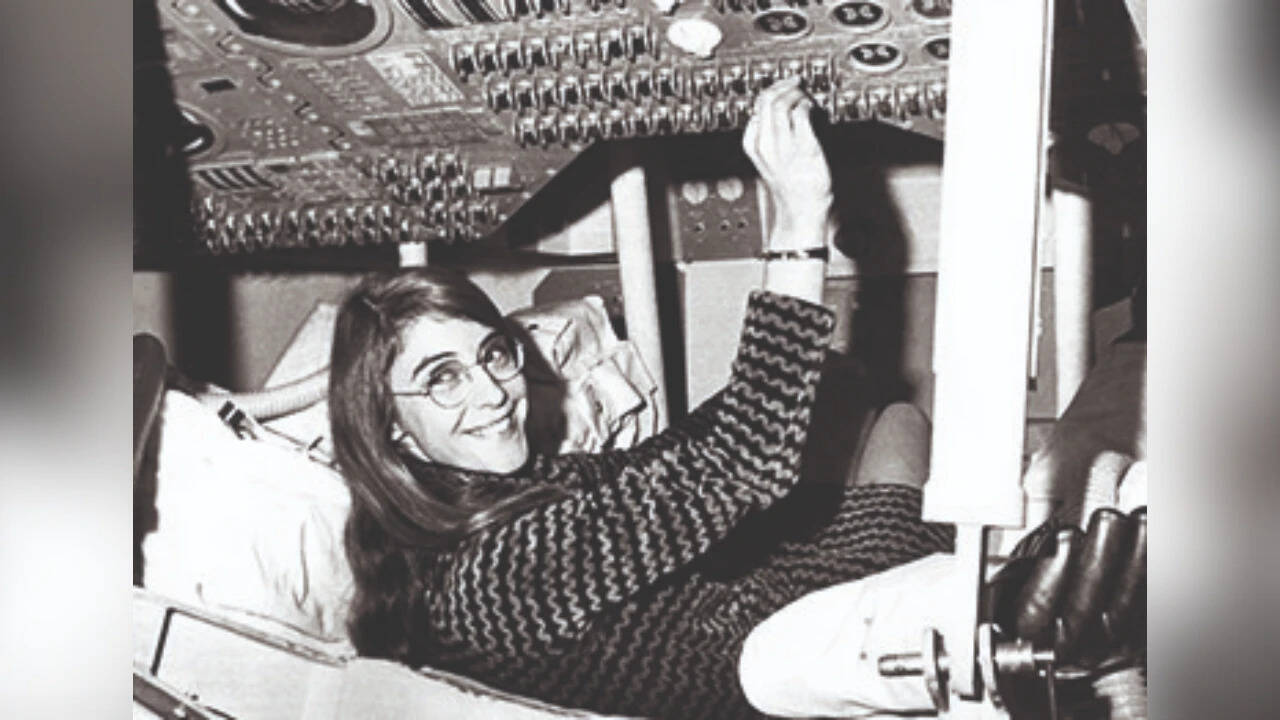
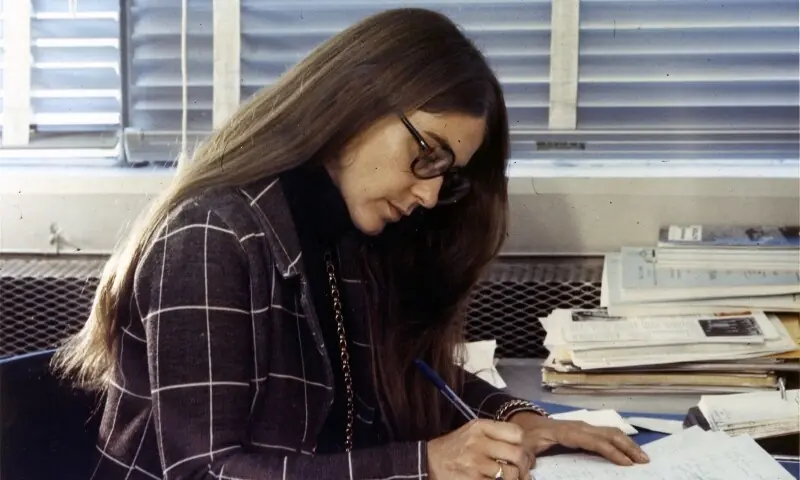
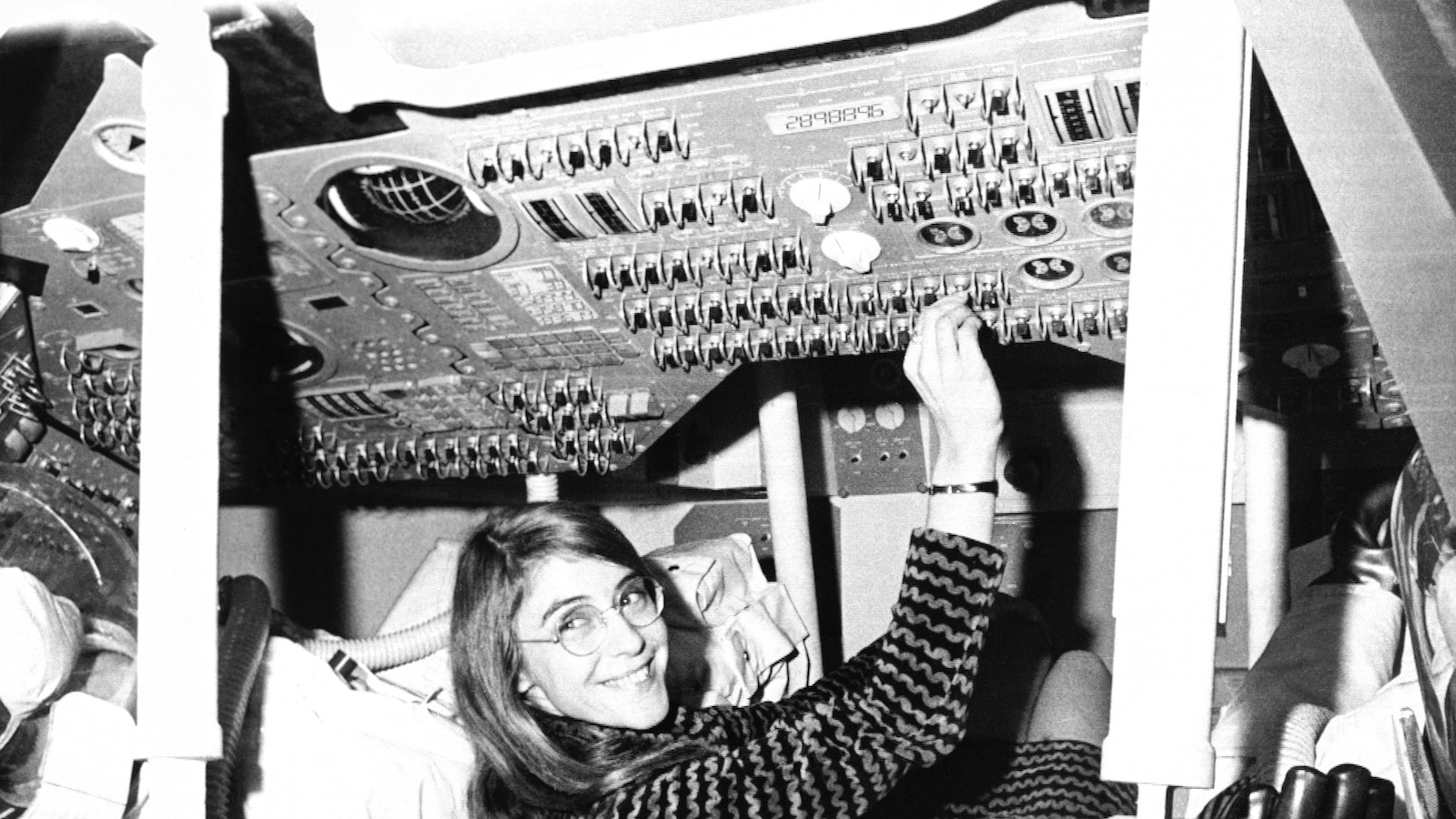
Photo via Times of India

Margaret Hamilton, scientist who worked on Nasa's Apollo programme, dies

Read the original at Times of India ↗
Cite

Margaret Hamilton, scientist who worked on Nasa's Apollo programme, dies. (2026, October 9). Times of India. https://timesofindia.indiatimes.com/world/us/margaret-hamilton-scientist-who-worked-on-nasas-apollo-programme-dies/articleshow/134803936.cms

Dated when The Aporia collected the article, usually within hours of publication. Check the original for its exact date and byline.

Times of India · collected 2026-10-09 · by Agencies

Quick Summary

Margaret Hamilton, a pioneering scientist who led the development of the computer system for NASA's Apollo lunar program, passed away at age 90 on September 30, according to MIT, her former employer. At MIT from 1959 until the mid-1970s, Hamilton was instrumental in developing software that made the Apollo missions possible, including creating robust onboard systems that helped ensure the safe landing of Apollo 11 by overriding a faulty script three minutes before touchdown.
Written by AI on 2026-10-09, from this article's own text only (the story summary below draws on all the coverage).

AI analysis

Story summary

Margaret Hamilton, a pioneering computer scientist who developed critical software for NASA's Apollo program, died at age 90 on September 30. Born in Indiana in 1936, she studied mathematics and later joined MIT where she became the first programmer hired by NASA for the Apollo project in 1965. Her work was crucial during the historic moon landing of Apollo 11 in 1969, particularly when her software successfully managed hardware issues, ensuring the mission's success. Hamilton’s contributions made her a symbol of women in technology and were celebrated widely posthumously by NASA and MIT, who recognized her as a trailblazer in an era before "software engineering" was even a common term.

Written for “Margaret Hamilton Dies” on 2026-11-02, grounded in this article and the 5 other(s) covering the same event.

Story

📰 Margaret Hamilton Dies
Science · 6 article(s) covering the same event. Compare every outlet's account →

Compared with similar articles

This article reads unscored and hedges 6% of its claims. Each row says how that neighbour differs.
Dawn
Hedges 1 of 21 claims Outlet record 72/100
Toronto Star
Hedges 3 of 26 claims Outlet record 64/100
ABC News (US)
Hedges 3 of 27 claims Outlet record 70/100
BBC News
Hedges 3 of 12 claims Outlet record 68/100
The Guardian
Hedges 2 of 15 claims Outlet record 66/100
How this article was measured signals, leaning charts, publisher record, byline, topics and claims

Signals How these are calculated →

Claims extracted
16
sentences that state something as happening or true
Uncertain
6%
1 of 16 hedged ("reportedly", "may", "according to")
Leaning
not political
takes no side on a contested political question
Publisher signals
59/100
Times of India's corrections and hedging, across everything collected from it. Not a measure of accuracy.
Outlets on this story
6
Science
Same framing elsewhere
1
articles that frame the event the way this one does
Analyzed 2026-10-09 · how these are computed

How this is being covered How these are calculated →

Article leaning vs. publisher reliability
Source leaning vs. consistency

Publisher

Times of India · 3890 article(s) · 2 correction(s) detected
Running correction rate · 2 correction(s)

Who wrote this

No reporter is named on this article, beyond the feed's “Agencies”.

Topics

American Apollo MIT Nasa the Massachusetts Institute of Technology

Subjects

Hamilton PERSON · 8× MIT ORG · 4× Nasa ORG · 4× Margaret Hamilton PERSON · 2× American NORP · 1× Apollo Program ORG · 1× Olivier de Weck PERSON · 1× de Weck PERSON · 1× the Massachusetts Institute of Technology ORG · 1× the Soviet Union GPE · 1×

Narrative

"She was a software engineer at a time when that field was in its infancy, and she not only developed advanced code herself but also led a team in using that nascent technology to develop one of the most complex systems humanity had ever achieved," de Weck added.
framing: assertive · carried by 1 article(s) · first seen 2026-10-09
🔮 "To say Margaret Hamilton was a pioneer - to say she was ahead of her time - would be an understatement," said Olivier de Weck, the Apollo Program Professor and interim head of the MIT department of aeronautics and astronautics.
2026-10-09 · Times of India
Margaret Hamilton, scientist who worked on Nasa's Apollo programme, dies · assertive framing

Claims (16 extracted, 1 hedged)

American scientist Margaret Hamilton, who led development of the computer system used by Nasa's Apollo lunar program, has died at the age of 90, her former employer said Wednesday. asserted
employer → lead → 90
In a statement, the Massachusetts Institute of Technology called Hamilton, who taught at the university from 1959 to the mid-1970s, a "computing pioneer" and said she died on Sept 30. asserted
she → call → Sept
"To say Margaret Hamilton was a pioneer - to say she was ahead of her time - would be an understatement," said Olivier de Weck, the Apollo Program Professor and interim head of the MIT department of aeronautics and astronautics. asserted
Weck → say → aeronautics
"She was a software engineer at a time when that field was in its infancy, and she not only developed advanced code herself but also led a team in using that nascent technology to develop one of the most complex systems humanity had ever achieved," de Weck added. asserted
Weck → develop → systems
The famed Apollo programme allowed US to beat the Soviet Union in the race to become the first humans to land on the Moon. asserted
US → allow → Moon
Nasa chief Jared Isaacman paid tribute to Hamilton on X, calling her "a pioneer whose work helped make Apollo and humanity's first journeys to the moon possible. asserted
Apollo → pay → moon
Born in Indiana in 1936, Hamilton studied mathematics before moving to Boston, Massachusetts with her husband in 1959. asserted
Hamilton → bear → 1959
She found employment at MIT, working in meteorology before she joined a lab in 1965 that was seeking people to develop software to "send a man to the Moon." asserted
that → find → Moon
Hamilton "was hired as the first programmer for the Apollo project at MIT, as well as the first female programmer in the project," the university said. asserted
university → hire → project
"By 1968, she was assistant director in charge of (Apollo's) Command and Service Module team, and more than 400 people were working on Apollo's software," MIT said. asserted
MIT → work → software
Hamilton was credited with making critical onboard systems more robust and accident-resistant. asserted
systems → credit → ?
Her software intervened approximately three minutes before the Eagle lander of the Apollo 11 mission touched down on the Moon, overriding a faulty script and ensuring the mission could safely continue, according to Nasa. uncertain
mission → intervene → Nasa
Jerry Wohletz, CEO of the Draper Laboratory - which was spun out of the MIT Instrumentation Lab - said Hamilton left "an indelible mark" on the company. asserted
Hamilton → spin → company
"Through her leadership and contributions to the development of the onboard flight software for Nasa's Apollo Guidance Computer, she helped ensure that Apollo astronauts landed safely on the lunar surface and safely returned home," he said. asserted
he → ensure → surface
Hamilton was awarded the Presidential Medal of Freedom by former president Barack Obama in 2016 for her achievements. asserted
Hamilton → award → achievements
Hamilton went on to publish more than 130 papers and started her own software companies Higher Order Software and Hamilton Technologies. asserted
Hamilton → go → companies

💬Give feedback
🕘History 🎫Support