Photo via Daily Mail

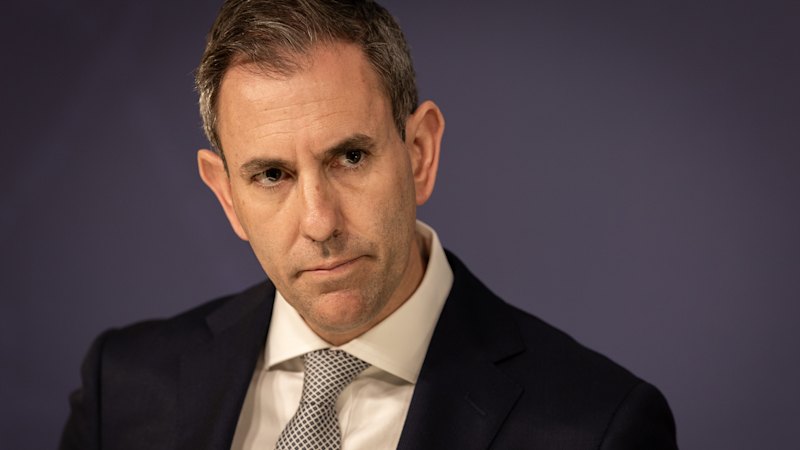
Albo celebrating getting rid of card surcharges with a cutesy video. Now the law of unintended consequences (and pure incompetence) has bitten him and Jim Chalmers on the bum: PETER VAN ONSELEN

Read the original at Daily Mail ↗
Cite

Onselen, P. v. (2026, October 9). Albo celebrating getting rid of card surcharges with a cutesy video. Now the law of unintended consequences (and pure incompetence) has bitten him and Jim Chalmers on the bum: PETER VAN ONSELEN. Daily Mail. https://www.dailymail.com/news/article-16195007/Albo-celebrating-getting-rid-card-surcharges-cutesy-video-law-unintended-consequences-pure-incompetence-bitten-Jim-Chalmers-bum-PETER-VAN-ONSELEN.html?ns_mchannel=rss&ns_campaign=1490&ito=1490

Dated when The Aporia collected the article, usually within hours of publication. Check the original for its exact date and byline.

Daily Mail · collected 2026-10-09 · by Peter van Onselen

Quick Summary

Columnist Peter Van Onselen criticizes the Australian Labor government for its handling of credit card surcharge policies affecting tax payments. The Australian Tax Office planned to stop accepting credit cards for tax payments from December 1, causing a cash flow issue for small businesses that rely on these payment methods. Despite Labor's previous support for banning credit card surcharges, they now claim the ATO’s decision is independent of their influence. Van Onselen argues that this situation was predictable and highlights the government's lack of business experience and preparedness in addressing such issues.
Written by AI on 2026-10-09, from this article's own text only (the story summary below draws on all the coverage).

AI analysis

Story summary

Treasurer Jim Chalmers delayed the Australian Taxation Office's (ATO) plan to ban credit card payments for tax bills, originally set to take effect on November 30. This decision came after significant backlash from small businesses and opposition parties. The ATO had argued that continuing to accept credit cards would cost taxpayers about $200 million annually due to fees associated with merchant services. Chalmers announced additional funding to support a year-long transition period, pushing back the ban until June 30 of the following year. This move aims to allow more consultation and better engagement with small businesses impacted by the change.

Written for “ATO Credit Card Ban Delayed” on 2026-10-31, grounded in this article and the 6 other(s) covering the same event.

Story

📰 ATO Credit Card Ban Delayed
Economy/Business · 7 article(s) covering the same event. Compare every outlet's account →

Compared with similar articles

This article reads unscored and hedges 6% of its claims. Each row says how that neighbour differs.
The Sydney Morning Herald
⚖️ Leans left Hedges 6 of 26 claims Outlet record 61/100
“Article A discusses a ban on card surcharges affecting rent payments through a major platform, while Article B comments on the broader policy and its unintended consequences for tax payments.”
The Sydney Morning Herald
Hedges 0 of 34 claims Outlet record 61/100
ABC News (AU)
Hedges 0 of 20 claims Outlet record 68/100
The Guardian
⚖️ Leans left Hedges 0 of 14 claims Outlet record 66/100
Daily Mail
Hedges 1 of 22 claims Outlet record 68/100
The Sydney Morning Herald
⚖️ Leans left Hedges 3 of 22 claims Outlet record 61/100
“While both articles discuss similar issues related to government announcements and credit/debit card surcharges, they do not describe the exact same specific incident or occurrence.”
The Sydney Morning Herald
Hedges 2 of 21 claims Outlet record 61/100
The Sydney Morning Herald
Hedges 9 of 95 claims Outlet record 61/100
“While both articles discuss the removal of credit card fees, Article A focuses on organizations' responses to the fee changes and their impact, while Article B comments on the broader policy implications and unexpected consequences from a political perspective.”
ABC News (AU)
Hedges 0 of 18 claims Outlet record 68/100
“Article A discusses Labor's concerns about the ATO's decision to stop accepting credit card payments, while Article B critiques the consequences of this decision and its impact on small business owners.”
The Sydney Morning Herald
Hedges 2 of 24 claims Outlet record 61/100
“The articles discuss different aspects and consequences related to Labor's policies, not a single specific incident.”
How this article was measured signals, leaning charts, publisher record, byline, topics and claims

Signals How these are calculated →

Claims extracted
34
sentences that state something as happening or true
Uncertain
6%
2 of 34 hedged ("reportedly", "may", "according to")
Leaning
withheld
no quote in the article backed the model's score
Publisher signals
68/100
Daily Mail's corrections and hedging, across everything collected from it. Not a measure of accuracy.
Outlets on this story
7
Economy/Business
Same framing elsewhere
1
articles that frame the event the way this one does
Analyzed 2026-10-09 · how these are computed

How this is being covered How these are calculated →

Article leaning vs. publisher reliability
Source leaning vs. consistency

Publisher

Daily Mail · 8501 article(s) · 20 correction(s) detected
Running correction rate · 20 correction(s)

Who wrote this

Peter van Onselen
23 article(s) here · 1 carrying a prediction
🔮 Chalmers can use the excuse of 'international pressures' until he's blue in the face, but Australians facing yet another increase in their mortgage repayments are entitled to ask what he will do to fix the situation.
🔮 Australians would settle for an aged care system that looks after the elderly and an energy project that bears some passing resemblance to its original price tag.
🔮 Winning an election by misleading voters, then doing what you reassured them you wouldn't do is hardly an achievement to gloat about.
🔮 Its embedded metadata named Albanese’s deputy communications director as creator and last editor, although metadata alone cannot conclusively establish authorship. Who knew about the dirt sheet, and contributed to writing it, could go much wider than one senior political staffer.
🔮 The document, obtained by the Daily Mail, attempted to smear Haines by cataloguing her own funding requests for her electorate and asking if she may have had personal connections to recipients of Federal government funding.
🔮 In June 2021, Larissa Waters declared Australians could not have confidence in the government while a minister remained in Cabinet with a rape allegation hanging over him.
🔮 And the uncomfortable truth for a government searching for someone to blame is that getting rid of either one would do precious little to absolve the other of the same fate: 'They're tied at the hip now.'
🔮 Perhaps small businesses should forget navigating government departments and simply ask for Albanese's mobile number? He even supplied the dialogue: 'It is in hand, I agree with what you are saying and I will get it done.' One man.
🔮 Which allows for the possibility that his next chapter could be better than his last.
🔮 Anika Wells' people said they would come back to me about her explanation for a birthday party trip in December 2025.
Also by Peter van Onselen
Nothing else under this byline is closely related to this article, so these are simply their most recent.
All 23 articles by Peter van Onselen →

Topics

ATO Aussies Australians Labor The Australian Tax Office

Subjects

Labor ORG · 10× ATO ORG · 9× Aussies NORP · 1× Australians NORP · 1× Finance ORG · 1× Jim Chalmers PERSON · 1× Jim Chalmers’ PERSON · 1× Katy Gallagher PERSON · 1× The Australian Tax Office ORG · 1× the ‘Albanese Government’s ORG · 1×

Narrative

But that doesn’t change the fact that the ATO’s reaction to Labor’s banning of surcharges should have been entirely predictable, meaning that a competent government would have been ahead of this issue before it became a crisis for businesses. Labor celebrated removing card surcharges as cost of living relief, hoping for a political bump.
framing: assertive · carried by 1 article(s) · first seen 2026-10-09
🔮 If it didn’t pass on the surcharge costs now that Labor has banned them, the ATO would have been forced to absorb a $200 million cost.

Claims (34 extracted, 2 hedged)

Labor keeps announcing help for Australians, then acting surprised when Aussies explain what that ‘help’ is actually costing them. asserted
help → announce → them
The Australian Tax Office had planned to stop accepting credit cards for tax payments from December 1. asserted
Office → plan → December
For a small business owner - the kind Labor ministers love to use as backdrops for press conferences - a credit card can bridge the gap between a customer’s late payment and the taxman’s deadline. asserted
card → love → payment
Remove that option and the tax bill still arrives on time, but the customer’s payment often does not. asserted
payment → remove → time
It’s not rocket science. asserted
It → ’ → ?
Understanding that this sudden issue is a cash flow nightmare for business owners hardly requires an economics degree - not that the Treasurer and Finance minister have one of those between them. asserted
Treasurer → understand → them
But I guess neither has also ever run a business either, so their shock, borne out of ignorance is hardly surprising. asserted
shock → guess → ignorance
Labor’s varied response has been a jumble of support, concern and buck-passing, depending on which minister or MP is being interviewed. asserted
minister → depend → support
One minister backs the decision, another wants it reconsidered. asserted
it → back → decision
It’s a choose your own adventure story leaving businesses wondering where the hell this goes next. asserted
this → ’ → businesses
The ATO uproar should come as little surprise given Jim Chalmers and Katy Gallagher don't have business experience or hold an economics degree between them When the ATO cracks down on tax avoidance, Labor happily claims credit for it doing so. uncertain
it → come → credit
It even boasts of it as the ‘Albanese Government’s corporate tax crackdown’. asserted
It → boast → crackdown
When the tax office withdraws a payment option businesses rely on, however, suddenly its independence is Jim Chalmers’ explanation for the decision - wringing his hands of any responsibility. asserted
independence → withdraw → responsibility
That's convenient, but it’s also ridiculous given that the decision follows a surcharge change Labor championed which put the ATO in the exact position it’s now in. asserted
it → ’ → position
If it didn’t pass on the surcharge costs now that Labor has banned them, the ATO would have been forced to absorb a $200 million cost. asserted
ATO → pass → cost
Labor wasn't prepared to increase the ATO’s budget to offset the hit, so it did what it felt it had to do, leaving businesses in a bind. asserted
it → increase → bind
Labor could have directed it not to do this, of course, but it didn’t. uncertain
it → direct → course
After the backlash, Chalmers suddenly found additional funding to delay the ban. asserted
Chalmers → find → ban
Apparently, the ATO’s independence wasn’t such an obstacle once the political heat became too much to bear. asserted
heat → become → ?
It was a belated intervention that should have come before businesses were thrown into uncertainty. asserted
businesses → come → uncertainty
I don't have much sympathy for the ATO. asserted
I → have → ATO
Its interest charges on outstanding tax bills are punitive to say the least, and well above the inflation rate or any home loan rate banks offer. asserted
banks → say → rate
Frankly, they are taking the piss charging interest at the rate they do as a government agency. asserted
they → take → agency
But that doesn’t change the fact that the ATO’s reaction to Labor’s banning of surcharges should have been entirely predictable, meaning that a competent government would have been ahead of this issue before it became a crisis for businesses. Labor celebrated removing card surcharges as cost of living relief, hoping for a political bump. asserted
Labor → change → bump
Albo filmed a video celebrating how the move was 'saving you money'. asserted
move → film → money
There is a perfectly reasonable case for ending annoying checkout fees, don’t get me wrong. asserted
me → be → fees
But abolishing a surcharge doesn’t abolish the cost of processing the payment. asserted
abolishing → abolish → payment
Lower interchange fees should help, but the Reserve Bank acknowledges that businesses can fold remaining costs into prices, leaving customers paying similar amounts anyway. asserted
businesses → help → amounts
Others, including the ATO and some private schools, for example, have indicated that they will stop accepting credit cards rather than absorb the costs. asserted
they → include → costs
Plenty of other organisations will soon do the same. asserted
Plenty → do → same
So the surcharge disappears, but some prices rise and some payment options disappear with it. asserted
options → disappear → it
Families lose flexibility. asserted
Families → lose → flexibility
Businesses face another cash-flow squeeze. asserted
Businesses → face → squeeze
This is the law of unintended consequences in action in real time, delivered during a cost of living crisis by a government congratulating itself for helping when it’s really not. asserted
it → deliver → itself

💬Give feedback
🕘History 🎫Support