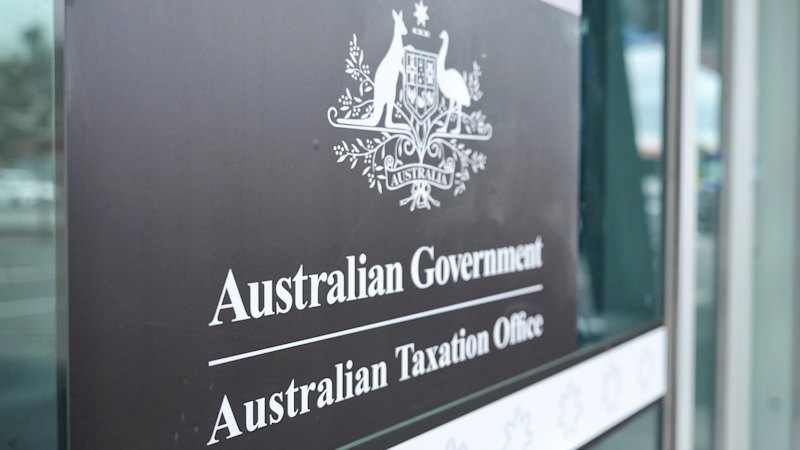
Photo via The Sydney Morning Herald

Surcharge ban will leave some renters in the lurch

Read the original at The Sydney Morning Herald ↗
Cite

Visontay, E. (2026, October 4). Surcharge ban will leave some renters in the lurch. The Sydney Morning Herald. https://www.smh.com.au/business/consumer-affairs/surcharge-ban-will-leave-some-renters-in-the-lurch-20261005-p612oc.html?ref=rss&utm_medium=rss&utm_source=rss_feed

Dated when The Aporia collected the article, usually within hours of publication. Check the original for its exact date and byline.

The Sydney Morning Herald · collected 2026-10-04 · by Elias Visontay

Quick Summary

A new ban on card surcharge fees and changes to interchange fees have led Macquarie Bank’s DEFT platform to stop accepting credit card payments for rent starting Thursday. This affects about 1.2 million monthly rent transactions processed by the platform, potentially leaving tenants who rely on credit cards in difficulty as there are no immediate alternatives. While the Reserve Bank estimates annual savings of $1.6 billion for consumers and a revenue loss of $660 million for banks, small businesses have raised concerns over increased costs to accept card payments. Renters who use rewards points or are financially constrained could face challenges without surcharge options, although some new payment platforms like Pay and Earn aim to offer similar services by charging service fees instead.
Written by AI on 2026-10-04, from this article's own text only (the story summary below draws on all the coverage).

AI analysis

Story summary

Macquarie Bank, one of Australia's largest payments platforms known as DEFT, has stopped accepting credit card payments for rent starting from Thursday in response to new regulations by the Reserve Bank banning surcharge fees on cards. The move affects around 1.2 million monthly rent transactions processed through DEFT. Advocates warn that tenants who rely on credit cards could face difficulties, potentially falling into arrears as there is no immediate alternative offered by Macquarie to guarantee the same payment experience. Additionally, merchants will now have to pay reduced “interchange fees” to banks when accepting card payments, further complicating the transition for both renters and property managers.

Written for “Rent Control Measures” on 2026-11-03, grounded in this article and the 0 other(s) covering the same event.

Story

📰 Rent Control Measures
Economy/Business · 1 article(s) covering the same event.

Compared with similar articles

This article reads leans left and hedges 23% of its claims. Each row says how that neighbour differs.
The Sydney Morning Herald
Hedges 1 of 22 claims Outlet record 61/100
“The articles describe different consequences of a credit card surcharge ban, not the same specific incident.”
The Sydney Morning Herald
Outlet record 61/100
“The articles discuss different aspects of the surcharge ban, with Article A focusing on rental payment platforms and potential renter impacts, while Article B seems to focus on the ATO's stance on credit card surcharges.”
Daily Mail
Hedges 2 of 34 claims Outlet record 69/100
“Article A discusses a ban on card surcharges affecting rent payments through a major platform, while Article B comments on the broader policy and its unintended consequences for tax payments.”
Daily Mail
Hedges 1 of 22 claims Outlet record 69/100
“The articles describe different policies affecting credit card payments in Australia but refer to distinct events - one about rental payment platforms and another about tax office payments.”
South China Morning Post
⚖️ Leans left Hedges 1 of 6 claims Outlet record 63/100
“The articles discuss different aspects of the card surcharge ban: one focuses on cafes and shops, while the other focuses on rental payments.”
Daily Mail
⚖️ Leans left Hedges 3 of 29 claims Outlet record 69/100
“The articles discuss different aspects of the same policy change but describe separate consequences and impacts on businesses and tenants, indicating distinct incidents.”
The Sydney Morning Herald
Hedges 6 of 43 claims Outlet record 61/100
“While both articles discuss the Reserve Bank's ban on card surcharge fees, they describe different aspects and impacts of the ban.”
The Sydney Morning Herald
Hedges 9 of 95 claims Outlet record 61/100
“While both articles discuss the impact of the surcharge ban on rent payments and credit card usage, they describe different aspects and timing of the event.”
ABC News (AU)
⚖️ Leans left Hedges 4 of 29 claims Outlet record 68/100
“While both articles discuss the ban on credit card surcharges, Article A focuses on general customer impacts and savings, whereas Article B specifically addresses how the ban affects renters using a particular payment platform.”
The Sydney Morning Herald
⚖️ Leans left Hedges 0 of 24 claims Outlet record 61/100
“The articles describe different events related to a broader policy change: one focuses on rent payment platforms and their response, while the other discusses business groups' reaction to the ATO's decision regarding credit card payments.”
How this article was measured signals, leaning charts, publisher record, byline, topics and claims

Signals How these are calculated →

Claims extracted
26
sentences that state something as happening or true
Uncertain
23%
6 of 26 hedged ("reportedly", "may", "according to")
Leaning
Leans left
of the writing, not the subject · beta estimate
Publisher signals
61/100
The Sydney Morning Herald's corrections and hedging, across everything collected from it. Not a measure of accuracy.
Outlets on this story
1
Economy/Business
Same framing elsewhere
1
articles that frame the event the way this one does
Analyzed 2026-10-04 · how these are computed

How this is being covered How these are calculated →

Article leaning vs. publisher reliability
Source leaning vs. consistency

Publisher

The Sydney Morning Herald · 5874 article(s) · 15 correction(s) detected
Running correction rate · 15 correction(s)

Who wrote this

Elias Visontay
13 article(s) here · 1 carrying a prediction
🔮 “There is no certainty at this time that this process will result in receipt of a binding proposal, or that any transaction will ultimately be consummated,” the statement said.
🔮 They might not have sirens or carry guns, but when inspectors from the property taskforce come knocking on the doors of real estate agencies, they can be just as intimidating as police.
🔮 Earlier this year, China announced it will require physical buttons for critical controls in new cars sold in the country.
🔮 Australians’ newfound love affair with electric engines may have been the dominant story of the car industry this year – with an EV sold every 100 seconds in the first six months – but the trend has also dramatically shaken up the dynamics of the used vehicle market.
🔮 If the product dripped onto the trouser, that’s where the reaction would occur …
🔮 Shoppers were 84 per cent more likely to want the shoes in the scented room, and willing to pay 10 per cent more.
🔮 The business community is stepping up its calls on the tax office to rethink its abrupt decision to stop accepting credit card payments, warning that entrepreneurs and smaller businesses that need cash flow flexibility will be hit the hardest.
🔮 Tenants who rely on credit cards to pay their rent could soon be forced into arrears, advocates warn, after a major rental payment platform blocked the method of payment in response to a new ban on card surcharge fees.
🔮 Some Australians will likely still encounter card payment surcharges at the checkout despite a ban on the practice coming into effect on Thursday as business lobby groups warn that many smaller shops, especially those run by migrants, are still in the dark on how the new payment rules work.
🔮 “I’m not a fashion-forward guy, I got into this because I’m a football fan, but we’ve stumbled into the fashion space now, and we’ve seen that these customers are willing to spend,” he says.
Also by Elias Visontay
Rip Curl’s owner in takeover talks with US retail giant
2026-11-02 · The Sydney Morning Herald
EV boom zaps second-hand prices for petrol and diesel cars
2026-10-16 · The Sydney Morning Herald
Nothing else under this byline is closely related to this article, so these are simply their most recent.
All 13 articles by Elias Visontay →

Topics

Australia DEFT Macquarie Macquarie Bank the Reserve Bank’s

Subjects

Macquarie ORG · 3× Australia GPE · 1× DEFT ORG · 1× Macquarie Bank ORG · 1× Pay and Earn ORG · 1× Tenants Union ORG · 1× The Reserve Bank ORG · 1× the Australian Taxation Office ORG · 1× the Department of Foreign Affairs and Trade ORG · 1× the Reserve Bank’s ORG · 1×

Narrative

Ahead of the surcharge ban and the Reserve Bank’s broader reforms to Australia’s payments systems that came into effect from Thursday, Macquarie Bank said it would no longer accept cards from the same date on its DEFT platform, one of the nation’s largest payments systems, which processes about 1.2 million rent transactions each month.
framing: mixed · carried by 1 article(s) · first seen 2026-10-04
🔮 Tenants who rely on credit cards to pay their rent could soon be forced into arrears, advocates warn, after a major rental payment platform blocked the method of payment in response to a new ban on card surcharge fees.
2026-10-04 · The Sydney Morning Herald
Surcharge ban will leave some renters in the lurch · mixed framing

Claims (26 extracted, 6 hedged)

Tenants who rely on credit cards to pay their rent could soon be forced into arrears, advocates warn, after a major rental payment platform blocked the method of payment in response to a new ban on card surcharge fees. uncertain
platform → rely → fees
Ahead of the surcharge ban and the Reserve Bank’s broader reforms to Australia’s payments systems that came into effect from Thursday, Macquarie Bank said it would no longer accept cards from the same date on its DEFT platform, one of the nation’s largest payments systems, which processes about 1.2 million rent transactions each month. asserted
which → come → transactions
In announcing an end to accepting card payments, Macquarie conceded there was no alternative for affected customers relying on credit to pay their rent. asserted
Macquarie → announce → rent
“There is no like-for-like solution we can provide that will guarantee the same experience as paying by credit card today,” the bank said. asserted
bank → be → card
The move from Macquarie is one of the many ways banks, businesses and government agencies are changing their processes to respond to the surcharge ban and a parallel lowering of the cap on “interchange fees”, which merchants must pay to a customer’s bank to accept a card transaction. asserted
merchants → change → transaction
Like Macquarie and its DEFT platform, the Australian Taxation Office has moved to stop accepting credit card payments. asserted
Office → move → payments
Across the board, banks have broadly already wound back the generosity of credit card sign-on bonuses and reward points earnings rates, due to the lower cap on fees that have traditionally funded card perks. asserted
that → wind → perks
Associated benefits such as complimentary travel insurance have also been scrapped or scaled back, prompting a warning from the Department of Foreign Affairs and Trade to travellers that free coverage policies they might be relying on may no longer exist. The Reserve Bank estimates the ban will save consumers $1.6 billion annually, and that it will cut banks’ revenue by $660 million a year. uncertain
it → scrap → million
However, small business owners and lobby groups have complained of still having to foot the bill to accept card payments and being forced to increase their menu and product prices accordingly. asserted
owners → complain → prices
While the exact number of tenants who pay their rent by credit card is not known, industry sources said the method had broad appeal to renters who paid by card to boost their reward point earning potential, as well as contract workers without consistent pay cheques and those on a low income struggling to make payments. asserted
who → pay → payments
Appealing to the points earners, some new businesses have emerged touting their abilities to plug the gap in a similar way. asserted
businesses → appeal → way
One new platform, Pay and Earn, allows renters to pay by credit card, which the company then transfers as cash to a managing agent or a landlord’s account. asserted
company → pay → agent
Instead of applying a surcharge to card payments, it charges a “service fee” to use the platform, bypassing the ban. asserted
it → apply → ban
Tenants Union chief executive Leo Patterson Ross said that while he was confident the market would find a way to cater to points-driven tenants, he thought financially distressed tenants were in more danger. asserted
tenants → say → danger
“The people I’d be most concerned about are the people on the edge of hardship,” he said. asserted
he → concern → hardship
Some renters’ incomes “don’t line up nicely” with what landlords or managing agents expect. asserted
landlords → line → what
“If you’re a contractor or have irregular income, you can see an advantage to using a credit card.” asserted
you → ’re → card
Patterson Ross said paying by credit card “provided a flexibility” that some people needed. asserted
people → say → that
“There will definitely be some people who have used cards to pay their rent because it’s better to do that than fall into arrears even if it’s only in the short term…so they can get back on top of things relatively quickly, so the interest on the card doesn’t start racking up,” he said. asserted
he → use → card
“What are they going to do? asserted
they → go → What
At least in the short term, they’re probably going to fall into minor arrears, maybe a week’s worth, which could become a mark on their ledger when they’re next applying for a property if another agent looks closely enough. uncertain
agent → go → property
It could be the difference between (being accepted for) a property or not.” uncertain
It → accept → property
Fengfei Li, a senior finance lecturer at Deakin University, believes the move by Macquarie to stop renters paying by card “illustrates a potential unintended consequence of the surcharge reforms”. asserted
renters → believe → reforms
Li said that while there was no concrete data on the total number of tenants in Australia paying their rent by credit card, renters as a demographic “are more exposed to cash-flow difficulties than mortgage holders”, citing data relied on by the RBA. “Those affected could include renters already under significant financial pressure,” she said. uncertain
she → say → pressure
“For some renters, that could mean losing valuable payment flexibility, particularly if they have relied on a credit card to bridge the gap between rent falling due and income arriving and cannot find a suitable alternative. uncertain
income → mean → alternative
“ The Business Briefing newsletter delivers major stories, exclusive coverage and expert opinion. asserted
newsletter → deliver → stories

💬Give feedback
🕘History 🎫Support