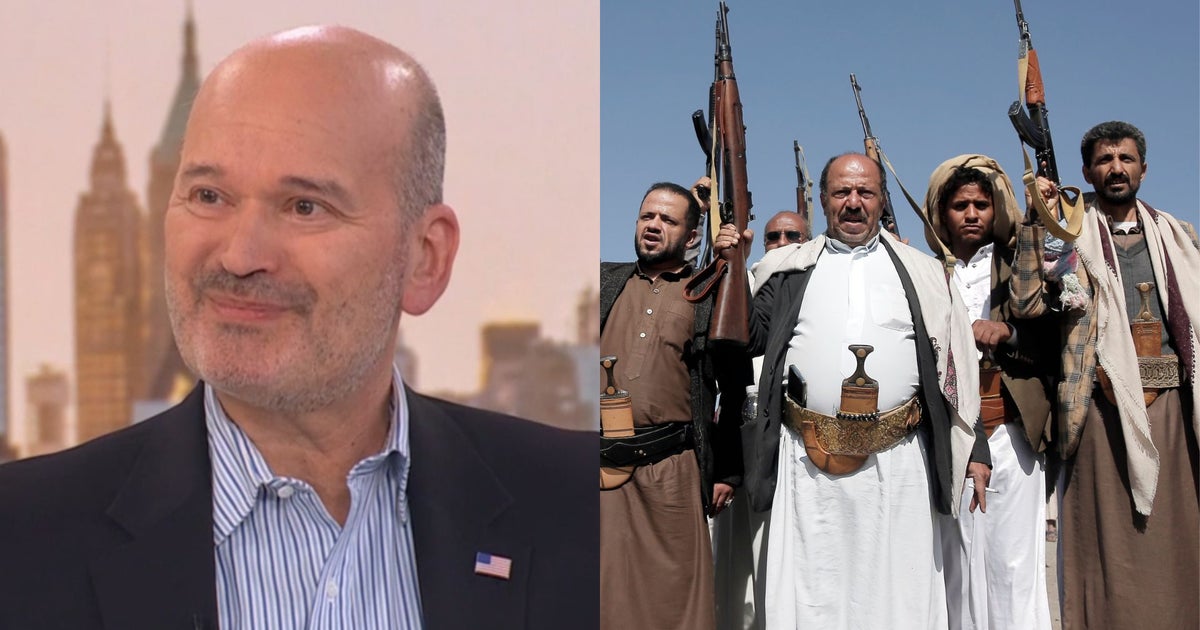
Photo via Fox News

The Houthis aren't somebody else's problem. America can't afford to look away

Read the original at Fox News ↗
Cite

Shihabi, A. (2026, October 9). The Houthis aren't somebody else's problem. America can't afford to look away. Fox News. https://www.foxnews.com/opinion/houthis-arent-somebody-elses-problem-america-cant-afford-look-away

Dated when The Aporia collected the article, usually within hours of publication. Check the original for its exact date and byline.

Fox News · collected 2026-10-09 · by Ali Shihabi

Quick Summary

The article argues against viewing the Houthi conflict in Yemen as separate from broader regional tensions involving Iran, emphasizing that American interests are at stake due to the Houthis' alignment with Tehran. It suggests that while U.S. intelligence and targeting support for Saudi-led forces is already valuable, direct military involvement by the United States could enhance operational effectiveness against time-sensitive targets such as mobile missile launchers and drone facilities. The author advocates for a limited American air power role to complement existing support without escalating into a wider conflict.
Written by AI on 2026-10-09, from this article's own text only (the story summary below draws on all the coverage).

AI analysis

Story summary

Some in Washington view Houthis as a problem for others to handle, given America's existing conflict with Iran and upcoming midterm elections. However, experts argue that Yemen’s war, where Houthis, designated by the U.S. as a foreign terrorist organization backed by Tehran, are fighting against a government supported by Saudi Arabia, is part of the broader regional confrontation. Despite initial setbacks, Yemeni government forces and their Saudi allies have recently expelled Houthis from key areas around the Bab el-Mandeb Strait, suggesting a shift in battlefield momentum that could influence how involved the U.S. decides to be in this conflict.

Written for “Houthis Threat To USA” on 2026-10-30, grounded in this article and the 0 other(s) covering the same event.

Story

📰 Houthis Threat To USA
Politics · 1 article(s) covering the same event.

Compared with similar articles

This article reads leans right and hedges 18% of its claims. Each row says how that neighbour differs.
The Hindu
Hedges 2 of 23 claims Outlet record 60/100
“The articles discuss different aspects of the conflict, with Article A focusing on a military announcement by Yemen's leader and Article B discussing broader strategic implications for the U.S. involving the Houthis.”
National Post
Hedges 2 of 24 claims Outlet record 60/100
“The articles discuss different conflicts involving Iran—one is about the U.S. war with Iran, and the other about the Houthi movement in Yemen.”
ABC News (AU)
Hedges 0 of 26 claims Outlet record 68/100
“Article A describes the announcement of a new military operation, while Article B discusses broader strategic considerations about U.S. involvement with the Houthis.”
Al Jazeera
Hedges 4 of 47 claims Outlet record 60/100
“Article A discusses the general issue of U.S. involvement in Yemen, while Article B reports on Iran offering to facilitate talks between Saudi Arabia and the Houthis.”
CBS News
Hedges 0 of 2 claims Outlet record 66/100
“The articles discuss different aspects of the Houthi conflict and do not describe the same specific incident or time.”
Al Jazeera
Hedges 0 of 2 claims Outlet record 60/100
“Article A discusses broader political and strategic considerations regarding the Houthis and Iran, while Article B reports on specific attacks by the Houthis that led to the suspension of airport operations in Saudi Arabia.”
New York Post
⚖️ Leans right Hedges 1 of 29 claims Outlet record 66/100
“While both articles discuss the Houthis and Iran's involvement in Yemen, they do not describe the same specific incident occurring at the same time.”
The Independent
⚖️ Leans strongly right further right than this Hedges 4 of 53 claims Outlet record 59/100
“Article A discusses broader strategic concerns about the Houthis without specifying a particular incident, while Article B reports on a specific military offensive and attacks by the Houthis.”
South China Morning Post
Hedges 1 of 5 claims Outlet record 64/100
“The articles discuss different aspects of the Houthi conflict and U.S. involvement but do not describe the same specific incident.”
CBS News
Hedges 0 of 2 claims Outlet record 66/100
“The articles discuss related topics but refer to different timeframes and contexts, with Article A addressing general attitudes towards the Houthis and Article B focusing on a specific warning from the Houthis.”
How this article was measured signals, leaning charts, publisher record, byline, topics and claims

Signals How these are calculated →

Claims extracted
62
sentences that state something as happening or true
Uncertain
18%
11 of 62 hedged ("reportedly", "may", "according to")
Leaning
Leans right
of the writing, not the subject · beta estimate
Publisher signals
70/100
Fox News's corrections and hedging, across everything collected from it. Not a measure of accuracy.
Outlets on this story
1
Politics
Same framing elsewhere
1
articles that frame the event the way this one does
Analyzed 2026-10-09 · how these are computed

How this is being covered How these are calculated →

Article leaning vs. publisher reliability
Source leaning vs. consistency

Publisher

Fox News · 5977 article(s) · 10 correction(s) detected
Running correction rate · 10 correction(s)

Who wrote this

Ali Shihabi
1 article(s) here · 1 carrying a prediction
🔮 Some in Washington would like to believe the Houthis are somebody else’s problem.
The only article under this byline in the corpus.

Topics

American Houthis Saudi Washington Yemen

Subjects

American NORP · 9× Yemen GPE · 6× Houthis NORP · 5× Saudi NORP · 4× Saudi Arabia GPE · 4× Washington GPE · 4× The United States GPE · 3× Yemeni NORP · 3× Iran GPE · 2× U.S. GPE · 2×

Narrative

The Houthis retained the port, preserved their economic and military lifeline and used the following years to consolidate their rule, strengthen their relationship with Iran, and acquire increasingly sophisticated missiles and drones.
framing: assertive · carried by 1 article(s) · first seen 2026-10-09
🔮 Some in Washington would like to believe the Houthis are somebody else’s problem.

Claims (62 extracted, 11 hedged)

Some in Washington would like to believe the Houthis are somebody else’s problem. asserted
Houthis → like → Washington
It is easy to understand why. asserted
It → understand → ?
America is already deeply engaged in the war with Iran, and there is little appetite for widening the battlefield with the midterm elections approaching. asserted
elections → be → battlefield
The Houthis have also cynically given Washington a reason to limit its involvement by signaling that American shipping will not be targeted. asserted
shipping → give → involvement
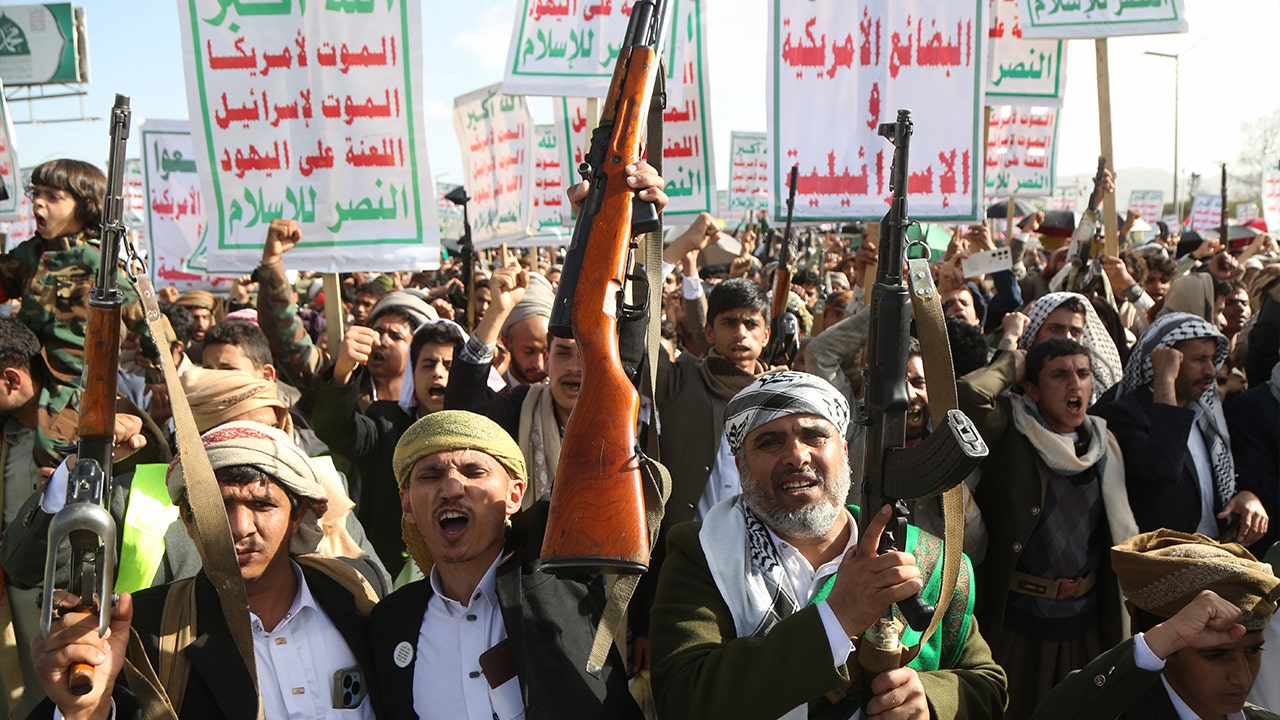
The Houthis—a U.S.-designated foreign terrorist organization aligned with Iran and armed and supported by Tehran—are waging a campaign against Yemen’s Saudi-backed government that forms part of the same regional confrontation. asserted
that → align → confrontation
The good news is that the war is beginning to move in the right direction for the Yemeni government, although the battle will be challenging and, like all battles, will have its ups and downs. asserted
battle → begin → ups
Government forces, supported by Saudi air power, have expelled the Houthis from some strategically important areas around the Bab el-Mandeb and are demonstrating their capacity to operate effectively. asserted
forces → support → capacity
These gains remain vulnerable, but the battlefield momentum is encouraging. asserted
momentum → remain → ?
It also changes the calculation about American involvement. asserted
It → change → involvement
The United States is already providing Saudi Arabia with intelligence and targeting support while stopping short of direct strikes. asserted
States → provide → strikes
American satellites and other surveillance systems can help locate missile batteries, drone facilities, command centers and mobile launchers. asserted
satellites → help → batteries
The case for American support should not rest on the claim that Saudi Arabia and Yemen cannot succeed without it. uncertain
Arabia → rest → it
It should rest on the fact that the United States has a clear interest in helping them succeed. asserted
them → rest → interest
Direct American air power could make that intelligence considerably more effective. uncertain
intelligence → make → ?
U.S. aircraft can operate directly within American intelligence, surveillance and targeting networks, allowing information gathered by satellites and other sensors to move rapidly through the sensor-to-shooter chain. asserted
information → operate → chain
Saudi aircraft can also receive sophisticated U.S. and allied targeting information, including through interoperable systems, but intelligence shared with a partner may require additional dissemination, release and command steps before reaching the aircraft assigned to strike. uncertain
intelligence → receive → aircraft
Even a short delay matters when a mobile missile launcher can fire, relocate and disappear within minutes. asserted
launcher → matter → minutes
Placing American aircraft directly inside this sensor-to-shooter loop could therefore shorten the time between detecting and attacking a target. uncertain
Placing → place → target
A limited American role could concentrate on mobile missile launchers, drone facilities and other time-sensitive assets rather than expand into a large or open-ended campaign. uncertain
role → concentrate → campaign
It would allow intelligence Washington is already collecting and sharing to be exploited with greater speed and effect. asserted
Washington → allow → speed
Saudi Arabia has the aircraft, intelligence capabilities and resources necessary to support the Yemeni government, while Yemeni troops are proving capable of conducting the ground fighting themselves. asserted
troops → have → fighting
Washington, however, could make the campaign faster and more effective without assuming responsibility for the war. uncertain
campaign → make → war
This distinction matters. asserted
distinction → matter → ?
The case for American support should not rest on the claim that Saudi Arabia and Yemen cannot succeed without it. uncertain
Arabia → rest → it
It should rest on the fact that the United States has a clear interest in helping them succeed. asserted
them → rest → interest
Geography makes Yemen difficult to ignore. asserted
Yemen → make → ?
The Houthis have strengthened their position along the Red Sea coast and around the Bab el-Mandeb, one of the world’s most important maritime chokepoints. asserted
Houthis → strengthen → chokepoints
Their ability to threaten Saudi shipping has consequences far beyond Yemen. asserted
ability → threaten → Yemen
Roughly 22 percent of global seaborne container trade passes through the Red Sea. asserted
percent → pass → Sea
When the route is disrupted, ships must travel around Africa, lengthening journeys and raising freight and insurance costs. asserted
ships → disrupt → costs
The Houthis are building ties with al-Shabaab in Somalia, al Qaeda’s wealthy East African affiliate. asserted
Houthis → build → Somalia
American officials have warned of weapons transfers, training in drones and explosives, and tactical coordination between the groups. asserted
officials → warn → groups
This raises the prospect of a militant network operating on both sides of the Gulf of Aden. asserted
This → raise → Aden
Its targets may be Saudi Arabia and Yemen’s government today, but there is no reason to assume that its priorities will remain unchanged. uncertain
priorities → be → ?
Energy security makes the issue even more consequential. asserted
issue → make → ?
Saudi Arabia exports oil through the Strait of Hormuz, but its East-West Pipeline also carries crude across the kingdom to Yanbu on the Red Sea. asserted
Pipeline → export → Sea
The pipeline provides an alternative route when Hormuz becomes dangerous. asserted
Hormuz → provide → route
Its strategic value declines sharply if the Houthis can threaten the Red Sea simultaneously. asserted
Houthis → decline → Sea
Iran and its allies could therefore apply pressure at two critical chokepoints: Tehran around Hormuz and the Houthis around the Bab el-Mandeb. uncertain
Iran → apply → Mandeb
China depends heavily on Gulf energy flows, Europe relies on the Red Sea and Suez trading system, and American energy production does not insulate American consumers from global oil prices. asserted
production → depend → prices
…and 22 more, not listed.

💬Give feedback
🕘History 🎫Support