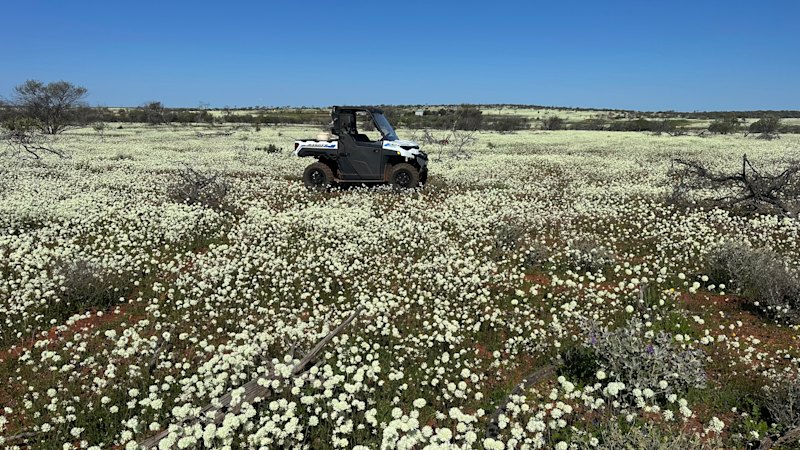
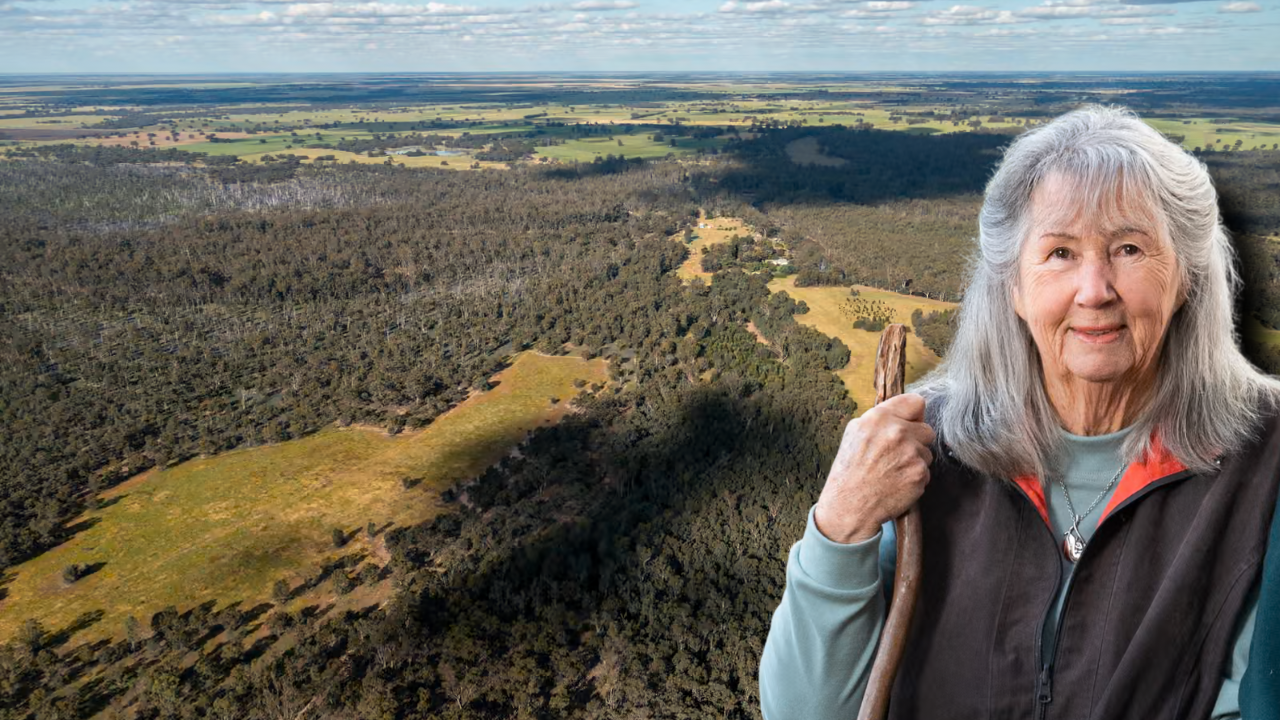
Photo via The Sydney Morning Herald

Farmers fight to keep WA’s iconic wildflowers in bloom

Read the original at The Sydney Morning Herald ↗
Cite

Thompson, H. (2026, October 9). Farmers fight to keep WA’s iconic wildflowers in bloom. The Sydney Morning Herald. https://www.smh.com.au/national/western-australia/farmers-fight-to-keep-wa-s-iconic-wildflowers-in-bloom-20261010-p6105b.html?ref=rss&utm_medium=rss&utm_source=rss_feed

Dated when The Aporia collected the article, usually within hours of publication. Check the original for its exact date and byline.

The Sydney Morning Herald · collected 2026-10-09 · by Holly Thompson

Quick Summary

Jeff Johnson, a farmer near Geraldton, Western Australia, transformed his degraded 1750-acre farm using deep ripping techniques to improve water infiltration and soil health. This method allowed native plants like spring everlastings and mulla mulla to return. Eddy Wajon in the Great Southern region has also restored cleared farmland into thriving habitat with over 95% of revegetation surviving, supporting a diverse range of wildlife including 600 plant species, 260 moth species, reptiles, birds, and insects. Both farmers advocate for policy changes to better manage land use and conservation practices in Australia.
Written by AI on 2026-10-09, from this article's own text only (the story summary below draws on all the coverage).

AI analysis

Story summary

In 2017, Jeff Johnson, a farmer near Geraldton in Western Australia, had a critical realization about his farm's sustainability after heavy rainfall. The land, which received only around 335 millimeters of rain annually and was already degraded from overgrazing and poor water management, could not retain enough moisture to support life. Johnson decided to implement the 'rip and tine method' using machinery to dig trenches in the soil to improve water retention and plant growth. His 1750-acre property saw a dramatic transformation, with wildflowers and native plants thriving as a result of improved land management practices. This effort aligns with broader concerns about protecting Western Australia's iconic but underrepresented wildflower landscapes from further degradation due to farming practices.

Written for “Wildflower Conservation Efforts WA” on 2026-11-05, grounded in this article and the 0 other(s) covering the same event.

Story

📰 Wildflower Conservation Efforts WA
Environment · 1 article(s) covering the same event.

Compared with similar articles

This article reads leans left and hedges 7% of its claims. Each row says how that neighbour differs.
Times of India
Hedges 0 of 33 claims Outlet record 59/100
“The articles describe two different individuals undertaking land restoration projects in Western Australia but do not refer to the same specific incident or time.”
How this article was measured signals, leaning charts, publisher record, byline, topics and claims

Signals How these are calculated →

Claims extracted
45
sentences that state something as happening or true
Uncertain
7%
3 of 45 hedged ("reportedly", "may", "according to")
Leaning
Leans left
of the writing, not the subject · beta estimate
Publisher signals
61/100
The Sydney Morning Herald's corrections and hedging, across everything collected from it. Not a measure of accuracy.
Outlets on this story
1
Environment
Same framing elsewhere
1
articles that frame the event the way this one does
Analyzed 2026-10-09 · how these are computed

How this is being covered How these are calculated →

Article leaning vs. publisher reliability
Source leaning vs. consistency

Publisher

The Sydney Morning Herald · 6202 article(s) · 15 correction(s) detected
Running correction rate · 15 correction(s)

Who wrote this

Holly Thompson
18 article(s) here · 1 carrying a prediction
🔮 That announcement will add about $100 a month to repayments on a 30-year $600,000 mortgage.
🔮 They are undeserving casualties, and I will carry this regret for the rest of my life.
🔮 “While it’s important to note that the current proposal is limited to exploration and appraisal activities only … that doesn’t in any way diminish the serious concerns about the impacts of exploration drilling itself and concerns about the way in which an exploration approval could lead to a fracking operation in the Kimberley,” Wilson said.
🔮 “The letter outlined how the EPA was so concerned about the proposal, it bought in independent experts to peer-review Woodside’s claims dismissing potential impact on threatened species, including green sea turtles and pygmy blue whales,” Roberts said. “The EPA also expressed deep concerns about the risk of oil spills from the Browse gas to North West Shelf proposal, saying these events could have irreversible, catastrophic consequences for Scott Reef, Rowley Shoals and the Kimberley Coast.
🔮 The first story alleged Poland coached a contact on how to engineer a land swap deal with the WA government that would see “toxic soil” from a Metronet project dumped and buried in exchange for a sand mining operation.
🔮 He said managing the condition could be hard, but he struggled more while sitting in class at Capel Primary School.
🔮 Whitby was one of several WA politicians expressing dismay and shock after Victorian Independent MP Helen Haines was hit by a car on Monday afternoon in what appears to be a targeted attack.
🔮 “Especially when I was younger, I was really looking at other young people my age and seeing them hanging out with their friends or travelling or socialising, and I couldn’t explain to them that I do want to join you guys, but I have responsibilities that I have to go home to,” she said.
🔮 A leader of one of the state’s major universities says the institution will “vigorously oppose” a planned merger of Curtin, Murdoch and the University of WA after the Cook government announced it will progress a business case to create a mega-university.
🔮 “The land won’t be able to support farming because nothing will grow, and all those native plants will be gone too.
Also by Holly Thompson
Nothing else under this byline is closely related to this article, so these are simply their most recent.
All 18 articles by Holly Thompson →

Topics

Boxwood Hill Geraldton

Subjects

Johnson PERSON · 4× Wajon PERSON · 4× Australia GPE · 1× Boxwood Hill GPE · 1× Donna PERSON · 1× Eddy Wajon PERSON · 1× Geraldton GPE · 1× Jeff Johnson PERSON · 1× Mullewa PERSON · 1×

Narrative

The contrast between WA’s wildflower season and land protection The state’s 2026 wildflower season was described as the “best in recent memory”, drawing in plenty of tourists to view carpets of everlastings, orchids, and rare native species. But there is a contrast – the landscapes behind the internationally renowned spectacle remain critically underrepresented in Australia’s protected area network.
framing: assertive · carried by 1 article(s) · first seen 2026-10-09
🔮 “The land won’t be able to support farming because nothing will grow, and all those native plants will be gone too.
2026-10-09 · The Sydney Morning Herald
Farmers fight to keep WA’s iconic wildflowers in bloom · assertive framing

Claims (45 extracted, 3 hedged)

On a goat and cattle farm inland of Geraldton, a region that gets around 335 millimetres of rain annually, the grounds are awash with colour and life. asserted
grounds → get → colour
When Jeff Johnson first purchased the Mullewa farm Tallering Views, in the state’s Mid West, the 1750-acre property was already degraded from overgrazing and poor water management. asserted
property → purchase → overgrazing
Johnson’s own 20 cows and 400 goats continued to strip the land further. asserted
cows → continue → land
After a particularly heavy rainfall in 2017, he said he had a lightbulb moment. asserted
he → say → moment
“Out of 25 millimetres of rain … about five millimetres of that water is sitting on the surface on the crust, the rest of it’s down the river and in the ocean, and everything’s dying,” he said. asserted
he → sit → ocean
“I stood back in the shed and said, ‘holy crap, if I don’t do something about trying to catch this water and getting all the plants to grow again, we’ll be in a desert’, so it really changed my mind. asserted
it → stand → mind
Johnson began researching methods to revegetate the land and discovered deep ripping or the ‘rip and tine method’. asserted
Johnson → begin → ripping
Machinery is used to dig long trenches in the soil, breaking the harder layer of compressed earth beneath the topsoil to improve water infiltration, boost nutrient availability and allow plant roots to grow deeper. asserted
roots → use → availability
It didn’t take long for Johnson to notice a change. asserted
Johnson → take → change
“All the natural plants that normally grow here for the last 300 years all started springing up where I got these rip marks,” he said. “We even had earthworms coming out … in this dry, arid station country it was just mind-blowing because they’re the dudes that make it all happen under the ground.” asserted
it → grow → ground
He is now monitoring the return of each native species, including spring everlastings and mulla mulla. asserted
He → monitor → everlastings
But Johnson said he had concerns for the future. asserted
he → say → future
“The way we’re managing land now with the chemicals and fertilisers, and the station country that overstock, we’ve got about 30 harvests to go and we’re in the shit big time,” he said. asserted
he → manage → shit
“The land won’t be able to support farming because nothing will grow, and all those native plants will be gone too. asserted
plants → support → farming
“It needs a whole policy change. asserted
It → need → change
The state government doesn’t know how to do it. asserted
government → know → it
It’s people like myself that are prepared to change. asserted
that → ’ → myself
We are the ones that have to put this information out.” asserted
that → have → information
Eddy Wajon agrees. asserted
Wajon → agree → ?
In 2002 he became the first private purchaser in the Gondwana Link project with his wife Donna – a block in Boxwood Hill covering 572 hectares and another smaller block spanning 46 hectares in the state’s Great Southern region. asserted
he → become → region
The project is a large-scale conservation effort to restore and reconnect a 1000-kilometre swathe of fragmented habitat. asserted
project → restore → habitat
Wajon and his wife have now restored the cleared farmland they purchased into thriving habitat – in once abandoned paddocks, 95 per cent of revegetation has survived. asserted
cent → restore → revegetation
“We could see the land was rapidly being cleared, and we stepped in,” Wajon said. uncertain
Wajon → see → ?
“When we started we saw maybe one mallee fowl in five years, now we can guarantee you will see one.” asserted
you → start → one
Wajon said they had also seen six different orchard species sprout – varieties they had not deliberately planted – at the end of 2025. asserted
they → say → 2025
This year the region’s rainfall has been minimal, with around 200 millimetres falling compared to the average of 400 millimetres. But the early drier conditions also resulted in carpets of everlastings which usually don’t bloom until December. asserted
which → fall → December
Wajon said plenty of visitors had come along to photograph the spectacle. asserted
plenty → say → spectacle
The contrast between WA’s wildflower season and land protection The state’s 2026 wildflower season was described as the “best in recent memory”, drawing in plenty of tourists to view carpets of everlastings, orchids, and rare native species. But there is a contrast – the landscapes behind the internationally renowned spectacle remain critically underrepresented in Australia’s protected area network. asserted
landscapes → describe → network
While the South West is recognised globally as a biodiversity hotspot with exceptional flowering-plant diversity, parts of the Wheatbelt and Great Southern, have as little as 4 per cent of their area under formal protection. asserted
parts → recognise → protection
That is despite those regions being part of the Southwest Australian global biodiversity hotspot – one of 36 places on earth richest in threatened endemic species. asserted
regions → threaten → species
Wajon said it was “distressing” that efforts to protect and revegetate more of the land, or to keep areas including roadsides abundant with native species, had so far recorded limited success. asserted
efforts → say → success
The upcoming UN Biodiversity Conference (COP17), held across the end of October, will also test Australia’s progress toward its target of conserving 30 per cent of land by 2030. asserted
Conference → hold → 2030
Wajon said the state was no where close to that number. asserted
state → say → number
He said News South Wales and Victoria had schemes to compensate and incentivise conservation, and that WA needed something similar. asserted
WA → say → something
“What’s come from the government is a blank wall – we are going backwards not forwards,” he said. asserted
he → come → government
“We could do twice as much as we are now to revegetate the land with more support. uncertain
we → do → support
“As a state we need to get serious about protecting the environment. asserted
we → need → environment
University of Western Australia Professor of Biodiversity Stephen Hopper also agreed that large parts of regional WA are on a “very poor trajectory” towards the UN’s 30 per cent goal. asserted
parts → agree → goal
He said the “uplands” – including granite outcrops, lateritic mesas and sand plains – across the Wheatbelt and Great Southern were “almost impossible to restore”, while “lowlands” along rivers, creeks, coastlines were much easier. asserted
lowlands → say → coastlines
“Botanical survey work in the 1980s established that two thirds of threatened plants were concentrated in uplands,” he said. asserted
he → establish → uplands
…and 5 more, not listed.

💬Give feedback · no sign-in needed

No sign-in needed for now. Your note is sent without a name, so it cannot be answered.

🕘History 🎫Support